
At WiseGEEK, we're committed to delivering accurate, trustworthy information. Our expert-authored content is rigorously fact-checked and sourced from credible authorities. Discover how we uphold the highest standards in providing you with reliable knowledge.
What can I do if I Have Trouble Sleeping?
 Mary McMahon
Mary McMahon
Mary McMahon
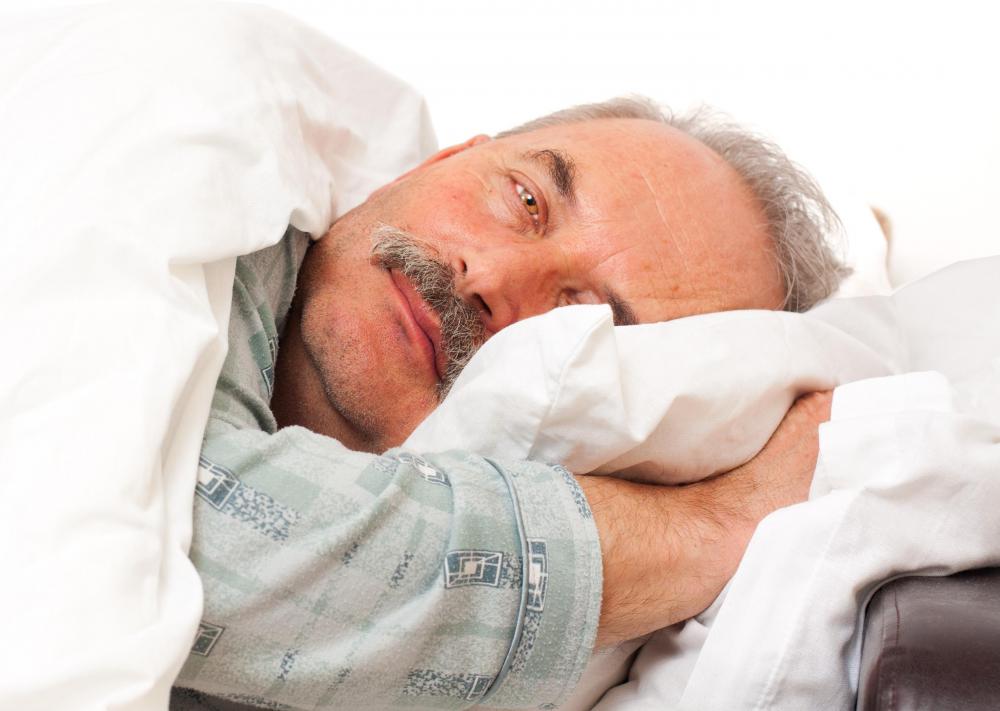
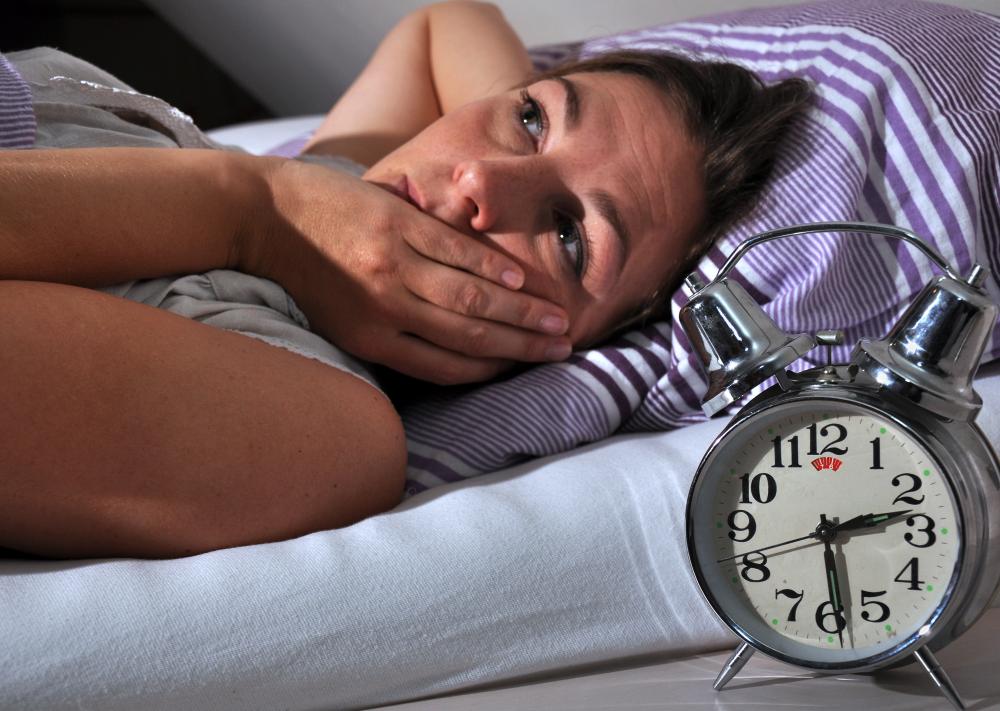
There are a number of things you can do if you are having trouble sleeping. Getting a night of sound sleep can break the pattern of insomnia, making it easier for you to get back into the rhythm of sleeping well on a regular basis. It may encourage you to know that many people struggle with insomnia, and that managing insomnia does not have to be difficult.
One of the best ways to improve sleep is to improve your sleep hygiene, the set of habits which surround sleeping and going to bed in your house. In the bedroom, use heavy blinds or curtains to control light, and make sure that you are insulated from sources of sound which can disrupt sleep. Designate the bedroom specifically as a place for relaxing and sleeping, and avoid taking work into the bedroom. Hide your clock so that you won't be staring at it if you have insomnia, and keep your bedroom cool.

You may also want to change your habits around bedtime. Try to stick to a specific schedule: get up at the same time every day, and go to bed around the same time every night, even on your days off. Make a habit of exercising in the afternoon or evening, and consider bathing or showering right before bed to relax your muscles and get in a peaceful frame of mind. Don't eat for at least two hours before you plan to go to bed, and consider eating the biggest meal of the day at lunch, and eating lightly for dinner.

When you get into bed to go to sleep, take a few deep breaths, and try to relax your body. Don't try to force yourself into sleep, but focus on your breathing and clear your mind. If you haven't slept after 15 to 20 minutes, get up and doing something else around the house, such as reading in the living room for half an hour. This helps to break the pattern of lying awake in bed, by letting your brain know that you will pursue another activity if you can't get to sleep.

Sometimes, trouble sleeping is related to emotional problems. If you are under a great deal of stress or you have experienced a trauma, you may want to consider making an appointment with a counselor to talk about it. He or she can help work through your issues, and suggest some relaxation exercises which can promote sleep. Psychiatrists can also prescribe drugs which can be used as sleep aids, although these should ideally be used as a last resort, because while sleeping pills do relieve insomnia, they fail to address the underlying problem which is causing it.
Mary McMahon
Ever since she began contributing to the site several years ago, Mary has embraced the exciting challenge of being a WiseGEEK researcher and writer. Mary has a liberal arts degree from Goddard College and spends her free time reading, cooking, and exploring the great outdoors.
Learn more...
Mary McMahon
Ever since she began contributing to the site several years ago, Mary has embraced the exciting challenge of being a WiseGEEK researcher and writer. Mary has a liberal arts degree from Goddard College and spends her free time reading, cooking, and exploring the great outdoors.
Learn more...AS FEATURED ON:
AS FEATURED ON:









-
![Getting into a regular evening routine can help people fall asleep.]() By: MitarartGetting into a regular evening routine can help people fall asleep.
By: MitarartGetting into a regular evening routine can help people fall asleep. -
![Many people struggle with insomnia.]() By: Sandor KacsoMany people struggle with insomnia.
By: Sandor KacsoMany people struggle with insomnia. -
![Insomnia may be related to emotional issues.]() By: Dan RaceInsomnia may be related to emotional issues.
By: Dan RaceInsomnia may be related to emotional issues. -
![Regular exercise early in the day helps improve sleep patterns at night.]() By: Syda ProductionsRegular exercise early in the day helps improve sleep patterns at night.
By: Syda ProductionsRegular exercise early in the day helps improve sleep patterns at night. -
![Doctor-prescribed sleeping pills should be used only as a last resort for those who have trouble sleeping.]() By: Dmitry LobanovDoctor-prescribed sleeping pills should be used only as a last resort for those who have trouble sleeping.
By: Dmitry LobanovDoctor-prescribed sleeping pills should be used only as a last resort for those who have trouble sleeping. -
![Trouble sleeping can be caused by consuming too many energy drinks through the day.]() By: Oleksiy MarkTrouble sleeping can be caused by consuming too many energy drinks through the day.
By: Oleksiy MarkTrouble sleeping can be caused by consuming too many energy drinks through the day. -
![Watching TV when unable to sleep isn't recommended.]() By: xalanxWatching TV when unable to sleep isn't recommended.
By: xalanxWatching TV when unable to sleep isn't recommended. -
![Trouble sleeping can be as simple as having an uncomfortable bed.]() By: Innovated CapturesTrouble sleeping can be as simple as having an uncomfortable bed.
By: Innovated CapturesTrouble sleeping can be as simple as having an uncomfortable bed.





Discussion Comments
Have you tried Ubrain? its an app on the iphone and android phones. it is a binaural beat program you play with your on music; there is a track called Snooze that is really good. i recommend trying it. there is a free version to try but i don't think snooze is in it. good luck
Post your comments