
At AllThingsNature, we're committed to delivering accurate, trustworthy information. Our expert-authored content is rigorously fact-checked and sourced from credible authorities. Discover how we uphold the highest standards in providing you with reliable knowledge.
What are Wetlands?
 Mary McMahon
Mary McMahon
Mary McMahon
Wetlands are unique environments in which the soil is saturated with water for all or most of the year. Often, they include pools of standing water for much of the year, and all host a multitude of plant and animal species that have adapted to their unique conditions. Wetlands are an extremely valuable natural resource: in addition to offering habitat for plants and animals, they also help protect neighboring land, and reduce soil erosion. For this reason, many countries around the world have embarked on conservation programs, so that these environments will be around for future generations.
There are several types of wetlands, depending on where they are located and the chemical makeup of the water in them. In most cases, they form a intermediate area between a large body of water such as an ocean or lake and dry land, although some inland wetlands form in areas isolated from bodies of water. They tend to form in areas of low ground, which accumulates water readily, and if allowed to thrive without disruption, they have numerous positive affects on the natural environment.

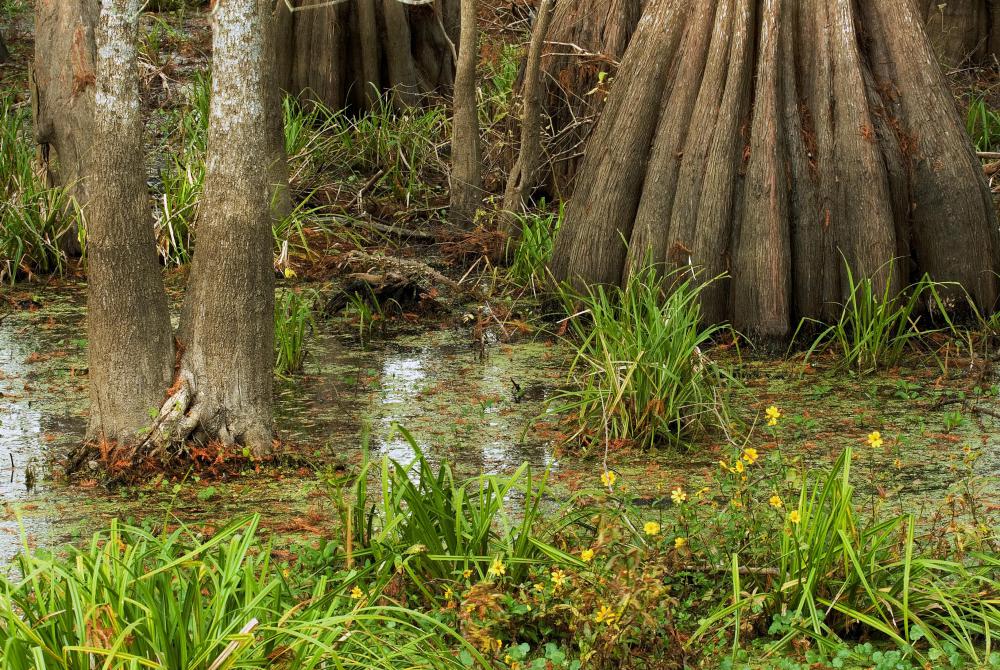
When asked to visualize wetlands, most people think of marshes. Marshes are characterized by low growing plants and reeds and a sense of open space: coastal marshes are salty, thanks to the salt water which floods them. Other types include bogs, which have a highly acidic chemical balance, and fens, which are very alkaline. Swamps support trees and other large plants, often with limited visibility, and due to their soil saturation and pools of standing water, they are classified as wetlands.

One of the most important functions of a wetland is to act as a buffer zone between a body of water and dry land. They protect land from flooding and storm damage by absorbing the brunt of it. In addition, this area helps to prevent soil erosion, because the plants and trees that live in them form dense networks of roots that hold the soil in, preventing it from washing away. Many actually create accumulations of rich, nutritious soil upon which plants, animals, and birds can thrive.

Wetlands provide habitat for numerous animals including dragonflies, crayfish, catfish, sculpins, snakes, turtles, geese, herons, frogs, flamingos, and many others. Most of these animals have adapted specifically to living in this environment. Long legged birds, for example, use their long legs to keep their torsos out of the water, and have long necks and beaks to reach into the water for food such as aquatic plants and insects. Loss of habitat for wetlands animals could be devastating, as they are ideally suited to life in these conditions, and many of them would face dangerous predators and unfavorable living conditions outside of wetland areas. In addition, wetlands play host to numerous plants, not all of which have been categorized and studied.
Frequently Asked Questions
What exactly are wetlands and why are they important?

Wetlands are diverse ecosystems where water is the primary factor controlling the environment and associated plant and animal life. They are crucial for biodiversity, providing habitat for a multitude of species. Wetlands also act as natural water filters and buffers against flooding, while storing carbon, thus playing a role in climate regulation.
What are the different types of wetlands?

Wetlands vary widely due to regional and local differences in soils, topography, climate, hydrology, water chemistry, vegetation, and other factors. Major types include swamps, marshes, bogs, and fens. Swamps are typically wooded, while marshes are dominated by grasses and reeds. Bogs and fens are peatlands, with bogs being more acidic.
How do wetlands benefit wildlife?

Wetlands serve as critical habitats for a vast array of wildlife, including migratory birds, fish, amphibians, and invertebrates. They offer breeding grounds, abundant food sources, and shelter. According to the Ramsar Convention, wetlands are vital for maintaining the global biological diversity of many species, especially waterbirds.
What human activities threaten wetlands?
Human activities posing threats to wetlands include drainage for agriculture, urban development, pollution, overfishing, and the introduction of invasive species. Climate change also exacerbates these threats by altering precipitation patterns and causing sea-level rise. The cumulative effect of these activities can lead to significant wetland loss and degradation.
How are wetlands linked to climate change?
Wetlands are intricately linked to climate change. They store approximately 30% of global soil carbon, according to the World Wildlife Fund. When degraded or drained, they can release large amounts of carbon dioxide. Conversely, healthy wetlands can absorb and store carbon, mitigating the effects of climate change.
What efforts are being made to conserve wetlands?
Global efforts to conserve wetlands include international agreements like the Ramsar Convention, which provides a framework for the conservation and wise use of wetlands. Locally, initiatives may involve restoration projects, sustainable management practices, and the establishment of protected areas. Public education and community involvement are also key components of successful conservation strategies.
Mary McMahon
Ever since she began contributing to the site several years ago, Mary has embraced the exciting challenge of being a AllThingsNature researcher and writer. Mary has a liberal arts degree from Goddard College and spends her free time reading, cooking, and exploring the great outdoors.
Learn more...
Mary McMahon
Ever since she began contributing to the site several years ago, Mary has embraced the exciting challenge of being a AllThingsNature researcher and writer. Mary has a liberal arts degree from Goddard College and spends her free time reading, cooking, and exploring the great outdoors.
Learn more...AS FEATURED ON:
AS FEATURED ON:









-
![Turtles often live in wetlands.]()
Turtles often live in wetlands. -
![A frog that lives in a wetland.]() By: andrewburgessA frog that lives in a wetland.
By: andrewburgessA frog that lives in a wetland. -
![Catfish, which live in the wetlands.]() By: boguslawCatfish, which live in the wetlands.
By: boguslawCatfish, which live in the wetlands. -
![Flamingos live in wetlands.]() By: Anna OmelchenkoFlamingos live in wetlands.
By: Anna OmelchenkoFlamingos live in wetlands. -
![Swamps are classified as wetlands.]() By: Paul WolfSwamps are classified as wetlands.
By: Paul WolfSwamps are classified as wetlands. -
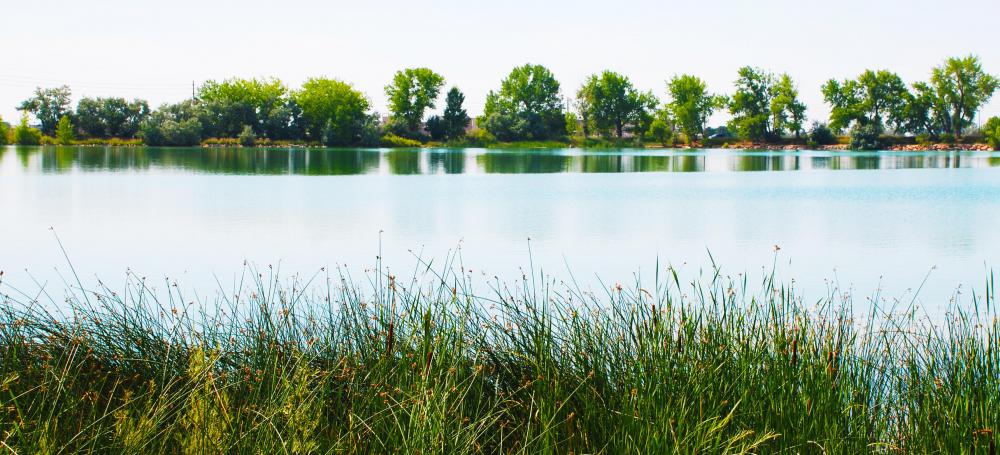
![Wetlands may occur along the shorelines of lakes and rivers.]() By: cantelowWetlands may occur along the shorelines of lakes and rivers.
By: cantelowWetlands may occur along the shorelines of lakes and rivers.


Discuss this Article
Post your comments