
At TheHealthBoard, we're committed to delivering accurate, trustworthy information. Our expert-authored content is rigorously fact-checked and sourced from credible authorities. Discover how we uphold the highest standards in providing you with reliable knowledge.
What are Welts?
 Mary McMahon
Mary McMahon
Mary McMahon
Welts are bumps in the skin that are caused by a fluid buildup directly below the surface of the skin. A number of things can lead to the development of a welt, ranging from trauma to the skin to an allergic reaction. Depending on the cause, a welt may be a sign of a serious problem, or it may be something which will resolve on its own, given enough time. When welts are a sign of a medical problem, they are usually accompanied by other symptoms which provide clues to the problem.
Physical trauma such as a blow can cause a welt, and welts can also be caused by allergic reactions, infections, injections, insect bites, and skin reactions, in very sensitive people. For example, in people with dermographism, even a gentle touch to the skin can cause a welt to emerge. The welt is typically pale red, although welts may have a whitened area in the center, and some are surrounded by a streak of reddish or unusually pale skin.

Left to its own devices, a welt will gradually subside as the fluid is reabsorbed by the surrounding cells. However, when a welt is a sign of an allergic reaction or infection, it can get worse, or it can indicate that the welt's owner requires some medical treatment. For example, welts characterize the itchy rash known as hives which emerges when people experience severe allergic reactions. The appearance of hives can be a sign of anaphylactic shock, a medical condition which can be deadly if left untreated.

For people with sensitive skin, welts may be a common experience, and nothing to worry about. However, if welts appear unusually large or they appear to be spreading, getting medical attention can be advisable. A doctor can determine the cause of the welt and the best course of action, ranging from topical skin creams to soothe irritation to the provision of steroids and other aggressive anti-allergy treatments.

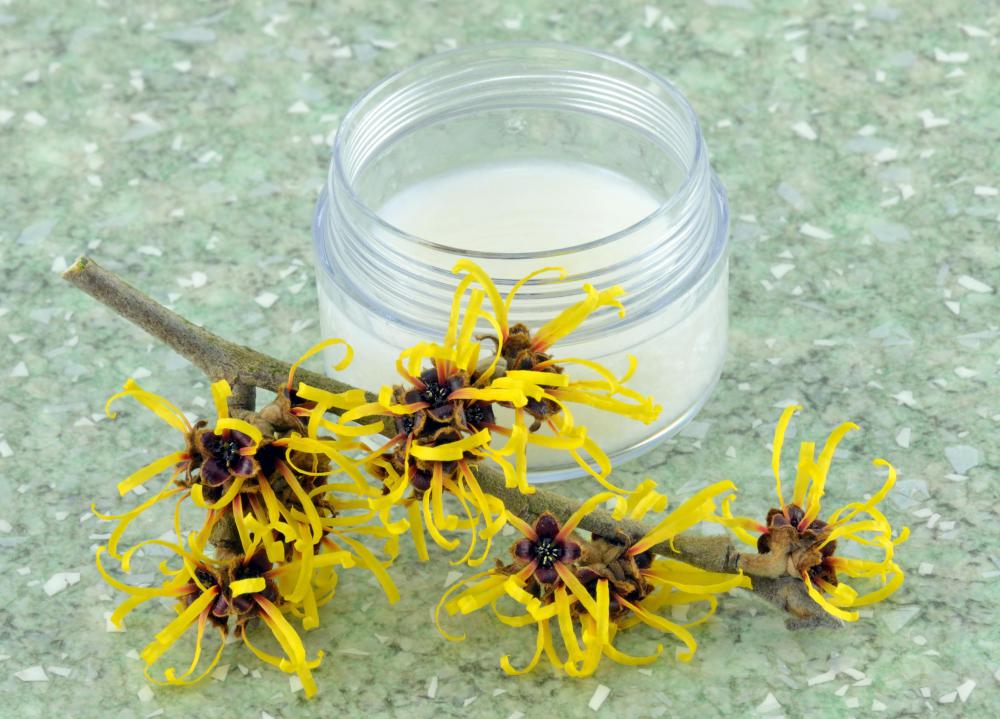
You may also hear a welt referred to as a wheal. Welts are often tender to the touch, because the area is inflamed and irritated, and sometimes they feel hot. Wearing tight clothing against a welt is usually ill-advised, because the garment can scratch and irritate the welt, causing it to swell and spread. Sometimes, applying ice or an astringent like witch hazel to a welt can soothe the itching and burning associated with welts.
Mary McMahon
Ever since she began contributing to the site several years ago, Mary has embraced the exciting challenge of being a TheHealthBoard researcher and writer. Mary has a liberal arts degree from Goddard College and spends her free time reading, cooking, and exploring the great outdoors.
Learn more...
Mary McMahon
Ever since she began contributing to the site several years ago, Mary has embraced the exciting challenge of being a TheHealthBoard researcher and writer. Mary has a liberal arts degree from Goddard College and spends her free time reading, cooking, and exploring the great outdoors.
Learn more...AS FEATURED ON:
AS FEATURED ON:


-
![Applying an astringent, such as witch hazel, to a welt can help to reduce pain and itching.]() By: dianamowerApplying an astringent, such as witch hazel, to a welt can help to reduce pain and itching.
By: dianamowerApplying an astringent, such as witch hazel, to a welt can help to reduce pain and itching. -
![Hives can appear as part of an allergic reaction.]() By: Rob ByronHives can appear as part of an allergic reaction.
By: Rob ByronHives can appear as part of an allergic reaction. -
![Allergies to eggs may cause skin welts.]() By: Brent HofackerAllergies to eggs may cause skin welts.
By: Brent HofackerAllergies to eggs may cause skin welts. -
![If welts are followed by symptoms of anaphylaxis then emergency medical care is necessary.]() By: Monkey BusinessIf welts are followed by symptoms of anaphylaxis then emergency medical care is necessary.
By: Monkey BusinessIf welts are followed by symptoms of anaphylaxis then emergency medical care is necessary. -
![Welts can appear as an itchy rash.]() By: librakvWelts can appear as an itchy rash.
By: librakvWelts can appear as an itchy rash.




Discussion Comments
I have a welt from physical trauma (paintballing) on my leg. It's normal, but it has been on my leg for a month. Doesn't bother me but if you push down on it with enough force you can feel it.
I have roundish itchy welts on my neck in different places from using Perricone Cold Plasma Sub D. I have large, round, puffy, itchy spots. What in the world is in this stuff? I've never had this issue with any other product. Weird.
I didn't realize welts were a buildup of fluid. I always assumed that the injured cells were swelling up. I guess they can only really swell with something, so I should have realized.
The absolute best thing I've ever found for welts of almost any kind is Bepanthen. It's a cream that's supposed to be for diaper rash and cracked nipples during breastfeeding, but it works wonders on just about anything.
I was told to use it regularly after I got a tattoo, and it healed right up. Now I usually keep a tube handy at home and in the car. If my cat scratches me and I don't use the Bepenthen it can take a few days to stop being red and itchy. If I use the cream it's basically gone by tomorrow.
@anon71798 - That sounds like heat rash to me, although you haven't described what the welts look like. It's caused by hot weather, skin being exposed to heat and moisture (like sweat) and friction. I used to get it on the back of my neck when I was living in a desert climate, it does feel like little pins with itchy welts and it's extremely annoying. I've heard you can also get it in cold climates because you have to wear so much clothing.
There's nothing you can do except put calming creams on it, and try to keep the area dry and cool.
But I would also take a look online for some pictures of heat rash so that you can compare with what you're seeing and if it doesn't go away, or if it doesn't look right then go and see a doctor because a rash can be a symptom of all kinds of different things.
Mung beans - cooling, made the itch from my cherry allergy welts go away right away. I don't need any special product for this now. Wish I knew that back when I got poison ivy every year.
I have had great success with a product called Stop Rash by Seagate Products company in San Diego, CA.
It stops the itching within minutes and the skin welts diminish and the skin returns to normal within hours.
man, during thanksgiving I went to Louisiana and during one of the days i picked wild onions. almost two weeks later I'm now breaking out bad in theses welts and bumps. At first I thought it was fleas but now i know it's not because its only me. Going to see a doctor because neither the the creams nor witch hazel works.
it would be good to go see an allergist or a hemoglobin doctor and have your blood tested.
I got a welt from a water balloon being shot at my thigh at 80 miles per hour. It was burning and stinging. What should i do to make it stop burning or stinging?
I have welts on and round my neck. sometimes it feels like little pins sticking me. Confused, any answers?
I often find that nothing out there works for welts or rashes on the skin; red, itching, irritating skin. Even trying what dermatologists suggest. Can anyone out there recommend an over the counter medication that has actually worked for them? Anything will help. Thx.
Post your comments