
At WiseGEEK, we're committed to delivering accurate, trustworthy information. Our expert-authored content is rigorously fact-checked and sourced from credible authorities. Discover how we uphold the highest standards in providing you with reliable knowledge.
What are Thrift Shops?
 Michael Pollick
Michael Pollick
Michael Pollick
One of the most vital services provided by charity organizations is the redistribution of items donated by the public. All of the clothing, toys, appliances, furniture and other usable donations must be offered for resale somehow. This has led to the proliferation of thrift shops, non-profit or barely-for-profit outlets open to the public during regular business hours. These stores may be operated by the non-profit organizations themselves or by outside companies that specialize in the management of such shops.
Many people associate thrift shops with specific charity groups, such as Goodwill and the Salvation Army. Organizations like these aggressively seek out donated merchandise through the use of drop-off centers and warehouses. Delivery trucks maintained by these charities will often pick up furniture and deliver it directly to the stores. Almost every sizable city in the United States contains at least one example of these "professional" thrift shops.

Others may be owned and operated by individual churches or other non-profit organizations. Retail space may be donated or offered at a substantial discount to the operators. Thrift shops tend to be a little more no-frills than other outlets, since the space is usually older and money for maintenance and upgrading is minimal. Some local charities hire professional shoppers who can locate discounted materials for resale and organize donation campaigns. Volunteers may perform many of the pricing and sorting chores, while a few paid staff members handle the accounting and scheduling side of the business.

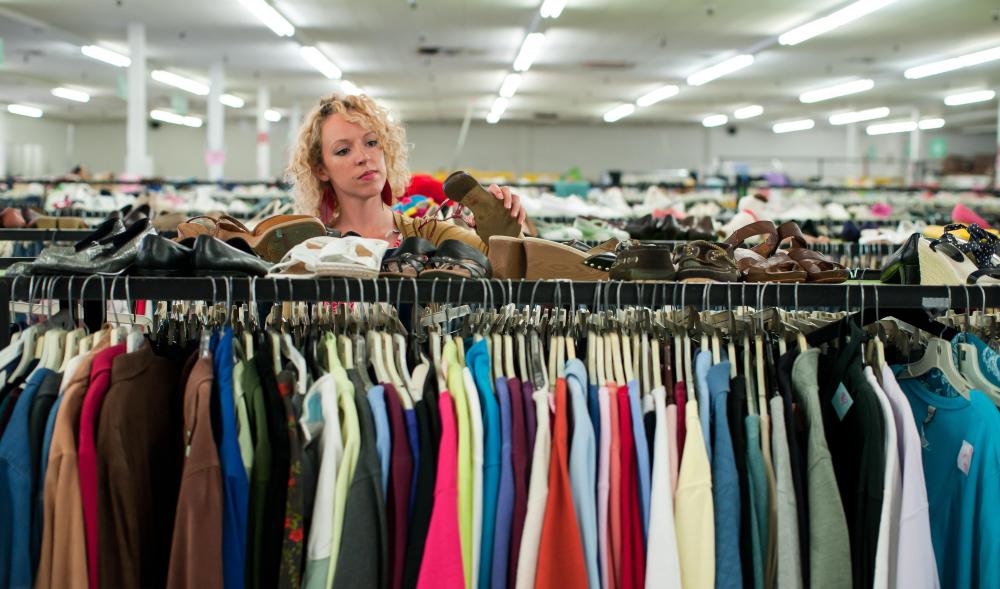
Some shops may be quite clean and organized, depending on their staffing and funding. Others may resemble a yard sale, with random boxes of merchandise. Usually, the store will at least roughly organize their goods by type: clothing will be presented on sized racks, furniture will be arranged together, and appliances will be separated by usage. Other popular items in most thrift shops include toys, bedding, decorative items and books. Prices are roughly equivalent to what most people would charge during a yard or garage sale. Clothing is especially affordable because charities receive so much of it and storage space can be at a premium.

There are some definite disadvantages to shopping at thrift shops. Almost all items are sold in "as is" condition, which means if a shopper brings home a broken toaster or a stained shirt, he or she probably owns it for good. Some stores offer basic exchange policies or store credit, but if a shopper's budget is tight, he or she will definitely want to test and inspect any purchases before paying for them. Some donated items may also be inherently dangerous, especially older electrical appliances that may have been recalled or discontinued. Finding a complete set of accessories or an instruction manual may also be problematic. Shoppers should make sure that they inspect toys for signs of damage or contamination.

Thrift shops can also offer a few advantages over traditional retail outlets. Certain companies may donate new or nearly-new merchandise as charitable donations. This can mean a significant savings over the recommended retail price elsewhere. Shops may also contain undiscovered collectibles or antiques that can be resold for a profit or used to fill out a personal collection. It often pays to sort through older books or records for interesting titles at bargain prices. Furniture may also be priced to sell, and it can always be reupholstered or refinished later.
Michael Pollick
A regular WiseGEEK contributor, Michael enjoys doing research in order to satisfy his wide-ranging curiosity about a variety of arcane topics. Before becoming a professional writer, Michael worked as an English tutor, poet, voice-over artist, and DJ.
Learn more...
Michael Pollick
A regular WiseGEEK contributor, Michael enjoys doing research in order to satisfy his wide-ranging curiosity about a variety of arcane topics. Before becoming a professional writer, Michael worked as an English tutor, poet, voice-over artist, and DJ.
Learn more...AS FEATURED ON:
AS FEATURED ON:









-
![A woman perusing the clothing selection of a thrift shop.]() By: gabe9000cA woman perusing the clothing selection of a thrift shop.
By: gabe9000cA woman perusing the clothing selection of a thrift shop. -
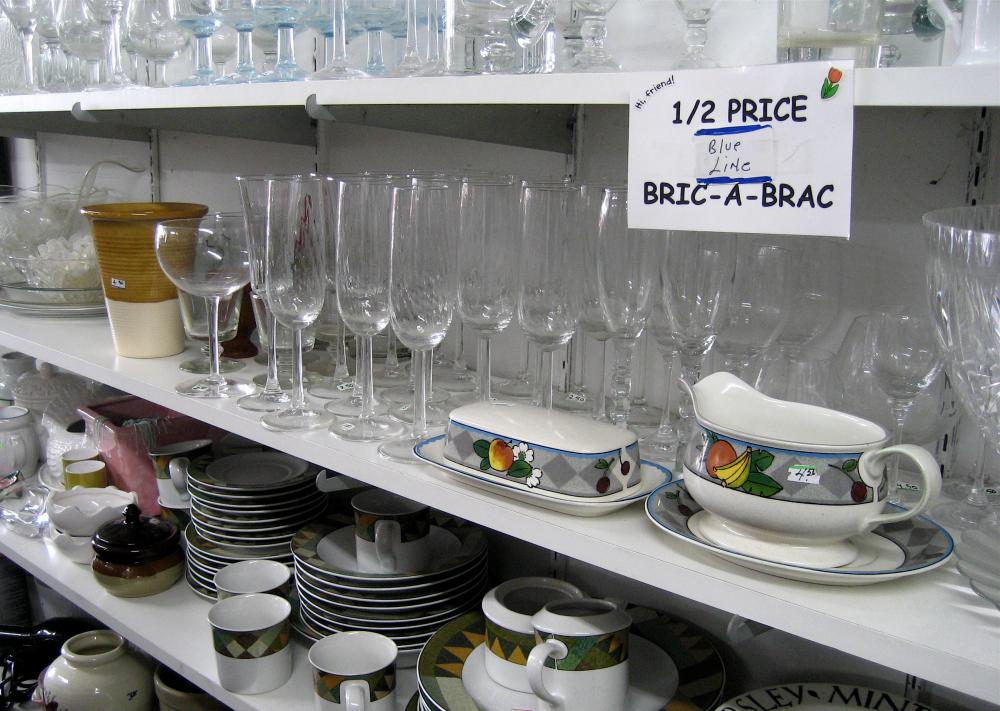
![Dishes can be donated and then sold in thrift shops.]() By: Janet WallDishes can be donated and then sold in thrift shops.
By: Janet WallDishes can be donated and then sold in thrift shops. -
![Furniture is sold "as is" in thrift shops.]() By: Jaroslaw SzarekFurniture is sold "as is" in thrift shops.
By: Jaroslaw SzarekFurniture is sold "as is" in thrift shops. -
![Thrift shops sometimes carry electrical appliances.]()
Thrift shops sometimes carry electrical appliances. -
![Clothing can be especially affordable at thrift shops.]() By: Andres RodriguezClothing can be especially affordable at thrift shops.
By: Andres RodriguezClothing can be especially affordable at thrift shops.


Discussion Comments
@anon12554-- I don't think it's a problem because everyone knows which thrift shops are federally approved. Everyone knows about Goodwill and Salvation Army and they have offices everywhere.
If I come across a privately owned one, I usually ask if they are associated with a charity and what percentage of their profits they give.
I love thrift shops. I've found many very valuable vintage items from these shops over the years. Recently, vintage has become popular and there are vintage shops popping up everywhere. But they sell what most thrift shops sell but at a much higher price!
You might not find the exact vintage item you're looking for with just one visit to a thrift shop. But if you're patient and visit regularly, you will surely find something close and at great prices.
Don't go to vintage shops, first check out thrift shops for the best prices!
@anon137248-- I donate to local charity thrift shops all the time and they ask me if I want a receipt but I always say no. I had no idea that the receipt is tax deductible.
So I can keep these receipts and claim them in my tax return and pay less tax?
In order for your donation to be tax deductible it must go to a federally approved 501(c)(3) corporation. However, some for-profit thrift stores act as donation centers on behalf of local charities.
You neglected to talk about privately-owned thrift shops that claim to support a charitable cause. Most of their customers assume that their all their purchases and donations "go to a good cause". In reality, the owner may only pay a nominal flat fee or as little as 3% of sales for the ability to hang the "charity" sign.
Does it really matter? Perhaps not, people are getting a good value and after all, it's far better to recycle than add to the landfills.
But my question is, Are donations to privately-owned thrift shops tax deductible? (Many give receipts.) It is my understanding that only IRS-approved 501(c)(3) thrift stores are allowed to give tax-deductible receipts for donations.
Post your comments