
At TheHealthBoard, we're committed to delivering accurate, trustworthy information. Our expert-authored content is rigorously fact-checked and sourced from credible authorities. Discover how we uphold the highest standards in providing you with reliable knowledge.
What are the Symptoms of Kidney Failure?
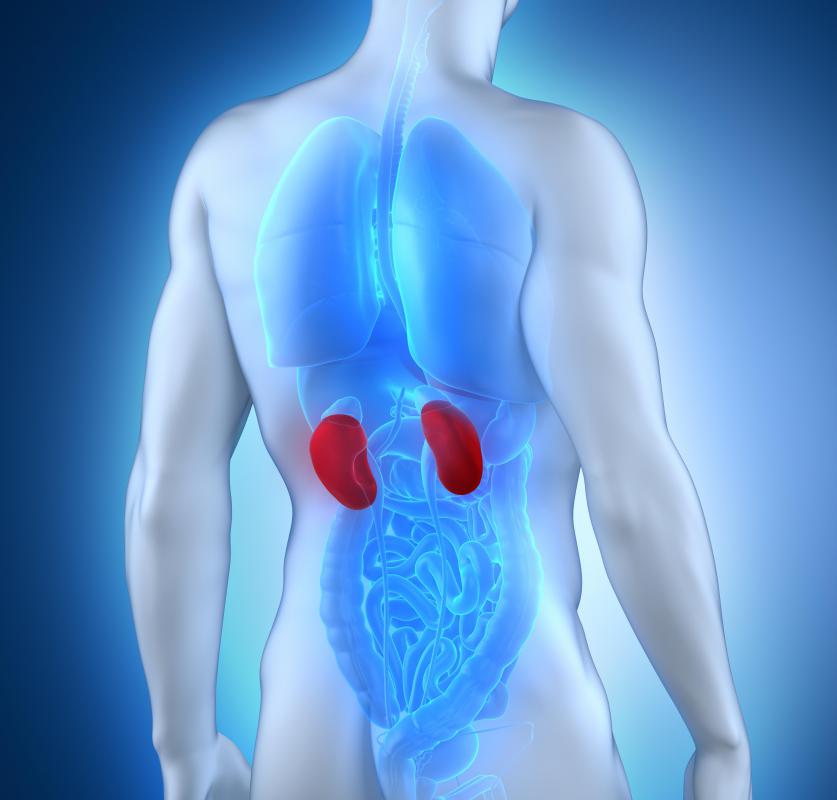
The signs and symptoms of kidney failure include a decrease in urine output, fluid retention, swelling, drowsiness, shortness of breath, fatigue, and in severe cases, chest pain, seizure, or coma. Though a decrease in urine output is a common symptom, it may not be a marked decrease. Fluid retention is the most noticeable sign, and swelling of the feet, ankles, or legs as a result of the fluid build-up is generally obvious.
Kidney failure occurs when the kidneys lose their ability to remove excess fluid and waste from the blood stream. It can happen suddenly as a result of trauma or injury, after a complicated or extensive surgery, or when the blood flow to the kidneys is disrupted. This is called acute kidney failure and often happens to patients who are already hospitalized. Unlike chronic kidney failure, which occurs gradually over time as a secondary result to a primary disease or condition, the acute type is reversible.

Both types of kidney failure require medical attention. If early signs of this condition go unnoticed, waste begins to build up inside the body and can be fatal. If a person who is diabetic, has high blood pressure, has had recent major surgery, or has had a heat stroke stops having urine output or begins retaining fluid, he or she should see a doctor as soon as possible.

Treatment for this condition involves treating any underlying illnesses that might be damaging the kidneys, and then treating the symptoms of kidney failure while the kidneys heal. In most cases, a change in dietary habits is necessary. In some cases, dialysis, which is a way of removing excess toxins from the body mechanically, may be necessary. Dialysis might be temporary for acute kidney failure, but the chronic type may require life-long dialysis if a kidney transplant fails or is not an option.
AS FEATURED ON:
AS FEATURED ON:


-
![Swelling and drowsiness are two symptoms of kidney failure.]() By: CLIPAREA.comSwelling and drowsiness are two symptoms of kidney failure.
By: CLIPAREA.comSwelling and drowsiness are two symptoms of kidney failure. -
![Dialysis treatment might be used for acute kidney failure.]() By: Tyler OlsonDialysis treatment might be used for acute kidney failure.
By: Tyler OlsonDialysis treatment might be used for acute kidney failure. -
![Kidney failure can lead to a coma.]() By: gwimagesKidney failure can lead to a coma.
By: gwimagesKidney failure can lead to a coma. -
![Kidney failure sometimes comes following a complicated or extensive surgery.]() By: Tom WangKidney failure sometimes comes following a complicated or extensive surgery.
By: Tom WangKidney failure sometimes comes following a complicated or extensive surgery.



Discussion Comments
my husband lost his right kidney ureter, and top of bladder to cancer in sept 08. now the other kidney has big and small tumors and is failing along with nods in lungs and i guess you can call them cyst and tumors on liver, pancreas, gall bladder and on other areas as well.
will someone please tell me straight forward the truth without all this beating around the bush? thank you
It appears that high end of normal level of uric acid in the blood, which is a measure of how well the kidneys are working, in older adults is connected with memory problems that precede dementia.
There are no clear answers yet on that relation and how it works, but higher then normal uric acid level can potentially alert older people of what might be ahead, and possibly take early action.
Post your comments