
At WiseGEEK, we're committed to delivering accurate, trustworthy information. Our expert-authored content is rigorously fact-checked and sourced from credible authorities. Discover how we uphold the highest standards in providing you with reliable knowledge.
What Are the Signs of an Allergic Reaction to a Mosquito Bite?
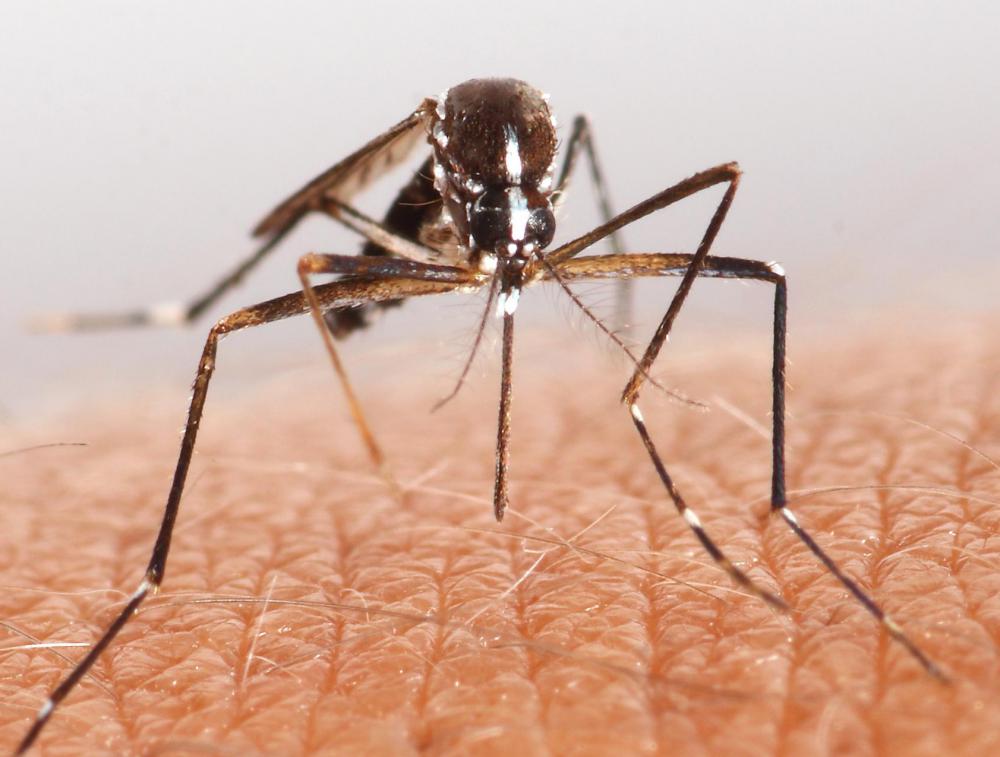
Mosquito bites are not generally considered dangerous, but some people can experience a severe allergic reaction to them. In addition to life-threatening reactions that cause the windpipe to swell up and interfere with breathing, an allergic reaction to a mosquito bite may be as mild as a simple itchy, red area around the bite. The intensity of a reaction to a mosquito bite is typically related to the amount of times the person has been bitten.
When a mosquito bites a person, it breaks through the skin. The body recognizes the saliva from the mosquito in the bite as foreign. Generally, the body produces small bumps with accompanying itching where the insect bit. The immune system learns from experience, so the next time a mosquito bites the person, the immune response is quicker, and can be much more intense.

Instead of a small area responding to the bite, a strong allergic reaction to a mosquito bite can occur. Where the last bite only produced a mildly irritating itch and lump, the new bite could result in a large area of inflammation, where the skin is red, swollen, and itchy.
This form of reaction is mild enough, although unpleasant, and it can take up to two days to appear after the bite. Although the reactions to the bite do tend to worsen after the initial recognition of the mosquito saliva by the immune system, in countries where mosquitos are very common, the opposite can also occur. Adults who have had many bites throughout their life tend to become less sensitive to the saliva, and therefore do not experience as many symptoms as those who rarely experience bites.

A much more serious form of allergic reaction is anaphylaxis. This is a potentially deadly condition where the immune system has an extreme reaction to the saliva, and endangers the life of the person who was bit. A skin rash, blotchiness, and hives are some of the signs of this reaction. The anaphylaxis can also close the airways, causing wheezing and difficulty breathing. The throat can swell up, along with the face, and the person may have skin itchiness throughout his or her body.

Other symptoms of anaphylaxis include diarrhea and vomiting. Unusual anxiety and fainting spells can also occur, as can an increase in heart rate. All of the symptoms require medical treatment quickly. Other issues, such as fever, headache, or an increase in the size of lymph glands, may point to a mosquito-borne disease, especially if the person has been in an exotic country recently.

People at risk of allergic reaction to a mosquito bite can reduce the risk by using insect repellent and staying inside at dusk and dawn, when the insects feed. Clothing that covers exposed skin can also help. Washing the area of a new bite with soap and water may reduce the localized allergic reaction.
AS FEATURED ON:
AS FEATURED ON:









-
![Mosquito about to bite.]()
Mosquito about to bite. -
![A severe allergic reaction to a mosquito bite could result in breathing difficulties.]() By: Laurent HamelsA severe allergic reaction to a mosquito bite could result in breathing difficulties.
By: Laurent HamelsA severe allergic reaction to a mosquito bite could result in breathing difficulties. -
![EpiPens are used in the treatment of severe allergic reactions.]() By: Greg FrieseEpiPens are used in the treatment of severe allergic reactions.
By: Greg FrieseEpiPens are used in the treatment of severe allergic reactions. -
![Signs of an allergic reaction to a mosquito bite may include hives.]() By: marilyn barboneSigns of an allergic reaction to a mosquito bite may include hives.
By: marilyn barboneSigns of an allergic reaction to a mosquito bite may include hives.



Discussion Comments
Sigh. As many mosquito bites as I've had during my lifetime, I should be completely immune to them. Alas, that is not the case.
A few days ago, I swatted a mosquito that got in the house. Yes, inside the house. No, I don't live in a place where we normally need mosquito netting, but since then, I've thought about it, believe me.
Anyway, the mosquito escaped and took its revenge by nailing me on the first joint of the middle finger on my left hand. It started itching like crazy immediately and in an hour, my whole middle finger was so swollen I could hardly bend it, and the swelling was starting down into my hand.
I hit the urgent care clinic and the doctor looked at my finger and said, "Wow. Are you sure this was just a mosquito? Really? Seriously? Wow." A shot of Benadryl and six prednisone tablets later and I'm much better, but he said it was a good thing I came in. He said if the swelling had continued, I could have had compromised circulation in that finger, or cellulitis could have set in, which would have been too fun for words.
If you think you're having an unusual reaction, just go on to the doctor. Don't wait around, hoping it will get better. The consequences could be serious.
Post your comments