
At WiseGEEK, we're committed to delivering accurate, trustworthy information. Our expert-authored content is rigorously fact-checked and sourced from credible authorities. Discover how we uphold the highest standards in providing you with reliable knowledge.
What are the Risks of High Creatine Levels?
Creatine is an amino acid that naturally occurs in the body, but it can also be purchased as a dietary supplement designed to enhance athletic performance, typically found in pill or powder form to be taken with liquids. Creatine monohydrate, the most common formula of the supplement, has increasingly been used as a substitute for steroids, and many people who would never touch steroids have claimed to use creatine as a legal performance enhancer. Users should be aware, however, that as with many steroids, high creatine levels in the body have been found to have adverse effects such as an upset stomach, dehydration, or kidney problems. While any long-term side effects have yet to be discovered, some athletes choose to avoid the possibility of short-term side effects altogether.
Natural Creatine

Produced by the liver and kidneys, creatine is used as an energy source by muscles and other organs. Creatine can also be derived naturally through eating certain meats, poultry, and fish. In most cases, the body regulates the correct amount of creatine on its own — whether the creatine is produced by the body or consumed from sources of meat. High creatine levels in the body occur only when creatine supplements are consumed, resulting in the presence of more creatine in the body than would occur naturally.
Creatine Supplements

Many athletes add creatine supplements to their diet because high creatine levels have been shown to improve sports performance when bursts of energy are required, and the makers of creatine supplements claim that high creatine levels fuel skeletal muscles. The supplement is usually taken as a pill or powder that can be mixed with sports drinks. Creatine supplements have been available since the late 1980s and can be purchased in many health food stores and online.

Peer pressure is one of the reasons that creatine supplements are so popular among athletes; the pressure to compete and win in today’s society, no matter what the cost, has increased the sales of these supplements. Creatine has been used in competitive sports at the university and high school level, and competitors with high creatine levels have been found at nearly every sporting level from amateur to professional. The dietary supplement is most often used in sports such as weightlifting, running, wrestling, and hockey.
Possible Side Effects

According to health and sports officials, the possible side effects of creatine can include muscle cramps, dehydration, diarrhea, and nausea. Anterior compartment pressure, which usually appears as tightness in the calf, shin splints, or both, is another possible side effect, and high creatine levels can also result in tears to the muscles or ligaments. When creatine supplements are used, the kidneys must filter out extra creatine, which causes them to work harder; this can result in kidney failure if the kidneys are overly stressed. Possible long-term side effects of high creatine levels have yet to be determined, but studies of creatine supplement usage up to five years have not shown any major effects, besides the ones previously mentioned.

Many athletic coaches are well aware that students are using these dietary supplements to enhance their abilities, regardless of the chance of side effects. A study by the Blue Cross health insurance company showed that one million people from the age of 12 to 17 have used dietary supplements to enhance their sports performance. Although creatine is legal and easy to purchase, some concerns have risen regarding the content of the supplements. Health officials have stated that at least 25% of these dietary supplements are laced with substances that are not listed on the packaging, which could lead to additional risks.
AS FEATURED ON:
AS FEATURED ON:









-
![Fish and chicken are among the dietary sources of creatine.]() By: Olga ShevchenkoFish and chicken are among the dietary sources of creatine.
By: Olga ShevchenkoFish and chicken are among the dietary sources of creatine. -
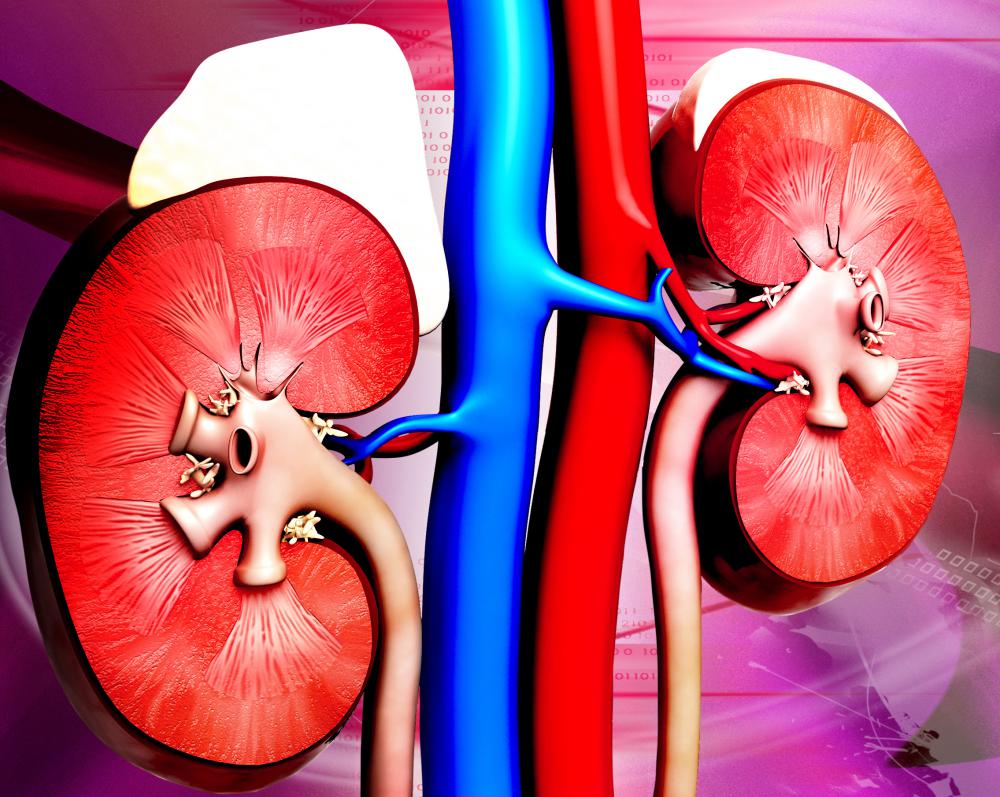
![Excessive creatine levels may lead to kidney failure.]() By: krishnacreationsExcessive creatine levels may lead to kidney failure.
By: krishnacreationsExcessive creatine levels may lead to kidney failure. -
![Creatine powder is popular among athletes looking to boost endurance.]() By: Clifford FarrugiaCreatine powder is popular among athletes looking to boost endurance.
By: Clifford FarrugiaCreatine powder is popular among athletes looking to boost endurance. -
![Many athletes add creatine supplements to their diet to improve performance.]() By: Shariff Che'LahMany athletes add creatine supplements to their diet to improve performance.
By: Shariff Che'LahMany athletes add creatine supplements to their diet to improve performance. -
![It's common for wrestlers to take creatine as a dietary supplement.]() By: Nicholas PiccilloIt's common for wrestlers to take creatine as a dietary supplement.
By: Nicholas PiccilloIt's common for wrestlers to take creatine as a dietary supplement. -
![Some high school athletes will use creatine to boost performance despite the risk of side effects like cramps and dehydration.]() By: JJAVASome high school athletes will use creatine to boost performance despite the risk of side effects like cramps and dehydration.
By: JJAVASome high school athletes will use creatine to boost performance despite the risk of side effects like cramps and dehydration.



Discussion Comments
wow Cindy, i find that very hard to believe and in fact am very certain that you may be heavily misinformed.
The bottom line is creatine is safe. i have been using it for years. you have to cycle it and you have to follow the instructions. you can benefit a lot from using creatine. i am an ectomorph and my gains with this supplement have been immense. highly recommended stuff.
I'll stop using it when i stop going to the gym.
Gatorade is an excellent liquid to mix with creatine because it contains the simple sugars that help shuttle creatine into your cells. Creatine is not a new substance. It's safety has been proven for over 10 years.
On the other hand, anyone who knows anything about creatine, knows that it degrades rather quickly in liquid. Once it is mixed it needs to be consumed immediately. It will not store overnight.
All in all I think creatine works very well when taken correctly. I have been taking creatine for 9 days and have seen fast changes. I think it's also good for skinny people (ectomorphs) such as myself to take it but, to also eat _big_. Thought I'd share this to all you hardgainers out there. P.S It does improve your brain. Ed
As far as I am aware, Vitamin C, impairs the absorption of Creatine so it's best to take it with water and not orange juice, or any other juice as they are mostly fortified with Ascorbic Acid which is Vitamin C.
I can't comment on something as serious as someone dying - though not necessarily from creatine. As far as I know, creatine is best mixed with a fruit juice (orange works well) and should be consumed immediately as it oxidizes and loses its potency. I have never heard of anyone leaving it in the fridge for a couple of days. Why? That might have caused botulism. Hope this was of some help to you.
cindy is incorrect, you won't die from mixing creatine and gatorade..
I was wondering what happens if you mix creatine with something like gatorade. I can't seem to find any information on what happens if you mix it with any fluid and then put it in the fridge for several hours before drinking it.
I know of someone's husband that mixed the creatine with gatorade, put it in the fridge overnight, drank it and then became very sick. He died two days later.
Please give me any info you can on this subject so I can warn others not to do this.
Thank you,
Cindy
Post your comments