
At WiseGEEK, we're committed to delivering accurate, trustworthy information. Our expert-authored content is rigorously fact-checked and sourced from credible authorities. Discover how we uphold the highest standards in providing you with reliable knowledge.
What are the Pros and Cons of Requiring School Uniforms?
 Michael Pollick
Michael Pollick
Michael Pollick
While school uniforms have been successfully implemented by private and parochial schools for decades, public school systems have had notoriously variable results implementing uniform programs on a large scale. Sometimes, school administrators are successful in their quest for a restrictive but workable dress code, but at other times, they are faced with a vocal opposition consisting of parents and students who do not support such institutional restrictions. There are a number of pros and cons of requiring school uniforms, although the ultimate decision to implement such a program is generally left to higher level school system administrators.
One advantage of uniforms is the instillation of a sense of purpose. When an individual student dons a school uniform, he or she often feels a stronger sense of unity with other classmates. The clothes provide a sense of identity with something greater than the individual. The wearing of school uniforms offers students the opportunity to develop a stronger work ethic, since they are more aware of the roles they are expected to play while in uniform.

A disadvantage of this purposeful uniformity is the fear of a meaningless conformity. Students, particularly adolescents, are often keenly aware of the power of uniforms in the "real world." While they may create a positive sense of unity, they can also imply the sacrifice of individuality to a group mentality. The uniform requirement can make some students feel repressed or less respected as individuals. Some very sensitive students may feel more of a temptation to drop out of school entirely rather than acquiesce to a seemingly senseless conformity.

Another positive aspect of school uniforms is social equalization. When the social playing field becomes more even, the educational environment often benefits as well. If everyone is required to wear the same outfit, the wealthiest student and the poorest student in a classroom is on a equal fashion footing. Standardized uniforms discourage social ostracism based on a student's mode of dress. Students from lower economic backgrounds would conceivably face far less teasing from more affluent students if everyone dressed the same.

Unfortunately, even when everyone dresses the same, it's unlikely that all students in a school will treat each other equally. Students, particularly adolescents, are often acutely aware of the social status of others, and school uniform policies are not often a panacea for all social challenges a student may face. Students could still form cliques and social groups based on other factors besides uniforms. The incidence of bullying and social ostracism would not necessarily be reduced significantly by the implementation of uniforms alone.

School uniforms could be a financial advantage for parents, since they would not be obligated to purchase fashionable or expensive clothing for their child's educational needs. Schools that implement school uniform policies often provide vouchers for the purchase of at least two complete outfits. The time-consuming decision over what a child should wear to school every morning would also be virtually eliminated. The individual elements of a typical school uniform may be much cheaper to purchase or replace than the upscale fashions favored by many school-age children.

For certain families, however, a required school uniform may create some hardships. Two uniforms must be worn five days a week, which means they must be laundered more often than regular clothes worn outside of school. Some families without laundry facilities in their homes may not have the means to make additional trips to a commercial laundromat, or the financial ability to repair or replace damaged or ill-fitting uniform components. Some students may find themselves with no other option but to wear a less-than-pristine school uniform, which could prompt the very social ostracism those uniforms were ostensibly designed to prevent.

On paper, the uniform requirement often sounds very promising, but in reality, the results have been decidedly mixed. Some public school systems have noticed significant improvements since implementing a school uniform program, while others have discovered that enforcement of the policy can be very challenging in the long-term. Instead of requiring school uniforms, some school systems are considering other alternatives, such as same-sex classrooms and "grade-less" classes where students are encouraged to learn at their own pace in lieu of automatic promotion to higher grades.
Michael Pollick
A regular WiseGEEK contributor, Michael enjoys doing research in order to satisfy his wide-ranging curiosity about a variety of arcane topics. Before becoming a professional writer, Michael worked as an English tutor, poet, voice-over artist, and DJ.
Learn more...
Michael Pollick
A regular WiseGEEK contributor, Michael enjoys doing research in order to satisfy his wide-ranging curiosity about a variety of arcane topics. Before becoming a professional writer, Michael worked as an English tutor, poet, voice-over artist, and DJ.
Learn more...AS FEATURED ON:
AS FEATURED ON:









-
![Schools often insist on uniforms to foster a sense of community among students.]() By: huesSchools often insist on uniforms to foster a sense of community among students.
By: huesSchools often insist on uniforms to foster a sense of community among students. -
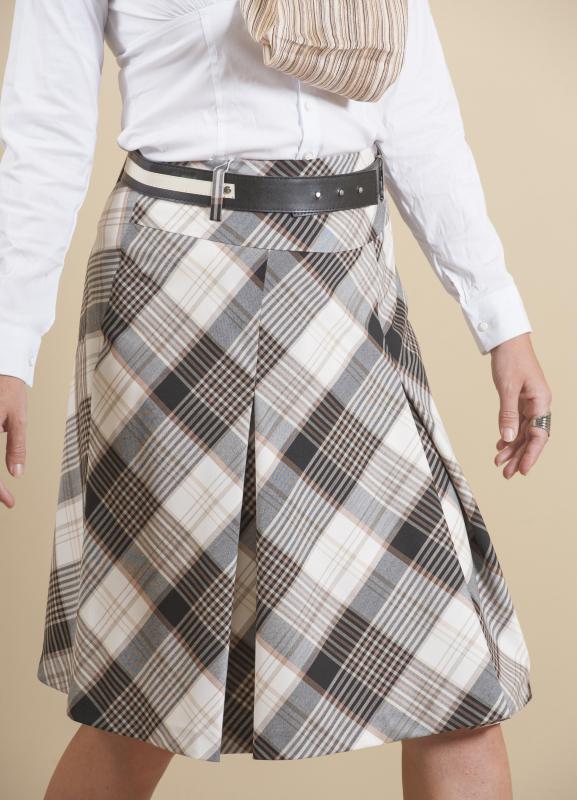
![Many school uniforms feature plaid or tartan patterns.]() By: sdennessMany school uniforms feature plaid or tartan patterns.
By: sdennessMany school uniforms feature plaid or tartan patterns. -
![Uniform cleaning needs might be hard on a family with limited means.]() By: dutourdumondeUniform cleaning needs might be hard on a family with limited means.
By: dutourdumondeUniform cleaning needs might be hard on a family with limited means. -
![School uniforms often make students feel like they are conforming.]() By: Paul VintenSchool uniforms often make students feel like they are conforming.
By: Paul VintenSchool uniforms often make students feel like they are conforming. -
![Schools without uniforms allow students to express their individuality and creativity through their clothing.]() By: Andres RodriguezSchools without uniforms allow students to express their individuality and creativity through their clothing.
By: Andres RodriguezSchools without uniforms allow students to express their individuality and creativity through their clothing. -
![Public schools typically do not require uniforms.]() By: GorillaPublic schools typically do not require uniforms.
By: GorillaPublic schools typically do not require uniforms. -
![School uniforms can make students feel socially equal to their peers.]() By: michaeljungSchool uniforms can make students feel socially equal to their peers.
By: michaeljungSchool uniforms can make students feel socially equal to their peers.





Discussion Comments
To those that claim uniforms reduce the individuality of a person I must say that they are wrong. Unless the dress code becomes so strict that it's completely impossible to twist it, you can always find ways to show your personality through those small twists on it.
Of course, to do it you must have a personality to begin with. It is extremely easy to give the impression of being special and unique when you can wear anything but to do so when your choices are limited is when you show you are special and creative -- traits that benefit everybody.
Trying to find any kind of relationship, either as a pro or as a con, between bullying and uniforms is completely absurd and meaningless since bullies do not care about how you dress, but about how easy it is to make you a victim. I know that from personal experience since I was bullied, in both schools with and without uniforms, until I decided enough was enough and put a stop to it in a non-violent yet painful way (for the bullies of course).
Same about economic cost. The problem is not about the uniform being cheaper or more costly, as that depends on the cost of whole uniforms. If the school is decent enough they will make them affordable so even the poor students can pay for them. If the school (like some elitist schools I know) uses the excuse of the uniform to prevent poor families from attend, then the uniform is just an excuse to fake being open to all, but making it impossible for the poor to attend.
Truth to be told, the idea of having to wear a school uniform is positive, but how it is implemented it is what makes it an excellent idea or the worst possible nightmare for those who aren't able to wear it, either because of costs, because of it being too strict, or because they have no personality to imbue into their uniform and way to dress.
In fact, uniforms are like nearly everything in life. For example, a knife is a great tool that helps in a lot of scenarios but can also be used to kill. It is not the knife or the uniform what's wrong/evil but how we use them.
@anon988432 -- I believe that school uniforms should not be allowed because some people express themselves by the way they dress. As a mother of 13, I think that school uniforms would make it easier when back to school time rolls around, but I think it is more fun for the kids to dress how they want. As long as there aren't any vulgar or inappropriate writing or symbols.
I think that schools should require uniforms because It would help kids fit in at school. At school I notice many kids who don't wear "cool" clothes and get bullied for it, I think that having uniforms would help change that because everyone is wearing the same thing. But I could also see it both ways, because many kids try to express themselves with what they wear. But many kids express themselves to much by maybe violating the dress code by wearing very short shorts. So I believe that every school should have school uniforms. Also It would depend on what kind of uniforms, like if it was a suit for the boys I know from experience that suits often give a confidence boost. Last school uniforms look pretty cool most of the time and it wouldn't violate any dress codes.
I think school uniforms can be good or bad. It just depends on the school and its uniform.
I don't think that schools should wear uniforms. It doesn't show off their personality and everyone looks the same and you can get confused on who each other is.
You would still have to pay for clothing that's not related to school. Not exactly the best for cost.
i don't think that uniforms work because wearing the same thing as everyone else doesn't improve reading or math. kids should be able to wear what they want to wear because it builds character.
I agree with school uniforms. It is sad that there are dress codes in place at all schools, yet only a majority of the student bodies are made to comply. Dress codes are for everyone, not just those who lack the ideal bodies. There are too many definitions of "what is too short" or inappropriate. School uniforms may eliminate these things.
As a mother of five daughters, my children do not wear uniforms, but I wish they did. It would be cheaper, less stressful for me and the my girls, and i feel that their grades would be better.
I hate school uniforms. I want to learn about sewing just so I can make them fit right. School uniforms are no fair. I think the studies on the cons are right. I have already gotten my ears gauged. I want to get a tattoo. I'm in eighth grade. What does that say to you?
School uniforms are a big slap in the face to the people that served our country for our freedom of choice.
my school had school uniforms and it didn't work out.
i figure out that school uniforms don't work at all because many students will find a way to tease and bully other students. also the behavior will not reduce because students are bad anyway and learning will not improve at all because students just day dream all day.
I think school uniforms are stupid. They don't even work to do what they are supposed to do, and they are therefore a bad idea.
I think it is a good idea to have a school uniform. I remember one school having just a lightweight dress coat for girls. They could still wear regular cloth underneath, just have the dress over it.
The reason it worked well was because there was less focus on what to wear, and in particular it was helpful for those whose families did not have money to splurge on the latest fashion. There is still plenty of time to wear fun cloth after school and on weekends. I think wearing uniforms balances life better.
Post your comments