
At WiseGEEK, we're committed to delivering accurate, trustworthy information. Our expert-authored content is rigorously fact-checked and sourced from credible authorities. Discover how we uphold the highest standards in providing you with reliable knowledge.
What are the Most Common Symptoms of a Belly Button Hernia?
A belly button hernia, or navel hernia, occurs when part of the intestines push through the abdominal wall at the front of the waist. While this type of hernia occurs most often in newborn babies, it can happen to people of all ages. One of the most common symptoms is a large bulge around the belly button, along with red, highly sensitive skin in the abdominal area. Often, individuals will experience pain that gradually increases and is localized to the belly button or abdomen.
One of the most common symptoms of a navel hernia is a large bulge around the belly button for which the person affected is unable to provide an explanation. While this bulge may be most obvious during periods of hard work, such as when lifting, coughing, pushing, or performing other similar activities, it will usually be visible at all times. In many cases, the bulge starts relatively inconspicuously, but increases in size when left untreated. This is typically the first symptom of a hernia, and is often the way that it is initially diagnosed.

A belly button hernia may also cause the skin around the belly button to become red and sensitive. In addition, those affected with a hernia may notice that the skin slowly begins to increase in temperature, and at times may even feel hot to the touch. Those who suffer from these symptoms may not always recognize it as being linked to a hernia, and because of this, they may develop serious complications. In general, changes in skin color, temperature, or sensitivity often require medical attention, as they can be indicative of a serious medical condition.

People with this condition may experience high amounts of pain on or around the belly button. In most cases, this pain starts relatively slowly, and increases in intensity over time. The pain is usually quite localized and often does not radiate far from its point of origin. Complete belly button hernia repair is usually required for this pain to completely dissipate, though in some cases, over-the-counter or prescription painkillers may provide some relief.
AS FEATURED ON:
AS FEATURED ON:









-
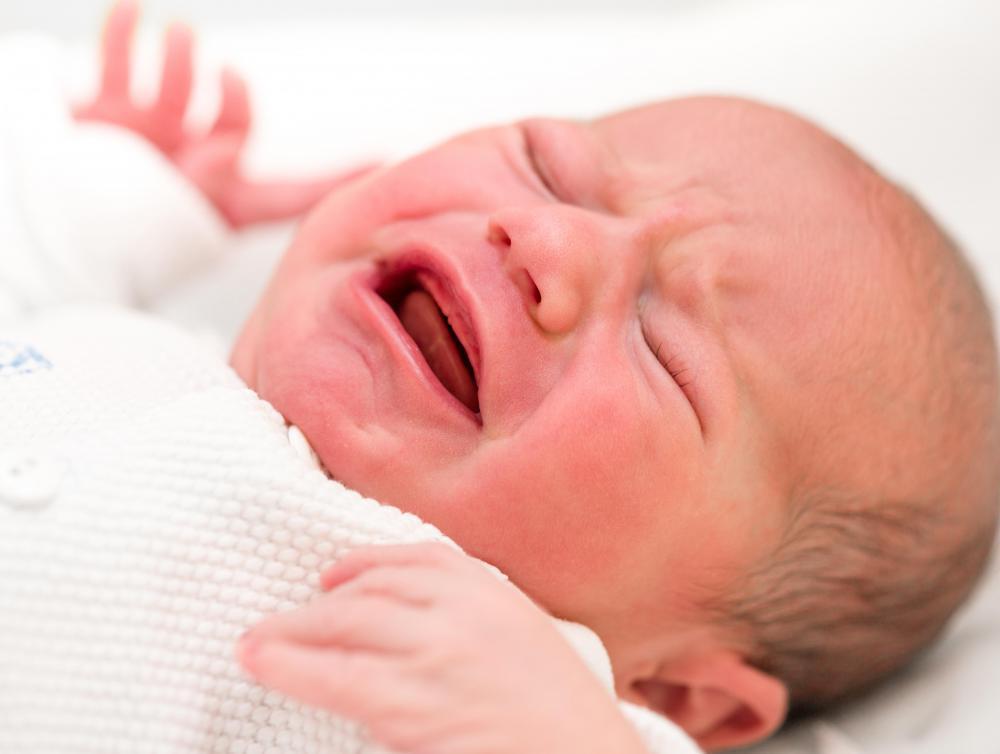
![Belly button hernias occur most often in newborn babies.]() By: artushBelly button hernias occur most often in newborn babies.
By: artushBelly button hernias occur most often in newborn babies. -
![A large bulge around the belly button is the most obvious symptom of a belly button hernia.]() By: Monkey BusinessA large bulge around the belly button is the most obvious symptom of a belly button hernia.
By: Monkey BusinessA large bulge around the belly button is the most obvious symptom of a belly button hernia. -
![A large bulge can often be seen under the skin near the belly button in an infant with an umbilical hernia.]() By: massimhokutoA large bulge can often be seen under the skin near the belly button in an infant with an umbilical hernia.
By: massimhokutoA large bulge can often be seen under the skin near the belly button in an infant with an umbilical hernia. -
![A belly button hernia will cause large amounts of pain around the belly button.]() By: krivinisA belly button hernia will cause large amounts of pain around the belly button.
By: krivinisA belly button hernia will cause large amounts of pain around the belly button.



Discussion Comments
@shell4life – Yes, it's possible. My aunt had to have belly button hernia surgery, and her doctor said that her weight and her near constant constipation caused the hernia.
He told her that anything that increases the pressure in the intestines can potentially cause a belly button hernia. I'm sure that her risk was greater because of her weight, but the constipation did contribute to it.
Have you tried simply adding more fiber to your diet? I would definitely recommend trying to treat the problem before it causes a much bigger one.
Being constipated for a long time can cause belly button pain. I used to suffer from this often, and the pain would be severe.
I've never known anyone who has had a belly button hernia operation, but I'm a little afraid that my frequent constipation might cause me to have an intestinal hernia in this area someday. Does anyone know if this is possible?
@Perdido – There are several things that could cause pain around the belly button. A doctor would want to eliminate all of them before doing any hernia surgery, I'm sure.
I had intense pain to one side of my belly button, but my kidneys were causing it. I have polycystic kidney disease, and one of my cysts had ruptured. The pain can occur anywhere in my abdomen, my sides, or my back.
Like you, I didn't have a bulge. You really should see a doctor. You might have some sort of condition or infection that needs to be treated.
What if you only have one of the belly button hernia symptoms? I have pain around my belly button that is pretty intense, but I don't have a bulge or red skin. I haven't done any heavy lifting or anything, either.
Could it be something other than a hernia? Is there any other illness associated with belly button pain?
Post your comments