
At TheHealthBoard, we're committed to delivering accurate, trustworthy information. Our expert-authored content is rigorously fact-checked and sourced from credible authorities. Discover how we uphold the highest standards in providing you with reliable knowledge.
What are the Most Common Side Effects of Pneumonia?
 Jessica Ellis
Jessica Ellis
Jessica Ellis
Pneumonia is an infection or inflammation of the lungs that may have widespread physical effects. The disease may be difficult to treat in some instances, particularly if the infection is viral in nature. Knowing the side effects of pneumonia can help identify the disease as well as let sick people take proper precautions and measures to maintain health until the illness subsides.
Many of the side effects associated with pneumonia are related to the respiratory system. People with pneumonia may at first believe they have a a nasty but simple cold, thanks to persistent coughing and shortness of breath. If these symptoms begin to include a fever or are accompanied by intermittent chest pain, it may be critically important to see a medical professional at once.

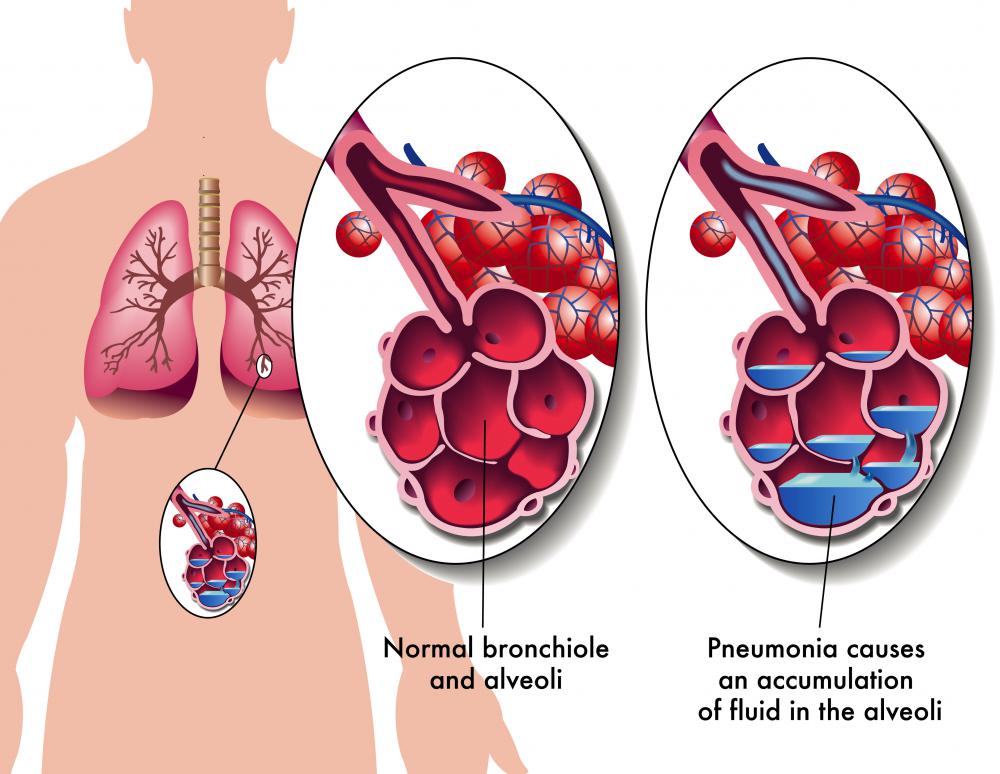
Most people recover from pneumonia, but lingering and even permanent side effects can occur in some cases. Most serious side effects of pneumonia occur in situations where the infection goes untreated or is complicated by underlying lung disease. If the infection gains momentum, it can quickly spread to other parts of the body. In some cases, the infection may spread to the air sacs, making breathing extremely difficult. Bacteria may also enter the bloodstream and travel to other organs, causing secondary and sometimes life-threatening infections.

People with pneumonia may be in danger of developing abscesses on the lungs. These are pus-filled sacs that grow over damaged or destroyed tissue. The sacs can sometimes hemorrhage, causing bleeding in the lungs. Healthcare professionals may choose to treat abscesses with antibiotics, and sometimes they drain them if they do not respond to drug therapy.

Though rare, one of the most dangerous side effects of pneumonia is a buildup of fluid between the two thin membranes that coat the lung. Called pleural effusion, the fluid may start as a thin sterile liquid but can also develop into pus, at which point it is called empyema. Advanced cases may leave permanent scarring on the membranes even after the infection is successfully treated.

Since many forms of pneumonia are treated with drug therapy, it is also important to note that some side effects of this condition may in fact be reactions to the drugs. Depending on the type of medication used, patients may experience nausea, muscle aches and fatigue, or dizziness and loss of appetite. It is important for patients to ask about side effects associated with any prescribed medication, and also to be aware of any symptoms that may indicate an allergic reaction to the drug.
Jessica Ellis
With a B.A. in theater from UCLA and a graduate degree in screenwriting from the American Film Institute, Jessica is passionate about drama and film. She has many other interests, and enjoys learning and writing about a wide range of topics in her role as a TheHealthBoard writer.
Learn more...
Jessica Ellis
With a B.A. in theater from UCLA and a graduate degree in screenwriting from the American Film Institute, Jessica is passionate about drama and film. She has many other interests, and enjoys learning and writing about a wide range of topics in her role as a TheHealthBoard writer.
Learn more...AS FEATURED ON:
AS FEATURED ON:


-
![Pneumonia can begin with symptoms similar to a cold, such as persistent coughing.]() By: djtaylorPneumonia can begin with symptoms similar to a cold, such as persistent coughing.
By: djtaylorPneumonia can begin with symptoms similar to a cold, such as persistent coughing. -
![Pleural effusion is a rare but dangerous side effect of pneumonia.]() By: Dr CanoPleural effusion is a rare but dangerous side effect of pneumonia.
By: Dr CanoPleural effusion is a rare but dangerous side effect of pneumonia. -
![Many of the side effects associated with pneumonia are related to the respiratory system.]() By: vbalehaMany of the side effects associated with pneumonia are related to the respiratory system.
By: vbalehaMany of the side effects associated with pneumonia are related to the respiratory system. -
![Pneumonia causes the alveoli, the tiny air sacs in the lungs, to become inflamed and filled with fluid.]() By: rob3000Pneumonia causes the alveoli, the tiny air sacs in the lungs, to become inflamed and filled with fluid.
By: rob3000Pneumonia causes the alveoli, the tiny air sacs in the lungs, to become inflamed and filled with fluid. -
![Shortness of breath, accompanied by fever or chest pain, may be a sign of pneumonia.]() By: DURIS GuillaumeShortness of breath, accompanied by fever or chest pain, may be a sign of pneumonia.
By: DURIS GuillaumeShortness of breath, accompanied by fever or chest pain, may be a sign of pneumonia. -
![Children experiencing inflamed nasal and throat passages may be more susceptible to developing a secondary condition, such as pneumonia.]() By: julaszkaChildren experiencing inflamed nasal and throat passages may be more susceptible to developing a secondary condition, such as pneumonia.
By: julaszkaChildren experiencing inflamed nasal and throat passages may be more susceptible to developing a secondary condition, such as pneumonia.




Discussion Comments
@literally-- Costochondritis is another common side effect of pneumonia. This is when lung cartilage (costal cartilage) becomes inflamed.
If you're already being treated for pneumonia, then don't worry. Once the pneumonia is treated, this inflammation will go away as well. It's temporary.
It's also possible to develop pleurisy from pneumonia. This is the inflammation of pleural cavity lining of the lung.
I just found out that I have costochondritis because of pneumonia. I won't get to talk to my doctor until tomorrow morning. What is this exactly? Is it dangerous?
Thankfully, my aunt hasn't developed any of these more severe complications after pneumonia. But her immune system seems to have suffered.
The doctor said that her lungs are very sensitive now and she has to be very careful because even a minor cold can cause her to develop pneumonia again. And she does seem to be more open to respiratory infections than before.
Post your comments