
At TheHealthBoard, we're committed to delivering accurate, trustworthy information. Our expert-authored content is rigorously fact-checked and sourced from credible authorities. Discover how we uphold the highest standards in providing you with reliable knowledge.
What are the Most Common Reasons for Ear Tubes in Adults?
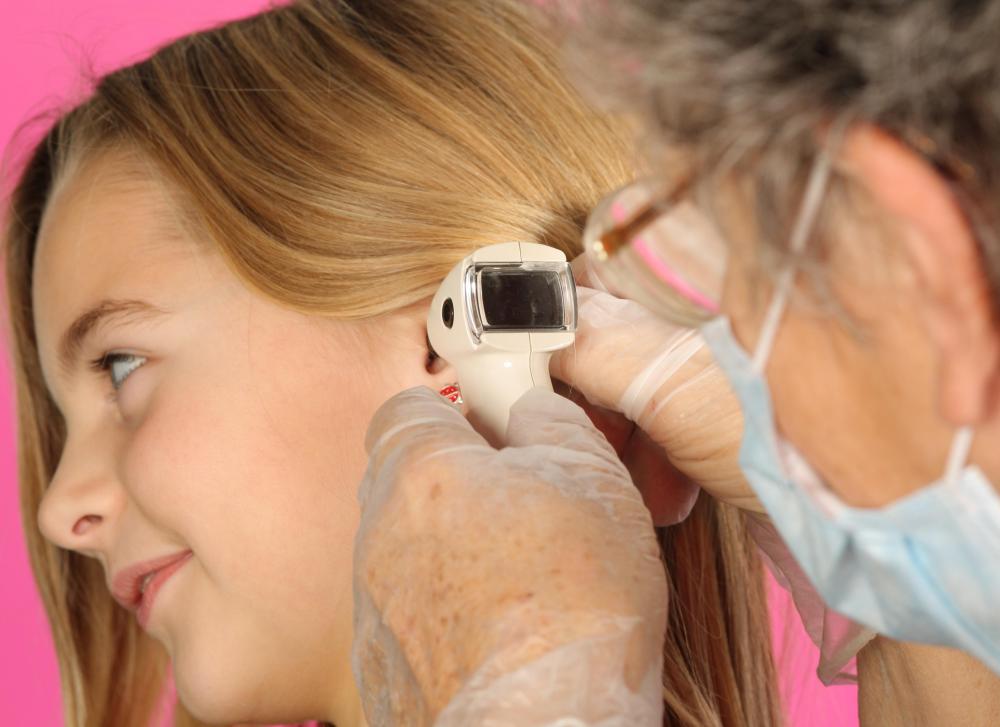
The most common reason for ear tubes in adults is a dysfunction of the Eustachian tubes, called barotrauma. The condition is caused by unequal air pressure behind the eardrum and outside of the ear, which causes pain. Another reason is repeated ear infections, although this is more common for children. Ear infections can be caused by viruses or bacteria and the buildup of fluid in the ear canal. Ear tubes are tiny, hollow cylinders inserted into the eardrum to allow air into the middle ear, and the procedure is done during outpatient surgery that lasts about 10 to 15 minutes.
Eustachian tube dysfunction is pressure-related pain caused by a significant difference in air pressure inside and outside the ear. The condition prevents the tube from opening as it normally would when swallowing or yawning, so air cannot flow in and out of the middle ear. Ear tube surgery might be recommended for the condition if decongestants or antibiotics are ineffective or if the person is going to be flying. Inserting these tubes allows air to flow in and out of the middle ear to equalize the pressure.

Some of the causes of dysfunction include allergies, colds, ear infections, or narrow Eustachian tubes. It can also occur because of activities that involve altitude changes, such as scuba diving, using an elevator, or flying. The symptoms include dizziness, ear pain and discomfort, and slight hearing loss. It can also make the ear feel clogged or stuffy, and a person might have difficulty getting the ear to pop.

Frequent ear infections are another reason for medical professionals to recommend ear tubes for adults, although they are not as common in adults as for children because of changes to the anatomy of the ear. Adults have a steeper angle to the Eustachian tube, which keeps fluid from building up and makes it less likely for viruses and bacteria that enter through the nose to migrate to the ear. Adults who are susceptible to ear infections can be inserted to prevent future infections by allowing fluid to drain from the middle ear and keeping the ear ventilated.

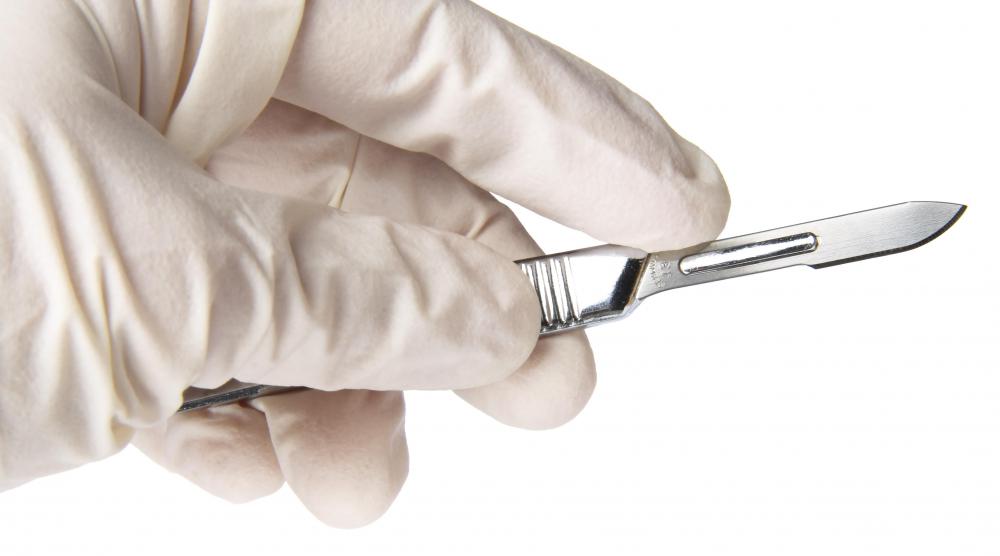
A medical professional can generally insert ear tubes in adults in an office setting. The quick procedure entails making a tiny incision in the eardrum with a laser or scalpel, suctioning out the fluid in the middle ear, and putting the artificial tube in the hole. Typically, antibiotic eardrops will be used in the ear, followed by plugging it with cotton. Recovery from the surgery takes about an hour, but there is usually no postoperative pain.
AS FEATURED ON:
AS FEATURED ON:


-
![A scalpel may be used during ear tube surgery.]() By: Marina LohrbachA scalpel may be used during ear tube surgery.
By: Marina LohrbachA scalpel may be used during ear tube surgery. -
![A bacterial infection occurs when the Eustachian tubes become clogged and cannot let fluid drain from the middle ear.]() By: Jenny ThompsonA bacterial infection occurs when the Eustachian tubes become clogged and cannot let fluid drain from the middle ear.
By: Jenny ThompsonA bacterial infection occurs when the Eustachian tubes become clogged and cannot let fluid drain from the middle ear. -
![Yawning can help relieve eustachian tube dysfunction.]() By: chunumunuYawning can help relieve eustachian tube dysfunction.
By: chunumunuYawning can help relieve eustachian tube dysfunction. -
![Chronic ear infections can lead to a recommendation for ear tubes in both adults and children.]() By: philippe DevanneChronic ear infections can lead to a recommendation for ear tubes in both adults and children.
By: philippe DevanneChronic ear infections can lead to a recommendation for ear tubes in both adults and children. -
![Frequent ear infections may necessitate ear tubes for adults.]() By: Lisa F. YoungFrequent ear infections may necessitate ear tubes for adults.
By: Lisa F. YoungFrequent ear infections may necessitate ear tubes for adults. -
![Dysfunction of the Eustachian tubes may occur as a result of a common cold.]() By: Von SchonertagenDysfunction of the Eustachian tubes may occur as a result of a common cold.
By: Von SchonertagenDysfunction of the Eustachian tubes may occur as a result of a common cold.




Discussion Comments
I have a condition call otitis media. I've had numerous ear infections growing up and have a permanent hole in my ear drum, which prohibits me from doing any type of water activity , swimming etc.
I am at the point right now where my right ear is extremely uncomfortable. A lot of humming sound and pressure issues. So hard to explain! Feels as if the ear drum flutters when i talk resulting in an uncomfortable feeling. It doesn't hurt, but extremely annoying. I am not a physician, but I do know my body and i feel as if I might need some medical intervention, possibly a tube or a look into my Eustachian tube or both. Help!
Having your ear drums cut and having a foreign object placed in them will cause both discomfort and pain. The eardrum has to heal around the incision. Your coworker may have a number of problems associated with her ears that will cause pain, hearing loss, pressure and slowed healing, due to the eardrum being cut.
Any type of surgery will cause pain and discomfort and depending on what type of surgery you have, the loss of functioning and mobility with the associated body part. You are not this employee's supervisor or physician and you have no place questioning someone who had a medical procedure conducted for the betterment of their health. You are not a lie detector; you are a person just like your coworker who can succumb to illness or injury. Be more concerned about your personal character, because it is apparent in this post that you aren't concerned about this individual's pain or health, just whether you think they are lying or not.
Don't be silly or inappropriate; just be compassionate towards another person in pain. You might surprise yourself if you show kindness and professionalism verses what the bottom line innuendo of your question was really about. Be honest, use good judgment and don't question another's integrity (honesty). Question your own.
It indeed hurts and she may not have been able to hear very well
while wearing the headset. While tubes will help tremendously with ear infections, after inserted the ear can still be draining infection for three to five days, along with pain.
Yes, she can still have pain!
My coworker told me she had to have tubes in an ear, and the next day said she couldn't wear the headset for work in our drive-through. Does it really hurt that bad that she can't wear the headset? I can't tell if she lying or not.
Post your comments