
At WiseGEEK, we're committed to delivering accurate, trustworthy information. Our expert-authored content is rigorously fact-checked and sourced from credible authorities. Discover how we uphold the highest standards in providing you with reliable knowledge.
What Are the Most Common Causes of Swollen Lymph Nodes in the Throat?
The most common causes of swollen lymph nodes in the throat include a cold, tonsillitis, strep throat, or an ear infection that spreads. Other conditions, including cancer, human immunodeficiency virus (HIV), and mononucleosis, can also cause lymph node swelling, but these conditions are much less common. The inflammation often responds to treatment with home remedies or antibiotics, depending on the cause, and the swelling typically goes down within a couple of weeks.
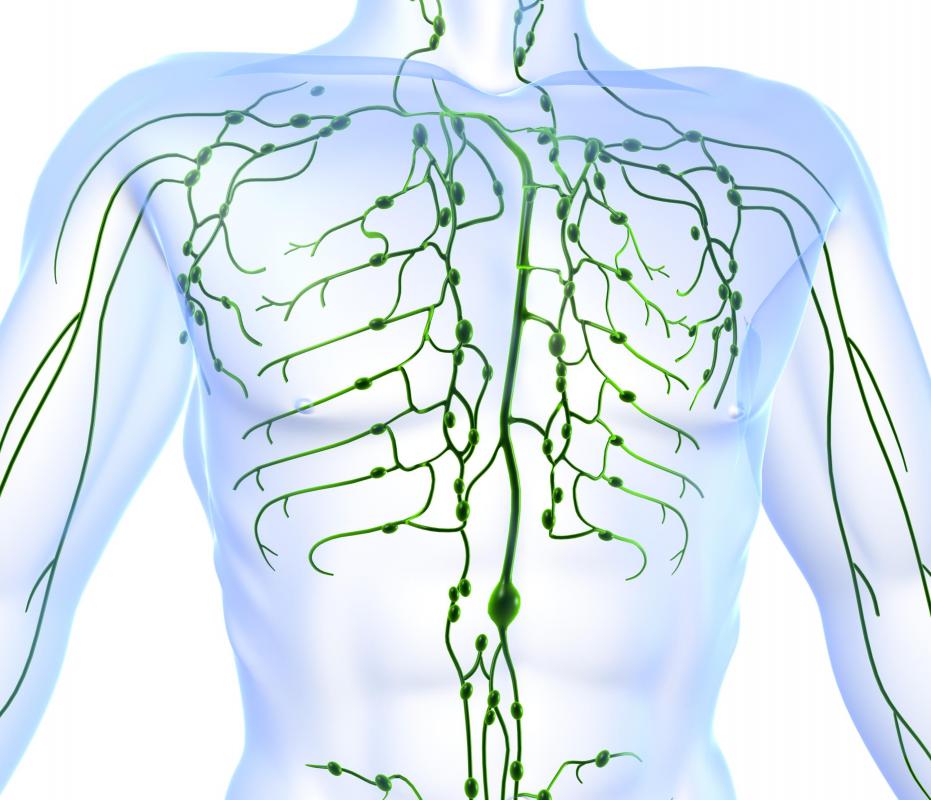
Several groups of lymph nodes exist throughout the body as part of the human lymphatic system. They contain clusters of white blood cells, called lymphocytes, that play an important role in the immune system: they create antibodies that fight viral and bacterial infections. When the immune system attempts to fight these foreign substances, the lymphocytes multiply. If an infection persists, it can spread and might cause swollen lymph nodes in various parts of the body.

The common cold frequently leads to swollen lymph nodes in the throat, along with discomfort, fever, and runny nose if an upper respiratory infection is involved. The lymph nodes in the neck might feel tender in someone with a cold. Warm compresses and over-the-counter pain relievers may help relieve symptoms.
Strep throat can also cause swollen lymph nodes. A person with this condition might have trouble swallowing, a headache, and a stiff neck. Healthcare professionals commonly recommend extra fluids and rest, along with antibiotics, to treat strep throat. Gargling with warm salt water helps some patients feel better, as can using numbing sprays used to deaden pain. If symptoms last more than four days, medical treatment should be sought.

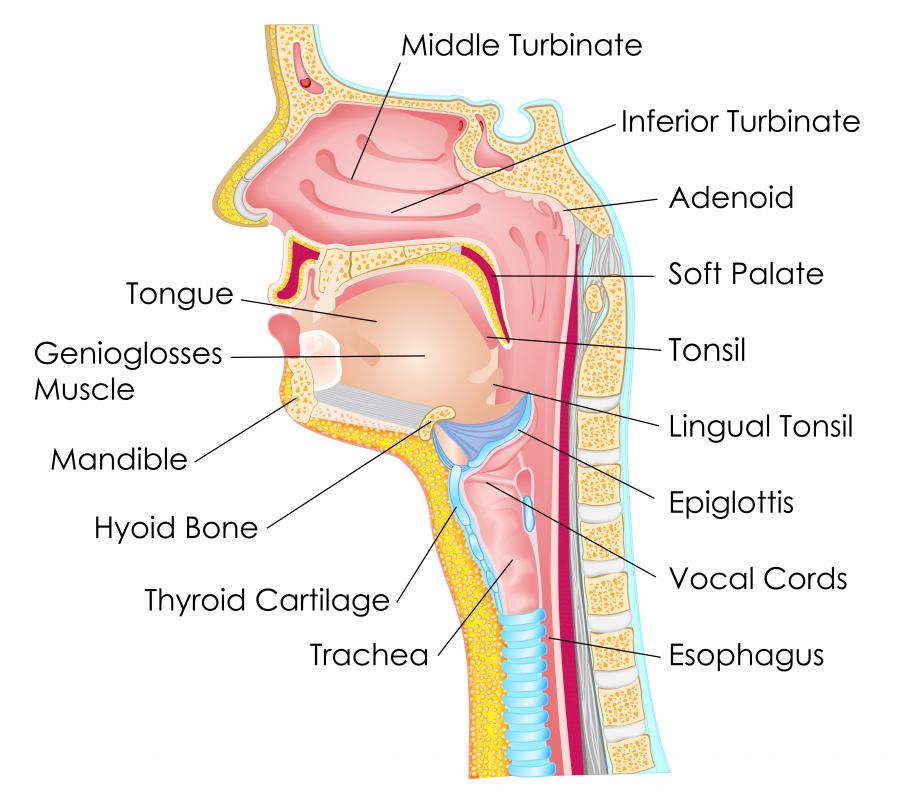
Lymph nodes in the tonsils might also become inflamed and swollen when infected. These nodes drain fluid to the back part of the throat. Infected tonsils typically appear red and might develop white spots, indicating infection; other symptoms include a change in the voice and bad breath. Mild tonsillitis may not need any special treatment, but if a throat culture indicates a serious infection — such as strep — a medical professional might prescribe antibiotics. Surgical removal of the tonsils might be necessary if tonsillitis becomes chronic.

Lymphomas, which are cancers of the lymphatic system, can cause the lymph nodes to become enlarged; swollen lymph nodes in the throat are a common symptom of both Hodgkin's and non-Hodgkin's lymphomas. Non-Hodgkin's lymphoma, which is actually a group of 16 different diseases, is characterized by night sweats, weight loss, fatigue, and fever. Hodgkin's lymphoma is less common than the non-Hodgkin forms, and has many of the same symptoms. Both forms of cancer can be treated effectively if diagnosed early.

Any disorder that affects the immune system might hinder the body's ability to fight off infection. HIV can lead to frequent infections, causing swollen lymph nodes anywhere in the body. It also increases the risk for certain forms of cancer, including lymphomas. Medical professionals usually prescribe medication to ease symptoms in HIV patients.
AS FEATURED ON:
AS FEATURED ON:









-
![The lymphatic system.]() By: Sebastian KaulitzkiThe lymphatic system.
By: Sebastian KaulitzkiThe lymphatic system. -
![Lymph nodes usually become swollen due to bacterial or viral infections.]() By: Klaus EppeleLymph nodes usually become swollen due to bacterial or viral infections.
By: Klaus EppeleLymph nodes usually become swollen due to bacterial or viral infections. -
![Swollen lymph nodes are one of the first signs of illness.]() By: ShakzuSwollen lymph nodes are one of the first signs of illness.
By: ShakzuSwollen lymph nodes are one of the first signs of illness. -
![Strep throat can cause swollen lymph nodes in the throat.]() By: DDRockstarStrep throat can cause swollen lymph nodes in the throat.
By: DDRockstarStrep throat can cause swollen lymph nodes in the throat. -
![Bacterial infections that cause swollen lymph nodes may respond well to antibiotic treatment.]() By: NorGalBacterial infections that cause swollen lymph nodes may respond well to antibiotic treatment.
By: NorGalBacterial infections that cause swollen lymph nodes may respond well to antibiotic treatment. -
![A throat culture may be necessary to determine the presence of strep throat.]() By: JPC-PRODA throat culture may be necessary to determine the presence of strep throat.
By: JPC-PRODA throat culture may be necessary to determine the presence of strep throat. -
![The presence of cancer may lead to swollen lymph nodes.]() By: snapgalleriaThe presence of cancer may lead to swollen lymph nodes.
By: snapgalleriaThe presence of cancer may lead to swollen lymph nodes.


Discussion Comments
I was unlucky enough to get mono when I was in college. So not fun. My lymph nodes were so swollen, I could hardly talk or swallow. It felt like I could hardly breathe, either. Now that was one miserable six weeks or so.
I had to take a round of prednisone to help with the swelling in my throat. Fortunately, I had changed colleges and was too late to register for the winter quarter where I was going, so I was at home, and didn't have to miss any classes, which was a good thing. I was one sick puppy. I got over it, but my lymph nodes were tender for a while.
My mom worked for a doctor, and I know when I got a sore throat, the first thing she always checked on was to see if my lymph nodes in my neck were swollen. If they were, she would usually draw blood for a white blood cell count. She was the office lab tech.
I remember having really swollen lymph nodes one time. I had a terrible case of tonsilitis and was running a fever, as well. I didn't have strep, fortunately, but I was on antibiotics for several days. I remember the doctor looking at my throat and saying I had the ugliest tonsils he had ever seen.
Post your comments