
At TheHealthBoard, we're committed to delivering accurate, trustworthy information. Our expert-authored content is rigorously fact-checked and sourced from credible authorities. Discover how we uphold the highest standards in providing you with reliable knowledge.
What are the Most Common Causes of Lymph Node and Neck Pain?
The most common causes of lymph node and neck pain are infection of some variety, though swelling and inflammation owing to injury elsewhere may also be to blame. At least in humans, some of the most prominent lymph nodes are located just behind the sinuses and in the soft tissues of the neck and upper throat. Sinus and respiratory tract infections frequently cause pain here, as do autoimmune conditions like the Human Immunodeficiency Virus (HIV) or the more advanced Acquired Immunodeficiency Syndrome (AIDS). Certain types of cancers can also cause pressure and pain. Most medical experts recommend that anyone who experiences lymph or neck pain that lasts for more than a few days get evaluated by a trained professional to rule out more serious conditions, or to begin treatment if any such conditions are found.
How Lymph Nodes Work

Lymph nodes are part of the lymphatic system and their main job is to act as a filtering system for the body. They are basically made up of reticular connective tissue that is filled with lymphocytes, substances that trap bacteria and viruses that may be circulating in the body. This capture and holding process is one of the main sources of lymph node and neck pain. As the lymphocytes multiply as a result of a bacterial or viral infection, swelling and tenderness can occur.

There are six types of lymph nodes in the neck region. The anterior cervical lymph nodes are in the back of the neck and help to drain the tonsils and thyroid gland, whereas the posterior cervical lymph nodes extend from the middle of the head down to the shoulders. These are often some of the first to be checked by a care provider if he or she suspects a sinus infection. The tonsillar lymph nodes are in the back of the throat and help to drain the pharynx and tonsils.

Under the jaw, the sub-mandibular lymph nodes drain the mouth's floor. Finally, the supraclavicular lymph nodes, which are above the collar bones, assist in draining the chest in case of a respiratory infection. People may feel pain any time these get clogged, backed up, or are simply working at capacity, though in healthy people this usually passes relatively quickly.
Sinus and Throat Infections

One of the most common causes of this sort of pain is a sinus infection, which is when the sinuses — part of the nasal cavity — become inflamed due to the presence of some bacteria. While the most common form of pain is associated with posterior cervical lymph nodes, any one of the six types of neck lymph nodes can cause pain elsewhere in the head, neck, and chest. Impacted nodes can be situated pretty much anywhere depending on the severity of the infection and the body's ability to fight it off.
Pressure and Swelling

Another reason for neck pain with swollen lymph nodes is pressure. This can be owing to infection or inflammation elsewhere in the respiratory tract that stresses out the tissues along the nodes, as well as injury or damage to any part of the face or neck. A broken nose is a good example, as is any sort of bruising around the neck or upper chest, like may result from a car accident involving a tightly restrictive seatbelt.

When lymph nodes are swollen, they begin taking up space usually occupied by muscle. As the neck muscles are used, they press against the swollen lymph nodes, causing the increased lymphocytes to create pressure and pain. Eventually the body's immune system will destroy the bacteria or eliminate the virus and alleviate the swelling. If a more serious problem is present, though, certain medications may be needed to help bring things down.
Auto-Immune Conditions

Lymph node and neck pain can also be caused by more serious diseases like lymph node cancer. Lymph node cancer, also known as lymphoma, has a high rate of treatment success and curability, but the chances tend to go up the earlier it’s caught. Certain autoimmune conditions can also cause swelling and pain. HIV and AIDS are two examples; rheumatoid arthritis is another.
Treatment Options

Pain and swelling that is caused by the common cold or routine sinus infections will typically go away all on its own, usually within a day or so. In most cases pain related to more serious conditions only gets worse with time, though, and the swelling often increases noticeably, too. Most medical experts and care providers recommend that anyone experiencing unusual swelling or pain lasting for a week or more get checked out. Sometimes the problem may be minor, but if it’s serious getting started on treatment early can often make all the difference.
AS FEATURED ON:
AS FEATURED ON:


-
![The lymphatic system.]() By: Sebastian KaulitzkiThe lymphatic system.
By: Sebastian KaulitzkiThe lymphatic system. -
![Lymph nodes in the head and neck.]() By: AlilaLymph nodes in the head and neck.
By: AlilaLymph nodes in the head and neck. -
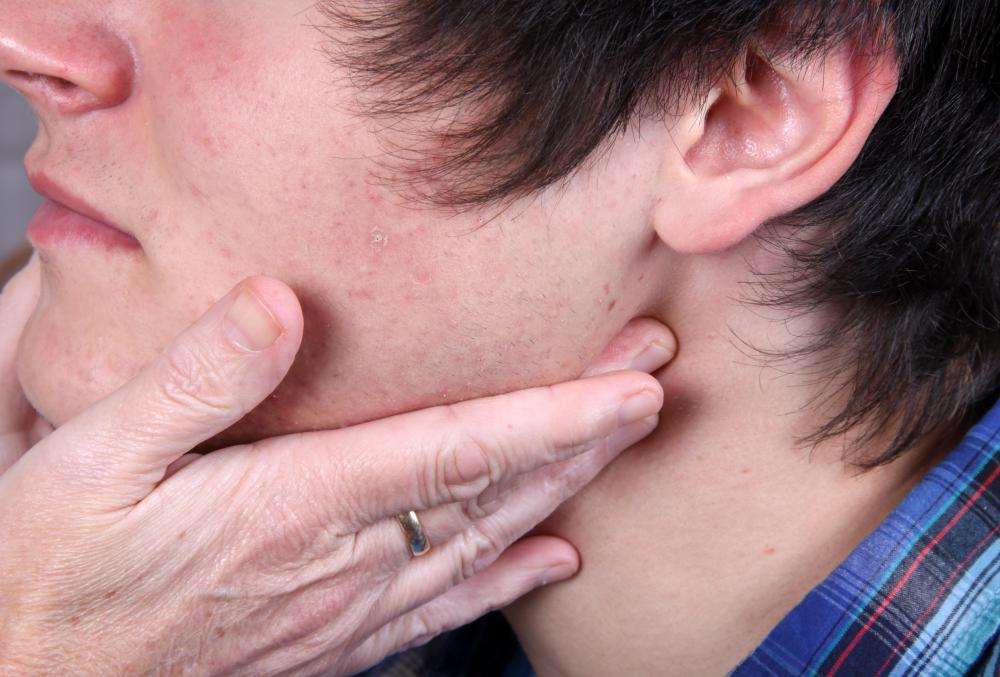
![Swollen lymph nodes may cause neck pain in some people due to pressure.]() By: Klaus EppeleSwollen lymph nodes may cause neck pain in some people due to pressure.
By: Klaus EppeleSwollen lymph nodes may cause neck pain in some people due to pressure. -
![Swollen lymph nodes are one of the first signs of illness.]() By: ShakzuSwollen lymph nodes are one of the first signs of illness.
By: ShakzuSwollen lymph nodes are one of the first signs of illness. -
![A person with lymph or neck pain that lasts more than a few days should seek medical attention.]() By: Max TacticA person with lymph or neck pain that lasts more than a few days should seek medical attention.
By: Max TacticA person with lymph or neck pain that lasts more than a few days should seek medical attention. -
![There are six types of lymph nodes in the neck region.]() By: shefkateThere are six types of lymph nodes in the neck region.
By: shefkateThere are six types of lymph nodes in the neck region. -
![Swollen lymph nodes with pain in the neck or throat is often caused by a tonsil infection.]() By: Cheryl CaseySwollen lymph nodes with pain in the neck or throat is often caused by a tonsil infection.
By: Cheryl CaseySwollen lymph nodes with pain in the neck or throat is often caused by a tonsil infection. -
![Pressure from a broken nose might cause lymph node and neck pain.]() By: Alen-DPressure from a broken nose might cause lymph node and neck pain.
By: Alen-DPressure from a broken nose might cause lymph node and neck pain. -
![When lymph nodes are swollen, they begin taking up space usually occupied by muscles.]() By: Barabas AttilaWhen lymph nodes are swollen, they begin taking up space usually occupied by muscles.
By: Barabas AttilaWhen lymph nodes are swollen, they begin taking up space usually occupied by muscles.







Discussion Comments
My neck hurts all the time. Lying down on it is brutal. I found a small lump on the back of the neck. I'm guessing this is a swollen lymph node. I have sinus issues, so maybe that's all it is. My neck sure does hurt, though -- so much that I can't sleep
I just recently found out I may have lymphoma. I found a lump in my pelvis. I also have a lump in the area of my liver. A biopsy is set for Nov. 20. I am scared. I only work part time at my job, I fear losing my benefits I just got. I am also scared of being sick and losing my job. I wish that my lump hurt, I would know that they are doing their job.
I always get a lot of pain in my neck lymph nodes, especially under the chin, when my body is fighting off a cold or the flu.
Post your comments