
At TheHealthBoard, we're committed to delivering accurate, trustworthy information. Our expert-authored content is rigorously fact-checked and sourced from credible authorities. Discover how we uphold the highest standards in providing you with reliable knowledge.
What are the Most Common Causes of Hand Swelling?
There can be quite a number of causes of hand swelling, but infection and injury in the fingers, hand, or lower arm tend to be among the most common. Inflammation of the tendons and ligaments can also play a role; tendonitis and carpal tunnel syndrome are but two examples in this category. Hormonal imbalances can contribute, too, and pregnant and menstruating women are some of the most commonly afflicted with temporary swells of both the hands and feet. It might also be the case that swelling is a symptom of a larger, often more serious problem. Liver or kidney conditions, malnutrition, and heart failure are some examples. Swelling that lasts more than a day or two is usually cause for some alarm, though a precise diagnosis can’t usually be made without a thorough medical investigation. Anyone who is worried about their symptoms is usually encouraged to see a professional as soon as possible.
Localized Infection or Injury

Swelling is a very common response to injury. When bones break, tissues get bruised, and muscles rip or tear, blood vessels rushing to the scene often swell as they try to reach the damaged area. They may also take on extra water and nutrients to bring to the injury, and the tissues surrounding the site typically also enlarge as a means of protecting the tissues as they heal. All of this can lead to outward swelling and distortion of the hand’s shape and color.

Infections can have a similar effect. A person who has infected tissues in the wrist or hand may see swelling as the body launches a fight. Sometimes the infected tissue is obvious, as is often the case when a cut or gash allows bacteria from the outside in, but some infections are strictly internal. Imbalances in the blood and lymphatic tissue are two examples.
Inflammation

Inflammatory swelling can have a variety of causes and can be chronic or acute in nature, sometimes presenting as redness, pain, local fever or impaired function of affected organs. In the hands, inflammation-related swells usually happen in response to a specific injury or stress on a muscle group. Carpal tunnel syndrome, for instance, which is a wearing down of the wrist ligaments, can sometimes lead to swelling; tendonitis, an unnatural separation of the muscle from the bone it’s attached to, is another possibility. Inflammation related to arthritis in the joints of the fingers or wrists might lead to swelling, too.
Superficial Responses to Outside Stimulation

Irritations on the skin can also sometimes cause the hands to appear swollen. Some common causes of skin swelling include skin infection, allergic reaction, insect bites, hives, cellulitis and eczema. Most of the time, the swelling will die down as the irritation subsides, and it’s usually limited to the skin; larger tissues and muscular and bone structures aren’t usually impacted.
Hormonal Imbalance

Hormones are primarily involved in chemical regulation in the body, but when they’re imbalanced swelling in the extremities can be a consequence. Pregnancy is one of the most common examples, and pregnant women frequently experience on-and-off swelling of both the hands and the feet as their hormone levels swing. This frequently also happens in the days and weeks leading up to menstruation, a phenomenon known as “pre-menstrual syndrome.” Sometimes thyroid imbalances in both women and men can produce similar swells.
As a Symptom of a Larger Condition

Not all swelling of the hands is actually related to the hands at all. Sometimes, problems elsewhere in the body can cause swelling as something of a side effect. This is most often the case in situations of major organ failure or disease, when the blood becomes thick with toxins. Normally, blood flows continually from the heart, down the arms and all the way to the fingers and back again &mash; but when there are problems, things can get more or less “stuck” in the hands, and sometimes the feet, too, which can lead to swelling and pain. Edema, an abnormal accumulation of fluid beneath the skin, in another common cause of general swelling in the extremities of the body and is typically caused by higher than normal volumes of tissue fluid in the blood.
Treatment and Diagnosis

To alleviate swelling, doctors often recommend a first-aid treatment that includes rest, ice, compression and elevation — a routine commonly known by the acronym RICE — as a short-term solution. To ice an area, bagged ice cubes or cold packs are usually placed on the swollen skin and an elastic bandage or hand towel can be used to compress the ice. The person affected by hand swelling should rest and elevate as the area is iced and compressed in order to minimize healing time if injured and to alleviate as much swelling as possible until medical attention can be sought. This treatment should not be used as a cure though, and unless the cause is clear, any indicators of hand swelling or general swelling of the body should usually be evaluated by a medical professional. A proper diagnosis usually requires blood tests to check the levels of chemicals, toxins, and hormones.
AS FEATURED ON:
AS FEATURED ON:


-
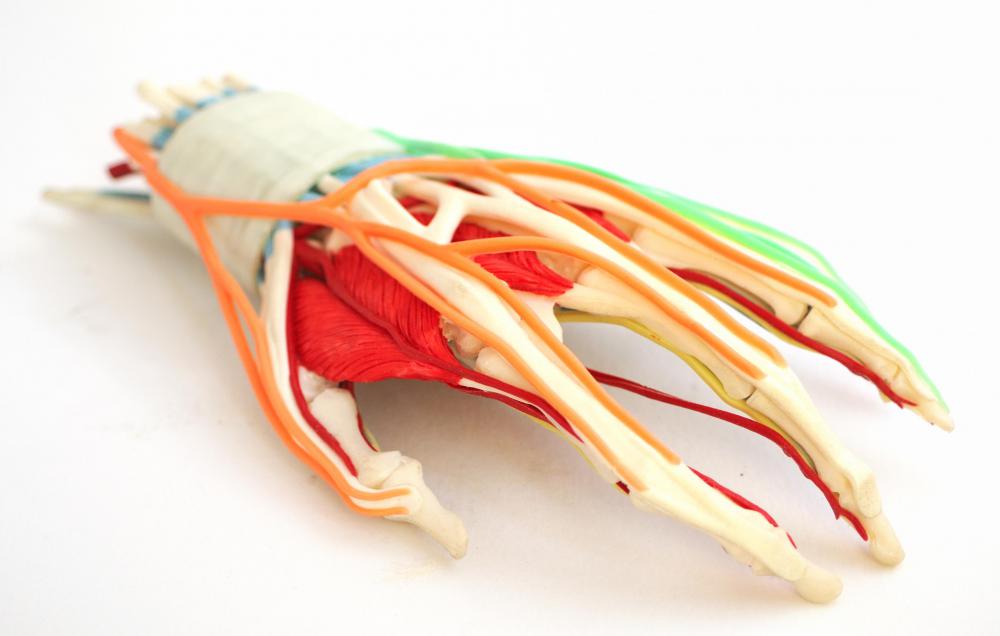
![A model of a human hand.]() By: emuA model of a human hand.
By: emuA model of a human hand. -
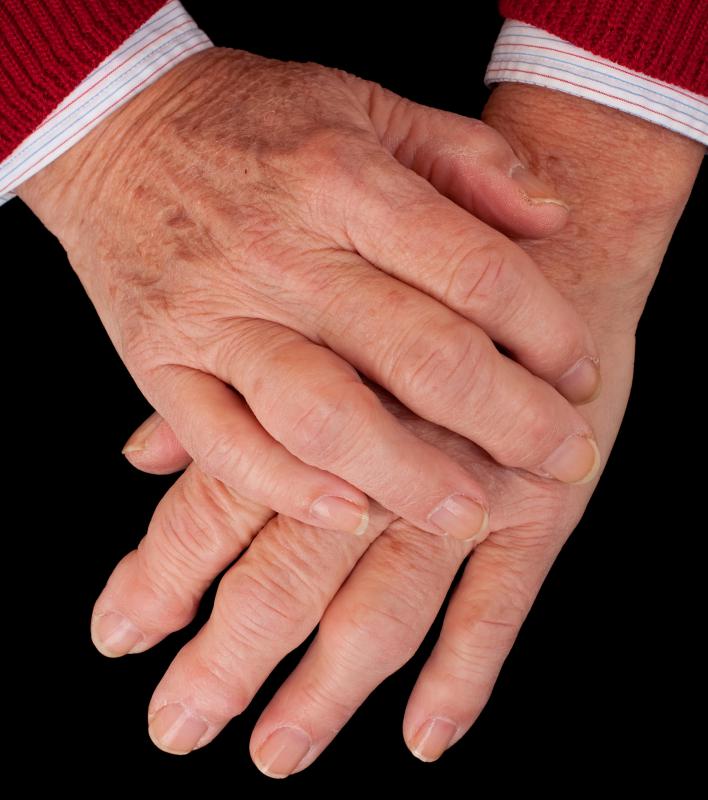
![Arthritis can cause hand swelling.]() By: Denis PepinArthritis can cause hand swelling.
By: Denis PepinArthritis can cause hand swelling. -
![Ice can help reduce hand swelling.]() By: volffIce can help reduce hand swelling.
By: volffIce can help reduce hand swelling. -
![Hives can cause hand swelling.]() By: Jürgen FälchleHives can cause hand swelling.
By: Jürgen FälchleHives can cause hand swelling. -
![Carpal tunnel syndrome, common in web programmers and other computer users, can cause swelling.]() By: Artur MarciniecCarpal tunnel syndrome, common in web programmers and other computer users, can cause swelling.
By: Artur MarciniecCarpal tunnel syndrome, common in web programmers and other computer users, can cause swelling. -
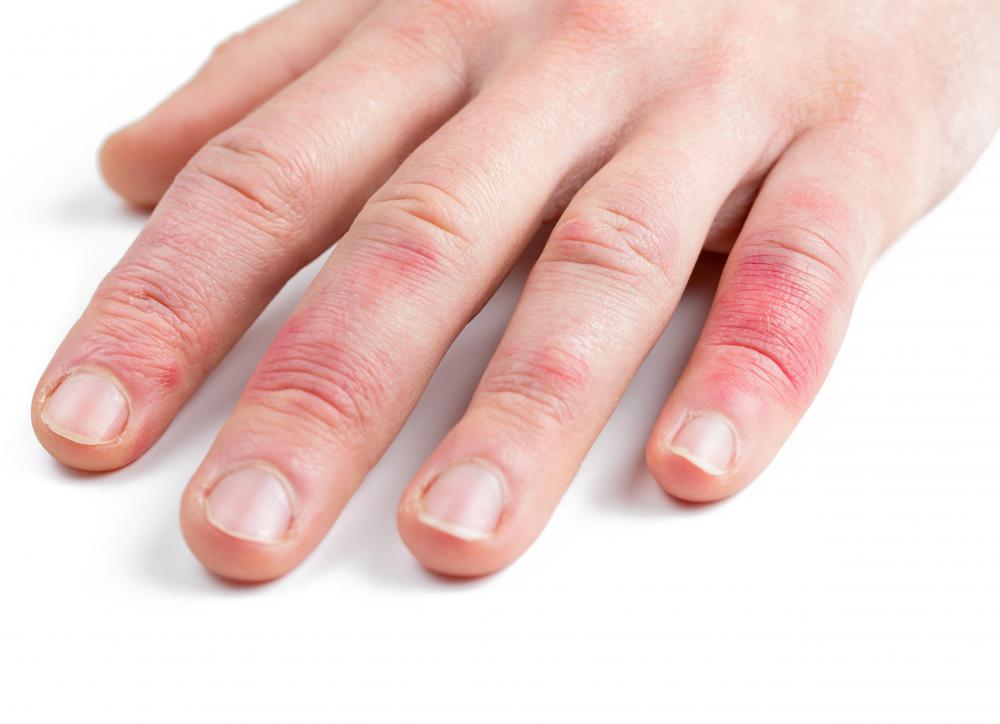
![Eczema can cause hand swelling.]() By: eyetronicEczema can cause hand swelling.
By: eyetronicEczema can cause hand swelling. -
![Unless the cause is clear, hand swelling should be evaluated by a medical professional.]() By: KalimUnless the cause is clear, hand swelling should be evaluated by a medical professional.
By: KalimUnless the cause is clear, hand swelling should be evaluated by a medical professional. -
![A hand injury can cause hand swelling and bleeding.]() By: corepicsA hand injury can cause hand swelling and bleeding.
By: corepicsA hand injury can cause hand swelling and bleeding.




Discussion Comments
I have had some hand and wrist swelling for the past few days. My doctor has diagnosed it as tendinitis of the wrist but the pain and swelling is in my hands and upper arm as well. I guess the effects are seen in the surrounding areas of the injury. I'm wearing a wrist brace which is good because it limits movement. Keeping an ice pack on my wrist and hand every couple of hours reduces the pain and swelling a little bit.
@ZipLine-- I think that both are caused by water retention which occurs due to hormonal changes. Most women have experienced some swelling before and during periods. The bloating of the abdomen is very noticeable but the hands and face can be a little swollen too.
Foot swelling is common during pregnancy both due to water retention and the increased weight of the body. Swelling can affect the arms and hands as well. But during pregnancy, if the swelling is sudden or severe, it can actually be a sign of an underlying condition like preeclampsia or a liver or kidney disorder.
PMS can cause hand swelling?! I had not heard of that before? And why does hand swelling occur in pregnancy?
Post your comments