
At TheHealthBoard, we're committed to delivering accurate, trustworthy information. Our expert-authored content is rigorously fact-checked and sourced from credible authorities. Discover how we uphold the highest standards in providing you with reliable knowledge.
What are the Most Common Causes of Back Pain and Diarrhea?
Back pain that occurs with diarrhea can be caused by a wide range of conditions and diseases, from the relatively minor, including food sensitivity and temporary bowel trouble, to the more serious, like pancreatitis or intestinal blockage. Most temporary problems will resolve themselves, but more complex issues typically require intervention. When in doubt, sufferers should consult a medical professional, especially if the pain is severe or prolonged or occurs in conjunction with a fever, nausea, or vomiting.
Specific Food Sensitivity

Sensitivity or allergic reaction to certain foods is one of the most common triggers of back pain and diarrhea. Acids in the stomach often have trouble digesting and breaking down foods that people are allergic or otherwise sensitive to, which can lead to unprocessed or badly digested foods traveling through the intestine. This can cause cramping and pressure on the lower back along with loose stools or diarrhea.

Certain medical conditions, particularly lactose intolerance or Celiac disease, might also be to blame. Lactose intolerance happens when a person is unable to digest milk or dairy products. Someone who suffers from this condition and eats cheese, yogurt, or related foods might experience back pain with diarrhea for several hours or even days. Celiac disease, by contrast, impacts how well the lining of a person’s small intestine is able to absorb and process foods. People with this condition are often unable to comfortably digest foods with gluten and other related proteins. Back pain and diarrhea aren’t usually the only symptoms in these cases, but they are often some of the most pronounced.
Food Poisoning

Food poisoning also could be responsible, especially if the individual has other symptoms such as headache or fever. When people eat food that is contaminated, their bodies typically try to flush it out as quickly as possible, which frequently causes a range of negative and often painful reactions. Spoiled meats, egg, and dairy products often lead to the most severe back pain, but symptoms can vary from person to person. Most of the time discomfort should pass within 12 to 48 hours, but if the pain persists medical attention might be required. Food poisoning can be very serious, particularly in young children.
Bowel Problems

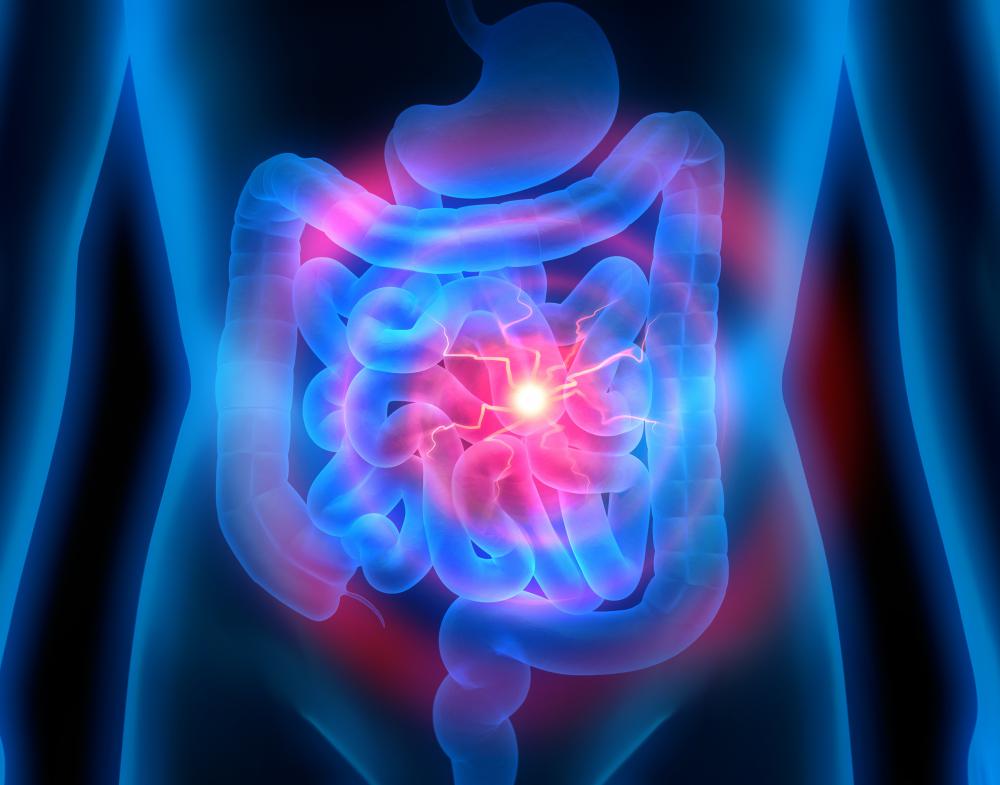
Irregularities with the large or small intestine are a common cause as well. The intestines press up against the lower back in most people, and when they are irritated they can cause radiating or pulsing pain. Irritated intestinal tissues can also lead to loose stools, as the intestines may not be able to process more compacted waste.
Cramping along with frequent diarrhea might indicate an inflammatory bowel disease, especially if there is blood or mucus in the stool. This family of diseases is treatable with anti-inflammatory medication in conjunction with certain dietary changes like adding more fiber and paying attention to proper hydration. The condition can be somewhat serious, though, and can sometimes require surgery, particularly if the bowels are twisting or kinking in response to what should be normal digestion.

Diverticular disease also could be responsible. This condition happens when the small pouches, or diverticula, along the digestive tract grow infected or inflamed, and it can cause diarrhea, fever, abdominal and back pain, constipation, and nausea. Someone who experiences diarrhea alternating with constipation might be suffering from irritable bowel syndrome or spastic colon, too. All of these conditions tend to come and go, often in response to certain foods or environmental triggers like high stress or sleeplessness; this can make them difficult to diagnose, as symptoms can alternate between being very painful and almost non-existent.
Infections and Growths

Gastrointestinal infections are another common cause, particularly if the patient experiences a loss of appetite, fever, nausea, or vomiting along with diarrhea and back pain. These may not seem very serious at first, but they do typically require prompt medical attention to keep them from spreading or becoming debilitating.
When back pain radiates outwards from the abdomen and is accompanied by a fever, gallbladder disease, pancreatitis, or a similar infection might be responsible. These conditions usually happen when harmful strains of bacteria begin multiplying in the intestinal passageways, and then spread to nearby organs like the pancreas and gallbladder; these do not typically go away on their own, and can in extreme cases be life threatening. Intense pain and bloating also might indicate an intestinal blockage, usually owing to a tumor or other abnormal growth.
Parasites

Though not as common, certain intestinal parasites might also cause back pain with diarrhea. Parasites are microbial organisms that invade and colonize the gut, essentially stealing nutrients from their human host. Other symptoms of parasite presence include dramatic weight loss, abdominal bloating, fever, and nausea.
Common Sense Precautions
Back pain that occurs with diarrhea is usually a sign that something is wrong. When symptoms last only a day or two it’s usually safe to assume that whatever is amiss has more or less fixed itself, but any pain that is persistent or that gets worse over time should usually be checked out by a medical professional. It’s also usually a good idea for anyone suffering diarrhea to consume a lot of fluids, particularly water. Prolonged diarrhea can cause dehydration, which comes with its own set of complications.
AS FEATURED ON:
AS FEATURED ON:


-
![An allergic reaction can cause diarrhea and lower back pain.]() By: mangostockAn allergic reaction can cause diarrhea and lower back pain.
By: mangostockAn allergic reaction can cause diarrhea and lower back pain. -
![Abnormalities of the small intestine can cause back pain and diarrhea.]() By: psdesign1Abnormalities of the small intestine can cause back pain and diarrhea.
By: psdesign1Abnormalities of the small intestine can cause back pain and diarrhea. -
![Irregularities in the small or large intestines can cause back pain because of where they are located in the body.]() By: ancroftIrregularities in the small or large intestines can cause back pain because of where they are located in the body.
By: ancroftIrregularities in the small or large intestines can cause back pain because of where they are located in the body. -
![Persistent back pain and diarrhea should be evaluated by a doctor.]() By: JackFPersistent back pain and diarrhea should be evaluated by a doctor.
By: JackFPersistent back pain and diarrhea should be evaluated by a doctor. -
![Diarrhea and chills, when accompanied by a headache, may be a sign of a more serious problem for an elderly individual.]() By: Mikael DamkierDiarrhea and chills, when accompanied by a headache, may be a sign of a more serious problem for an elderly individual.
By: Mikael DamkierDiarrhea and chills, when accompanied by a headache, may be a sign of a more serious problem for an elderly individual. -
![Food poison is a common cause of back pain and diarrhea.]() By: ohmega1982Food poison is a common cause of back pain and diarrhea.
By: ohmega1982Food poison is a common cause of back pain and diarrhea. -
![Temporary bowel trouble may cause back pain and diarrhea.]() By: Africa StudioTemporary bowel trouble may cause back pain and diarrhea.
By: Africa StudioTemporary bowel trouble may cause back pain and diarrhea.



Discussion Comments
Two years ago I suffered a compression fracture in my lower back. I take extra strength Tylenol daily, sometimes two or three times. Sometimes after a really bad episode of pain, I get "the runs" for a few days. What's going on? How can a person fall on their butt and break their back?
@MikeMason-- I developed these same symptoms a short time before I was diagnosed with irritable bowel syndrome. I had nausea, diarrhea, bloating and back pain.
Pain that's felt in the back can originate in the bowels or stomach. Many people don't realize this. Back pain can have many different causes, but when it's accompanied by diarrhea, it's important to look at the gastrointestinal system.
@MikeMason-- Lower back pain can be a symptom of a kidney issue. But there are many possible causes of lower back pain, it doesn't have to be kidneys.
It's also possible that the back pain and diarrhea have different causes and are happening at the same time by coincidence.
I'm glad that you have a doctor's appointment. A physical exam and diagnostic tests are the best way to get to the root of the problem.
I have had lower back pain and diarrhea for the past few days. I heard that lower back pain is usually related to the kidneys. Is this true?
I'm going to see a doctor this afternoon, I just hope that it's nothing serious.
Post your comments