
At TheHealthBoard, we're committed to delivering accurate, trustworthy information. Our expert-authored content is rigorously fact-checked and sourced from credible authorities. Discover how we uphold the highest standards in providing you with reliable knowledge.
What are the Medical Uses of Alum?
Alum is the name generally given to two common salts: potassium aluminum phosphate and ammonium aluminum sulphate. In its naturally occurring state, the substance has been used for more than 2,000 years in a wide variety of applications. Before the beginning of the 20th century, it was routinely manufactured and used for pickling, canning, tanning leather, and baking. From then on, its use in food processing gradually decreased because of safety concerns over its side effects. Professionals in the fields of medicine and health care, however, still frequently use it to treat injuries and disease.
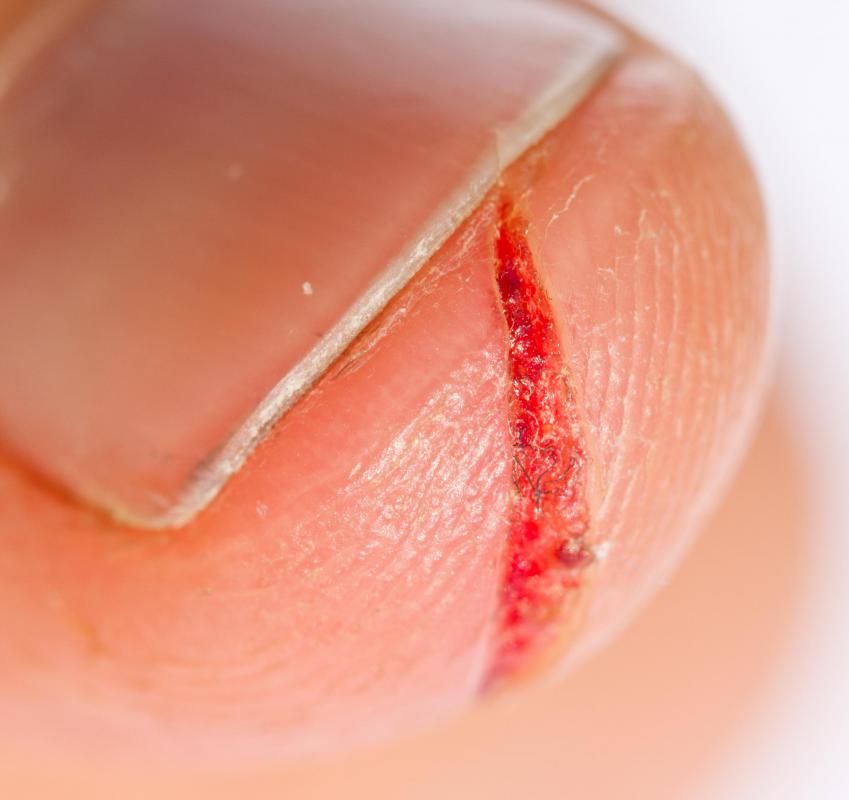
In medicine, alum is regularly employed as an astringent to shrink tissues and reduce the discharge of bodily fluids, as a styptic to contract organic tissues and stop or reduce hemorrhage and bleeding, and as an emetic agent to induce vomiting when someone has ingested poison. It is also often used to enhance certain vaccines and to prevent or treat infections. Veterinarians typically advise pet owners to apply the powdered version to animal cuts caused by improper nail trimming as a way to stop bleeding.

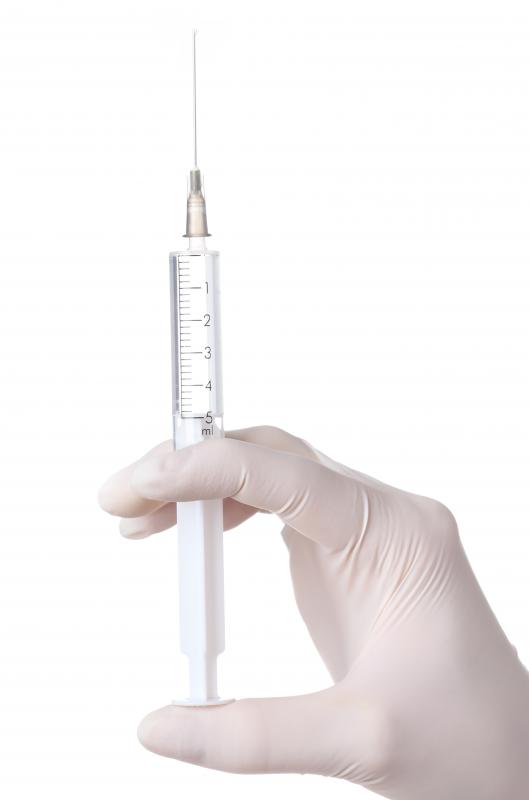
When this compound is used to enhance a vaccine, it is classified as an adjuvant, or supplementary contributing agent. Adjuvants containing aluminum have been shown to make some vaccines last longer and appear to often help produce more antibodies against disease. Relatively common vaccines licensed in the United States and typically administered to children include diphtheria-tetanus-pertussis (DTP), where pertussis is commonly known as whooping cough; diphtheria-tetanus-acellular pertussis (DTaP), acellular meaning no whole cells of pertussis; Hepatitis A and B; human papillomavirus (HPV); and rabies.

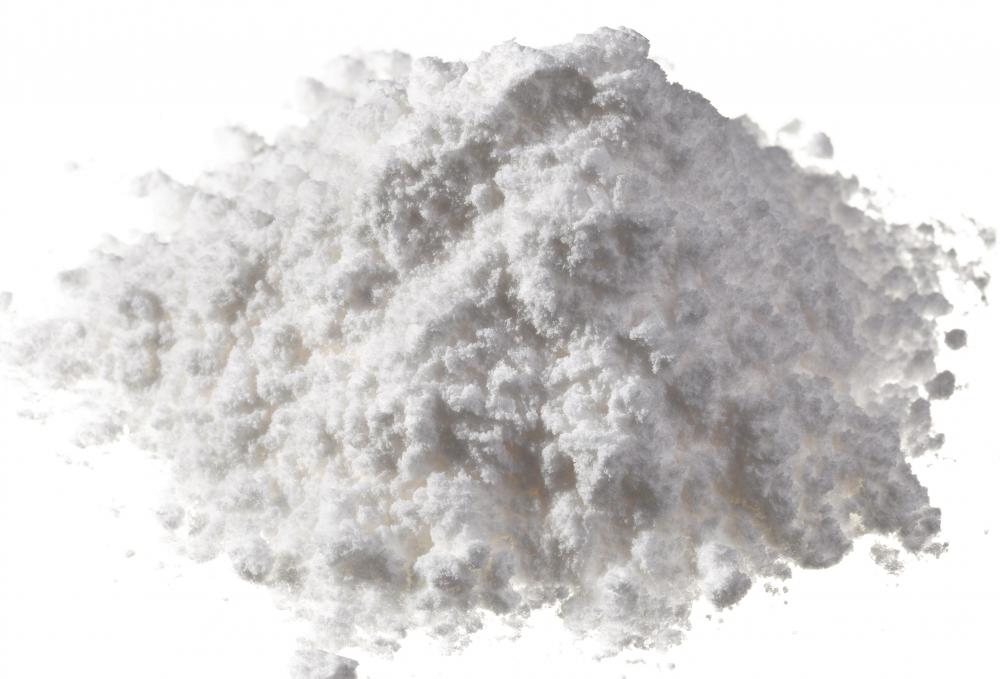
Some people believe that powdered alum is an effective home remedy for canker sores. Advocates of this form of treatment typically claim that dabbing the sore with the powder a few times a day will speed up healing. Anyone adopting this method of treatment should, however, be aware of the possible side effects: sores may sometimes burn and the powder can cause puckering of the mouth on occasion. Experts also recommended that those who apply the powder in or near the mouth rinse their mouths with water following treatment since the compound could cause vomiting.

Alum is still an ingredient of some everyday products found in many medicine cabinets. For example, people often use styptic pencils — short sticks of molded alum with points like pencils — to stop bleeding from razor cuts from shaving. The substance is also frequently listed in the ingredients of toothpaste and tooth powder.
AS FEATURED ON:
AS FEATURED ON:


-
![An adjuvant is an alum compound used to increase the potency and longevity of a vaccine.]() By: Photographee.euAn adjuvant is an alum compound used to increase the potency and longevity of a vaccine.
By: Photographee.euAn adjuvant is an alum compound used to increase the potency and longevity of a vaccine. -
![Alum is used as an astringent to shrink the tissue around a wound and slow bleeding.]() By: F.C.G.Alum is used as an astringent to shrink the tissue around a wound and slow bleeding.
By: F.C.G.Alum is used as an astringent to shrink the tissue around a wound and slow bleeding. -
![Powdered alum is sometimes used to accelerate the healing process of canker sores inside the mouth.]() By: HamsterManPowdered alum is sometimes used to accelerate the healing process of canker sores inside the mouth.
By: HamsterManPowdered alum is sometimes used to accelerate the healing process of canker sores inside the mouth. -
![Toothpaste containing alum.]() By: picsfiveToothpaste containing alum.
By: picsfiveToothpaste containing alum. -
![Alum induces vomiting when someone has ingested a poison.]() By: Aleksandar MijatovicAlum induces vomiting when someone has ingested a poison.
By: Aleksandar MijatovicAlum induces vomiting when someone has ingested a poison.

Discussion Comments
We live on a remote island in a country with no veterinarians and a huge population of cats. Someone told me we could use alum to keep our female cats from getting pregnant. Does anyone know if this is true and how we could use it?
Anybody ever use alum for cysts? Just wondered if it works to get rid of them.
Can alum be used for galding under the breast?
I have used alum ash for treating asthma.
Method: One teaspoon of ash, taken in early morning with warm water can cure asthma attacks for a lifetime, but it must be used very carefully.
Can alum be used for swelling of the ankles?
Can alum be used to shrink fluid on the knees?
Mix with petroleum jelly and apply to hemorrhoids. It will shrink them quickly.
Alum has been used by ladies of the night for years. also I used it for wisdom tooth pain per old lady and it worked!
Can Alum be used to tighten the walls of your vagina?
can alum be use in the eye of a horse that has moon blindness?
Post your comments