
At TheHealthBoard, we're committed to delivering accurate, trustworthy information. Our expert-authored content is rigorously fact-checked and sourced from credible authorities. Discover how we uphold the highest standards in providing you with reliable knowledge.
What are the Health Benefits of Taking Bee Pollen?
 Michael Pollick
Michael Pollick
Michael Pollick
In a world filled with largely unsubstantiated claims of miraculous "super foods," bee pollen appears to be the real deal. Many people take daily doses of these granules as a dietary supplement, since it does contain nearly every element required for healthy living, including B-complex vitamins, folic acid, free amino acids and proteins. Raw bee pollen is also high in carbohydrates, and may even contain natural antibiotics.
Bee pollen starts out as the microscopic male seed of the various plants attractive to bee colonies. As the bees move through the flower, the dusty pollen collects on their bodies. Using a special natural "comb," the bees are able to concentrate all of this pollen into a single granule carried back to the hive as a source of food for young bees. These concentrated granules are collected by skilled beekeepers for use as a human diet supplement.

The medicinal value of the pollen is still being studied, but so far there have been credible claims of improved fertility, weight loss, allergy reduction, improved hemoglobin production and lower LDL cholesterol levels, among many others. There are even some preliminary studies on the effects of bee pollen on cancer in mice. Mice given food supplemented with it had noticeable reductions in the development of mammary tumors, a common condition among mice.

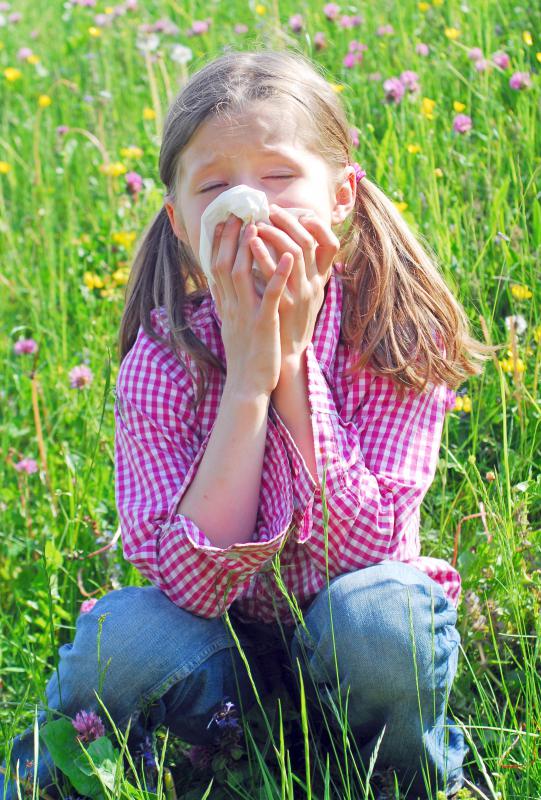
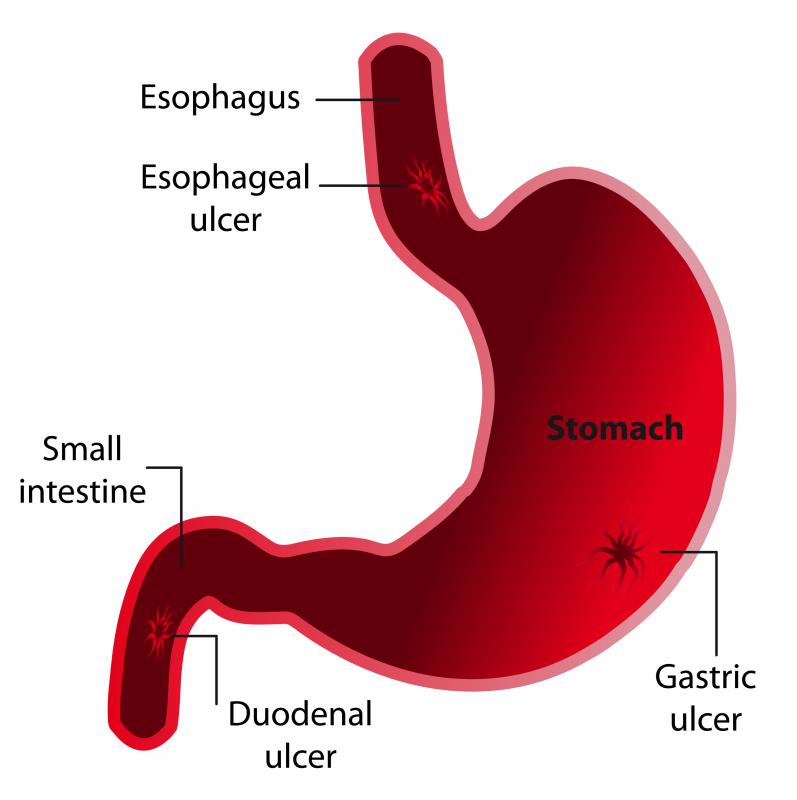
Bee pollen has also been shown to improve allergic conditions such as hay fever, if taken at least 6 weeks before the start of allergy season. There is also anecdotal evidence that its regular ingestion may improve migraine headaches, digestive tract ulcers, and certain urinary tract infections. Its natural antibiotic properties may be responsible for these results, or it may be a case of desensitization to allergens as a person builds up a tolerance for plant pollen.

There are also claims that ingredients in bee pollen can curb a person's appetite while also providing additional energy for exercise and natural increases in metabolism. The granules may be sprinkled onto food, mixed into cold supplemental shakes or consumed with water as a nutritive tonic.
Many nutritional experts recommend only buying domestically grown bee pollen, since imported granules may be dried before shipping. Quality products are often stored as a live food item in health food outlets and should be semi-moist when purchased. Bee pollen may be mixed with other products such as royal jelly, a highly nutritive substance with its own list of potential health benefits.
Michael Pollick
A regular TheHealthBoard contributor, Michael enjoys doing research in order to satisfy his wide-ranging curiosity about a variety of arcane topics. Before becoming a professional writer, Michael worked as an English tutor, poet, voice-over artist, and DJ.
Learn more...
Michael Pollick
A regular TheHealthBoard contributor, Michael enjoys doing research in order to satisfy his wide-ranging curiosity about a variety of arcane topics. Before becoming a professional writer, Michael worked as an English tutor, poet, voice-over artist, and DJ.
Learn more...AS FEATURED ON:
AS FEATURED ON:


-
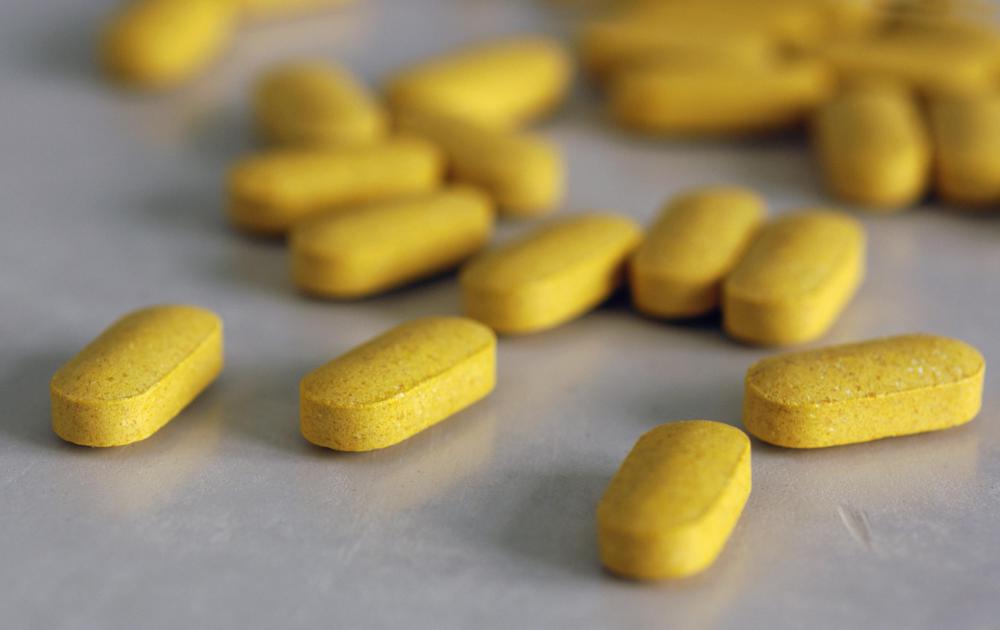
![Bee pollen can be consumed as a supplement in pill form.]() By: Anthony HallBee pollen can be consumed as a supplement in pill form.
By: Anthony HallBee pollen can be consumed as a supplement in pill form. -
![Taken at least six weeks before allergy season, bee pollen has been shown to help with hay fever symptoms.]() By: photophonieTaken at least six weeks before allergy season, bee pollen has been shown to help with hay fever symptoms.
By: photophonieTaken at least six weeks before allergy season, bee pollen has been shown to help with hay fever symptoms. -
![Bee pollen is rich in vitamins, proteins, and amino acids.]() By: marcelBee pollen is rich in vitamins, proteins, and amino acids.
By: marcelBee pollen is rich in vitamins, proteins, and amino acids. -
![People who take bee pollen on a regular basis may experience fewer migraine headaches.]() By: MediablitzImagesPeople who take bee pollen on a regular basis may experience fewer migraine headaches.
By: MediablitzImagesPeople who take bee pollen on a regular basis may experience fewer migraine headaches. -
![There is anecdotal evidence that regular ingestion of bee pollen may be helpful for treating digestive tract ulcers.]() By: p6m5There is anecdotal evidence that regular ingestion of bee pollen may be helpful for treating digestive tract ulcers.
By: p6m5There is anecdotal evidence that regular ingestion of bee pollen may be helpful for treating digestive tract ulcers.


Discussion Comments
I, for one have, found fresh local bee pollen very helpful in combating my own symptoms of hay fever. My eyes begin to itch and water from late April to early June every year. It's a very, very uncomfortable experience, and it began in my 20s.
A few years ago, I tried taking a half teaspoon of bee pollen daily in March, and my allergy season was about 80 percent less uncomfortable. About a cup of local bee pollen costs about $10-$15 and is well worth the expense.
In the past two years, I have used it at the onset of my symptoms, and it works nearly as well as the earlier doses. I buy fresh local bee pollen during my allergy season and freeze some for the next year. If you have not used bee pollen, start with a very small daily dose and work up to a teaspoon per day as needed.
I tried IVF four times. Three times it did not work. The fourth time I invested in simple diet changes. I took supplements, which included royal jelly and bee propolis. The diet change has had a great effect and who's to say that the royal jelly and/or bee propolis actually didn't help?
However, there are medical studies that have taken place already in fertility clinics around the world, which first alerted me to the effects of taking bee propolis especially. One study saw an increase from 20 percent pregnancy rate to 50 percent pregnancy rate. I am convinced of its benefits. I am pregnant for the first time ever and after 20 years of trying.
Further study needs to be done to now go on to prove the effects of these natural supplements, rather than assuming they don't work because of the lack of evidence. The sky is blue due to the sunlight hitting the earth's atmosphere. I don't need umpteen studies and trials to tell me that.
what you don't realize that bee pollen is the universe's way of propagating life.
pollen is nature's primal sperm, the very essence of the sun (and wind, water, and earth's) energy formed into a sperm like substance for the sole purpose of creating life.
the full and all inclusive complex of vitamins, (over 4,000+ known) enzymes, amino acids, minerals, and other phytonutrients are just added benefits to supplementing your days with bee pollen.
bee pollen is the purest form of life energy.
A well balanced diet should give a person all the required food elements-essential amino-acids and fats, vitamins and minerals without the added expense of buying bee pollen. I have no data, but I do have doubts about the other claims made for bee pollen.
Let's look to see whose monetary interest is enhanced by making those claims. It is human to look for easy simple answers to hard complicated problems.
Donald W. Bales, M.D. retired internist
With respect, while bee pollen contains some vitamins and minerals, there is nothing that is not obtainable from a standard diet.
Unless there is something new in the past few months, there is no substantiation for the other allegations. In fact the few properly conducted studies (double blind) have shown no benefit at all. For example the claim about providing extra energy for excise was conclusively debunked in the 1970's.
True, small exposure to allergens can help the body to deal with a larger exposure. That's the whole purpose to getting allergy shots. Importantly, those types of allergy shots are very specific to dealing with the tree and grass pollens which, as a group, are called "hay fever".
Bee pollen however, comes primarily from flowers, not trees or grasses. Not only does that provide no benefit for hay fever but in fact can trigger an allergic reaction if you have sensitivity to flower members of the daisy family. But that's just my two cents worth.
Is bee propolis the same as bee pollen? I suppose I will have to read up for myself. My supplements supplier does not list the pollen, so I suppose it is different.
what about raw honey? Is that also filled with vitamins?
Post your comments