
At TheHealthBoard, we're committed to delivering accurate, trustworthy information. Our expert-authored content is rigorously fact-checked and sourced from credible authorities. Discover how we uphold the highest standards in providing you with reliable knowledge.
What are the Health Benefits of Prune Juice?
 Jessica Ellis
Jessica Ellis
Jessica Ellis
Prune juice is beneficial to every area of the body because it contains antioxidants that fight cell-damaging free-radicals. It is good for the heart, potentially reducing LDL cholesterol, lowering blood pressure and contributing to an even, regular heartbeat. The fiber in this beverage prevents spikes in blood sugar, as well, and may also help people to feel full longer and lose weight. Bowel regularity is another advantage, as the juice has a mild laxative effect. The level of benefit a person gets from the drink ultimately depends on how manufacturers process it, so it’s important to read labels on store-bought versions before buying.
Protection Against Free Radicals

Prunes are high in antioxidants called phenols. Scientists believe that these substances are able to block oxygen-based free radicals that damage body fats. Although damaging fat and getting rid of it may seem like a good thing, in reality, every cell in the human body requires some fat in its outer membrane for proper functioning. Drinking a single glass of prune juice each day therefore might protect every area of the body against problems such as cancer, keeping cell membranes strong and functional.
Heart Benefits

Doctors recognize that potassium is important for a healthy heart. This mineral plays a role in nerve response and muscle movement. It is responsible at least in part for triggering the heart to contract and pump blood at the proper pace throughout the entire body. Getting enough potassium reduces blood pressure in some individuals. A reduction in blood pressure lowers the risk of problems such as dizziness, heart disease, heart attack and stroke.

Prune juice is excellent source of potassium, with a 6 ounce (0.18 liter) serving containing 0.02 ounces (528 milligrams), or about 15 percent of the recommended daily allowance. It is also very low in sodium, with a 6 ounce (0.18 liter) serving having less than 0.001 ounces (35 milligrams), or under 1 percent of the recommended daily allowance. This matters because higher levels of sodium generally make blood pressure go up.

Similar to other fruits, vegetables and whole grains, prunes contain a high amount of both insoluble and soluble fiber. The insoluble type may lower the level of low-density lipoprotein or “bad” LDL cholesterol in the blood, because it makes it harder for the intestines to absorb bile produced by the liver. The body’s response is to make and release even more bile salts, but this requires more LDL cholesterol. The liver therefore makes more receptors, which pull the LDL cholesterol out of the blood and reduce the risk of blood clots and heart attack.
Blood Sugar Regulation

A ¼ cup (30 gram) serving of prunes provides 12.1 percent of the recommended daily allowance of soluble fiber. This kind of fiber mixes with water in the body to create a gel-like substance, which slows down the movement of food through the digestive system. It also shields the food from digestive enzymes and makes it harder for nutrients including glucose to reach the intestinal wall and enter the bloodstream. As a result, the body doesn’t produce a spike in insulin, and blood sugar levels stay more stable. Prune juice therefore is an excellent beverage choice for diabetics or for those at risk for developing the disease.
Weight Loss
The soluble fiber in this type of drink may help people to maintain or lose weight. As it mixes with water and turns into a gel, the fiber makes an individual feel full longer. That means a person is less likely to overeat.
Bowel Regularity
Insoluble fiber gives stools bulk so they pass through the intestinal track more quickly. Physicians often recommend prune juice as a simple, inexpensive over-the-counter laxative for this reason. When a person is able to avoid constipation and has regular bowel movements, he is at lower risk for serious problems such as colorectal cancer. Clean, functional intestines also contribute to benefits such as increased energy, as physical body processes often depend on the nutrients absorbed in the gut.
Selecting a Healthy Version
Not all dried plum juices are the same when it comes to their nutritional content and benefits. Some manufacturers add extra sugar or unhealthy preservatives during processing, which may lower or negate health benefits. Versions also have different concentrations, and this affects how much fiber and other nutrients a person gets in each serving. Looking for an organic variety is a way to avoid some of these problems. When no manufactured version works, experts recommend making juice at home by simmering five parts water to one part dried plums for several hours, removing the pits and pureeing the mixture.
Jessica Ellis
With a B.A. in theater from UCLA and a graduate degree in screenwriting from the American Film Institute, Jessica is passionate about drama and film. She has many other interests, and enjoys learning and writing about a wide range of topics in her role as a TheHealthBoard writer.
Learn more...
Jessica Ellis
With a B.A. in theater from UCLA and a graduate degree in screenwriting from the American Film Institute, Jessica is passionate about drama and film. She has many other interests, and enjoys learning and writing about a wide range of topics in her role as a TheHealthBoard writer.
Learn more...AS FEATURED ON:
AS FEATURED ON:


-
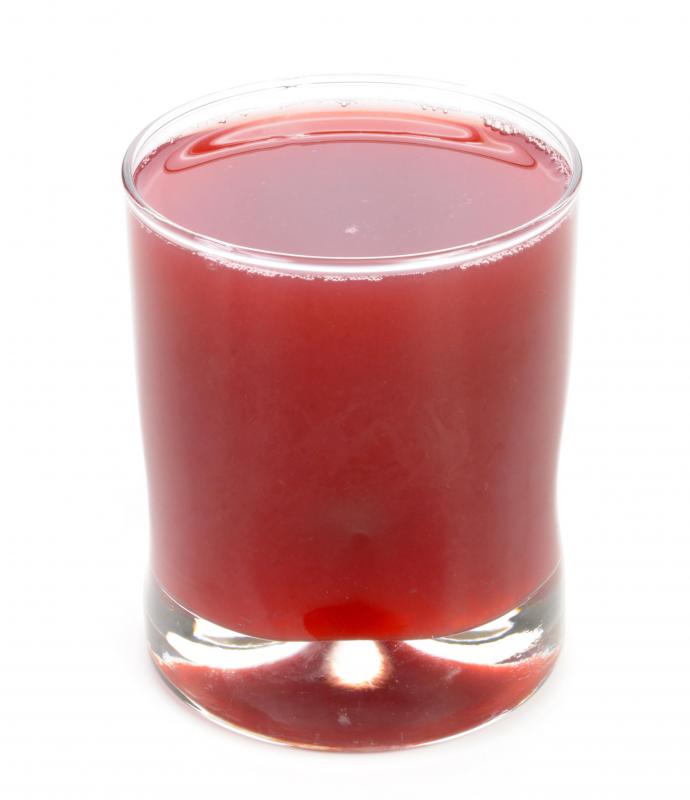
![A glass of prune juice.]() By: MSPhotographicA glass of prune juice.
By: MSPhotographicA glass of prune juice. -
![Prunes.]()
Prunes. -
![Prune juice has a mild laxative effect.]() By: Africa StudioPrune juice has a mild laxative effect.
By: Africa StudioPrune juice has a mild laxative effect. -
![Prune juice is an excellent source of potassium, a mineral that helps reduce high blood pressure.]() By: dambusterPrune juice is an excellent source of potassium, a mineral that helps reduce high blood pressure.
By: dambusterPrune juice is an excellent source of potassium, a mineral that helps reduce high blood pressure. -
![Untreated hypertension can lead to dizziness or stroke.]() By: elizalebedewaUntreated hypertension can lead to dizziness or stroke.
By: elizalebedewaUntreated hypertension can lead to dizziness or stroke.


Discussion Comments
Is it good to drink two bottles of prune nectar a day?
I am drinking prune juice and enjoying it. I have a problem with moving my bowels sometimes and it really does the trick. Plus, it doesn't taste that bad, as I had thought. Thanks for your article about prune juice.
Seriously, the only prune juice that's best in the world Is Sunsweet. I drink the whole 32 fl oz and believe me when I say you will feel so much better! Plus you will feel notice the difference how much your tummy goes down. *Warning*: it will make you go about 5 to 8 times to the bathroom depending how much you ate over the holidays. I took it twice this month. I recommend you talk to your doctor first on how many glasses you can take. I must say I don't have any problems going to the restroom. I just needed to clean out my system. I feel so much better.
Okay I'm going to chime in too. I started drinking a glass of prune juice a day just under two weeks ago, and well, I haven't felt this good in two to three decades (I'm 45).
I have always had problems with constipation and as I have gotten older that has only gotten worse. I have also had so much gut pain and severe back pain, stress and high anxiety. Well, now my gut feels calm, the acid problems have gone away, the gas problems have gone, the pain in my gut has gone, the severe pain in my back has gone and I have a ton of energy now.
I'm feeling excited by this. I honestly believe now that prune juice is a blessing of nature for us all. I could never stand the taste of it when I was young, but now it tastes good to me and very refreshing too. I know I like the taste now because my body needs and wants the wonderful drink. I will drink a glass of prune juice every day for the rest of my natural life and for any unnatural extensions of said life, too P.S. I felt like I was slowly dying, and now I feel full of life. Very awesome!
If you don't like the taste of prune juice,try milk of magnesia then you might like prune juice. I think prune juice tastes better as cold as possible.
I keep hearing folks talk about how bad prune juice tastes. Let me throw this at you. You have two choices. The first choice is the prune juice, the second is Go-Nicely (the stuff they give you the day before surgery). I've tasted both, and nothing tastes worse than Go-Nicely. Don't believe me? Just you try it!
Was going to do a colonic, but started drinking prune juice. Now that's the way to go!
Although prune juice contains lots of iron, the fibers in it (just like any fibers) prevent the iron from being properly absorbed. Prune juice can cause a 30 percent to 60 percent iron absorption decrease.
After weeks of experimenting with taste and simplicity, I finally found the perfection combination of fruits for my daily fruit smoothie! Fill one blender with 1 part strawberries, 1 part bananas, 1 part blueberries, and 1 cup of prune juice. Blend and enjoy! It's fast, easy, and tastes super!
I sip on it throughout the day and my stomach never growls, never get hungry, and never have that end of day "hangry" feeling! Plus with all that potassium and vitamin C, it feels good to feel good!
I love it. I don't know how you can say the taste is not good, because I love the taste. It's awesome for constipation. This coming from a person who's been having problems for years and "going out" two a week. Now I go every day. Amazing.
For all those saying it tastes terrible, try putting unprocessed honey in it for sweetening. Also, unprocessed honey regulates blood sugar, so you won't crash later. Beware of allergies though. Unprocessed honey has pollen in it.
I have read many testimonies on consumers who have been drinking prune juice. One thing that bothers me is, I don't want to lose weight by drinking prune juice. Is there a way for me to retain my weight? I'm freaking skinny and I need to gain more weight, not lose weight. But please don't ask me to stop drinking prune juice.
A friend just told me how nice prunes are for cleansing the bowels. I tried it and the results were great. I love it and will continue using it as my only juice.
I have lost 5 kilos in one and 1/2 months combining prunes and exercise. I am thankful to my friend.
I have crohn's colitis and drinking prune juice, a glass in morning and before bed has helped beat the disease. Along with this, I eat carrots cooked with tumeric powder to help heal the internally affected areas. Try drinking oat milk too; it's great!
I am a 73 year old man and i have chronic (bone to bone) pain in my knee. I have to take hydrocodone four times a day to be able to walk. The problem is the medication causes me to plug up. I started prune juice and am very happy with the results. It seems like there are many health benefits as well. I love prune juice.
I've been drinking prune juice for years. I don't drink it regularly but when I began to feel heavy and tired, I drink a glass and voila! Like new! I don't advocate a brand but SunSweet seems to have the most effect. Heck, I have a bottle of the generic brand from Walmart and it works but nonetheless, prune juice is here to stay.
Prune juice - just a teaspoon has been very effective for my one month old baby's constipation. We are continuing the same.
Does prune juice really taste bad? Not to me. I have tried it and it's just like eating dates but you are only drinking it. Love it.
i would like to know if prune juice can help in any way to get rid of lymph nodes?
I can't help but laugh at all the "bad taste" comments. Probably coming from the same people that have forgotten how they came to like the taste of beer. Just like almost anything else it's an acquired taste. The more often you try it, the better it starts to taste.
I'm a relatively young guy at 25 years of age. I work out regularly and can say first hand there are many benefits to eating prunes and/or drinking prune juice. A lot of us live an on the go lifestyle and we may not be getting the proper amount of fruits and veggies. I use prune juice once a week, it's like a body flush for me just to make sure I'm keeping my insides as healthy as my outside.
I only take a small cup (four ounces, maybe) and feel it within just a couple hours.
Now, if your body reacts the way mine does it is probably cause as I said earlier you're probably not getting the right amount of fruits and veggies in a day and your body isn't used to all the extra fiber. If you absolutely cannot develop a taste for prunes or prune juice than make sure you get your fiber from other sources. Then worse comes to worse you can come back to old reliable. Just remember everything in moderation!
I used to be completely regular, then I started menopause, and was no longer regular. One small can of prune juice every morning is the miracle cure. I drink it before my coffee and muffin, and it works like a charm. I love the taste, too!
I love to drink my prune juice mixed with some diet lemonade. it's awesome and has the same effect as drinking the juice on its own.
I have had hemorrhoids for a week. I will start drinking prune juice today. I am scared. Will it get any better ever?
Because i eat so much garbage junk foods and rice and beans I suffer from constant nasty gas. I started drinking 4 ox of prune juice each night and another each morning. For six weeks now I am regular as a clock and no more wicked effluviums. My girlfriend is back too.
I had a fissure after childbirth and the biggest help for me was a glass of prune juice every night before bed--worked even better than the laxative that the doctor prescribed! I'm so grateful for prune juice.
Prune juice is awesome. I mix it as well.I do 50-50 with grapefruit juice and it takes that really sweet flavor away, and it is surprisingly good!
i tried everything but at last prune juice worked for me.
I drank one glass and I am almost gagged. Yes it did work for constipation but I can't drink it without getting that gagging feeling. It's like drinking liver juice. Perhaps I should try holding my nose. I think I will try eating prunes.
I have had an extremely painful hemorrhoid for two months now and prune juice has been the biggest help in getting through this. I am never ever constipated, so I'm not sure why this thing developed, but having a normal BM has been so painful for me since I had the hemorrhoid.
I was eating lots of fiber, drinking lots of water, taking the max amount of stool softeners daily, and this had no effect on me. Just normal BMs.
So I tried the prune juice - one glass warm in the morning. At first it gave me diarrhea, which I was OK with, because in my situation, it is better than regular stool. After a couple days, this stopped and now I just have extremely soft BMs that fly out with no pain at all.
So, if you have hemis, try drinking some warm prune juice before you normally go to the bathroom - it will help loosen things up and reduce your pain greatly.
My doctor told me to drink prune juice to get my bowel movements running correctly. I didn't know it was going to have such a bitter taste. It's really gross. But I drink it anyway because it's a lot of help. It got me back on track! But it still tastes gross.
I had problems with my bowel the last two months. My doctor prescribed me to take prune juice at least 2-3 tablespoons before bed time and it helped. my bowels now are normal.
For constipation problems, I recommend prune juice to get relieved. Now, i wanted to add prunes to my diet.
Thanks for the miracle effect of prunes.
For the last three years I've been suffering from severe constipation and bloating. Prune juice was recommended and i tried it. It was great. I need about 24 to 30 ounces daily. Is it safe drinking this amount daily? I started drinking four days ago. Thank you.
i feel constipated every day, but when i drink prune juice it makes a big difference. i think this is very good to the body.
I recently started eating about 30 prunes a day -just to get things moving. After the first three days my bum was bleeding it was so sore. System back on track. I'm still doing about 20 every second day and the bleeding bum has healed, thankfully. Going to start washing it down with some prune juice as it sounds so good.
Is it OK to drink prune juice during pregnancy?
I am a junk food junkie. Recently, I have tried to change my diet. And am doing well, if i must say so myself. I added prune juice to the equation, and wow! Now, I'm not sure of all the other benefits I'm getting through drinking it, but it definitely works as a laxative!
It's cool, for the most part, because I feel lighter, like i may be losing weight. I don't care much for the taste, so I mix it with other juices. I do read the label to make sure that they are all 100 percent juices. My trick to consuming foods I don't like is mixing them with foods I do like. So far salads has been my best disguise in doing this. But the point is, prune juice rocks!
I cannot understand all the negative comments about the taste of prune juice. I just drank a quart of it and I wish I had more. It tastes wonderful! These must be people that think Cola is better tasting. But, everyone is right about the laxative effect. It reminds me of when I prepped for my colonoscopy!
which company's prune juice is better to drink?
For me prune juice is an excellent laxative. I find it is best taken at least four hours after a meal.
I have recently started drinking prune juice and I agree with some of the comments on how nasty tasting it is. I don't like any juice simply because I don't like drinking anything that tastes sweet.
What I found is that if I squeeze lemon juice in my cup of juice it really helps me be able to drink the stuff. You will need to find out what amount you need to make it taste good. And as an added bonus, lemon juice is very good for you (also helps bloating among other things).
In regards to the question posted up top there about "are all healthy foods gross," I used to wonder the same thing. It really depends on what you are normally putting in your body.
Let's take this as an example. Normally, you eat a lot of pizza and bread and soups and burritos. This mean you obviously like cheesy bread, beans, etc. Then I am assuming a piece of celery with peanut butter for a snack doesn't sound too great.
Your body becomes accustomed to what you are putting into it. So my recommendation is to try to eat things that you like that are healthy -- perhaps salads, baby carrots, any fruit or melon or berries. Raw nuts are great, too. Many of these things don't taste bad at all, and then the more of these healthy things you put into your body, the more your body will actually start to like them.
It's hard to explain, but basically you will develop a taste for healthy things that you may never have had before. Just start with snacks and try to make your otherwise high fat meals a little lower in fat by using rice or almond milk with your cereals, or instead of alfredo sauce, try just tomato with a little parmesan, versus all covered in cheddar.
Can hiv positive people use prune juice as an arv supplement?
I am 17 and I just started drinking this stuff. I can tell how healthy it is just by how awful it tastes. Why must everything healthy taste bad? Is it really worth a lifetime of eating food that tastes like garbage just to make it to like 95? I work at a seniors home and those 95+ year olds' lives are like hell. I can see the pain in their eyes they just want to die.
Does drinking prune juice change the color of your stool?
I also would like to know how many prunes are equal to eight ounces of prune juice. I have read that by eating 10 prunes a day, one's bones can become 10 percent denser in one year. I cannot eat the prunes; therefore I prefer the juice. I want to drink the equivalent of 10 prunes a day. How many ounces is that?
Which is a better laxative -- whole prunes or prune juice?
How many prunes does it take to equal an eight ounce glass of store-bought prune juice? My sister says three but I say more like 10 or 12.
i took prune juice since last 2 months. i am now having all relevant symptoms for a hyperkalemia. not sure whether it is the potassium overdose from the prune juice that caused this. stopped the intake for further observation.
The taste of prune juice is not bad. It is so worth it to have a glass of it every night before bedtime. I am more regular now and feel better. It is a definite cure for constipation and it's natural too.
Prune juice is always said to have a great taste - what? Prune juice tastes flat out nasty. I actually get the chills drinking that liquid crap.
For three months now, I've been drinking one glass of prune juice daily. I mix about six ounces of juice with three ounces of water and heat the mixture slightly. I'm so much more regular and less gassy/bloated than I used to be. I love this natural remedy!
why is it that prune juice can be used as a laxitive but plum juice can't?
prunes are very good for not getting sick. my dad's been taking prunes for years, cleaning out his diet, and getting rid of fungal organisms in the body. he is in his sixties and has never been to the doctor for body health, never been sick and is still energetic with original hair colors. 1% is grey hairs but he still looks young.
how do you get people to drink it when they'd rather go for apple juice?
Is prune good for one who is suffering from acidity or gastritis?
what are the benefits of prune juice in cancer patients?
Yes, there are solids foods that provide a good source of protein, which passes to the colon and expands when combined with liquids, thus "pressuring" waste to be expanded more quickly. The primary benefit of prune juice is that in addition to containing fiber in a liquid form (that does not need to be broken down), it also draws fluids into the colon much more quickly.
Can drinking prune juice cause the urine to appear bloody?
Been drinking prune juice and I must say my bloated stomach is flatter, I have more energy and feel healthier and lighter in the space of around 4 days of drinking 200ml a day.
does prune juice gives us brighter skin?
Prune is an excellent choice for anyone suffering from constant constipation or having trouble with infrequent bowel movements. If you drink 2-3 glasses of prune juice per day, you can almost be guaranteed that you will have a descent bowel movement every day.
My Dr. recommended prune juice as an excellent source of iron, I'm surprised to find no mention of iron or folate...
Is that why older people drink prune juice!? Because of its laxative effect? But aren't fibrous foods (like grains or prunes themselves) a better source of fiber?
Post your comments