
At TheHealthBoard, we're committed to delivering accurate, trustworthy information. Our expert-authored content is rigorously fact-checked and sourced from credible authorities. Discover how we uphold the highest standards in providing you with reliable knowledge.
What are the Effects of High Potassium Levels?
Potassium is an essential nutrient used by the body to help maintain the muscles and organs, including the heart. Under normal circumstances, the body regulates this mineral in the bloodstream, using the kidneys to filter out any excess, but various factors can result in high potassium levels. External symptoms of this condition can be mild, and include sudden weakness, fatigue, or nausea. This makes it all the more dangerous, because high potassium levels can cause a fatal heart attack without warning. Doctors will often check the levels of patients at risk, such as those who have kidney disease or are taking potassium supplements.
Symptoms

High potassium levels, also called hyperkalemia, result in cell failure on a systemic level. This can cause symptoms such as hyperventilation, nausea, and unexplained changes in pulse rate. These symptoms are very non-specific, making the condition very difficult for a medical professional to diagnose without blood or kidney testing. Often, there are no observable symptoms at all.

A person with undiagnosed hyperkalemia might simply collapse from heart failure without warning. If immediate measures are not taken to reduce the amount of potassium in the body, the condition can be fatal. Fortunately, most people at risk for developing high levels of this mineral are already under the care of a medical professional for another condition, and should have their blood potassium levels tested regularly.
Potassium and Health

Most foods, particularly fruits such as banana and avocado, naturally contain potassium. Small quantities are distributed throughout the cells of the body, including the blood cells. Removing excess potassium from the blood is one of the principal functions of the kidneys; in a healthy individual, it will be excreted as waste. Some medical conditions and treatments can hamper this process, causing the body to retain more of the mineral than it needs.
Definition and Causes of High Levels

In a healthy adult, the level of potassium should be between 3.5 and 5.0 mEq/L, which is a measurement of the concentration in a given amount of blood. Levels higher than 5.1 are considered dangerous, and levels higher than 6.0 constitute an emergency that requires immediate medical treatment. Medical professionals rarely check a patient's potassium levels, however, unless they are being treated for a condition like kidney disease.

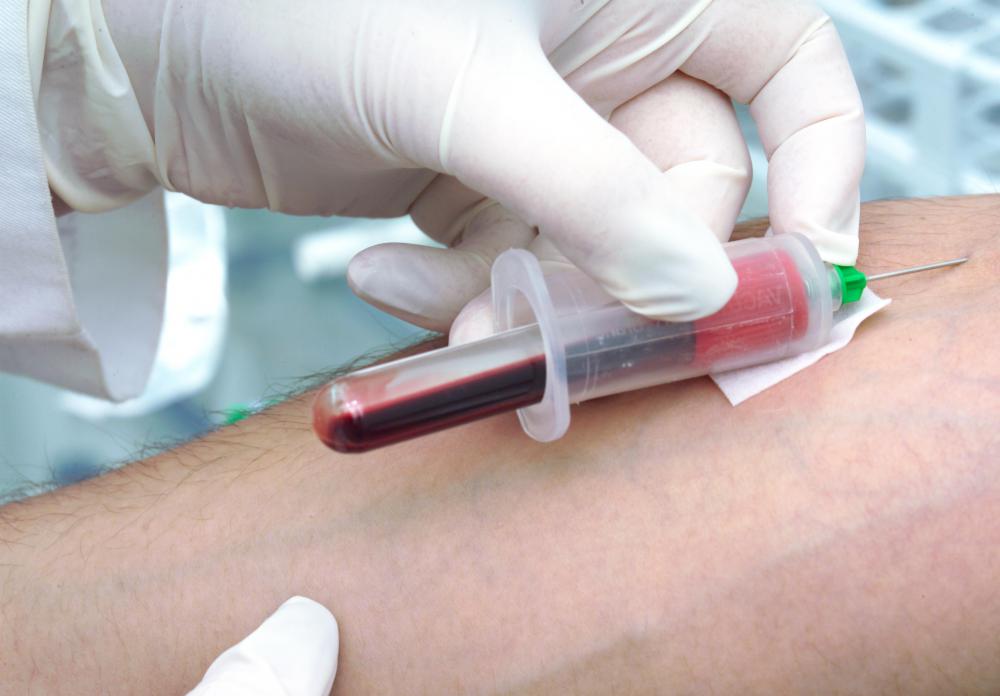
Because of the kidneys' role in controlling the amount of different chemicals in the body, kidney disease or malfunction is one of the most common causes of high potassium levels. Some medications can also interfere with the body's ability to process and excrete this mineral. Disease or sudden trauma can occasionally cause blood cells to release potassium into the bloodstream, resulting in hyperkalemia. Unfortunately, this can also cause a blood test to be inaccurate if the cells rupture when the blood is being drawn.
In some cases, a person's diet can also cause this condition. Salt substitutes, many of which are used by heart patients, often include potassium chloride, which looks like table salt and has a similar flavor. Even in these cases, however, fatal levels will rarely accumulate unless the patient also has undiagnosed kidney or digestive problems.
Prevention
Patients at risk for hyperkalemia should avoid salt substitutes, as well as foods with high levels of potassium. It is possible to "leach," or remove, the mineral from vegetables by soaking them in water for extended periods of time. Certain medications, like sodium bicarbonate and diuretics, may also help lower high potassium levels in the blood.
Treatment
Emergency care for high potassium levels can include intravenous glucose or insulin, which will reduce the amount of potassium in the bloodstream. Calcium can help minimize the mineral's effect on the heart. Hemodialysis, in which the blood is filtered by a machine outside of the body, is one of the most reliable treatments.
Deliberate Usage
Legal jurisdictions that practice lethal injection as a form of capital punishment make intentional use of hyperkalemia. The chemicals used in the execution process include potassium chloride, which is considered a humane way to shut down the heart; this compound is also used in some euthanasia devices. Less controversially, the chemical is sometimes used in cardiac surgery to stop the heart when a procedure cannot be performed when it's beating.
AS FEATURED ON:
AS FEATURED ON:


-
![High potassium levels can cause fatigue and nausea.]() By: laurent hamelsHigh potassium levels can cause fatigue and nausea.
By: laurent hamelsHigh potassium levels can cause fatigue and nausea. -
![Hemodialysis might be used to treat extremely high potassium levels.]() By: Tyler OlsonHemodialysis might be used to treat extremely high potassium levels.
By: Tyler OlsonHemodialysis might be used to treat extremely high potassium levels. -
![High potassium levels may lead to nausea.]() By: Piotr MarcinskiHigh potassium levels may lead to nausea.
By: Piotr MarcinskiHigh potassium levels may lead to nausea. -
![High potassium levels in the body may cause muscle spasms.]() By: Photographee.euHigh potassium levels in the body may cause muscle spasms.
By: Photographee.euHigh potassium levels in the body may cause muscle spasms. -
![Drawing blood for diagnostic purposes may lead to false high potassium readings.]() By: Tim URDrawing blood for diagnostic purposes may lead to false high potassium readings.
By: Tim URDrawing blood for diagnostic purposes may lead to false high potassium readings.


Discussion Comments
I am an oddball, says my doctor. I feel best when my potassium level is 5.5 and below 4 I can go into a form of paralysis. I have a type of periodic paralysis called andersen tawil syndrome, which is more likely rarely diagnosed than actually rare. The known symptoms in my family go back about five generations. It has been a long, strange trip to get to this diagnosis. I take a large dose of potassium holding diuretic along with about 120 meq of potassium and still have difficulty holding my target level of 5.5.
I'm confused about my potassium level. I've been a T2 diabetic for six years, and in all that time, my blood test results, plus my kidneys, etc., have always been excellent.
Two weeks ago though, I had my blood done, and my potassium was 6. I had a retest a week later and it was 4.2. Does this mean if the 6 was real, and not a lab error, wouldn't it have stayed high if something is wrong, or can it go back to normal, and then go back up again?
I visited my GP for an MOT. I'm 38 and got a call later that day saying go to A&E as soon as possible, since my potassium level was extremely high. I asked what this means, but they didn't say.
A lot of panic on my part later, I got an ECG and then another blood test, waited for about three hours, then the doctor called me in and said my potassium level that morning was 6.7, but now it was 4. He said this sometimes happens in transit of blood samples, like an oil and water type of mix.
I know the GP was doing their job, but for the love of God, the thoughts that went through my head this last three hours have been a touch morbid to say the least.
Why is everyone so concerned about 'high' potassium levels at 5.4 and 5.8 etc. Potassium levels are not counted as 'high' unless 6.0 or above. I am a dialysis patient and on the unit the doctors are happy with levels under 6.0.
Low potassium levels can be as dangerous as high potassium, so it is important not to cut potassium out of your diet unless told to by a dietician or doctor.
My mother almost died from high potassium. She was weak, had arm paralysis, had nausea, loose stools, and had a hard time breathing and lots of coughing. The nursing home head nurse said that good oxygen levels, not having a fever and not being clammy was just an anxiety attack. After two hours they finally got her the ambulance.
Her symptoms were like a heart attack but her heart was fine. Her potassium level was 9.9. They gave her high, lethal doses to counteract the potassium temporarily until the dialysis could begin to wash away the high potassium.
They have heavily sedated her to rest, but she is alive and doing better. The doctors did not think she would make it. I'm glad my family kept insisting on taking her to the hospital, otherwise she would have died. Her medications and being dehydrated increased that potassium. I hope my mom's story can educate others.
anon39646: There are many reasons why potassium level would be high. Sometimes if the blood sample has taken a while to get to the testing lab where it is then spun and analyzed we get 'delayed separation' which would cause the potassium to leak out the cells in the sample and causes a falsely high result.
Let me say this, because if you have a doctor that believes in health care rationing, and there are a lot. Think HMO. High potassium is fatal. If you are diagnosed with high potassium, you need to go to the ER.
My mother almost died today for this exact thing because HMO doc sent her home and just lowered her blood pressure med dose. Her heart almost stopped. She went to sleep and we could not wake her. Heart rate was 30 when paramedics arrived. High potassium can stop your heart. Every doctor who is worth their skin knows this!
i do eat two or three bananas per day. i know that has a lot of potassium. do you think that will have an effect on my body or skin? if anyone knows about this, please let me know. Thanks. -- jj
i have been diagnosed with a high potassium level
of 5.8. should i be worried and what can i do to lower this level?
Had a triple bypass operation last year and all seemed to be going well until about four months ago, when I got what felt like pins and needles in my left forearm and little finger.
I went to A&E and GP but nothing found or mentioned about potassium levels. Still get the pins and needles thing which feels like a band around my finger restricting movement. I had blood tests last week and has been found that have a high potassium level.
I will have another blood test in two weeks. Could this be the cause of the pins and needles thing and should i be worried?
I am not scared of truth as I have had very little help or information since my heart attack and operation last year.
In case you are wondering, i am only 45. Any feedback would be appreciated.
I've recently been for a pre-assessment at the hospital, as I'm having surgery on my shoulder in the next few weeks due to a accident which happened in march when my car door trapped my shoulder.
Since this time, I've been taking tramadol and diclofenac for pain and inflammation. My blood test came back which potassium was high so i had it repeated at the G.P. office. It was still still high (5.9) but blood could have been lying a few hours before collection.
is this anything to worry about? Also could my accident and medication cause problems with my potassium? thanks m.s.
I have hyperkalemia and eat low potassium foods and log them daily. However, low potassium foods are hard to come by because potassium is not listed on most fresh foods. Is there a reliable source that lists a reliable range of low potassium foods? Is there a home testing meter available to monitor blood levels?
Also, will taking a glass of baking soda in water daily help to lower the potassium level in blood?
Please reply, there are so many of us out here with so little information on hyperkalemia.
Many thanks.
Post subject: I am a dialysis patient who has a constant high potassium level between 7 and 8.5.
Post dialysis testing shows dialysis done is effective. I log all I eat and drink each day and keep that potassium intake to less than 1500 mg per day. I feel fine and don't show signs that normally show with high potassium levels such as cramping, abnormal heart rhythm, nausea, diarrhea, muscle weakness, confusion etc. My dialysis center tests my potassium level every dialysis day.
My mother-in-law had blood work today, and it came back that her potassium levels were so high that she was put in the hospital. She recently had a kidney removed, because of kidney cancer. Could the other kidney be having a hard time working by itself? -- Cheska
In March I went into hospital because of high potassium levels disclosed in blood test in my home town. I went to a hospital ll miles away. On taking further tests they said my potassium level was normal and they said that the mistake could have been made through the delay in the sample being taken and tested. In my home town a docotr and a nurse took the tests. In the hospital a doctor and two nurses took the tests. Can you enlighten me as to why there was panic?
My recent lab work showed an elevated potassium level of 5.8, all other tests were normal. Is this a high enough level to be alarmed about?
My blood chemistry kidney function is normal so is my liver function chemistry. My potassium is elevated to 5.4. I "was" taking Yasmin and I saw a tv ad showing that Yasmin can elevate potassium levels. I have stopped taking the Yasmin. I am continuing on a low potassium diet until my blood chemisty is checked again in a few weeks. I am hoping that stopping the Yasmin will correct my problem and I can go back to a normal diet.
I have recently been asked to go back to my doctor after two blood tests because of high potassium levels. I would like to know if this has anything to do with HIV/aids? Can anyone help me?
thx mike
Post your comments