
At HomeQuestionsAnswered, we're committed to delivering accurate, trustworthy information. Our expert-authored content is rigorously fact-checked and sourced from credible authorities. Discover how we uphold the highest standards in providing you with reliable knowledge.
What are the Different Types of Sewing Pins?
 Mary Elizabeth
Mary Elizabeth
Mary Elizabeth
Sewing pins are small pieces of metal wire used in attaching fabric and classified as sewing notions. They have several uses, and can hold layers of material in place both prior to and during attachment. When an item is being fitted, pins are used to determine where a line of stitching should fall. Some are designed to be multipurpose, either for use in another craft or for other purposes.
Main Types

The two main types of sewing pins are straight pins and safety pins, also known as hemming or basting pins. The key facets of each that differ and can help sewers choose the type they need are length, thickness, type of head and tip for straight pins, and whether they are straight or curved for safety pins. For both kinds, the metal or finish is typically brass, steel, nickel, or a combination. The metal used determines whether the pins will stick to a magnet — a plus for making sure there are none on the floor. Nickel-plating helps prevent steel pins from rusting.
Heads and Tips

The typical pinhead on the straight pin is a blunt nub made of the same metal and called a flat head. Straight pins are also available with larger color ball heads made of plastic or glass, making them easier to see and grasp. T-pins have a head bent into the shape of a capital letter T, making them also easier to grasp and see. Straight pins come standard with pointed tips, but ballpoint tips are available to avoid catching threads when working with knits.
Length and Width

Metric and imperial pins are made to different specifications and are not exactly equivalent. Those made in the US are categorized by a size number and length in inches to the nearest 1/16 inch. The sizing systems are different for straight pins and safety pins. Metric pins are not categorized by a size number, but rather by length in millimeters to the nearest millimeter.
Imperial straight pins are offered in sizes ranging from 0.5 to 1.75 inches (~1.3 mm to 4 mm), with each size corresponding to an increase in 1/16 inch (~1.6 mm). The most common sizes are 8, 16, 17, 20, 21, 22, 24, and 28. One oddity to note with regard to T-pins is that, while they are available in sizes 16, 20, 24, 28, and 32 — the longest T-pin at 2 inches (~51 mm) — size 28 T-pins are sometimes referred to as “extra long.”
Imperial safety pins are sized as follows (~19–76 mm):
- Size 00 = 3/4 inch
- Size 0 = 7/8 inch
- Size 1 = 1 7/16 inch
- Size 2 = 1 1/2 inch
- Size 3 = 2 inches
- Size 4 = 3 inches
The increase in length is not equivalent as the size goes up. Size 4 safety pins are also known as blanket pins.
For metric straight pins, typical sizes are 13, 25, 26, 30, and 34 mm (~0.5 to 3.7 inch). Metric t-pins are often offered at a 44 mm (~1.7 inch)length, and safety pins at 37 mm (~1½ inches) and 46 mm (~1.8 inches). Descriptions of metric pins are more likely to include the thickness and offer more variety in that area, while imperial ones seem to be available in a greater number of lengths.
In general, longer pins tend to be thicker, made for coarser fabrics. Dressmaker or seamstress pins are the most common, and are designed for fabrics of light- to medium-weight. Pleating pins are a bit shorter and extra fine, suitable for delicate fabric. Very short pins, often called appliqué and sequin or sequin pins, are some of the shortest offered. Another type is the bridal and lace pin.
Differentiating Pin Types
Sewing pins are differentiated from specialized pins for other tasks, including quilting pins, flower or corsage pins, kilt pins, a knitting stitch holder that looks like an oversize safety pin, hat pins, bobbin lace pins, and diaper pins. There are also fork pins, sometimes known as upholstery pins or loose cover pins, that are shaped like a U. Tidy pins, also called twist pins or upholstery pins, have a top like a thumbtack and a helix shaped shaft, and are specially designed to hold slipcovers, mattress pads, and doilies in place. The name upholstery pins can be used for two quite different items.
Mary Elizabeth
Mary Elizabeth is passionate about reading, writing, and research, and has a penchant for correcting misinformation on the Internet. In addition to contributing articles to HomeQuestionsAnswered about art, literature, and music, Mary Elizabeth is a teacher, composer, and author. She has a B.A. from the University of Chicago’s writing program and an M.A. from the University of Vermont, and she has written books, study guides, and teacher materials on language and literature, as well as music composition content for Sibelius Software.
Learn more...
Mary Elizabeth
Mary Elizabeth is passionate about reading, writing, and research, and has a penchant for correcting misinformation on the Internet. In addition to contributing articles to HomeQuestionsAnswered about art, literature, and music, Mary Elizabeth is a teacher, composer, and author. She has a B.A. from the University of Chicago’s writing program and an M.A. from the University of Vermont, and she has written books, study guides, and teacher materials on language and literature, as well as music composition content for Sibelius Software.
Learn more...AS FEATURED ON:
AS FEATURED ON:


-
![Straight pins.]() By: FotoschlickStraight pins.
By: FotoschlickStraight pins. -
![A safety pin.]() By: PhilophotoA safety pin.
By: PhilophotoA safety pin. -
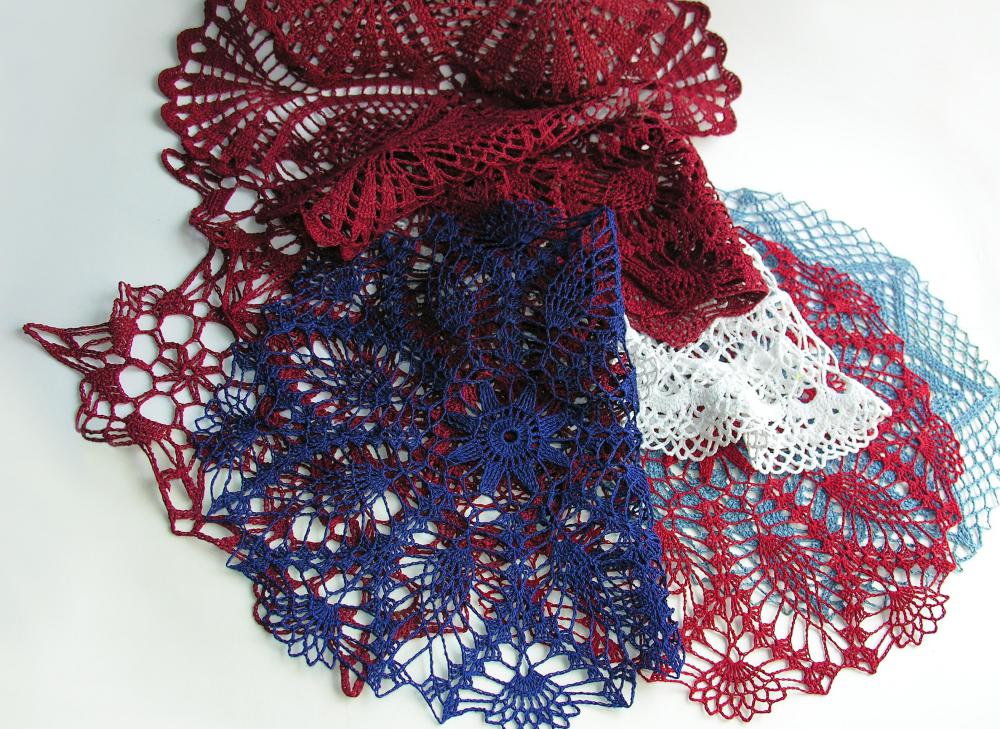
![Upholstery pins may be used to keep doilies secured.]() By: Maria BrzostowskaUpholstery pins may be used to keep doilies secured.
By: Maria BrzostowskaUpholstery pins may be used to keep doilies secured.


Discussion Comments
I always forget that safety pins were originally meant for things like sewing, considering that people use them for all sorts of things these days, from constructive to decorative.
While a lot of people, myself and my mother included, tend to store pins in sewing pin cushions, it is important to know what kind of pins you put on a cushion, since when their ends stick out it might be harder to remember the type or size. I find these work best for standard sewing pins anyway, though; larger pins do not always stay in as well and might still prick you, which is what these cushions are meant to avoid.
When using straight pins for sewing, I find it usually does not matter very much what size pins I am using; the important thing is that a pin can go through all of the layers of fabric I am pinning together. Most of the time, the standard size I have on hand is good enough.
Post your comments