
At WiseGEEK, we're committed to delivering accurate, trustworthy information. Our expert-authored content is rigorously fact-checked and sourced from credible authorities. Discover how we uphold the highest standards in providing you with reliable knowledge.
What are the Different Types of Nerve Tissue?
Nerve tissue is the primary component of the nervous system in the bodies of vertebrates, including humans. The nervous system consists of nerves that are responsible for controlling, as well as regulating, body functions. The brain and spinal cord are also included, meaning there are several different types of nerve tissue are present in the body.
There are two main categories of nerve tissue: that found in the central nervous system and that in the peripheral nervous system. The central nervous system is made up of tissue found in the brain and spinal cord, while the peripheral nervous system contains nerve cells, fibers, and ganglia located elsewhere in the body.

The tissue located in the brain and spinal cord consists of both gray and white matter. Gray matter is responsible for muscle control in the body, and it also helps with various sensory perceptions, including the ability to hear and see. Speech, memory, and emotions are also regulated by this type of nerve tissue. The white matter of the central nervous system helps regulate important body functions, such as blood pressure and body temperature.

The nerve tissue in the peripheral nervous system includes nerves in both the spinal cord and outside the brain. This tissue primarily connects the central nervous system to the rest of the body, so it's present in each of the body systems. The peripheral nervous system is broken into two sub-categories: the autonomic and somatic nervous systems.
The somatic nervous system is designed to help with voluntary body functions and other tasks that can be consciously controlled. Intentional muscle movement is an example of this type of tissue at work. This system also helps a person be aware of his or her immediate surroundings by assisting in the senses of the body, such as processing sight and sound.
The autonomic nervous system contains tissue that helps regulate body functions that cannot be controlled on a conscious level, such as digestion and the regulation of the heart rate. The ability to sweat or produce saliva is also attributed to the tissue found in the autonomic nervous system. The act of breathing is controlled by the cooperation of both the somatic and autonomic nervous systems.
AS FEATURED ON:
AS FEATURED ON:









-
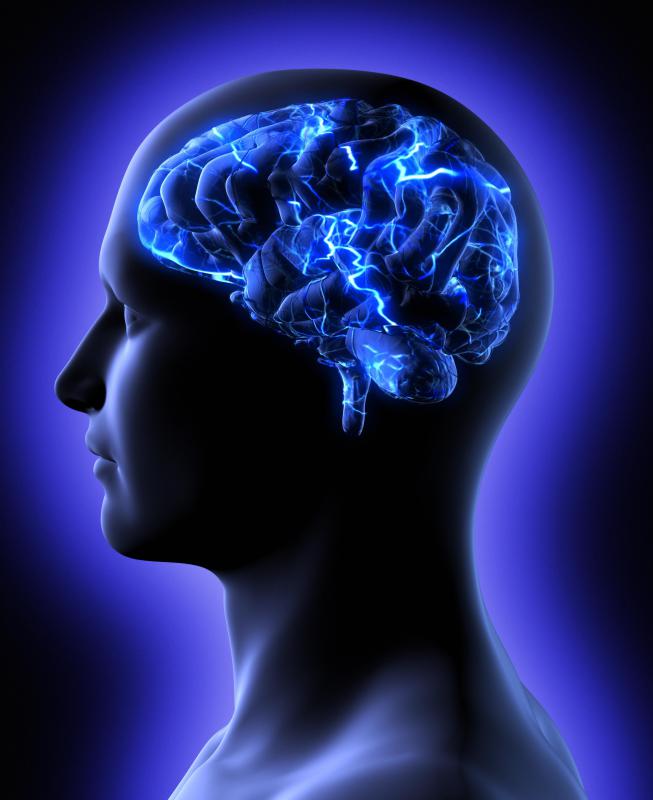
![The central nervous system is made up of tissue found in the brain, as well as the spinal cord.]() By: James SteidlThe central nervous system is made up of tissue found in the brain, as well as the spinal cord.
By: James SteidlThe central nervous system is made up of tissue found in the brain, as well as the spinal cord. -
![The ability to produce saliva is attributed to tissue found in the autonomic nervous system.]() By: Adrian CosteaThe ability to produce saliva is attributed to tissue found in the autonomic nervous system.
By: Adrian CosteaThe ability to produce saliva is attributed to tissue found in the autonomic nervous system.

Discussion Comments
@BostonIrish
It seems like the function of the brain and the nervous system could be compared to the internet. We are all like nerves that interact in a vast web of small senses, and work together to make things happen in the larger body, responding to adversity and pain.
All of nerves form a fractal that is very much like a tree, with branches constantly branching out to form a fractal form of a web. This web receives signals from many different places and brings them together to a central database via the spine. This database, the human brain, is a vast clump of interacting nerve cells which make decisions at a conscious and unconscious level concerning the signals it receives.
The autonomic nervous function is a result of our pre-programming as a species on the DNA level of cellular function. This database of instincts causes us to develop the basic function of decision making from a young age and enable our proper control of the somatic nervous function. In this way, the conscious mind springs out of the unconscious mind during childhood.
Post your comments