
At WiseGEEK, we're committed to delivering accurate, trustworthy information. Our expert-authored content is rigorously fact-checked and sourced from credible authorities. Discover how we uphold the highest standards in providing you with reliable knowledge.
What are the Different Types of Human Enzymes?
There are three main enzymes found in a human body: digestive, metabolic, and food enzymes. Each one speeds up a different chemical reaction inside the body. Sometimes a natural enzyme is needed, and these can be found in supplements and many raw foods.
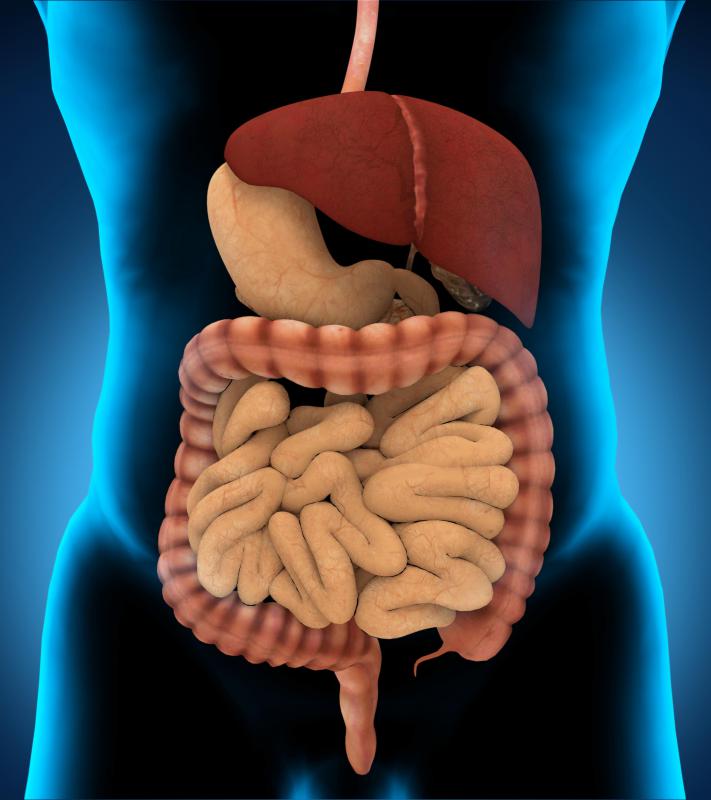
Some of the most important types of human enzymes are the digestive kind, which are secreted by the mouth, stomach, pancreas, and intestines. These are necessary for breaking down and digesting foods. After food has been broken down, vital nutrients are then delivered throughout the body via the bloodstream. Each digestive substance is named and classified based on what complex food it breaks down.

Protease, for example, helps break down complex proteins into much simpler amino acids. Lipase breaks down fats and other lipids, and converts them to fatty acids and glycerol. Amylase helps convert complex carbohydrates to simple sugars, like glucose.
Metabolic enzymes are predominately produced in and secreted by the pancreas. These serve a few important purposes. Along with purifying the blood, they also help the body absorb oxygen from the blood. They also aid in the production of energy.

One of the other main functions of a metabolic enzyme is maintaining the body's various tissues. They do this by converting proteins, fats, and carbohydrates into necessary cells that produce the tissues in the body. As humans get older, their bodies produce smaller amounts of enzymes, and many scientists believe this is a major part of the aging process.

Natural food enzymes are the last type of human enzymes. These are found naturally in some foods and aid in digestion of the particular foods they are in. Raw, unprocessed foods are generally thought to be the best source of these, since cooking foods can lower levels. Bananas, papayas, mangoes, and avocados are considered to have high levels of these.

Several supplements on the market claim to make up for a low enzyme level in a person's body. Companies that manufacture these products claim their supplements can improve a person's health in a number of ways, including slowing the aging process. Unfortunately, there has been no clinical evidence that supports this. Lactase supplements, for example, may help digestion for a short period of time, but they are typically destroyed long before they reach any other parts of the body.
AS FEATURED ON:
AS FEATURED ON:









-
![Metabolic enzymes are produced and secreted by the pancreas.]() By: pixdesign123Metabolic enzymes are produced and secreted by the pancreas.
By: pixdesign123Metabolic enzymes are produced and secreted by the pancreas. -
![Bananas have high levels of natural food enzymes.]() By: Tim URBananas have high levels of natural food enzymes.
By: Tim URBananas have high levels of natural food enzymes. -
![One type of human enzyme are digestive enzymes, which are located in the digestive tract.]() By: nerthuzOne type of human enzyme are digestive enzymes, which are located in the digestive tract.
By: nerthuzOne type of human enzyme are digestive enzymes, which are located in the digestive tract. -
![Most natural food stores stock several types of enzyme supplements.]() By: AriwasabiMost natural food stores stock several types of enzyme supplements.
By: AriwasabiMost natural food stores stock several types of enzyme supplements. -
![The human body producing fewer enzymes is believed to be a natural part of the aging process.]() By: Gianfranco BellaThe human body producing fewer enzymes is believed to be a natural part of the aging process.
By: Gianfranco BellaThe human body producing fewer enzymes is believed to be a natural part of the aging process.




Discussion Comments
@Ceptorbi - Proteolytic enzymes are digestive enzymes that break down protein in foods. The pancreas produces two proteolytic enzymes called trypsin and chymotrypsin. However, some foods also contain this type of enzyme. Pineapples, for example, contain bromelain and papayas contain papain. Since your body produces proteolytic enzymes, you don't have to consume them in food or via supplements. Supplements containing them, though, are marketed to people who have trouble digesting proteins.
What are proteolytic enzymes, and do I need to buy a supplement containing them, or can I get them from food?
Post your comments