
At TheHealthBoard, we're committed to delivering accurate, trustworthy information. Our expert-authored content is rigorously fact-checked and sourced from credible authorities. Discover how we uphold the highest standards in providing you with reliable knowledge.
What Are the Different Types of EKG Leads?
In electrocardiography, a “lead” is basically an angle achieved by electrode placement and recording that can give medical experts some precise insight about the way the heart is working and how powerfully it is beating. A standard electrocardiogram (ECG or EKG) uses a series of 12 leads, but depending on the patient’s situation and the likely diagnoses, 3-lead and 5-lead models are sometimes also used. Most of the time, the patient's limbs, which is to say the arms and legs, are the core leads. Various places on the chest surface are usually also used. Electrode sensors are placed in these locations and then energy waves are pulsed through; the resulting echo maps to a graph that experts can use to make a number of measurements and diagnoses. The types of EKG leads usually correspond to their spatial direction in the results, specifically right and left; superior and inferior; and anterior and posterior. Actually analyzing and using the results tends to be a complex science, but simply understanding the leads tends to be more straightforward.
Understanding Electrocardiograms Generally

An electrocardiogram, often more commonly referred to as either an ECG or EKG, is a fairly common medical procedure that records information about the electrical conductivity of the heart. Electrodes, small metallic devices that receive electrical impulses, are placed in different areas of the body as leads. The number of leads can vary depending on how in depth the testing is, though 12 is usually the standard and most comprehensive approach. Practically speaking, this means that the testing electrodes are placed strategically so as to create 12 distinct angles of measurement.

The principles of the ECG existed before the invention of the machine. William Einthoven is most commonly credited with creating this electronic measure of the heart's contractivity. Beginning in 1903, measurements of heart rate, rhythm, and strength of contraction have all been made possible by the ECG.
How Leads Work
The electrical activity that causes heart contraction is picked up through the strategic placement of leads in different locations around the body. These electrodes may be compared and contrasted to deduce electronic differences during the phases of contraction. The 12-electrode lead approach is the most complex and telling, whereas the 5- and 3-lead EKGs are the middle and least conclusive, respectively.
12-Lead Model

The placement of the 12-lead EKG is usually done in four columns. The first column is composed of the limb leads and are traditionally named leads I,II, and III. The second column contains leads called aVR, aVL, aFV, collectively termed the augmented limb leads. The third and fourth columns of 12-lead electrodes are placed on the chest and tagged as V1 through V6.

Although these different EKG leads may be difficult to visualize based on their scientific descriptions, they may also be referenced in regards to bodily location. In this manner, the first three of the ten leads are the right, or RA. LA stands for left arm, and right leg can be abbreviated as RL. The LL is placed on the left leg, and V1 through V4 are placed down the ribs, with V5 and V6 located in proximity to the axillary, or armpit, line. After the leads are properly placed on adequately prepped skin, the EKG may be effectively performed.
3-Lead and 5-Lead Alternatives

Three-lead placement is performed on three different sides of the heart, usually one below and one to both the left and right of the heart. These may be placed, for example, of the left ankle and both wrists bilaterally. Comparably, all three leads may be placed on the torso, but they must be consistent with angles respective to one another. The five-lead version typically provides more information through greater lead placement, which yields more possible angle combinations.
AS FEATURED ON:
AS FEATURED ON:


-
![A man getting an EKG.]() By: nyulA man getting an EKG.
By: nyulA man getting an EKG. -
![The number of EKG leads may vary depending on how in depth the testing is.]() By: Gennadiy PoznyakovThe number of EKG leads may vary depending on how in depth the testing is.
By: Gennadiy PoznyakovThe number of EKG leads may vary depending on how in depth the testing is. -
![ECG's (also known as EKG's) monitor electrical activity of the heart, the signals that cause the heart to beat.]() By: adimasECG's (also known as EKG's) monitor electrical activity of the heart, the signals that cause the heart to beat.
By: adimasECG's (also known as EKG's) monitor electrical activity of the heart, the signals that cause the heart to beat. -
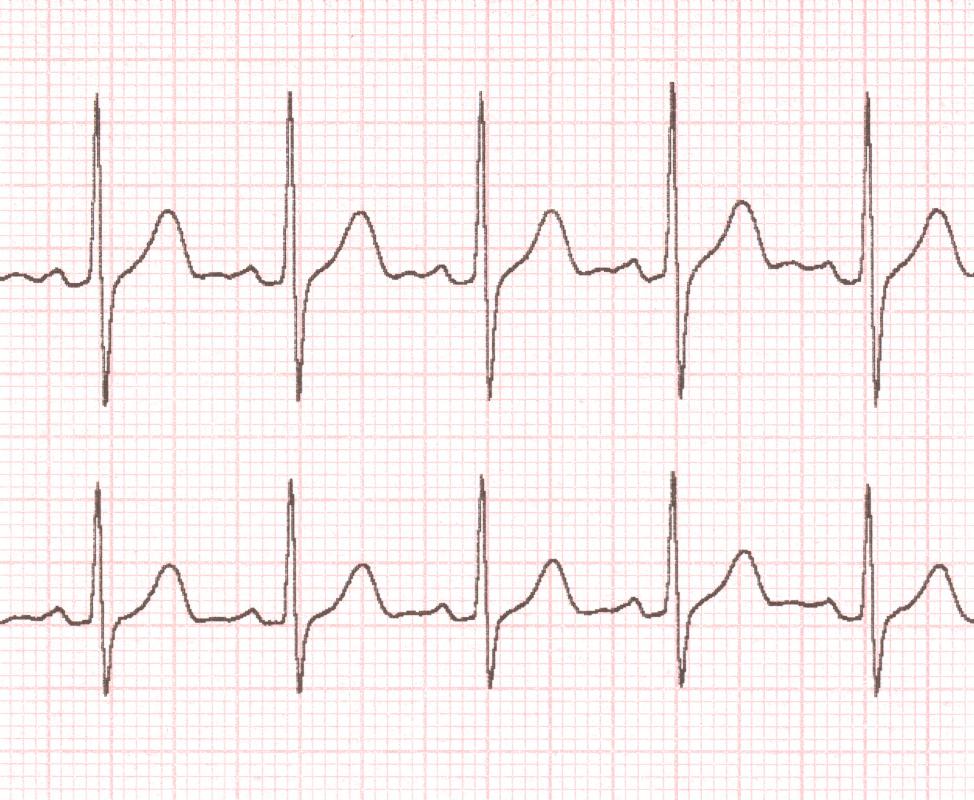
![A readout of electrical activity of the heart will be provided during an ECG.]() By: ILYA AKINSHINA readout of electrical activity of the heart will be provided during an ECG.
By: ILYA AKINSHINA readout of electrical activity of the heart will be provided during an ECG. -
![In many cases, patients in the intensive care unit will be monitored continuously using an EKG machine.]() By: sudok1In many cases, patients in the intensive care unit will be monitored continuously using an EKG machine.
By: sudok1In many cases, patients in the intensive care unit will be monitored continuously using an EKG machine.



Discussion Comments
I have to have an EKG every 6 months. I am on some experimental medication that has been known to affect heart rhythm, so I have to get checked out twice a year, just to make sure that my heart rhythm hasn't become erratic.
The technician uses 12 EKG leads on my body each time. They resemble stickers, and she puts them on my arms, legs, and chest.
The EKG only lasts a few seconds. I think it took more time for her to place the leads on my body than to perform the actual test.
Since these leads stick to my body, it can hurt a little when she rips them off. She yanks them quickly off my skin, and they tend to take any body hair I might have with them.
Post your comments