
At WiseGEEK, we're committed to delivering accurate, trustworthy information. Our expert-authored content is rigorously fact-checked and sourced from credible authorities. Discover how we uphold the highest standards in providing you with reliable knowledge.
What Are the Different Types of Autoimmune Skin Disorders?
There are many different autoimmune skin disorders, as well as a range of larger autoimmune conditions that may include skin problems among their symptoms. In general, though, four specific ailments make up the bulk of all diagnoses. Psoraisis usually involves patches of very itchy, scaly skin that seems to flake off, and is almost always strictly external, whereas scleroderma can cause a thickening of the skin around the hands and feet but primarily impacts the innermost layers of skin tissues. Disorders in the bullous family are usually characterized by large, sometimes pus-filled blisters, and a condition known as alopecia areata primarily affects the scalp and can lead to hair loss. Many of these conditions can resemble other less serious skin problems, particularly at first. Their designation as autoimmune usually means that regular treatments aren’t likely to be effective. The conditions can usually be controlled, but often only with a range of powerful medications.
Understanding Autoimmune Conditions Generally

When a disease or disorder is called autoimmune, it basically means that the body is actually attacking itself. The body’s immune system is the primary means of protection against outside threats, and its main purpose is to protect and defend the body from invaders. The skin is that system’s first defense. In the case of an autoimmune disorder, something gets confused and, rather than attack outside or foreign substances, the body starts attacking itself. Many problems will simply fix themselves with time, but this isn’t usually possible with autoimmune conditions. Sufferers can’t usually find relief until the signaling problem is corrected or at least minimized.

It’s often hard to diagnose autoimmune skin conditions in their early stages, since they often simply look like rashes, allergies, or patches of dryness — all of which usually will go away on their own or respond to topical treatments like lotions and medicated creams. A formal diagnosis usually requires blood work and other tests, and people who are found to be sufferers often face a lifetime of treatments. Sometimes the immune system can be trained to stop attacking itself, but not usually.
Psoriasis
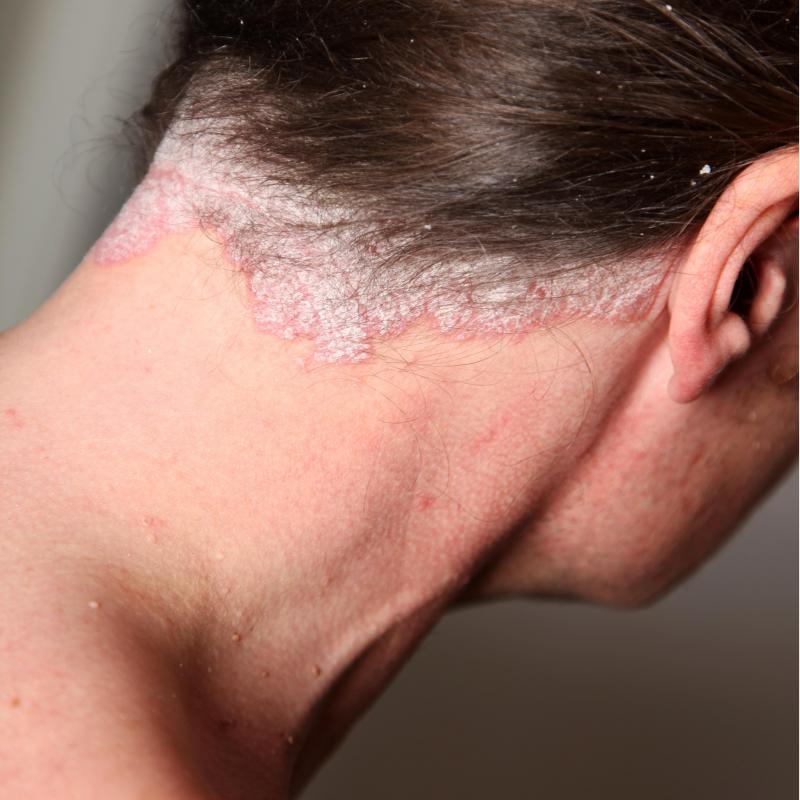
One of the most common autoimmune skin disorders is psoriasis. Psoriasis is a chronic condition, and symptoms include thickened, itchy skin with red or pink scaly patches. The problem usually happens when the process of cell renewal in the body becomes disrupted and the body produces new cells faster than it can cast off old cells. While not a serious condition in and of itself, it is often quite uncomfortable. Furthermore, scratching or picking at outbreaks may cause serious infections.
Scleroderma
Scleroderma is a disorder that works primarily internally, which can make its symptoms harder to notice and harder to diagnose as well. Compared to other skin conditions it also has a higher potential of becoming serious or even life threatening. The disease attacks connective tissues throughout the body and results in hardening of the skin, blood vessels, and organs. Symptoms include paleness in the extremities, feeling cold, pain, and inflammation. Skin thickening in the hands and feet are a common occurrence as well. If left untreated the disease may lead to serious complications, such as kidney damage, hypertension and heart issues.
Bullous Disorders
Bullous autoimmune skin disorders include a wide variety of conditions that are typically chronic and are usually caused either by autoantibodies or genetic defects. Disorders in this family include bullous pemphigoid, epidermolysis bullosa acquisita, paraneoplastic pemphigus, and dermatitis herpeti-formis, among many others. The specific type is usually determined by the location on the body where the disease manifests.
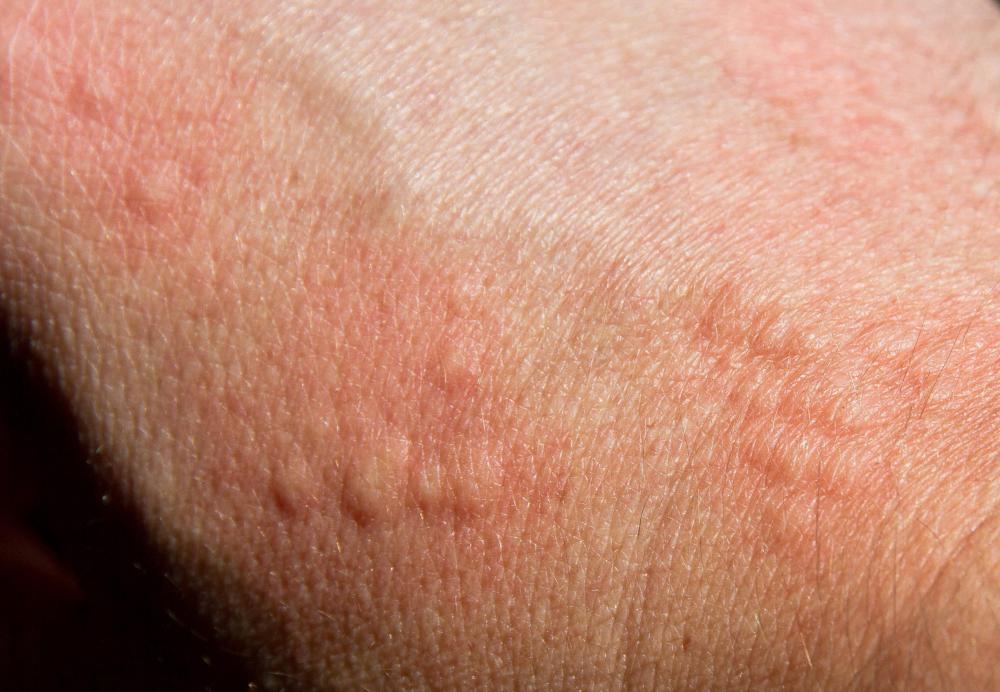
The most prominent feature of this family of autoimmune skin disorders is blisters, which cause eruptions on the surface of the skin as well as itchy rashes or hives in the affected area. These skin eruptions sometimes resemble serious burns and can develop anywhere on the body. Blisters typically develop in one region, such as the arms, inner thighs, groin, or abdomen. In some instances, however, they may appear over the entire body.
Alopecia Areata
Alopecia areata is a skin disorder that results in hair loss. In its most common form it can be isolated to the scalp, but in some more advanced cases people can experience total hair loss over the entire body, which is called alopecia areata universalis. All variations of the condition arise when the immune system attacks hair follicles. The condition most commonly presents during childhood and can affect both genders. The cause is unknown, but studies indicate that a genetic influence followed by some sort of environmental trigger, such as a virus, might be responsible.
AS FEATURED ON:
AS FEATURED ON:









-
![Psoriasis can cause skin problems on the body and head.]() By: Farina3000Psoriasis can cause skin problems on the body and head.
By: Farina3000Psoriasis can cause skin problems on the body and head. -
![An outbreak of hives can stem from an autoimmune disorder.]() By: Jürgen FälchleAn outbreak of hives can stem from an autoimmune disorder.
By: Jürgen FälchleAn outbreak of hives can stem from an autoimmune disorder.
Discussion Comments
Hidradenitis suppurativa, too.
Post your comments