
At TheHealthBoard, we're committed to delivering accurate, trustworthy information. Our expert-authored content is rigorously fact-checked and sourced from credible authorities. Discover how we uphold the highest standards in providing you with reliable knowledge.
What are the Different Stages of Cancer?
 Mary McMahon
Mary McMahon
Mary McMahon
Several different systems are used for ranking cancers by stage in the process of developing a treatment program. Staging this disease is important, because it allows a medical professional to assess it and use standardized terminology to describe it, so that the medical team can work together to develop the best course of treatment. Stages are ranked in order of severity, with slow or non-aggressive ones at the bottom of the scale, and fast-moving, severe cancers at the top.
One very common system for staging cancers runs from zero to four, with a stage zero being the least severe, while four is the most aggressive. An alternate numbered staging system is depicted in Roman numerals, with the option of I, II, III, and IV. Some physicians break the Roman numeral staging system down even further, with classifications like IIa and IIb to describe conditions that fall slightly between the stages.

Some medical professionals use the TNM system, which ranks a cancer with three separate parameters: tumor size, lymph node involvement, and metastasis. For example, someone could have a T3, N0, M1 cancer, meaning that the tumor was medium-sized, no lymph nodes are involved, and it has begun to metastasize slightly.
Other oncologists refer to in situ, localized, regional, and distant cancers when they talk about staging. In situ cancers are those that only involve a few cells, meaning that they are caught early or they develop slowly. Localized ones affect a larger area, while regional cancers are those that have begun to spread to neighboring organs and lymph nodes. In a distant cancer, it has spread to remote areas of the body, reflecting a widespread metastasis. This system is essentially interchangeable with the Roman numeral system of staging.

All types of cancer can be ranked under a staging system, including breast, colon, lung, and cervical cancers. Lower stages usually require less aggressive treatment, because the tumor is confined to a small area, and it may be able to be excised and eliminated. Higher stages require more serious treatment, and in some cases, it may be deemed untreatable as a result of how much it has spread.

Medical professionals sometimes disagree over the staging of a particular case, and seeking a second opinion can sometimes generate conflicting information. If healthcare providers do give different answers, it is a good idea for the patient to ask about why they disagree on their staging assessment, and how their treatment approaches might differ.
Mary McMahon
Ever since she began contributing to the site several years ago, Mary has embraced the exciting challenge of being a TheHealthBoard researcher and writer. Mary has a liberal arts degree from Goddard College and spends her free time reading, cooking, and exploring the great outdoors.
Learn more...
Mary McMahon
Ever since she began contributing to the site several years ago, Mary has embraced the exciting challenge of being a TheHealthBoard researcher and writer. Mary has a liberal arts degree from Goddard College and spends her free time reading, cooking, and exploring the great outdoors.
Learn more...AS FEATURED ON:
AS FEATURED ON:


-
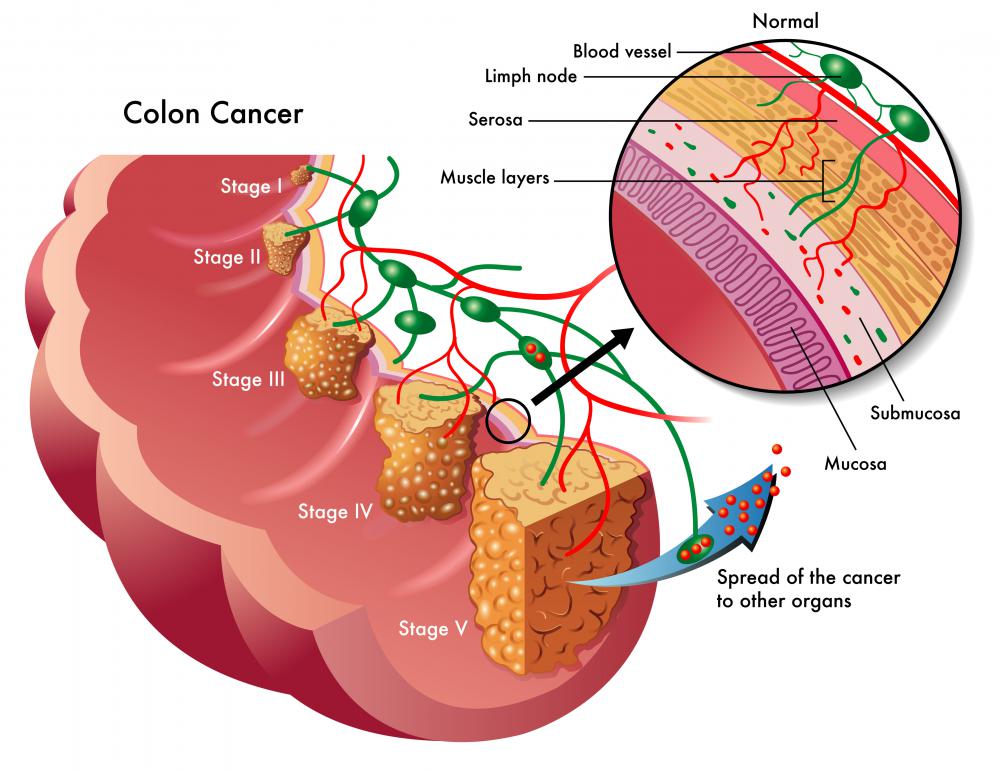
![Several systems rank cancer by stages of severity.]() By: BVDCSeveral systems rank cancer by stages of severity.
By: BVDCSeveral systems rank cancer by stages of severity. -
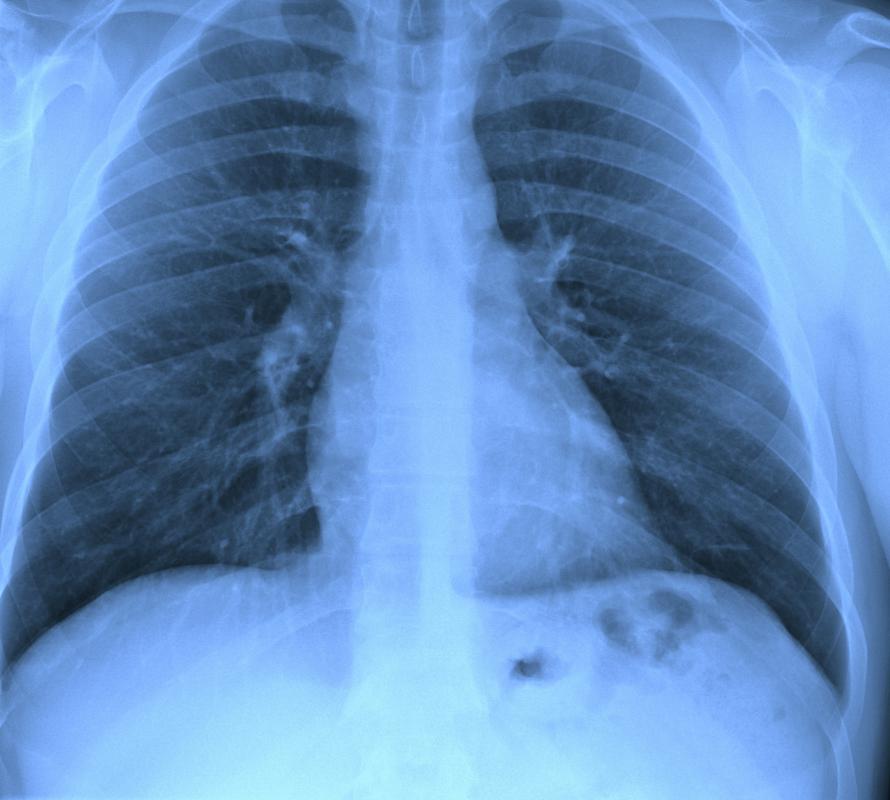
![An x-ray of cancerous lungs.]() By: itsmejustAn x-ray of cancerous lungs.
By: itsmejustAn x-ray of cancerous lungs. -
![If a patient is in an early cancer stage, surgery may be necessary to remove the tumor.]() By: deregeIf a patient is in an early cancer stage, surgery may be necessary to remove the tumor.
By: deregeIf a patient is in an early cancer stage, surgery may be necessary to remove the tumor. -
![One very common system for staging cancers runs from zero to four.]() By: rob3000One very common system for staging cancers runs from zero to four.
By: rob3000One very common system for staging cancers runs from zero to four.


Discussion Comments
@anon177729: "Outpatient" means the person is not staying overnight in the hospital. They may go to the hospital or cancer center for their treatments, but they are not in the hospital overnight.
What does outpatient s means? Do the outpatients need to stay at the hospital or not?
@Anon115747: Yes, it means she has cancer. Is it life-threatening? I don't know. It's great that you want to support your friend. Let me suggest you contact your local chapter of the American Cancer Society. You can look in the phone book or online. Someone with the ACS can give you ideas about how to support your friend. They probably have a booklet or brochure you can read for more guidance on this. A person facing cancer needs his or her friends.
A friend has been told she has optic nerve glioma and she will shortly be undergoing chemo, etc. I want to understand this a little more to support her. Does this mean she has a form of cancer and is it life threatening ?
i have read this but i do not know anything about it, but my health teacher said you do not want to get cancer.
I admire your great gift of health that protects you at 76 from terminal diseases.
I am exploring systemic enzymes to help my body deal with inflammations (which are precursors of cancer) keep eating healthy minimizing animal meats, drinking plenty of water, exercising, being content, Yoga helps to release stress and unites the body-breath-mind, so I function as one piece.
Best regards, Health and longevity!
I have cancer in both lungs. But it is not termed lung cancer. It is kidney cancer. 13 years prior to detection, my right kidney was removed due to an encapsulated tumor.
The first and second opinion oncology docs agreed that, due to the slow growth nature of these tumors, no treatment was warranted.
No change in size (3mm) was reported over the last year. As my age is 76, both docs are of opinion that these cancers are unlikely to affect my life.
It would be nice to unquestionably accept their professional opinion. I am not 'there' yet. The docs credit my immune system. Headaches,infections never; colds, and flu rarely (two colds, flu once in 15-20 years). Still, would like to bolster/help the immune system. Fruits are a life long part of my regular food intake- grapes, dark plums, apples, peaches, cantalupes, etc. Have started brushing teeth multiple times per day to reduce workload on immune system. Comments, suggestions, other options requested.
Synthroid is the sole prescription medication.
I've read that not only do doctors sometimes disagree over the staging of a particular cancer, but that different cancers are sometimes staged with different systems. Lymphomas, for example, uses the Ann Arbor staging classification.
Post your comments