
At PracticalAdultInsights, we're committed to delivering accurate, trustworthy information. Our expert-authored content is rigorously fact-checked and sourced from credible authorities. Discover how we uphold the highest standards in providing you with reliable knowledge.
What are the Different Neurology Jobs?
 Mary Elizabeth
Mary Elizabeth
Mary Elizabeth
Neurology is the area of medicine that deals with the nervous system and its disorders. There are several ways to categorize neurology jobs. One is by the occupational title of the person working in an area of neurology. Another is by the type of work being done, and lastly, we can look at the subspecialties that make up the field.
People who hold neurology jobs typically hold one of four or so occupational titles. First, a neurologist is a physician with specialist training in diagnosis and treatment of diseases of the nervous system and nerves. Second, a neurology nurse is a licensed health professional with specialist training in neurology as well as understanding and skill in services that promote and restore health. Third, a neurology nurse practitioner is a nurse with advanced training in health assessment as it relates to neurology. Fourth, a neurology physician assistant (PA) is a health professional trained in a portion of the duties of a physician and able to assist in taking patient histories, doing physical examinations, drawing blood, and other routine procedures with the physician supervising.

Neurology jobs categorized by type of work give us a different view of the profession. First, there are clinical practice jobs, in which the primary objective is treating patients. This is often combined with teaching, either in a medical school, a neuroscience department in a college or university, or both. One could also teach neuroscience without engaging in clinical practice. Another area, which can be the sole element of the job or combine with teaching and/or clinical practice is research. In 2000, according to the American Association of Neurologists, at least 40% of neurologists were involved in both clinical practice and clinical research.

Finally, we can categorize neurology jobs by the subspecialties, using either the American Board of Psychiatry and Neurology (ABPN) subspecialties—i.e., the specialties that are eligible for certification—are the subspecialties that appear in the field, for example, in medical colleges. In the first case, the subspecialties of neurology are Child Neurology, Clinical Neurophysiology, Hospice and Palliative Medicine, Neurodevelopmental Disabilities, Neuromuscular Medicine, Pain Medicine, Sleep Medicine, and Vascular Neurology. Subspecialties that appear in medical schools and therefore are linked to neurology jobs include Epilepsy, Neuro-oncology, Multiple Sclerosis, Dementia, Neuropsychology, Parkinson and Movement Disorders, Neuro-Opthamology, Neurogenetics, Headache Medicine, Autonomic Disorders, Behavioral Neurology, Geriatric Neurology, Neurocritcal Care, and Neuroimaging. Neurology is an evolving field, and new subspecialties—and therefore, new types of neurology jobs—are likely to continue emerging.
Mary Elizabeth
Mary Elizabeth is passionate about reading, writing, and research, and has a penchant for correcting misinformation on the Internet. In addition to contributing articles to PracticalAdultInsights about art, literature, and music, Mary Elizabeth is a teacher, composer, and author. She has a B.A. from the University of Chicago’s writing program and an M.A. from the University of Vermont, and she has written books, study guides, and teacher materials on language and literature, as well as music composition content for Sibelius Software.
Learn more...
Mary Elizabeth
Mary Elizabeth is passionate about reading, writing, and research, and has a penchant for correcting misinformation on the Internet. In addition to contributing articles to PracticalAdultInsights about art, literature, and music, Mary Elizabeth is a teacher, composer, and author. She has a B.A. from the University of Chicago’s writing program and an M.A. from the University of Vermont, and she has written books, study guides, and teacher materials on language and literature, as well as music composition content for Sibelius Software.
Learn more...AS FEATURED ON:
AS FEATURED ON:


-
![Neuroimaging is used to identify brain damage.]() By: NobiliorNeuroimaging is used to identify brain damage.
By: NobiliorNeuroimaging is used to identify brain damage. -
![A neurology physician assistant must, among other procedures, know how to draw blood from a patient.]() By: Tim URA neurology physician assistant must, among other procedures, know how to draw blood from a patient.
By: Tim URA neurology physician assistant must, among other procedures, know how to draw blood from a patient. -
![A geriatric neurologist must be familiar with legal topics such as advance directives, which specify how a patient would like to be treated in the event of incapacitation.]() By: Hakan KızıltanA geriatric neurologist must be familiar with legal topics such as advance directives, which specify how a patient would like to be treated in the event of incapacitation.
By: Hakan KızıltanA geriatric neurologist must be familiar with legal topics such as advance directives, which specify how a patient would like to be treated in the event of incapacitation. -
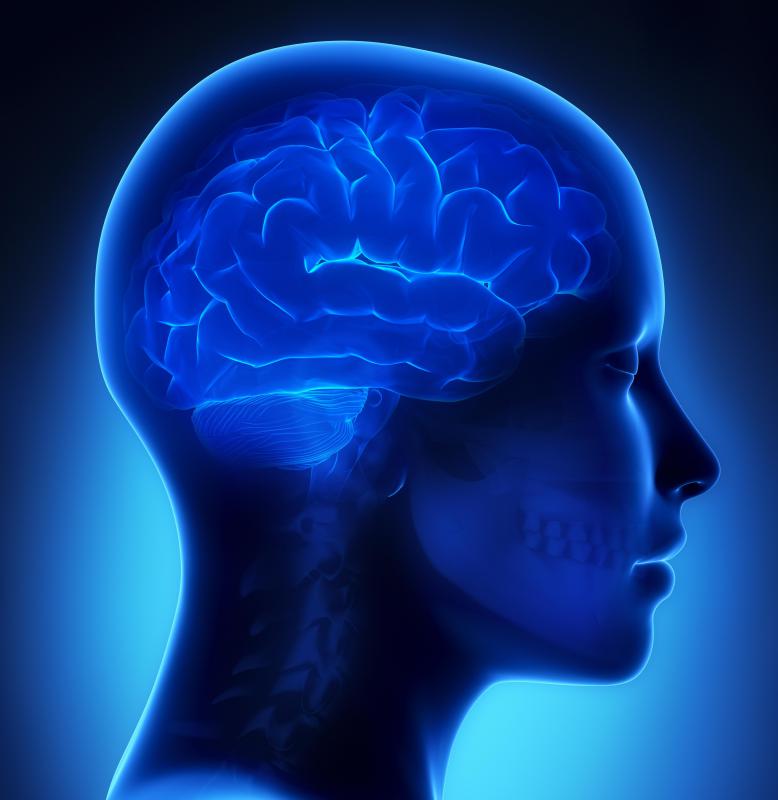
![Neurology is a medical specialty that focuses on conditions of the brain and other parts of the human nervous system.]() By: CLIPAREA.comNeurology is a medical specialty that focuses on conditions of the brain and other parts of the human nervous system.
By: CLIPAREA.comNeurology is a medical specialty that focuses on conditions of the brain and other parts of the human nervous system. -
![Some neurologists specialize in working with elderly patients.]() By: krutoevaSome neurologists specialize in working with elderly patients.
By: krutoevaSome neurologists specialize in working with elderly patients. -
![A neurologist may help individuals who are suffering from dementia.]() By: SmailhodzicA neurologist may help individuals who are suffering from dementia.
By: SmailhodzicA neurologist may help individuals who are suffering from dementia. -
![A neurology physician assistant is trained to practice medicine while directly supervised by a physician.]() By: BurlinghamA neurology physician assistant is trained to practice medicine while directly supervised by a physician.
By: BurlinghamA neurology physician assistant is trained to practice medicine while directly supervised by a physician. -
![Neurologists are physicians who have completed advanced training and have become board certified in their area of expertise.]() By: s_lNeurologists are physicians who have completed advanced training and have become board certified in their area of expertise.
By: s_lNeurologists are physicians who have completed advanced training and have become board certified in their area of expertise.






Discussion Comments
@bythewell - Likewise, geriatric neurology and dementia care in general are both going to be looking for talented people in the next few decades. The population in a lot of developed countries is top heavy, so there is going to be a boom of retired folk soon.
And many of them have a lot of income and will live long enough to suffer from degenerative diseases they might not have otherwise had.
Every kind of geriatric care is going to need an influx of workers, but I imagine neurologists and others in that field will be in particular demand.
Sleep is starting to be seen as more and more important to overall health. I didn't know that sleep medicine was considered a part of neurology, but I think it is probably a good specialty to go into.
There are certainly not going to be any lack of jobs for people who know what they are doing in this field.
This is probably because the average person is growing in size, and this can make sleeping difficult.
Since sleep is so crucial to health (and lack of sleep can in fact make people even more prone to fat) it is the kind of thing people are starting to take to their doctors more regularly. I guess that's just one more reason to go into neurology!
Post your comments