
At DelightedCooking, we're committed to delivering accurate, trustworthy information. Our expert-authored content is rigorously fact-checked and sourced from credible authorities. Discover how we uphold the highest standards in providing you with reliable knowledge.
What are the Different Kinds of Vinegar?
 Mary McMahon
Mary McMahon
Mary McMahon
Vinegar is an ancient condiment which has been used to flavor and preserve food for centuries. It is made by fermenting fruits or grains past the alcohol stage, until they sour and form acetic acid. There are numerous types, usually named after the substance used as a base, and with varying flavors. Many cooks stock multiple kinds of vinegar in the cupboard to flavor various dishes, and some cooks may also flavor it with the addition of herbs, flowers, or fruits.
The most common examples are cider, balsamic, rice, and white vinegars. There are numerous other types, as almost any type of fruit can be fermented into this condiment. In some Asian cuisines, coconut vinegar is popular, while honey, cane, and date varieties are made in other parts of the world. All types share a sour flavor, thanks to the acetic acid, and higher levels of the acid can also be used to preserve food so that it will not go bad.

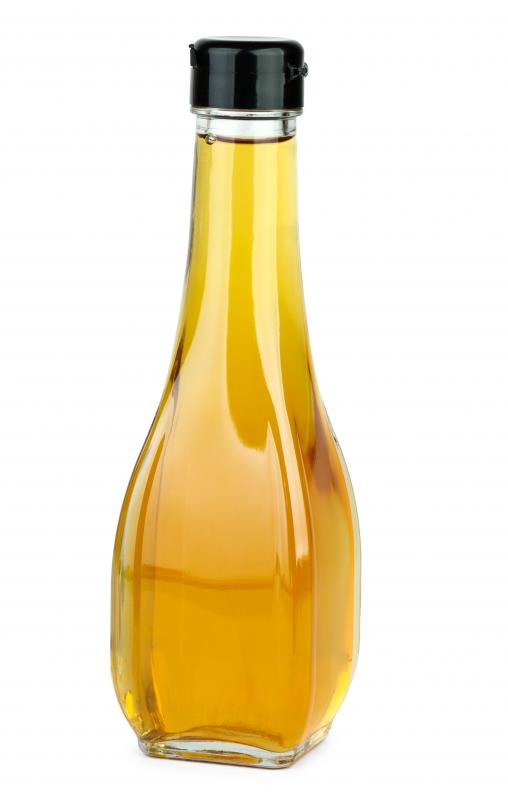
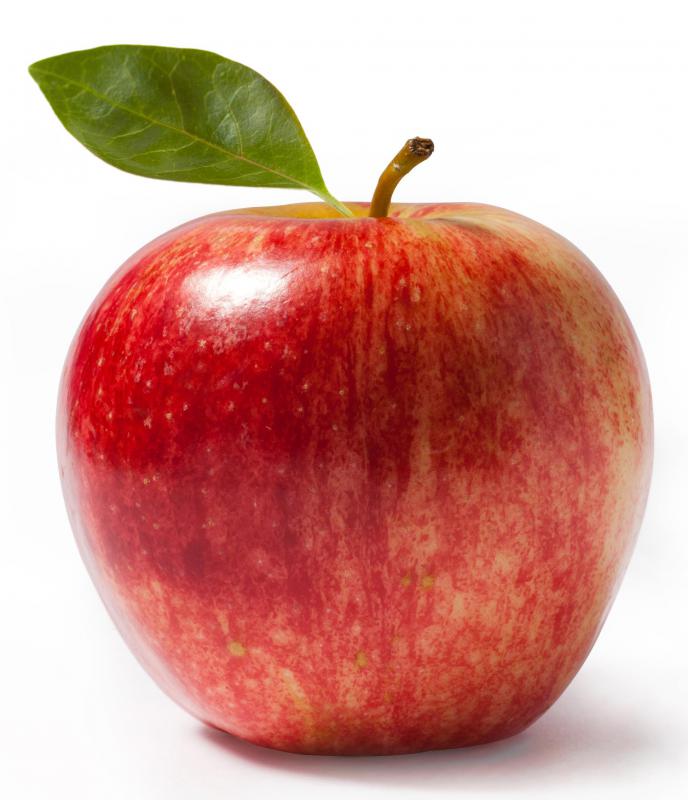
Cider vinegar is typically made from apples, and is created by crushing apples in a press to make juice, which is fermented into cider and allowed to age. It tends to be brownish yellow in color, with a mild flavor, and some people also believe that it has health benefits. Cider vinegar is frequently used in dressing, and is closely related to wine vinegar.

The wine variety, however, is more mellow, and has a wider range of flavors, because the taste and quality depends entirely on the wine used. This is probably the oldest type, given that the name “vinegar” is derived from a French term, vin aigre, or “soured wine.”
Balsamic vinegar is a product of Italy, primarily from Modena, made with white Trebbiano grapes which are pressed and aged in barrels. It is highly aromatic and has complex flavor, thanks to the long aging. This variety tends to be somewhat sweeter, and is used in dressings, sauces, and desserts. It can be used as a topping vanilla ice cream, for example, and is actually quite delicious.

White vinegar is made by oxidizing distilled grain alcohol. It tends to be the most aggressive in sourness, with a flat and uninteresting flavor. Some cooks use it in particular dishes, and it is also highly useful as a cleaning fluid. Another grain derived type, malt vinegar, is made by malting barley, fermenting it into an ale, and then allowing the ale to turn into vinegar. It has a much more complex flavor, thanks to the inclusion of malted barley, and is popular in England especially.

Many Asian foods call for rice vinegar, which is made with a base of rice. This type is usually quite mild, with a gentle flavor that compliments Japanese and Chinese cuisine. Different types are available, made with black, red, or white rice, and sometimes fortified with rice wine. Because of the mild flavor, it can take some time to adjust to the differences between Western and rice versions.
Mary McMahon
Ever since she began contributing to the site several years ago, Mary has embraced the exciting challenge of being a DelightedCooking researcher and writer. Mary has a liberal arts degree from Goddard College and spends her free time reading, cooking, and exploring the great outdoors.
Learn more...
Mary McMahon
Ever since she began contributing to the site several years ago, Mary has embraced the exciting challenge of being a DelightedCooking researcher and writer. Mary has a liberal arts degree from Goddard College and spends her free time reading, cooking, and exploring the great outdoors.
Learn more...AS FEATURED ON:
AS FEATURED ON:


-
![White, cider and balsamic vinegar.]() By: Picture PartnersWhite, cider and balsamic vinegar.
By: Picture PartnersWhite, cider and balsamic vinegar. -
![Malt vinegar is made with barley.]()
Malt vinegar is made with barley. -
![Apple cider vinegar.]() By: Roman IvaschenkoApple cider vinegar.
By: Roman IvaschenkoApple cider vinegar. -
![Red and white vinegar.]() By: GeoMRed and white vinegar.
By: GeoMRed and white vinegar. -
![Red wine vinegar can be used for cooking in a variety of ways.]() By: quaysideRed wine vinegar can be used for cooking in a variety of ways.
By: quaysideRed wine vinegar can be used for cooking in a variety of ways. -
![Cider vinegar is typically made from apples.]() By: xiangdong LiCider vinegar is typically made from apples.
By: xiangdong LiCider vinegar is typically made from apples.




Discussion Comments
Vinegar also helps cure hiccups. My mother used to give it to me a tablespoon at a time when I had hiccups. One usually did the trick but sometimes I needed two. Worked every time and I still use it today at age 55.
Has anyone ever made their own homemade vinegar? I wonder how labor intensive or time consuming this might be. We have some apple trees in our yard that produce an abundance of apples every year.
I try to gather as many as I can and use for different things, but had never thought of trying to make my own apple cider vinegar with them.
If someone has done this I would be curious to know how it turned out and if you would do it again.
I have tried most of the common types of vinegar, but would be really interested in trying the coconut or honey vinegar. I wonder if I would be able to find these at an Asian market?
I have also read the are many vinegar benefits when it comes to health, and have been trying to find more ways to include it in my diet. Using it as a topping on ice cream is one way I had never thought of before. I might even be able to get my kids to try vinegar this way.
I keep a bottle of white vinegar around for a couple different reasons. This is the best thing I have found for cleaning windows that doesn't streak.
It might not smell the greatest, but the smell quickly evaporates and you are left with clean windows. It is also cheap and one bottle will last me a long time.
I also had a friend once tell me to use it as a natural weed killer. If you don't want to use chemicals on your lawn, you may want to give this a try. I had moderate success with it. It did kill some weeds, but didn't work as quickly or thoroughly as what I had been using before.
I have a book that talks about all the benefits of apple cider vinegar. They suggest using a natural vinegar that has the mother in it. It is supposed to be good for all kinds of ailments.
I have found that it works good for me for heartburn. It seems strange how something that is as acidic as the cider vinegar would actually help with heartburn, but I have had good results with it.
I take the apple cider vinegar with a little bit of honey and wash it down with water. I really don't mind the taste, and would much prefer to use this than a medication.
can vinegar cure a problem with smelly vaginal discharge by washing with a small amount of vinegar and a cup of warm water?
vinegar is used for cooking.
It keeps teeth clean.
how to make nipa vinegar?
Vinegar in the diet keeps the blood sugar level stable.
Post your comments