
At WiseGEEK, we're committed to delivering accurate, trustworthy information. Our expert-authored content is rigorously fact-checked and sourced from credible authorities. Discover how we uphold the highest standards in providing you with reliable knowledge.
What are the Different Kinds of Vampires in Folklore?
 Niki Foster
Niki Foster
Niki Foster
The bulk of vampire lore originates from Eastern Europe and the surrounding areas, but folklore traditions from around the world feature various forms of blood-sucking monsters. Some similar creatures drain their victims of psychic or sexual energy, health, or qi, also known as life essence. A few of the most well known types of vampires are the nosferatu, moroi, strigoi, and mullo.
Perhaps the most well known form of vampire, popularized by fiction and film in the Western world, is the nosferatu. This Romanian vampire is the illegitimate child of two illegitimate children, and he engages in bloodsucking and sex with mortal women. According to legend, a woman thus impregnated will give birth to a witch or a moroi — also spelled moroii — a "living vampire" as opposed to the undead variety. Moroi are identified at birth by their hairy appearance, although such features as a caul, a tail, or an extra nipple could also signal vampiric identity.

The other main type of vampire in Romanian culture is the strigoi, or strigoii. Strigoi are either living witches or undead vampires, but the living ones become full fledged vampires after their earthly deaths. Living strigoi can send their souls out at night to commune with others of their kind, and the undead feed on the blood of people and livestock. The word strigoi is derived from the name of an ancient Roman bloodusucker, the strix, a nocturnal bird that feeds on humans.
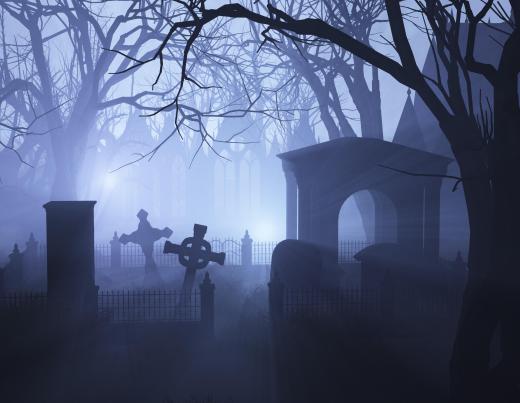
Some Gypsies, or Roma people, traditionally believe that the souls of the dead remain close to their bodies and sometimes wish to come back. The mullo, the Romani version of the vampire, usually returns to the human world to wreak revenge on a relative who has somehow done the dead person wrong. They suck the blood of their victim and otherwise torment him or her. Gypsies also believe in the dhampir, the son of a vampire and a mortal woman, usually the vampire's widow, who is skilled in hunting and killing vampires.

The Indian culture from which the Roma people originated also has many traditional bloodsucking creatures, notably the deity Kali, the black goddess, who, although not a vampire herself, may have inspired other vampire legends. Indian vampires include the bhut, the evil ghost of a man who died an untimely death, and the vetala. Both vampire varieties frequent graveyards, animate corpses, and attack the living. The brahmaparusha, from Northern Indian folklore, drinks its victim's blood through a hole in the skull and then eats the brains, finally dancing with the victim's intestines wrapped around its head.

Creatures similar to European vampires exist in cultures all over the world. One interesting example is the Chinese jiang shi, or hopping corpse, an undead monster who kills its victims by draining their qi. Another well known bloodsucker is the Central American chupacabra, who feeds on the flesh and blood of livestock during the night.
Niki Foster
In addition to her role as a WiseGEEK editor, Niki enjoys educating herself about interesting and unusual topics in order to get ideas for her own articles. She is a graduate of UCLA, where she majored in Linguistics and Anthropology.
Learn more...
Niki Foster
In addition to her role as a WiseGEEK editor, Niki enjoys educating herself about interesting and unusual topics in order to get ideas for her own articles. She is a graduate of UCLA, where she majored in Linguistics and Anthropology.
Learn more...AS FEATURED ON:
AS FEATURED ON:









-
![Some believe that vampires can turn into bats.]() By: cheri131Some believe that vampires can turn into bats.
By: cheri131Some believe that vampires can turn into bats. -
![Graveyards are often thought to contain vampires in folklore.]() By: AlienCatGraveyards are often thought to contain vampires in folklore.
By: AlienCatGraveyards are often thought to contain vampires in folklore. -
![Vampire bats exist, and they typically feed off the blood of small animals.]() By: andrewburgessVampire bats exist, and they typically feed off the blood of small animals.
By: andrewburgessVampire bats exist, and they typically feed off the blood of small animals. -
![According to vampire folklore, garlic can be used to slay the creatures.]() By: rmarinelloAccording to vampire folklore, garlic can be used to slay the creatures.
By: rmarinelloAccording to vampire folklore, garlic can be used to slay the creatures.


Discussion Comments
"Strigoi" is the singular form while "strigoii" is the plural form. Neither strigoi nor moroi suck blood because they are spirits, immaterial beings.
I speak the romanian language and we use both forms of the words: strigoi and strigoii. It's the same for moroi and moroii. Strigoi means vampire and strigoii means the vampires. Moroi means ghost and moroii the ghosts.
A strigoi is the worst kind of vampire, and it is mostly impossible to get rid of. A moroi is a nasty ghost but not the worst. None of these two words has the meaning of witch or are used to indicate a witch.
The thing I posted below Eve and Lucifer is known as the two seedline theory. It was known by Jewish rabbis and the early church fathers up until the fourth century under Constantine, when it started being suppressed.
This is why Jesus was calling them a brood of vipers, and white-washed sepulchers (living dead) or saying that their father was a liar in the beginning. This is also what's meant about the parable of the field (world) of wheat (humanity) that had tares (illuminati) that an enemy (Lucifer)had planted. Jesus said that at harvest time his angels will gather them up and cast them into the burning lake of fire.
This is also why the angel Gabriel told the Virgin Mary that she would have a son who would put enmity between her seed and Lucifer's seed. There are actually many allusions to this in the Bible.
You know, there is some truth to vampire legends. In the book of Genesis in the Garden of Eden story, in the original Hebrew text, the words 'eat,' 'know' and 'fruit' had sexual connotations. That's why they covered their genitalia with the fig leaves.
What actually happened was a mating between Lucifer and Eve that produced Cain. That is why he killed his brother and why he was banished and why God continually warns the descendants of Adam to remain separated from the descendants of Cain. Lucifer was a seraphim angel, from, the Hebrew word for Seraph/serpent This is why Lucifer is described in reptilian terms. The Hebrew word is Seraphim/burning ones.
The apostle Paul says that Lucifer masquerades as an angel of light. Light in latin is lumen. That is why all of the bio descendants of Cain call themselves the illuminati. They are what we would call the 'old money,' 'blue blood' families. Most of them suffer from a disease called Porphyria (vampirism). Because they are half human, half terrestrial angel, their blood is deficient and they aren't able to produce enough heme so they need the blood of others to sustain them.
When they are deficient, they have intense stomach pains, they have a violent reaction to garlic and they really are very photosensitive. Overexposure can cause severe burns and blistering if it is not overcast out. This is why you always see royalty and nobility wear the gloves and big hats, use umbrellas and overdress. This is also why they always have a blood lust, lore and legends surrounding them. Vlad the impaler, Ghengis Khan, Attila the Hun, Alexander the Great -- there is a legend his father Phillip witnessed his wife copulating with a serpent before his birth.
In Genesis 6 you can read an account of how the fallen angels that were cast to earth after Lucifer mated with the earthly women, creating hybrid beings called nephillim. They are the figures of mythology like Odin, Zues, Enki, Enlil, Quetzacoatl, Osiris, Ra, etc. Every continent has there own list of characters.
God destroyed them with the flood. But it says there were nephillim after the flood as well. These are also what David Icke tries to pass off as aliens or reptilian shapeshifters. They need the blood to sustain their human forms. They have special abilities, and can seem to change forms. You can read about this in the lore from around the world. They drink blood, engage in cannibalism and sexual perversions of every type. Sodom and Gomorrah were Cainite Cities. Another reason that they used to be called blue bloods is that they had a bluish tinge to their skin like the avatars of indian vedic text legends.
They take colloidal silver for that and it goes away. You can still see a modern day example of this in a family from Kentucky called the Fugate family (or smurf family) You can find out more about these families by looking up 13 Illuminati Satanic Bloodlines.
Thank you for the information. I loved learning more about vampires. I'm a big vampire fan and it isn't because of "Twilight." I don't like the "Twilight" saga at all. I write, like my own mini novellas on vampires, you know the traditional vampire in novels, but I was just wondering what other kind of vampires there are. I know this is really long. Sorry about that.
Moroi and Strigoi only have one "i" each at the end of the words... you misspelled both.
Post your comments