
At AllThingsNature, we're committed to delivering accurate, trustworthy information. Our expert-authored content is rigorously fact-checked and sourced from credible authorities. Discover how we uphold the highest standards in providing you with reliable knowledge.
What are the Different Kinds of Tuna?
 Niki Foster
Niki Foster
Niki Foster
Tuna are saltwater fish of the genus Thunnus, in the family Scombridae, though some other fish belonging to the same family are also commonly called tuna. Of the true tuna, belonging to the genus Thunnus, there are nine different species.
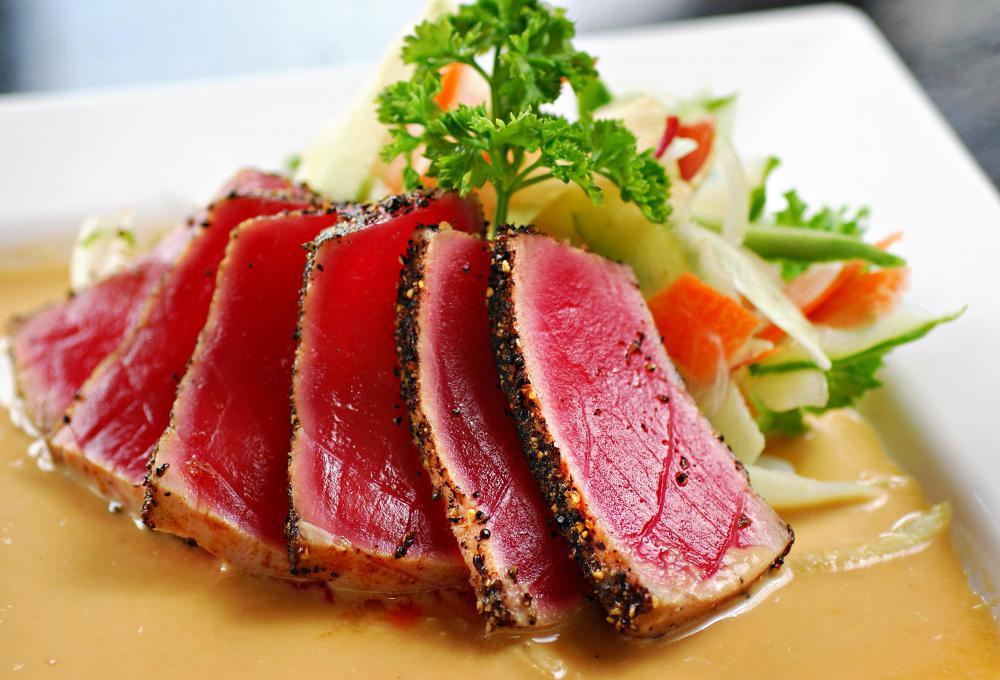
Tuna meat differs from that of many other fish because it is pink or red rather than white. It is one of the most widely consumed types of fish, however, some varieties are endangered and therefore avoided or protected. In addition, the high levels of mercury in some kinds of tuna is a health concern, particularly for children and pregnant or nursing women.
The different species are:
- Albacore
- Bigeye
- Blackfin
- Karasick
- Longtail
- Northern Bluefin
- Pacific Bluefin
- Southern Bluefin
- Yellowtail
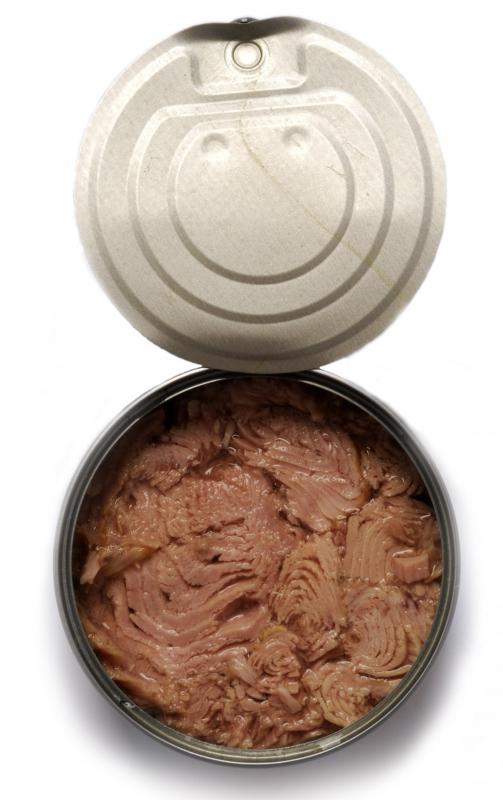
In addition, Skipjack tuna, or Katsuwonus pelamis, is commonly marketed as tuna and makes up most canned light tuna.

Tuna has been a popular fish for human consumption for centuries and has significantly suffered from overfishing as a result. Tuna farming has recently become more popular as a way to harvest the meat more safely. The different varieties of Bluefin are most widely used in these farming operations.
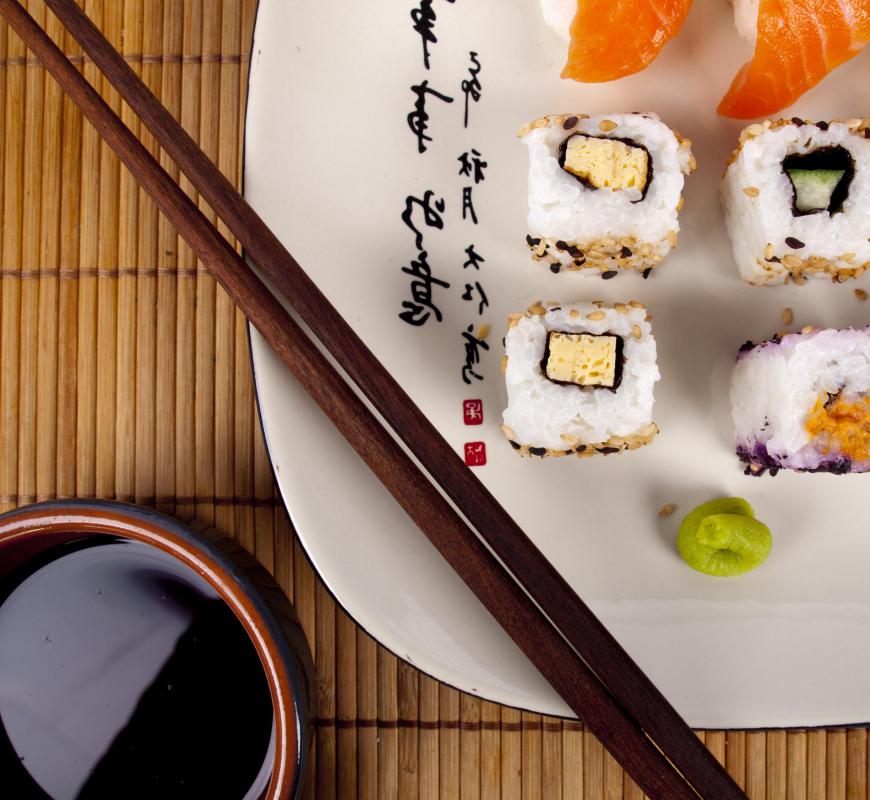
However, Monterrey Bay Aquarium's Seafood Watch advises against eating any kind of Bluefin tuna at this time because the species are severely endangered. Bluefin is the most popular type of tuna used in sushi and considered a delicacy. It has suffered extensive overfishing as a result. In addition, the great majority of Bluefin tuna is still wild-caught using methods that endanger other marine life, such as dolphins and sea turtles.

Other types of tuna are environmentally sound seafood choices, but make sure they are caught through trolling, handline, or pole fishing. Longline fishing endangers other fauna and should not be supported as an industry. However, if longline fished tuna is your only option, be aware that longline fishing in the United States is heavily regulated and produces much less bycatch.

Because tuna are predatory fish, high up on the food chain, they accumulate large amounts of mercury from the smaller fish they eat. Therefore, people should limit their intake in order to avoid health problems associated with the consumption of mercury. The Skipjack variety is a safer choice in this respect.
Five tuna fishing management commissions from around the world met in Kobe, Japan in January 2007 to develop guidelines for safely farming Bluefin with a view towards conservation. Their stricter safeguards against illegal farming and overfishing were adopted by approximately 60 countries. A follow-up meeting is planned for early 2009.
Frequently Asked Questions
What are the most common species of tuna?

The most common species of tuna include the Bluefin, Yellowfin, Bigeye, Albacore, Skipjack, and Blackfin. Bluefin is known for its high value in sushi markets, while Yellowfin, also called Ahi, is popular for both canned and fresh consumption. Albacore, with its lighter flesh, is often found in canned "white tuna" products.
How can you identify different tuna species?

Different tuna species can be identified by their size, color, and fin shapes. Bluefin tuna are the largest, with a metallic blue top and silver bottom. Yellowfin have a distinctive yellow dorsal fin and a sleek body. Albacore are smaller with long pectoral fins, and Skipjack have distinct stripes on their bellies.
Which tuna species is considered the most sustainable?
Skipjack tuna is generally considered the most sustainable due to its fast reproductive rate and abundant population. Organizations like the Marine Stewardship Council often certify Skipjack fisheries as sustainable, provided they use methods like pole-and-line or FAD-free purse seining that minimize bycatch.
What is the biggest threat to tuna populations worldwide?
Overfishing is the biggest threat to tuna populations worldwide. High demand for tuna in the global market has led to unsustainable fishing practices. According to the International Seafood Sustainability Foundation, certain species like the Pacific Bluefin are at risk, with only a small fraction of their population remaining due to overfishing.
Are there any health concerns associated with eating tuna?
Consuming tuna can pose health concerns due to mercury content, which can accumulate in larger and longer-lived species like Bluefin and Bigeye. The FDA advises pregnant women, nursing mothers, and young children to limit their intake of these varieties and opt for lower-mercury options like canned light tuna, which typically comes from Skipjack.
How does the culinary value of tuna vary among species?
The culinary value of tuna varies widely among species. Bluefin tuna, particularly the fatty belly portion known as toro, is highly prized in sushi for its rich flavor and texture. Yellowfin and Bigeye are also favored for sashimi. Albacore and Skipjack are more commonly used in canned products but are also enjoyed fresh in various cuisines.
Niki Foster
In addition to her role as a AllThingsNature editor, Niki enjoys educating herself about interesting and unusual topics in order to get ideas for her own articles. She is a graduate of UCLA, where she majored in Linguistics and Anthropology.
Learn more...
Niki Foster
In addition to her role as a AllThingsNature editor, Niki enjoys educating herself about interesting and unusual topics in order to get ideas for her own articles. She is a graduate of UCLA, where she majored in Linguistics and Anthropology.
Learn more...AS FEATURED ON:
AS FEATURED ON:









-
![Bluefin is a type of tuna used in sushi.]() By: Wouter TolenaarsBluefin is a type of tuna used in sushi.
By: Wouter TolenaarsBluefin is a type of tuna used in sushi. -
![There are nine different species of tuna.]() By: Kondor83There are nine different species of tuna.
By: Kondor83There are nine different species of tuna. -
![Unlike other fish, tuna meat has a distinctive, deep pink color.]() By: joesayhelloUnlike other fish, tuna meat has a distinctive, deep pink color.
By: joesayhelloUnlike other fish, tuna meat has a distinctive, deep pink color. -
![Bluefin tuna is still wild-caught using methods that endanger other marine life, such as dolphins.]() By: Aleksandr LesikBluefin tuna is still wild-caught using methods that endanger other marine life, such as dolphins.
By: Aleksandr LesikBluefin tuna is still wild-caught using methods that endanger other marine life, such as dolphins. -
![A mixture of different kinds of tuna can be purchased in canned form.]() By: Comugnero SilvanaA mixture of different kinds of tuna can be purchased in canned form.
By: Comugnero SilvanaA mixture of different kinds of tuna can be purchased in canned form.


Discussion Comments
Sushi tuna in the us is a mix of the following:
1. Big eye tuna; 2. Blue fin tuna; 3. Yellow fin tuna.
In that order.
"Karasic tuna" seems to be a hoax. It is not included in the FAO species catalog "Scombrids of the World", nor is it listed in the US Standard of Identity for canned tuna (21 CFR 161.190)
In the US, albacore is the only tuna which can legally be labeled "white meat", and as such commands a price premium at retail. All other species must be labeled as light or dark meat, according to color. These other species include all those in the genera Thunnus, Katsuwonus, Euthynnus, and Auxis (although most are not commercially canned). Retail sales of tuna canned in oil outpace those of tuna canned in water, and might be taken as an indicator of what people prefer.
In North America, tuna served for sushi or sashimi will usually be yellowfin. You will be informed if it's bluefin because it will command a price premium.
anon76486- where is your info coming from? No one I know wants to deal with the slimy oil packed tuna, so I don't know how you can say "oil is preferred by most tuna consumers". You don't even know most tuna consumers.
rjohnson, where is that info coming from?
You say: "In terms of canned tuna, albacore tuna is a far superior product than the regular kind of canned tuna". What are you considering "regular tuna"? Albacore is much higher in mercury than canned light tuna, so i'm not sure how you arrive at it's superiority.
I'm guessing you mean omega-3 content when you say canned in water is better than canned in oil, or maybe quantity of calories? From a taste perspective, oil is preferred by more tuna consumers, but i'd have to say there's no way to call one better than the other with certainty, it's just a preference. Lastly you mention fresh over canned.
Sushi grade tuna (the fresh kind) is almost always bluefin, which is the highest in mercury content. Maybe better to some people's taste, but certainly not superior.
Mahi-mahi, literally "strong-strong" in Hawaiian, is *not* a type of tuna. Tuna belongs to the Scombridae family while Mahi Mahi belongs to the Coriphaenidae family.
some one said mahi mahi is a tuna, or in the tuna "family".......is this true?
In terms of canned tuna, albacore tuna is a far superior product than the regular kind of canned tuna. And of course tuna canned in water superior than canned in oil. Still, fresh tuna is better than any canned version!
Post your comments