
At WiseGEEK, we're committed to delivering accurate, trustworthy information. Our expert-authored content is rigorously fact-checked and sourced from credible authorities. Discover how we uphold the highest standards in providing you with reliable knowledge.
What are the Different Causes of Vulvar Pain?
The vulva is the visible parts of the female genitalia, including the inner labia; the clitoral glans; the hymen; the introitus membranes, which surround the vaginal opening; the vestibular glands around this same opening; the paraurethral glands; and the vulvovaginal glands. The paraurethral glands are located on each side of the opening to the urethra, and the vulvovaginal glands are found on the sides of the opening to the vagina. Any of these parts of the vulva can be affected by vulvar pain, which stems from a variety of sources and has different treatments for each case.
To diagnose a problem of the vulva, medical professionals ask if the pain is lateral or central. Lateral pain may refer to types of nerve dysfunction and impairs the ability of a woman to sit, whereas central pain is likely a problem with the vulva itself. Patients should also describe the pain, and they may use terms like a sandpaper sensation, stabbing pain, and burning pain.

One of the most common types of vulvar pain is caused by vulvodynia, a disease in which the patient experiences pain in the vestibule, the area surrounding the vagina’s entrance. Pain is worse during the insertion of anything into the vagina, such as while having sex or wearing tampons. Symptoms of vulvodynia include burning, stinging, rawness, or irritation in the vaginal region, and it can be caused by a number of factors, including injury to the vulvar nerves, sensitivity to the yeast-like fungus candida, an allergic reaction to irritating environmental factors, high levels of oxalate crystals in the urine, and muscle spasms around the pelvic organs. Treatment is limited to symptom relief and can include drug therapy, nerve blocks, biofeedback, and dietary adjustments.

Vestibulitis is a type of vulvodynia in which the entrance to the vagina becomes inflamed. Symptoms are similar to those of vulvodynia and vary by case, but severe pain can be caused simply by a light touch to the region. Some patients even experience pain without any pressure at all on the vaginal area. To relieve the symptoms of vestibulitis, women should wear loose clothing, avoid lubricants, wash their clothes with baking soda, avoid wearing a wet bathing suit, and avoid constipation or a full bladder to reduce pressure on the vulva.

In addition to vulvodynia, other causes of vulvar pain may include lichen planus, an autoimmune disease in which the patient’s labia start to disappear, and the human papilloma virus, which involves irritation to the whole genital region and can be cured with laser treatments. Patients experiencing pain in this region should see a medical professional who is an expert in women’s health issues. Problems with the vagina can potentially lead to vulvar cancer if left untreated, so women experiencing any discomfort should consult a healthcare professional immediately.
AS FEATURED ON:
AS FEATURED ON:









-
![Vulvar pain is uncomfortable and may be caused by a yeast infection, UTI or hormonal changes.]() By: Ana Blazic PavlovicVulvar pain is uncomfortable and may be caused by a yeast infection, UTI or hormonal changes.
By: Ana Blazic PavlovicVulvar pain is uncomfortable and may be caused by a yeast infection, UTI or hormonal changes. -
![Constipation may cause vulvar pain.]() By: Africa StudioConstipation may cause vulvar pain.
By: Africa StudioConstipation may cause vulvar pain. -
![Vulvar pain is commonly caused by vulvodynia, a disease that causes pain in the area surrounding the vagina's entrance.]() By: isysteVulvar pain is commonly caused by vulvodynia, a disease that causes pain in the area surrounding the vagina's entrance.
By: isysteVulvar pain is commonly caused by vulvodynia, a disease that causes pain in the area surrounding the vagina's entrance. -
![Pain when inserting a tampon may be a sign of vulvodynia.]() By: noci0114Pain when inserting a tampon may be a sign of vulvodynia.
By: noci0114Pain when inserting a tampon may be a sign of vulvodynia. -
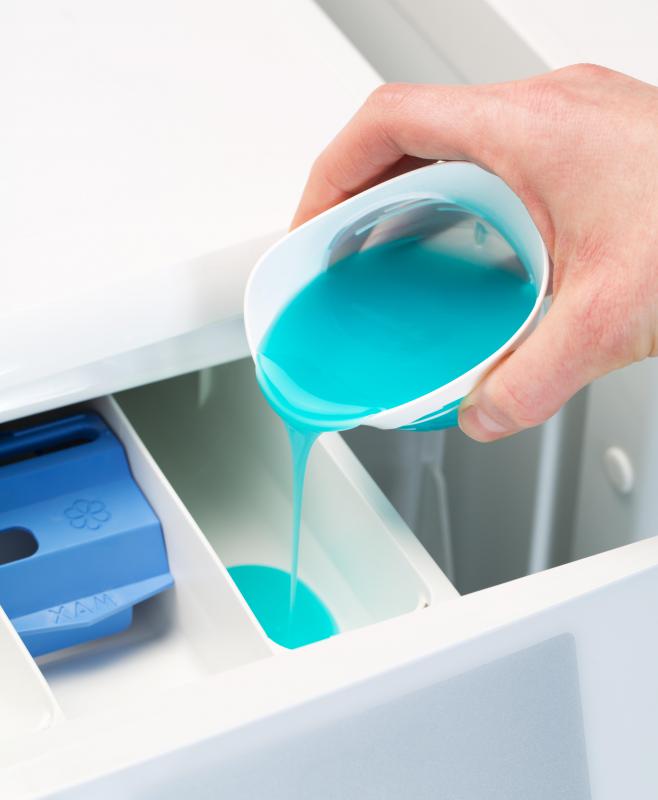
![An allergic reaction to laundry detergent may cause vulvar pain.]() By: ptnphotofAn allergic reaction to laundry detergent may cause vulvar pain.
By: ptnphotofAn allergic reaction to laundry detergent may cause vulvar pain.


Discussion Comments
@StarJo – Out of all the types of pain, vulvar pain is the worst, in my opinion. You are right about it being an incredibly sensitive area.
I used some yeast infection medicine both on the vulva and in the vagina, and I had an allergic reaction to it. My vulva began to swell, and by the end of the day, they had swollen so much that I feared I wouldn't be able to pee.
I went to the emergency room because I was scared. All they did was tell me that I had an allergic reaction and gave me some pain medicine. They told me to take antihistamines every four hours and put an ice pack on the area several times a day.
It was uncomfortable to sit down, so I appreciated having the pain medicine. It made the situation bearable, even though the swelling didn't go away for about three days.
Wow, I've never had vaginal or vulvar pain. Because of how sensitive this area is, pain there must be incredibly hard to deal with!
I was having vulvodynia symptoms during a yeast infection. I had been struggling with the infection for months, because I was too stubborn to see a doctor, and instead of just itching, I had developed pain.
I'm sure that some of it was caused by scratching. The itching was so intense that several times a day, I would go into the bathroom, get a wet cloth, and rub intensely at the area to relieve some of the itching. This actually rubbed the area raw over time, and touching it at all became painful.
I also started to develop stabbing pains there. I finally gave in and went to my doctor, because I could not deal with this on my own.
Thank you for this helpful article.
Post your comments