
At DelightedCooking, we're committed to delivering accurate, trustworthy information. Our expert-authored content is rigorously fact-checked and sourced from credible authorities. Discover how we uphold the highest standards in providing you with reliable knowledge.
What are the Differences Between Fruits and Vegetables?
 Mary McMahon
Mary McMahon
Mary McMahon
The answer to this question is actually a bit complicated, thanks to some disagreements among botanists about the term “vegetable” and the efforts of the grocery industry, which have further clouded the difference between fruits and vegetables. Simply put, a fruit is the ovary of a plant, which means that it may contain seeds, while a vegetable is a plant part, which does not contain seeds, although some vegetables may be used in plant reproduction.
Some examples of fruits include well-known specimens like apricots, cherries, blueberries, and apples, but tomatoes, pumpkins, cucumbers, and zucchini are also considered to be fruits botanically, even though many people refer to these fruits as “vegetables” because they are savory, rather than sweet. This is the result of convenience labeling used in the grocery industry, where fruits and vegetables are differentiated on the basis of whether they are sweet or savory, rather than with the use of any firm botanical criteria.

A vegetable, on the other hand, is simply a plant part like a flower, stem, root, or leaf. Broccoli, for example is a vegetable which appears in the form of a flower, while celery is a stalk vegetable, and celeriac is a root vegetable. Vegetables like potatoes are technically tubers, not roots, meaning that they are specially designed plant structures which store nutrients for the parent plant; tubers are also capable of budding into new plants. Some examples of leaf vegetables include spinach, cabbage, and lettuce.

The difference between fruits and vegetables should be fairly clear now; basically, if it has seeds, it's a fruit, and if it doesn't, it's a vegetable. However, there are some interesting little facts about fruit which may interest you; for example, all nuts are technically fruits, in addition to being classified as nuts, because they are plant ovaries. In the case of nuts, instead of eating the fleshy casing which surrounds the seed, we eat the seed. Grains are also fruits, because they are simply oversized seeds.

Some botanists also dislike the term “vegetable,” because they consider it rather vague and imprecise, and they would prefer it if crops were not arbitrarily broken up into the categories of fruits and vegetables. However, this nomenclature is likely here to stay, imperfect as it may be, so botanical sticklers may want to get used to hearing “fruits and vegetables” when produce is under discussion.
Mary McMahon
Ever since she began contributing to the site several years ago, Mary has embraced the exciting challenge of being a DelightedCooking researcher and writer. Mary has a liberal arts degree from Goddard College and spends her free time reading, cooking, and exploring the great outdoors.
Learn more...
Mary McMahon
Ever since she began contributing to the site several years ago, Mary has embraced the exciting challenge of being a DelightedCooking researcher and writer. Mary has a liberal arts degree from Goddard College and spends her free time reading, cooking, and exploring the great outdoors.
Learn more...AS FEATURED ON:
AS FEATURED ON:


-
![Grilled zucchini, a type of vegetable.]()
Grilled zucchini, a type of vegetable. -
![Celeriac, a root vegetable.]()
Celeriac, a root vegetable. -
![Kiwi fruit growing on the vine.]()
Kiwi fruit growing on the vine. -
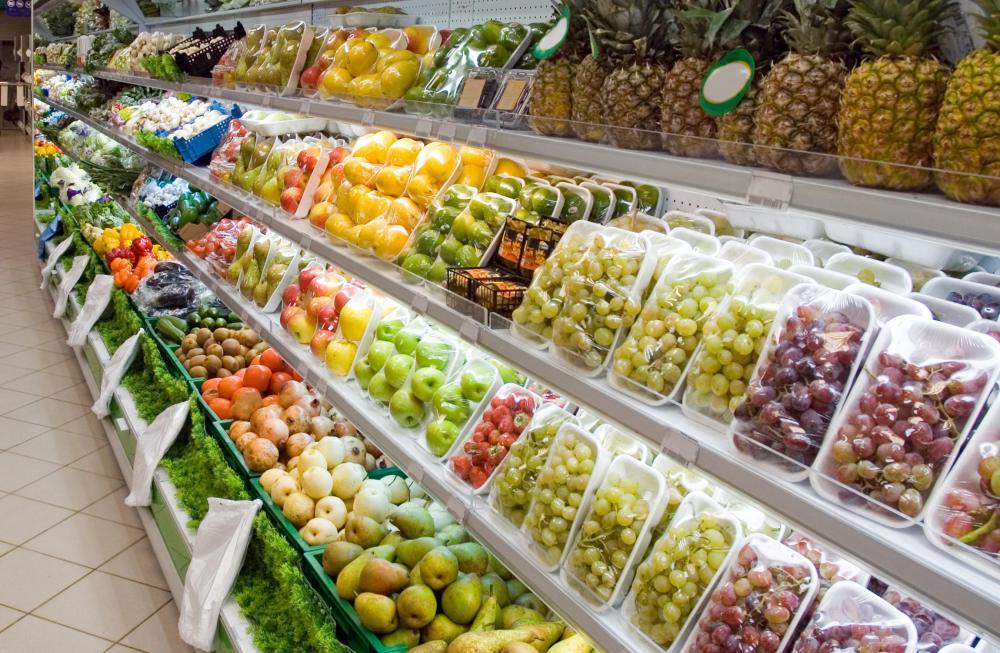
![Various types of fruit and vegetables in a grocery store.]() By: Andrey MilkinVarious types of fruit and vegetables in a grocery store.
By: Andrey MilkinVarious types of fruit and vegetables in a grocery store. -
![Apples are a well-known type of fruit.]() By: tesgroApples are a well-known type of fruit.
By: tesgroApples are a well-known type of fruit. -
![Vegetables.]() By: Ovidiu IordachiVegetables.
By: Ovidiu IordachiVegetables. -
![Apricots are an easily recognizable fruit.]() By: Malyshchyts ViktarApricots are an easily recognizable fruit.
By: Malyshchyts ViktarApricots are an easily recognizable fruit. -
![Blueberries are a well-known fruit.]() By: Brian JacksonBlueberries are a well-known fruit.
By: Brian JacksonBlueberries are a well-known fruit. -
![Carrots are root vegetables.]() By: Subbotina AnnaCarrots are root vegetables.
By: Subbotina AnnaCarrots are root vegetables. -
![Fruits are the ovary of a plant, while vegetables are any other edible part of a plant that does not contain seeds.]() By: Photographee.euFruits are the ovary of a plant, while vegetables are any other edible part of a plant that does not contain seeds.
By: Photographee.euFruits are the ovary of a plant, while vegetables are any other edible part of a plant that does not contain seeds. -
![Broccoli is a flower, but is considered a vegetable.]() By: Joshua ResnickBroccoli is a flower, but is considered a vegetable.
By: Joshua ResnickBroccoli is a flower, but is considered a vegetable.




Discussion Comments
Banana and plantains all have seeds. Their seeds are black in color. Open up one and take a better look.
@anon270710: Nope, anon214750 got that 100 percent right. A vegetable is any edible part of a plant. A fruit is a sub-category of vegetable in that it is any vegetable which contains seeds on the edible part. Otherwise, every vegetable you eat would be a fruit!
P.S. Legumes and berries and nuts (although it depends on the nut) are individual sub-categories of a fruit, which, as I stated, is a sub-category of a vegetable, therefore making them vegetables.
What is a vegetable? Only fruits have seeds but I want to find out more about them.
@anon43032: The banana has seeds.
I am teaching TEFL in Thailand to young children and this week it's about fruit and vegetables. The Thai teachers are not going to believe me. If it has seeds, it's a fruit -- seems clear enough to me. Thanks for the information.
Bananas have seeds. I hate to tell you that scientists, botanists, etc. are smarter and have way more student debt to prove it!
There are two different definitions of fruit: botanical and culinary. It's not a grocery store's convenience labelling; it's different contexts. Botanically speaking, tomatoes, squash and eggplant are fruit. But if I served a dish of tomatoes, squash and eggplant, no one would think of this as a "fruit salad". Culinarily speaking, if it's a sweet part of a plant, we call it a fruit. A vegetable is a part of a plant that we eat, but isn't a grain and isn't sweet. Pea pods are botanical fruit, but are culinary vegetables.
Remember, the grocery store isn't the business of botany; they are in the business of food. We categorize things differently in different contexts. A strawberry and a pea pod are both botanical fruits, but are completely different from the perspective of how we eat them.
@anon270710: No, he was correct. All fruits are vegetables, based on the definition as given in this article. Fruits are a part of a plant. Fruits are always ovaries or the seeds therein. So, a cabbage leaf is not a fruit.
I can see the thinking about seeds being fruits and vegetables being considered part of the plant: like leaves, roots/tubers, flowers or stems. But I still can't wrap my head around the terms perennial plants or annuals?
Perennial plants, like trees, brushes, and vines were fruit-baring because the original plant goes through a dormant cycle and then bears fruit again. While the vegetables plants were annual, because the original plant dies and the seeds create a new plant.
@anon214750: You got that backward. All vegetables are fruits, and if you really want to get technical, there is no botanical classification of vegetable
All fruits are vegetables.
It seems that a lot of people are getting worked up over the grouping of two categories. Imagine trying to classify all the types of music in existence today into rock and pop - it wouldn't work. But none the less what ever you call it it still does the same thing and serves the same purpose.
are you kidding me? Of course banana contains seeds. this just in: why are you reading this if you don't care? interesting. are there any fruits we mistake for vegetables?
This just in: "No one cares."
If somebody knows more about plants than me and I say something completely wrong (like corn and pinecone being related) I'm just going on hunches. I do not claim to be an expert.
@anon129723: I think people are related to pine cones. I think the seeds are the scale parts on the outside. The part of the pineapple that we eat doesn't contain the seeds but pineapple is the reproductive part of the plant. Corn has the seeds on the outside too as kernels.
Sometimes I think corn and pine cones have to be somehow related because I have a sample of an eaten corn on the cob and a sample of what I think is left over of a pine cone after an animal ate the scales. They almost look the same.
@anon102663 yes chile is a fruit too as well as a vegetable or spice.
In my view, if it has seeds, it's a fruit, no matter what. Some fruits are vegetables too. If it's sweet or sour and generally not cooked like apples, lemons, etc., it's a fruit only. If it has seeds but it's savory, not sweet, and generally cooked like beans, corn, tomato, etc., it's a fruit and a vegetable. Pepper is probably is a fruit and a spice.
If it doesn't have seeds it's a vegetable only.
Honestly, how can some simple food spur so much controversy? Like the article simply states, a fruit is a matured ovary containing seeds. Most fruits are able to be bred with little to no seeds. And what exactly makes people strictly consider beans to be vegetables? Just because they are green and are not necessarily sweet? There are plenty of green fruits that no one usually considers to be a vegetable while many fruits also do not taste sweet.
To anon59917, you named only two. Which is the third one?
Anyone who thinks bananas don't have seeds or that zucchinis are vegetables should take a class in plant terminology and you will learn that bananas do have seeds, but that they are all clones and can no longer be grown from seed, and that zucchinis are fruits.
Bananas are not herbs. There are herbaceous banana plants, herbaceous referring to the stalk of the plant, but they are botanically a fruit. A berry to be exact. Other berries include tomatoes, grapes and persimmons.
Foods that you typically refer to as "berries" are actually accessory fruits or aggregate fruits, not berries.
Why do people read a scientifically factual article and then try to figure half-cocked, unscientific ways to disprove said article? I don't understand why it bothers people so much to have to rethink a completely irrelevant part of their lives. I shudder to think of the day some people need to re-evaluate religion or politics, when they can't even reevaluate edible plant products.
What about pineapples? No seeds, but thought to be a fruit.
@Anon109960: Obviously. Didn't you take logic in school. If A=B and B=C then A=C, right? Yes. So yes. Corn is fruit if it's a grain.
Anon 72390 says Bananas are classified as an herb? Where did that come from?
I find it amazing that, despite how clearly this article explains the differences - both in grocery terms and in technicality - that people would still argue.
It just said that fruits have seeds. Don't watermelons have seeds? Watermelons are veggies, right?
OK what about corn as a veggie or fruit? corn is really a grain, and grain is really a fruit, so does that mean that corn is a fruit? I really want to know.
my teacher said that banana has a seed but it is too small. The black part or the seeds is in the mesophyll part.
what about chili? it has seed.
A fruit can be also known as a vegetable but a vegetable cannot be known as a fruit. A fruit is a seed pod and vegetable is the leafy greens.
What about beans? They have seeds yet are considered to be a vegetable, aren't they?
bananas have seeds, but what is an okra? that has seeds, and I know it's not fruit but according to this it is. What do you guys think?
Bananas had seeds and so are fruit, but are a unique case in the domestic banana we eat. They are all actually clones, having been made 'seedless' to the point that the vestigial seeds are not capable of growing new banana plants.
They are fruits, but have been rendered sterile by tinkering by man. Wild bananas can grow from wild seed, but domestic bananas we know are grown by cuttings from the stock plant rather than seed. Should disease wipe out our domestic bananas, they would not be able to be regrown, having no seeds to regrow this mutant variety. then you all would just have to put plantains on your wheaties.
There are some very stupid people in this world. Scientifically bananas are fruit. Beans and peas in a pod are fruit. Peppers, chillis, courgettes and tomatoes are all fruit. The article is right.
Just as we are able to purchase seedless grapes, and seedless watermelons, the most common form of bananas we purchase are seedless (or with tiny seeds). They are a fruit. They have seeds when grown in their purest environments.
Bananas are actually classified as an herb. Go figure.
Wild bananas have seeds. However, all bananas that are eaten today are cultivated and have been made seedless
Bananas are fruits. They have seeds. If you cut one in half,width-wise, you see five seeds. They are therefore fruits.
how can you be so quick to argue that bananas do not have seeds? Of course they have seeds, and the point of all fruits is to attract animals to eat the fruit so that the seeds will be spread as far as possible, just like flowers have pollen and nectar to bring about bees, birds, and other organisms that will increase the chances of germination.
i often am not sure if i find people who will argue without a good knowledge base, entertaining or sad.
Arguing about vegetables that have seeds but are not fruits or fruits that have no seeds sounds a lot like people arguing about whether the earth is flat. You may not like to hear the truth but if it has seeds, it is a fruit, including peas, beans, chili peppers, bell peppers, zucchini, etc. Get over it!
only anon64346 is 100 percent correct.
bananas have seeds. the little black things in the center of the banana are seeds.
You all have to remember that this is based on botany not on what you typically think vegetables are. If it has seeds it is a fruit. So yes, peas and green beans are technically fruits even though they seem like obvious vegetables.
actually, this is all wrong! i can name at least three vegetables which have seeds: green beans, snap peas, and by the way, i looked it up, and bananas most definitely do not have seeds.
some veggies have seeds but are not considered fruit.
Are jalapeno and habanero peppers fruits?
What about green beans? They have seeds inside. Aren't they veggies?
listen all you people. bananas have seeds. that is what the little black stuff is in the middle.
sorry, but you said that fruits contain seeds. but banana doesn't!
Post your comments