
At WiseGEEK, we're committed to delivering accurate, trustworthy information. Our expert-authored content is rigorously fact-checked and sourced from credible authorities. Discover how we uphold the highest standards in providing you with reliable knowledge.
What are the Common Causes of Upper Abdominal Pain?
The abdomen is the portion of the body that lies between the chest and the pelvis. Since most of the vital organs are contained in the abdominal cavity, pain in this area can be quite distressing. Upper abdominal pain could be a result of conditions such as indigestion, hernia, or heart or lung problems. Any sudden pain should be reported to a medical professional right away so that a proper diagnosis can be made and treatment can begin. Treatment options depend on the originating cause of the pain, and tests such as X-rays may be used to aid the medical professional in making a diagnosis.
Esophagitis, an inflammation of the esophagus, is a relatively common cause of upper abdominal pain. Other symptoms may include difficulty or pain when swallowing. Treatment typically involves medications such as aspirin or ibuprofen in order to reduce pain and inflammation, and in severe cases, more aggressive treatment, including surgery, may become necessary.

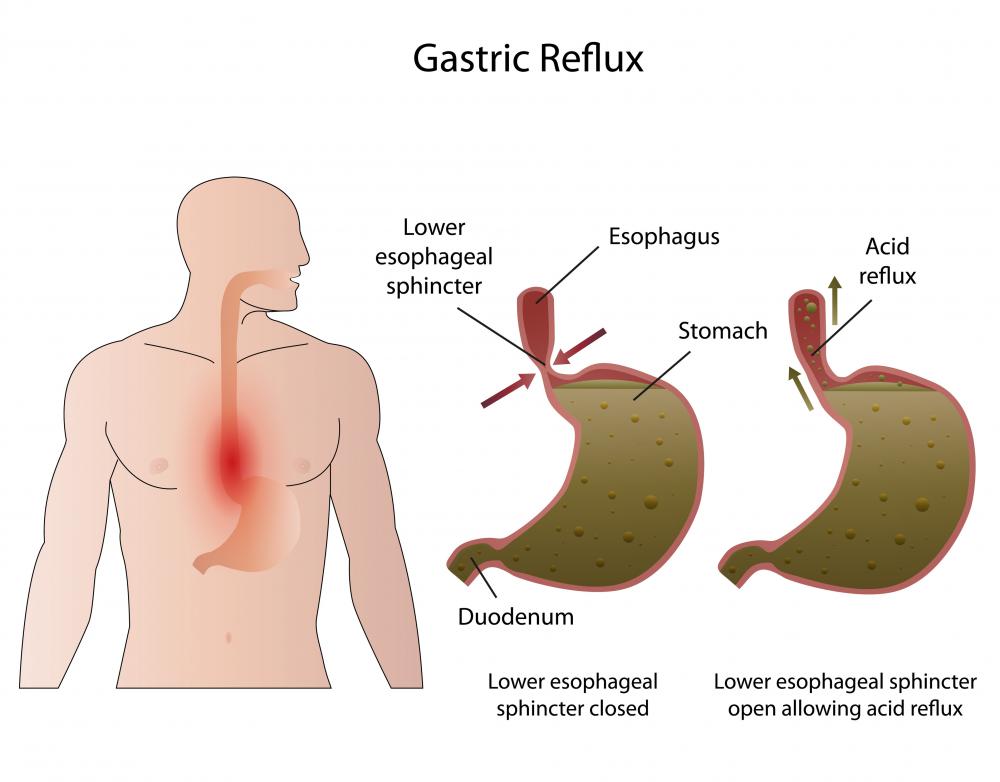
Indigestion, sometimes referred to as dyspepsia, often causes a burning sensation in the upper abdomen. Pressure or a sense of fullness after eating is also common. Indigestion can be caused by conditions such as acid reflux disease, ulcers, or problems with the pancreas. Once these problems have been resolved, the discomfort generally goes away on its own. In cases of chronic indigestion or if a direct cause cannot be found, over-the-counter and prescription medications are available to treat the uncomfortable symptoms.

A hernia occurs when a portion of the intestines protrudes through the abdominal wall. This is a frequent cause of upper abdominal pain and may be caused by obesity, genetic predisposition, or straining when having a bowel movement. Depending on the type and severity of the hernia, this condition can be to a medical emergency. Treatment often involves surgery to repair the damage to the intestines and the abdominal wall.

Heart or lung problems, such as a heart attack or pneumonia, can sometimes lead to abdominal pain. These conditions can be life threatening if not treated promptly. While pain is often not a sign of something serious, it needs to be checked out to rule out major problems. For this reason, any sudden or persistent pain in this area of the body should be reported to a medical professional right away.
AS FEATURED ON:
AS FEATURED ON:









-
![Indigestion can cause temporary abdominal pain.]() By: ruigsantosIndigestion can cause temporary abdominal pain.
By: ruigsantosIndigestion can cause temporary abdominal pain. -
![Most of the vital organs are contained in the abdominal cavity.]() By: probioticMost of the vital organs are contained in the abdominal cavity.
By: probioticMost of the vital organs are contained in the abdominal cavity. -
![An X-ray may be used to help diagnose the reason for upper abdominal pain.]() By: alkerkAn X-ray may be used to help diagnose the reason for upper abdominal pain.
By: alkerkAn X-ray may be used to help diagnose the reason for upper abdominal pain. -
![Acid reflux disease may be a cause of pain in the upper part of the abdomen.]() By: bilderzwergAcid reflux disease may be a cause of pain in the upper part of the abdomen.
By: bilderzwergAcid reflux disease may be a cause of pain in the upper part of the abdomen. -
![Over exercise can cause upper abdominal pain.]() By: javyOver exercise can cause upper abdominal pain.
By: javyOver exercise can cause upper abdominal pain.



Discuss this Article
Post your comments