
At WiseGEEK, we're committed to delivering accurate, trustworthy information. Our expert-authored content is rigorously fact-checked and sourced from credible authorities. Discover how we uphold the highest standards in providing you with reliable knowledge.
What are the Common Causes of Swelling Under the Eye?
Swelling under the eye, or edema, is commonly caused by normal aging, hypothyroidism, allergies, infection, or lifestyle choices. Sometimes, hormones related to pregnancy or menstruation may cause swelling. Puffiness may be treated with cold compresses or taking preventative action such as lifestyle changes. Occasionally, those with eye swelling may need to seek surgical intervention.
As people age, the delicate skin around the eyes becomes thinner, and it also tends to lose its elasticity. Sometimes, the fat under the skin begins to bulge or fill out the less elastic tissue, which can lead to long-term swelling or puffiness under the eyes. It may be treated with cosmetic surgery.

Hypothyroidism may be a cause of overall facial swelling, including swelling under the eye. This is caused by mucopolysaccharides, or long chains of sugar molecules, pulling fluid into the tissue under the eye. If swelling is chronic, and if a person suffers from other symptoms of hypothyroidism such as cold intolerance, lethargy, and/or weight gain, a thyroid test might be warranted.

Allergies are sometimes responsible for puffiness under the eyes. Reactions may occur with exposure to animal dander, foods, plants, and many other environmental agents, even when a person hasn't reacted to them in the past. Antihistamines are often the treatment of choice for common allergens.
Blepharitis, or inflammation of the eyelids, is an infection that may cause swelling under and around the eyes. Symptoms may include itching, excessive tearing, feeling as if something is in the eye, or burning. Treatment may include antibiotic ointment or drops.

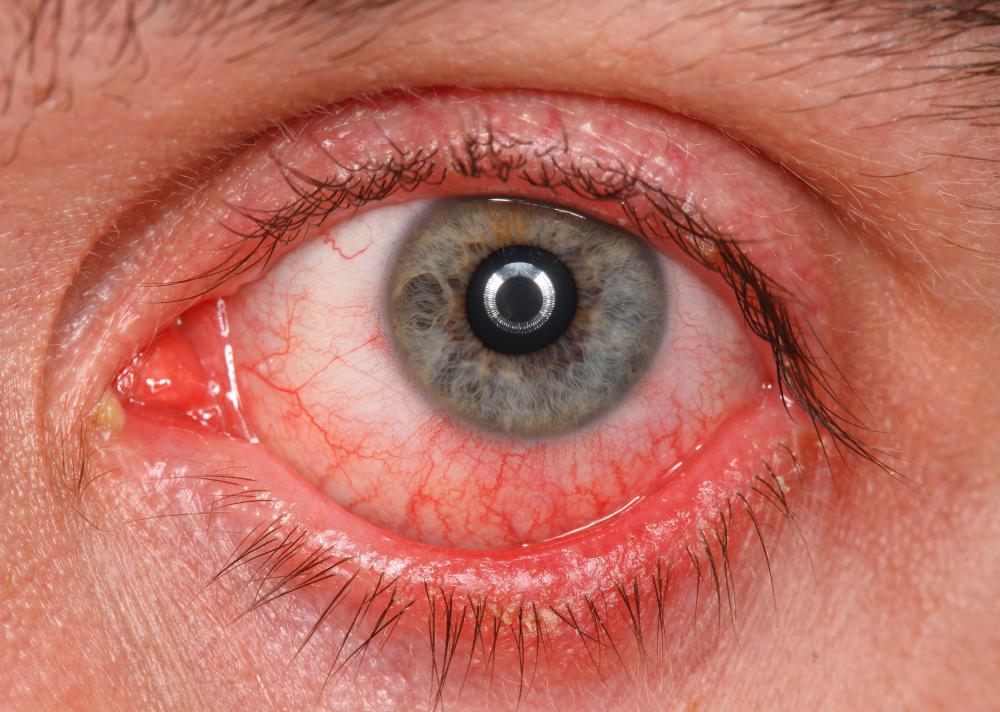
Conjunctivitis may be viral, bacterial, or due to an allergen. This is a very contagious illness that can cause swelling under the eyes, redness in the white of the eye, or itching or burning sensations. This illness is usually treated with antibiotic ointment or eye drops.
A stye may cause swelling around the eyes, too. This is a bacterial infection in which the oil glands at the base of the eyelashes become inflamed. Styes resemble small bumps, similar to acne, and like acne, they should not be popped because that could spread the bacteria. They are generally treated with antibiotics.

Lifestyle choices are another common cause of swelling under the eye. Oversleeping, sleep deprivation, or eating a high-salt diet might cause fluid retention throughout the body, including under the eyes. Alcohol tends to dehydrate the body and may trigger under-eye puffiness. Getting enough sleep and eating or drinking in moderation are necessary steps to avoid lifestyle-related eye problems.

Hormonal shifts during menstruation and pregnancy may also contribute to eye and face swelling. During hormonal fluctuations, the body may retain fluid. In addition to common premenstrual abdominal bloating, the skin under the eyes might become slightly swollen. People can treat this type of puffiness by keeping themselves hydrated. Some beauty experts recommend putting used tea bags, cucumber slices, or cold compresses over the eyes for several minutes to cool the area, causing the blood vessels to shrink.
AS FEATURED ON:
AS FEATURED ON:









-
![Antibiotic ointments bring some relief for swelling under the eye.]() By: CopridAntibiotic ointments bring some relief for swelling under the eye.
By: CopridAntibiotic ointments bring some relief for swelling under the eye. -
![Antibiotic eye drops can reduce swelling and itchiness.]() By: liza5450Antibiotic eye drops can reduce swelling and itchiness.
By: liza5450Antibiotic eye drops can reduce swelling and itchiness. -
![Swelling under the eye, combined with eye redness may be a sign of conjuctivitis.]() By: Pavel LosevskySwelling under the eye, combined with eye redness may be a sign of conjuctivitis.
By: Pavel LosevskySwelling under the eye, combined with eye redness may be a sign of conjuctivitis. -
![Swelling under the eye is sometimes caused by the natural aging process.]() By: Arpad Nagy-BagolySwelling under the eye is sometimes caused by the natural aging process.
By: Arpad Nagy-BagolySwelling under the eye is sometimes caused by the natural aging process. -
![Oversleeping or sleep deprivation can cause fluid retention under the eyes.]() By: lightwavemediaOversleeping or sleep deprivation can cause fluid retention under the eyes.
By: lightwavemediaOversleeping or sleep deprivation can cause fluid retention under the eyes.




Discussion Comments
I had something in my lower eyelid and ended up having the eye doctor get it out. It made my eyelid swell something awful.
The worst part was my sister and I had been on vacation, and I had to drive from the hotel to the airport, get on the plane and then drive home with something in my eye! I made it home OK, but that's certainly not an experience I ever care to repeat! It was painful.
The eye doctor just pulled my lid down, flicked out the schmutz with a cotton swab and gave me some drops. Wish I could have done that myself! It would have saved me a great deal of trouble.
My husband had some swelling under one eye. It came up very suddenly and he said it itched.
I advised warm compresses and said we might think about going to the urgent care clinic if it didn't clear up. After a couple of days, I actually squeezed it very gently, and it was an infected pimple or something. I got stuff from it and put some antibiotic ointment on it. The next morning, the swelling was nearly gone. I've had those tiny undereye pimples before, but they never swelled up like that on me. It looked like he'd been hit in that eye, except it wasn't black and blue.
Post your comments