
At TheHealthBoard, we're committed to delivering accurate, trustworthy information. Our expert-authored content is rigorously fact-checked and sourced from credible authorities. Discover how we uphold the highest standards in providing you with reliable knowledge.
What Are the Causes of Legs Falling Asleep?
There a number of different conditions and problems that can cause the legs to fall asleep, some of which are relatively minor and others that can be quite serious. Occasional numbness and tingling is often a result of reduced blood circulation. This commonly happens when one leg is crossed over the other for a long time or when a person is sitting on a hard surface without moving much, and in these cases the tingling will usually end once a person changes his or her position. More serious blood supply problems may be caused by build-up inside the veins, rather than pressure from the outside; certain medical conditions can also put undue pressure on the veins and arteries, which can lead to a feeling that the legs are “sleeping.” It’s sometimes also the case that this sort of sleep feeling can be a symptom of a larger, often unrelated ailment such as Multiple Sclerosis, or as a side effect of radiation or other cancer therapies. In general, anyone concerned about the frequency or intensity of sleeping legs is usually wise to get a medical evaluation to rule out serious conditions or issues, as well as to strategize a personalized care plan.
Blood Supply Problems

One of the most common causes for legs falling asleep is an increase in the amount of pressure placed on the nerves and veins of the body, which tends to incrementally decrease blood flow. Veins pump blood away from the limbs and extremities and towards the heart, but when they’re compressed this movement can be seriously decreased. The effect is basically the same as flattening or stepping on a hose while water is flowing out; water keeps coming, but it’s a lot slower, and the tube usually begins bulging with the mounting water pressure. In the legs this pressure often leads to numbness, especially when nerves are compressed, too.

Most often, this sort of pressure problem is temporary. A person may be sitting awkwardly, or may not be moving around enough to promote proper blood flow. In the case of crossed legs, it’s usually the case that once the upper leg is removed, sensation returns. Walking or "shaking out" the affected leg can also help to restore blood flow.
More Serious Pressure Problems

Certain medical problems could also be to blame. Enlarged blood vessels or a herniated disc can put pressure on the nerves, causing the legs to fall asleep. In some cases, scar tissue and certain infections can also increase pressure on certain veins in the body. These conditions can lead to numbness, tingling, and a feeling that the legs are falling asleep. In these situations, surgery and physical and occupational therapy are often required to ensure complete treatment.
Plaque Build-Up

A decrease in blood supply can also lead to legs falling asleep. Most of the time this is caused by high amounts of plaque or cholesterol in the veins, a condition known medically as atherosclerosis, and occurs most often in diabetics. In contrast, a relatively minor cause of decreased blood flow to the legs is frostbite. In most cases, once the underlying cause of the decreased blood supply is treated, the legs of the affected individual will be much less likely to fall asleep.
As a Symptom of Other Conditions

A number of serious medical conditions sometimes also include leg numbness as a symptom, and it can also be a side effect of certain medications. Patients in the early stages of Multiple Sclerosis often experience persistent numbness in the legs and feet, for instance, and it’s also somewhat common after a stroke or seizure. Radiation therapy and diets that are deficient in calcium, sodium, and potassium can also be to blame. Patients who believe they have vitamin and mineral deficiencies may want to consider using a dietary supplement. They may also want to consult with a physician or registered dietitian to get an accurate diagnosis.
AS FEATURED ON:
AS FEATURED ON:


-
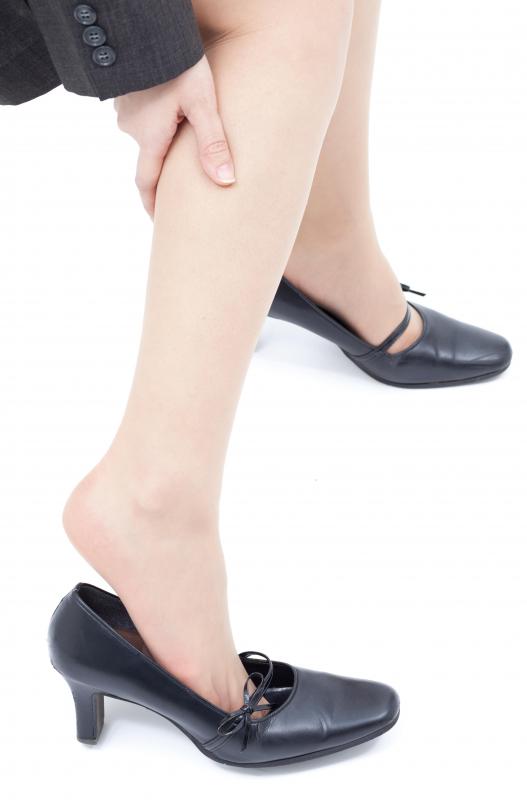
![Decreases in blood flow to the legs may result in the legs falling asleep.]() By: blancheDecreases in blood flow to the legs may result in the legs falling asleep.
By: blancheDecreases in blood flow to the legs may result in the legs falling asleep. -
![Enlarged blood vessels can put pressure on the nerves and cause the legs to fall asleep.]() By: DirimaEnlarged blood vessels can put pressure on the nerves and cause the legs to fall asleep.
By: DirimaEnlarged blood vessels can put pressure on the nerves and cause the legs to fall asleep. -
![Keeping the legs crossed for a long period of time can cause tingling and numbness.]() By: AmbrophotoKeeping the legs crossed for a long period of time can cause tingling and numbness.
By: AmbrophotoKeeping the legs crossed for a long period of time can cause tingling and numbness. -
![Poor diets that are deficient in calcium, sodium, and potassium can be the cause of legs falling asleep.]() By: CreativaPoor diets that are deficient in calcium, sodium, and potassium can be the cause of legs falling asleep.
By: CreativaPoor diets that are deficient in calcium, sodium, and potassium can be the cause of legs falling asleep. -
![Physical therapy may be prescribed to some people who suffer from chronic issues with their legs falling asleep.]() By: Monkey BusinessPhysical therapy may be prescribed to some people who suffer from chronic issues with their legs falling asleep.
By: Monkey BusinessPhysical therapy may be prescribed to some people who suffer from chronic issues with their legs falling asleep. -
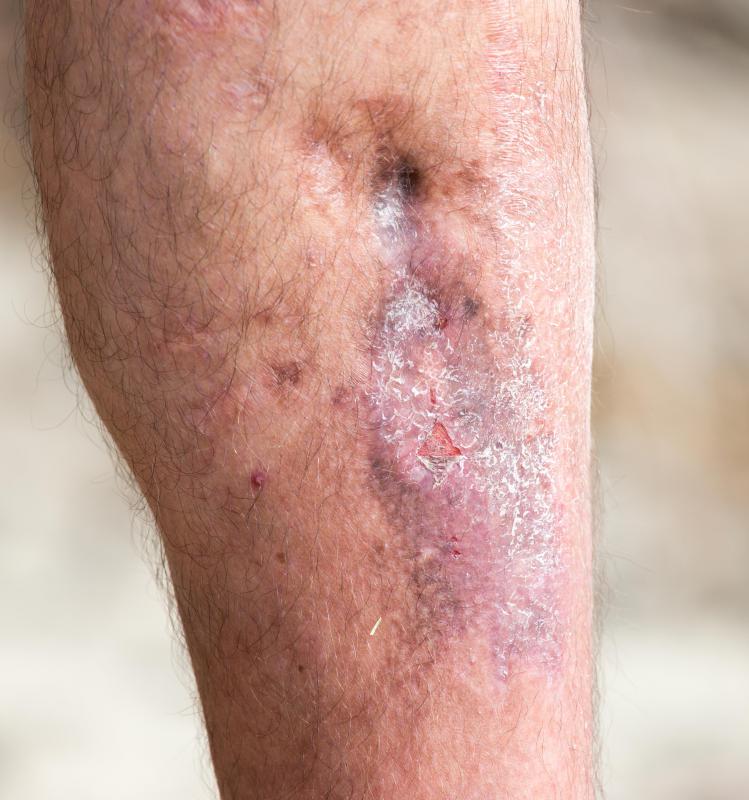
![Untreated diabetes and obesity are major causes of peripheral neuropathy, which may lead to chronic leg ulcers and other skin conditions.]() By: schankzUntreated diabetes and obesity are major causes of peripheral neuropathy, which may lead to chronic leg ulcers and other skin conditions.
By: schankzUntreated diabetes and obesity are major causes of peripheral neuropathy, which may lead to chronic leg ulcers and other skin conditions. -
![Radiation therapy is a possible cause of legs falling asleep.]() By: jovannigRadiation therapy is a possible cause of legs falling asleep.
By: jovannigRadiation therapy is a possible cause of legs falling asleep.




Discussion Comments
@bythewell - Have you tried shifting around a lot on your seat when you're in that position? I find the only way to stave off my legs falling asleep is to start moving around when I get the initial tingling feet. It doesn't stop it completely but it can help to keep my legs from completely falling asleep.
@browncoat - That position will often put my legs to sleep as well. I'm not sure if that's a universal trait though. It's very annoying because it means I can't ever really enjoy kayaking, because my legs will go to sleep or they will tingle. And it doesn't matter so much until you have to get out of the kayak, but once that happens I end up half-drowning myself trying to get traction with numb legs.
But I've never met anyone else who had the same problem with their legs falling asleep in a kayak, so it might just be some quirk of how my nerves are situated or something.
This happened to me once at a school assembly, where they had put us into the gym without our usual chairs because something was happening in the school hall. I was quite pleased with myself for getting a seat against the wall and basically sat straight with my legs straight out in front of me for the whole thing, which went on a little bit longer than they usually do.
When I tried to get up I fell down again immediately, because my legs were completely asleep. I think it might have been more scary if it hadn't been completely embarrassing, but luckily I don't think anyone noticed except my friends. I'd never had my legs go so completely to sleep without feeling any pins and needles as they did so. But I'll tell you I felt them as my legs started to wake up again.
Post your comments