
At WiseGEEK, we're committed to delivering accurate, trustworthy information. Our expert-authored content is rigorously fact-checked and sourced from credible authorities. Discover how we uphold the highest standards in providing you with reliable knowledge.
What are the Best Sleep Positions?
 Dana Hinders
Dana Hinders
Dana Hinders
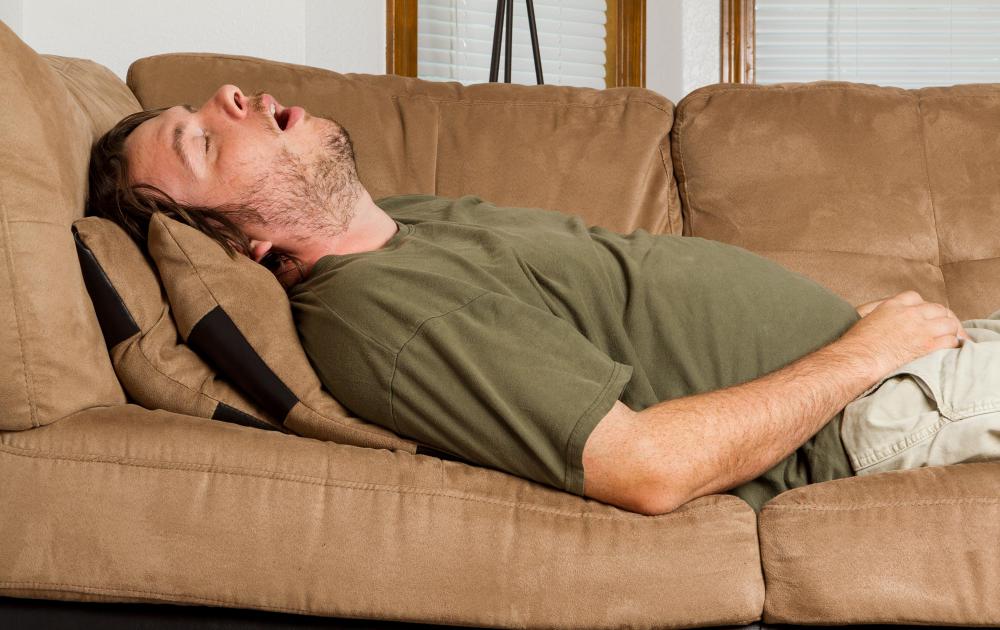
Most experts say that sleeping on the back with the head slightly elevated is generally the best sleep position. This position puts the least stress on the body and doesn't force it into any unnatural curves, and can also help minimize acid reflux, since the stomach is lower than the head. Sleeping on the side is also OK, but sleeping in a fetal position or on the stomach is not recommended.
Four Main Types — Pros and Cons:
Sleeping on the Back

Sleeping on the back is generally considered to be the best position for most people. People sleeping on their backs should make sure that their heads are slightly elevated, but only so the head is about in line with the natural curve of the neck. Having the head resting directly on the mattress can be uncomfortable, and having a pillow that is too high can push the head and neck too far forward and inhibit breathing. Those sleeping on their backs may also want to try putting a pillow underneath the knees to help relax the lower back.

Pros: This position is the best because of the way it allows the spine to rest in its natural curved shape. It can also help prevent acid reflux, and helps encourage circulation. Sleeping on the back may also have the cosmetic benefits, especially for women: since the weight of the breasts is supported in this position, breasts can better maintain their shape over time. People who sleep on their backs may also get fewer wrinkles, since their faces aren't pressed on anything while they are sleeping.

Cons: This position is not good for people who snore or for people with certain back problems like degenerative disc disease. It's also not good for people with sleep apnea, unless the head is elevated at least 30°. Sleeping on the back is also not ideal for pregnant women, though it is recommended for infants.
Sleeping on the Side
Sleeping on the side, but not curled up in a fetal position, is also considered to be a pretty good sleep position. Both the left and right sides are OK to sleep on, but anyone sleeping on his or her side should make sure that to use a pillow that is big enough to keep the neck from curving upwards or downwards. Having the neck in a neutral position can help prevent stiffness and back and neck pain. It's also important not to sleep resting on a hand or arm, since this means that the hand or arm gets compressed by an 8 to 10 pound (3.62 to 4.5 kg) head for hours at a time. The sleeping on the side position is recommended for pregnant women.

Pros: This position is good for the back, since it's pretty stretched out, and can also help with acid reflux since the head is still elevated above the rest of the body. Those with serious acid reflux may want to try sleeping on their left side, since this helps keep the ring of muscle between the stomach and the throat closed. Sleeping on the side can also help prevent snoring, and is fine for those with sleep apnea.

Cons: Those who sleep on their sides are at risk for neck and shoulder pain if they choose the wrong type of pillow, and may eventually get wrinkles and saggy breasts due to their faces pressing into the pillow and the effect of gravity on the breasts. Sleeping on the side is also not great for those with bursitis, as it can cause hip pain and shoulder pain, or those with rotator cuff problems, since they can be aggravated by the pressure on the shoulder. One study also found that sleeping on the left side may contribute to a lower heart pressure and output in people who already have heart problems.
Fetal Position

The fetal position is actually the most popular position, particularly among women, but it's not great for the body. Those who sleep in this position should use a pillow like that for side sleeping and make sure that the head and neck are aligned with the mattress as parallel as possible.
Pros: Sleeping in the fetal position is associated with some of the benefits of both back and side sleeping, including being good for acid reflux, snoring, and sleep apnea. It can also help stretch out the back, and is good for keeping warm at night. Sleeping on the left side in a fetal position is one of the recommended sleep positions for pregnant women.
Cons: Like the side position, sleeping in the fetal position can cause back and shoulder pain if a person uses the wrong kind of pillow. This position can also put stress on the knee joints if the knees are tucked in too tightly to the body, and it can squish internal organs together. The hunched over position is also not very good for breathing, since it makes it hard to breathe deeply from the diaphragm. It may also lead to wrinkles and sagging breasts.
Sleeping on the Stomach
This is usually considered to be the worst sleeping position because it puts a lot of pressure on the body, particularly the back. Those who do sleep on their stomachs should consider using a full-length body pillow to prop up one side of the stomach and take some of the pressure off of the body. The pillow supporting the head or neck should be thin to keep the neck in as natural an alignment as possible.
Pros: Those who snore may benefit from sleeping on the stomach, since it makes the upper airways open up. Sleeping on the stomach occasionally can be good for loosening up the lower back too.
Cons: The on-the-stomach sleep position puts a lot of pressure on the back, neck, and shoulders. When people sleep on their stomach, the natural curve of the back is disrupted, which can lead to soreness. Those who sleep on their stomach also have to keep the neck turned to one side for long periods of time, which can put the neck out of alignment with the spine and can also lead to nerve irritation.
This position also squashes the breasts against the body, which isn't great for their shape long-term, and puts pressure on the abdomen and sometimes the internal organs. Like all positions except sleeping on the back, sleeping on the stomach can also lead to wrinkles.
Special Cases:
Pregnant Women
Obstetricians recommend that pregnant women sleep on their left sides, particularly after their first trimester. This position is said to provide more blood to the placenta, the part of the uterus that facilitates nutrition for a fetus. Sleeping on the left side may also reduce the risk of stillbirths. A New Zealand study found that about twice as many women had stillbirths after sleeping on their right sides than women who slept on their left sides, though the overall number of stillbirths was still very low. Pregnant women should not sleep on their backs, as this can cause a range of health problems, including back pain, hemorrhoids, and less circulation to the uterus.
The left side sleeping position is also known as Sleep On Side (SOS) position. To get the best results with this position, pregnant women should sleep with a pillow between their knees and one supporting the belly, if need-be. The knees can be bent or drawn up to the belly in a fetal position.
Pregnant women also have a number of sleep-related issues that can sometimes be addressed with a change in sleep position, including back pain, heartburn during the night and shortness of breath. To help with these problems, pregnant women should try sleeping in the SOS position with a pillow to support the belly. This pillow and the one between the knees can help take pressure off of the back during sleep. For heartburn, pregnant women can try sleeping in the SOS position, but propping up the upper body with pillows. This position can also help with the shortness of breath that many pregnant women experience late in their pregnancies.
Infants
The best sleep position for most babies and infants is on their backs. Though sleeping on the stomach was once the recommended position, it was found to be connected with Sudden Infant Death Syndrome (SIDS). This is because babies on their stomachs are more likely to breathe in the carbon dioxide that they exhale, and are often not able to move themselves enough to change to a position that gives them fresh air. Some babies have medical issues that mean they need to sleep in another position than on their backs, so parents should always consult with their pediatrician.
Others
Some people have medical conditions that benefit from sleeping in certain positions. For instance, those with sciatica or may be unable to sleep comfortably on their backs and sides, but do well on their stomachs. Those who are paraplegic or quadriplegic may find it uncomfortable to sleep in certain positions, or may need sleeping accessories to get into a comfortable position. It's also important to consider sleep positions for those who cannot easily move themselves to prevent bedsores from occurring.
There are lots of bed and pillow designs that cater to a wide variety of conditions, so anyone who is uncomfortable in his or her current sleeping position, regardless of health, should consider asking a doctor about a change in sleep positions or a sleep aid.
How to Change Sleeping Positions:
It can be difficult to change from a less-than-ideal sleeping position to a good one, but it's certainly not impossible. A lot of it comes down to the type of equipment used for sleeping. For many people, a change in the type of pillow used can help improve their sleep or change their sleep position if needed. For instance, those who sleep on their stomachs may find it easier to switch positions if they use a cervical pillow, which is contoured to fit the neck of someone sleeping on their back or side. Someone wanting to switch from sleeping on his or her back to the side could try using a pillow designed to fit between the knees, which makes the position more comfortable.
There are also many different types of sleeping pads and accessories that provide support for specific types of sleeping positions, and that can be used to help train the body into a new position. Though sleep position is important, it's also worth remembering that people tend to change sleep positions several times throughout the night, and that there's no one position that is always the best for everyone.
Additional Resources:
Websites:
www.americanpregnancy.org — Information about the best sleep positions during pregnancy.
www.nichd.nih.gov — Information for parents about sleep positions for babies.
Videos:
Video 1 — More information about sleep positions and posture while sleeping.
Video 2 — Information from a doctor about sleep positions and pillows.
Video 3 — Information about sleep positions and back pain from a chiropractor.
Dana Hinders
Dana holds a B.A. in journalism and mass communication from the University of Iowa. She has loved being part of the WiseGEEK team ever since discovering the joys of freelance writing after her son was born. Dana also hones her writing skills by contributing articles to various blogs, as well as creating sales copy and content for e-courses.
Learn more...
Dana Hinders
Dana holds a B.A. in journalism and mass communication from the University of Iowa. She has loved being part of the WiseGEEK team ever since discovering the joys of freelance writing after her son was born. Dana also hones her writing skills by contributing articles to various blogs, as well as creating sales copy and content for e-courses.
Learn more...AS FEATURED ON:
AS FEATURED ON:









-
![Sleeping on the side with a supportive pillow is considered the second best sleeping method.]() By: takaSleeping on the side with a supportive pillow is considered the second best sleeping method.
By: takaSleeping on the side with a supportive pillow is considered the second best sleeping method. -
![People who snore might do better sleeping on their sides.]() By: Tracy KingPeople who snore might do better sleeping on their sides.
By: Tracy KingPeople who snore might do better sleeping on their sides. -
![Sleeping on your side, but not curled up in the fetal position is one of the best positions.]() By: Eléonore HSleeping on your side, but not curled up in the fetal position is one of the best positions.
By: Eléonore HSleeping on your side, but not curled up in the fetal position is one of the best positions. -
![People who sleep on their back should ensure that the head is slightly elevated.]() By: Sanjay DevaPeople who sleep on their back should ensure that the head is slightly elevated.
By: Sanjay DevaPeople who sleep on their back should ensure that the head is slightly elevated. -
![Some people may prefer to sleep curled up, especially when they are cold.]() By: Photographee.euSome people may prefer to sleep curled up, especially when they are cold.
By: Photographee.euSome people may prefer to sleep curled up, especially when they are cold. -
![A pregnant woman sleeping on her side is preferred.]() By: Monkey BusinessA pregnant woman sleeping on her side is preferred.
By: Monkey BusinessA pregnant woman sleeping on her side is preferred.



Discussion Comments
The best way to sleep face down is on a pillow length-wise. It's so comfortable for the back and it's one of my favorites.
One that's great for correcting neck alignment is a super tight fetal position, slightly tipped forward to allow the forehead to touch the mattress, or with the corner of the blanket wadded up for a custom height pillow.
After I had my baby, I had the worst sciatica pains. They were horrible, especially when I first woke up. It also did not help that all I wanted to do was sleep on my back since I could not my entire pregnancy. I did find a sciatica sleep position that worked for back sleeping that I wanted to share. I bought a pillow that looked like a tootsie roll, and kept it behind my knees when I slept. It helped to straighten my back so that the pain was not as unbearable in the morning. The pain eventually went away, but the rolled pillow helped until it did.
Professionals say it can actually be dangerous to sleep on your back when you are pregnant, especially late on in the pregnancy. I remember being the lightest sleeper when my wife was pregnant because I wanted to make sure she wasn't rolling over onto her back. The books I read, which was more like she dictated them to me, said that sleeping on your back can cause the blood flow to be cut off from the placenta. I think that her pregnancy was the most nerve-wracking point in my entire life. I think I came out of it worse for the wear than she did.
I have tried lots of pillows, I found the SidePosture pillow to be the answer. It's cool.
Post your comments