
At DelightedCooking, we're committed to delivering accurate, trustworthy information. Our expert-authored content is rigorously fact-checked and sourced from credible authorities. Discover how we uphold the highest standards in providing you with reliable knowledge.
What are Some of the Different Types of Pasta?
 Mary McMahon
Mary McMahon
Mary McMahon
Pasta comes in a wide variety of shapes and sizes, developed in various parts of Italy to go with a myriad assortment of sauces. In addition to strips, it can also be found molded into fantastical shapes, and it is made with different ingredients, depending on the intended purpose and the region in which it is being made. Basic pastas can be divided into two types: egg noodles, made with flour, salt, eggs, and oil; or regular, made with water, salt, and flour. Different types of flour including whole wheat, low protein, and conventional white are used in varying proportions in different parts of the world.
In general, the type of pasta used is dependent on the sauce. Thicker sauces go better with shaped pasta, because it will be able to hold and carry the sauce more effectively. Thinner sauces, on the other hand, go better with small, delicate strips like thin egg noodles or capellini. In addition, you may want to consider who is consuming the pasta when you pick out a type, as children find it easier to eat shapes that can be easily fit onto forks or in the bowl of a spoon.

Pasta cut into strips includes capellini, or angel hair, the thinnest type. Thicker varieties such as spaghetti, linguini, and fettucini are also available. Although these thicker shapes can be used with more robust sauces, they do not fare well with chunky ones, because the chunks tend to slide off the pasta and end up in the bottom of the bowl. They are ideal with cream sauces, pesto, lemon sauces, thin red sauces, or served with olive oil, garlic, and Parmesan. If you serve the pasta with a fork and spoon, diners will find it far less challenging to eat.

The assortment of shapes can be rather intimidating, especially in a market which carries a lot of Italian imports. Some common shapes include macaroni, small pasta tubes which are suited to baking and cream sauces; farfalle, or bow ties; rotini, or twisted noodles; rotelle, or wagon wheels,; and penne, larger tube shaped pasta. Rotini is also available in a longer strip form, in which case it is called fusilli. These shapes are all excellent in baked dishes, or served with dense, chunky sauces. Some is specifically designed for baking, as is the case with manicotti and lasagna. In both instances, the pasta is large, sturdy, and thick, to stand up to boiling, stuffing, and baking.
Mary McMahon
Ever since she began contributing to the site several years ago, Mary has embraced the exciting challenge of being a DelightedCooking researcher and writer. Mary has a liberal arts degree from Goddard College and spends her free time reading, cooking, and exploring the great outdoors.
Learn more...
Mary McMahon
Ever since she began contributing to the site several years ago, Mary has embraced the exciting challenge of being a DelightedCooking researcher and writer. Mary has a liberal arts degree from Goddard College and spends her free time reading, cooking, and exploring the great outdoors.
Learn more...AS FEATURED ON:
AS FEATURED ON:


-
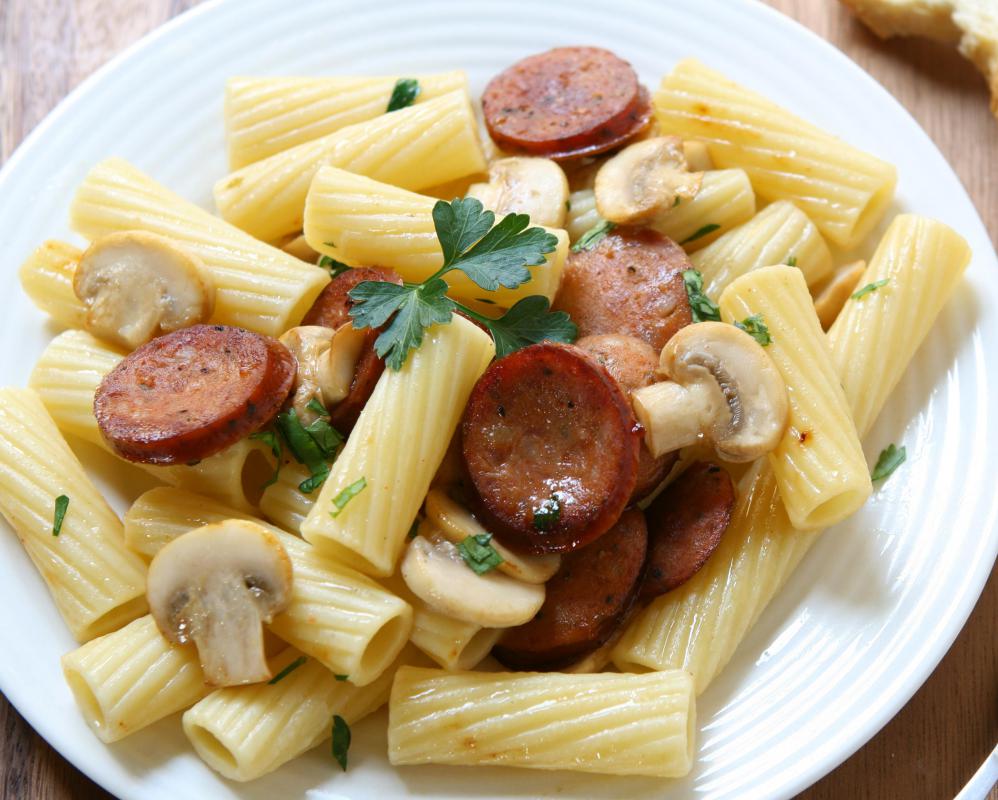
![Tortiglioni with sausage and mushrooms.]()
Tortiglioni with sausage and mushrooms. -
![Mezzaluna pasta.]() By: Comugnero SilvanaMezzaluna pasta.
By: Comugnero SilvanaMezzaluna pasta. -
![Many pastas taste good when topped with a bit of Parmesan cheese.]() By: Bert FolsomMany pastas taste good when topped with a bit of Parmesan cheese.
By: Bert FolsomMany pastas taste good when topped with a bit of Parmesan cheese. -
![Spaghetti pasta with pesto sauce, topped with pine nuts.]() By: Francesco83Spaghetti pasta with pesto sauce, topped with pine nuts.
By: Francesco83Spaghetti pasta with pesto sauce, topped with pine nuts. -
![Lasagna noodles are long, flat and ruffled on either edge.]() By: HandmadePicturesLasagna noodles are long, flat and ruffled on either edge.
By: HandmadePicturesLasagna noodles are long, flat and ruffled on either edge. -
![There are many shapes of pasta, such as spaghetti and its thicker relative fettuccine.]() By: Shawn HempelThere are many shapes of pasta, such as spaghetti and its thicker relative fettuccine.
By: Shawn HempelThere are many shapes of pasta, such as spaghetti and its thicker relative fettuccine. -
![Rotini and fusilli are similar in shape, although fusilli is longer.]() By: isrgilRotini and fusilli are similar in shape, although fusilli is longer.
By: isrgilRotini and fusilli are similar in shape, although fusilli is longer. -
![Linguini is a thicker variety of strip pasta.]() By: Cheryl DavisLinguini is a thicker variety of strip pasta.
By: Cheryl DavisLinguini is a thicker variety of strip pasta. -
![Farfalle pasta has a bow-tie or butterfly shape.]() By: Jiri HeraFarfalle pasta has a bow-tie or butterfly shape.
By: Jiri HeraFarfalle pasta has a bow-tie or butterfly shape. -
![Conchiglie pasta is shaped like a conch shell and is made in a range of sizes.]() By: MSPhotographicConchiglie pasta is shaped like a conch shell and is made in a range of sizes.
By: MSPhotographicConchiglie pasta is shaped like a conch shell and is made in a range of sizes. -
![The ends of penne pasta are angled like a pen.]() By: Joe GoughThe ends of penne pasta are angled like a pen.
By: Joe GoughThe ends of penne pasta are angled like a pen. -
![Whole grain pasta can be made into a variety of shapes and sizes, including penne pasta.]() By: ViktorWhole grain pasta can be made into a variety of shapes and sizes, including penne pasta.
By: ViktorWhole grain pasta can be made into a variety of shapes and sizes, including penne pasta.


Discussion Comments
I have no idea how old this is, but if it's any use, I'll weigh in. When I make pasta, I use the following recipe. I've found it's what strikes the best balance between flavor and ease to work with.
1 cup white flour
1/2 cup whole wheat flour
3 large eggs
2 tablespoons olive oil
1 teaspoon coarse salt
You have to knead it for a while, or throw it in a food processor with a dough attachment and then knead it for much less time, but it's worth it.
@bigmetal: Well, technically regular pasta is made with wheat as well. Do you mean whole wheat? If so, yes, whole wheat can be a bit trickier to use than regular processed wheat is.
Because it isn't as refined, whole wheat has a slightly rougher texture, and makes for tougher pasta dough (harder to roll out) as well as noodles with a heavier texture over all. It's not a huge difference, but it's noticeable. Whole wheat pasta has a richer, more nutty flavor than white flour noodles do -- many people prefer whole wheat for the results, even if it's a bit more trouble to prepare.
is it more difficult to make your own homemade wheat pasta than it is to make regular pasta?
Post your comments