
At TheHealthBoard, we're committed to delivering accurate, trustworthy information. Our expert-authored content is rigorously fact-checked and sourced from credible authorities. Discover how we uphold the highest standards in providing you with reliable knowledge.
What are Some Natural Laxatives?
Natural laxatives generally include any food that has a high fiber or water content, such as whole grains and fruits. Another category of natural laxatives contains foods such as yogurt that promote the growth of healthy bacteria in the intestinal tract. Other options are agents such as aloe vera that cause contractions of the intestinal walls, or peristalsis. A perhaps lesser-known but medically-accepted method of getting the bowels to move is to exercise. Any agent used for constipation relief and bowel regularity, even if natural in origin, should be used with caution to prevent problems such as dehydration.
High-Fiber Foods
Fiber is part of plants or carbohydrates that the body can’t break down easily during the digestion process. Adding this substance to a person’s diet generally relieves constipation. Experts divide it into two large classes, soluble and insoluble.

Soluble fiber absorbs water easily to form a gel-like substance. It makes people feel full longer and slows digestion so the body has a little more time to extract all the nutrients from eaten food. It also plays a role in controlling blood sugar and cholesterol. The insoluble type adds bulk to stools so they pass through the intestines faster. It therefore is important for removing toxins from the body.

People need both forms of fiber in order to digest food properly and stay regular. Virtually any food that has a high fiber content can have a natural laxative effect. Those with a high percentage of the insoluble variety are especially effective because of their ability to regulate bowel movements, however.
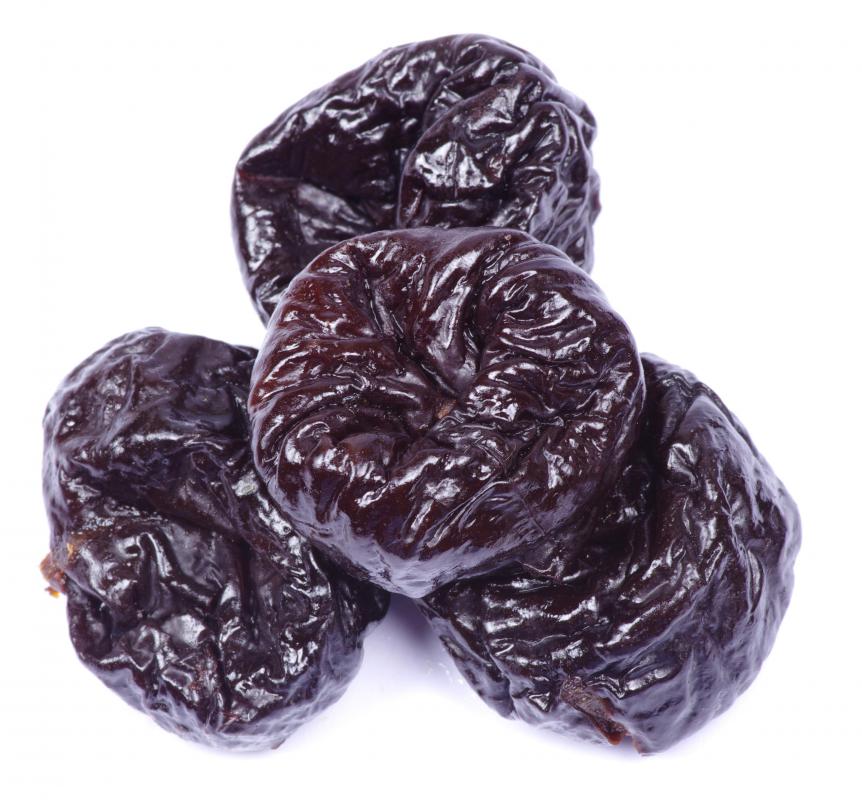
Foods that are high in insoluble fiber include whole grains such as wheat and rye, greens such as collards and kale, lentils, peas, carrots, celery and beans. Most fruits are nutritious alternatives, as well, with prunes, bananas, avocados, apples, berries, pears and kiwi fruit all good choices. Nuts such as walnuts and cashews are natural laxatives that also provide healthy fatty acids and an excellent energy boost.
Water

Stools need bulk if they are to move through and out of the intestines, but they also need a sufficient amount of water. Without this essential substance, stools become very hard and don’t move around the intestinal curves as easily. This can lead to painful intestinal blockages.
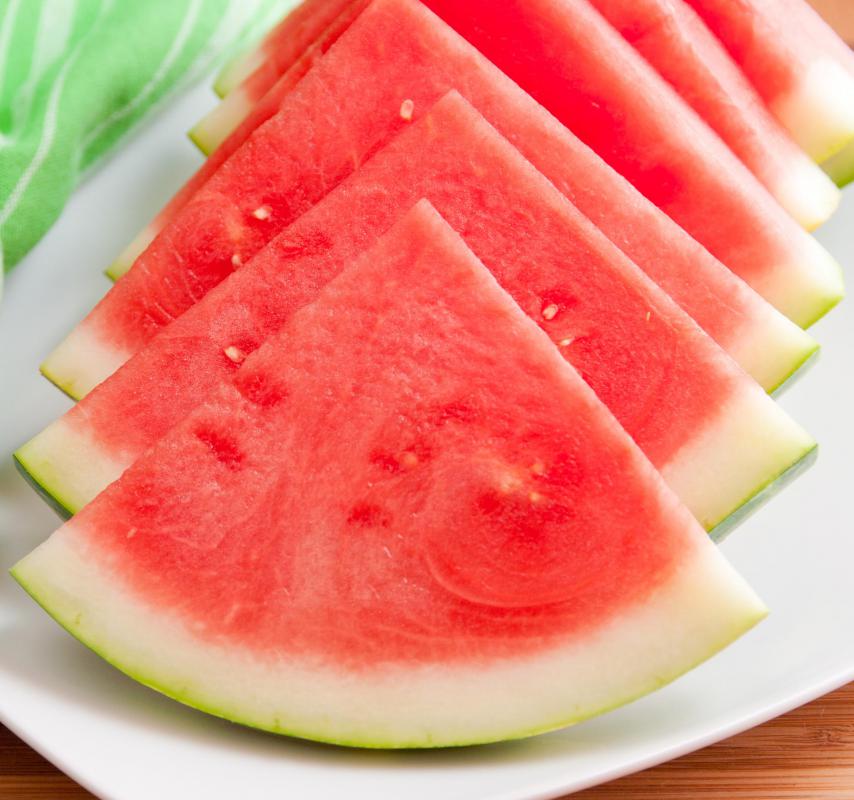
Any food with a high water content can work as a natural laxative. Perhaps the best-known example is watermelon, but lettuce actually has more water than watermelon does. Other choices for increasing hydration include apples, grapefruit, broccoli, tomatoes and cucumber.

Of course, foods are not the only way to get the water necessary. Simply drinking water is the best way to keep the body hydrated. Experts debate how much intake is sufficient, but they all recommend paying attention to thirst and drinking more when thirst becomes more noticeable.
Bacteria-Friendly Foods
Healthy digestion and bowel regularity depends on good bacteria living within the intestinal tract. Most high-fiber foods act as food for these organisms, but other foods such as yogurt, citrus fruits like oranges, asparagus, artichokes, peas and beans are known to promote bacterial growth. With bacteria keeping the intestines operating the way they should, stools move more easily and with greater speed out of the body.
Stimulating Agents

Some plants have chemical compounds called anthraquinones that increase the amount of peristalsis in the gut. Peristalsis moves stools along and out of the body. An example of a plant with this property is aloe vera, which contains the stimulant aloin. In addition to increasing peristalsis, aloin stops the intestines from reabsorbing water so stools stay softer. Rhubarb and cassia senna are two additional plants that contain anthraquinones. Using these plants for extended periods typically is not considered safe, but it is possible to use them under medical supervision for short periods for temporary constipation relief.
Exercise

Although most people think of laxatives as something an individual ingests, activity also is a bowel-stimulating agent. Professionals such as doctors still are not exactly clear why exercise encourages bowel movements, but they know that those who have become bedridden from disease or surgery experience constipation problems. They suspect that physical activity decreases the time food is in the large intestine, thereby preventing the intestine from taking too much water from the stool. Exercise also may encourage bowel movements because accelerated heart rate and increased oxygen intake stimulate peristalsis.

Doctors point out that large amounts of exercise are not needed to receive the digestive benefits physical activity offers. Even a short walk or going through certain yoga poses can be helpful. Gentle aerobic exercises such as swimming are also sufficient.
Natural Versus Safe
People sometimes associate the term “natural” with “safe,” but the two words are not synonymous. Even natural laxatives can cause problems such as excessive diarrhea and subsequent dehydration. The body can become dependent on natural substances in the same way it can become dependent on manufactured products. Additionally, many individuals have allergies to foods people recommend for laxative use, such as nuts. Anyone who wants to try a natural remedy for constipation therefore should consult with a physician prior to starting a regimen.
AS FEATURED ON:
AS FEATURED ON:


-
![Prunes are excellent natural laxatives.]()
Prunes are excellent natural laxatives. -
![Bananas are a natural laxative.]() By: Nikolai SorokinBananas are a natural laxative.
By: Nikolai SorokinBananas are a natural laxative. -
![Drinking at least 8 glasses of water per day can keep the body hydrated and act as a natural laxative.]() By: ElenathewiseDrinking at least 8 glasses of water per day can keep the body hydrated and act as a natural laxative.
By: ElenathewiseDrinking at least 8 glasses of water per day can keep the body hydrated and act as a natural laxative. -
![Beans.]() By: tfazevedoBeans.
By: tfazevedoBeans. -
![Aloe vera is sometimes taken as a supplement to treat digestive issues.]() By: cedrovAloe vera is sometimes taken as a supplement to treat digestive issues.
By: cedrovAloe vera is sometimes taken as a supplement to treat digestive issues. -
![Walnuts are natural laxatives.]() By: dinostockWalnuts are natural laxatives.
By: dinostockWalnuts are natural laxatives. -
![Carrots contain insoluble fiber.]() By: DionisveraCarrots contain insoluble fiber.
By: DionisveraCarrots contain insoluble fiber. -
![Kale is high in insoluble fiber, which can help with digestion.]() By: silencefotoKale is high in insoluble fiber, which can help with digestion.
By: silencefotoKale is high in insoluble fiber, which can help with digestion. -
![Lentils are high in fiber.]() By: gitusikLentils are high in fiber.
By: gitusikLentils are high in fiber. -
![Foods high in water content, such as lettuce, are considered good natural laxatives.]() By: geargodzFoods high in water content, such as lettuce, are considered good natural laxatives.
By: geargodzFoods high in water content, such as lettuce, are considered good natural laxatives. -
![Eating grapefruit can increase hydration levels and work as a natural laxative.]() By: Africa StudioEating grapefruit can increase hydration levels and work as a natural laxative.
By: Africa StudioEating grapefruit can increase hydration levels and work as a natural laxative. -
![Asparagus is a bacteria-friendly food.]() By: Tiramisu StudioAsparagus is a bacteria-friendly food.
By: Tiramisu StudioAsparagus is a bacteria-friendly food. -
![Pears are high in fiber.]() By: epanthaPears are high in fiber.
By: epanthaPears are high in fiber. -
![Avocados are a good choice for a natural laxative.]() By: khzAvocados are a good choice for a natural laxative.
By: khzAvocados are a good choice for a natural laxative. -
![Peas, which are high in fiber, may be used as a natural laxative.]() By: SasajoPeas, which are high in fiber, may be used as a natural laxative.
By: SasajoPeas, which are high in fiber, may be used as a natural laxative. -
![Yogurt is considered a natural laxative, as it promotes the growth of healthy bacteria in the intestinal tract.]() By: nenetusYogurt is considered a natural laxative, as it promotes the growth of healthy bacteria in the intestinal tract.
By: nenetusYogurt is considered a natural laxative, as it promotes the growth of healthy bacteria in the intestinal tract. -
![Celery is a high-fiber food.]() By: andersphotoCelery is a high-fiber food.
By: andersphotoCelery is a high-fiber food. -
![Watermelon could be used as a natural laxative because it has a high concentration of water.]() By: volgariverWatermelon could be used as a natural laxative because it has a high concentration of water.
By: volgariverWatermelon could be used as a natural laxative because it has a high concentration of water. -
![Cashews are a natural laxative and a good source of healthy fats.]() By: siamphotoCashews are a natural laxative and a good source of healthy fats.
By: siamphotoCashews are a natural laxative and a good source of healthy fats. -
![The senna plant is commonly used to make laxative tea.]() By: emerThe senna plant is commonly used to make laxative tea.
By: emerThe senna plant is commonly used to make laxative tea. -
![Natural laxatives can help treat constipation.]() By: rob3000Natural laxatives can help treat constipation.
By: rob3000Natural laxatives can help treat constipation. -
![Oranges can help with constipation.]() By: DionisveraOranges can help with constipation.
By: DionisveraOranges can help with constipation.















Discussion Comments
Another thing that those of you who are medically able to do is to reset your body by fasting. Don't jump into at once; try 24 hours first. You will reach a point where all the carbs you've consumed will be burnt and your body will then start to burn your fat cells. At this point, your cells go into repair mode and you'll really be surprised what can be healed!
I repeat though, don't do a prolonged fast at first. Work your way into it. Personally, I fast every Saturday or Sunday, whichever day I don't have much going on. Every quarter I'll do five days.
Google it and you'll find all kinds of methods but this is one way to get rid of the toxins we all live with nowadays, reset your appetite (we really do eat way too much these days) and discover what your real hunger point is.
Another 'victim' of having to take meds to deal with the meds. Am on time-release Morphine (Exalgo) and Tramadol.
Miralax is (was for me) indeed a "magic" pill (sic) for many. However, in my case I recently discovered that I have a allergic reaction to it (am allergic only to sulphur); if you take it and it turns your face (the classic 'V' area - nose down to around mouth and chin) into the Sahara - dry, flaking, virtually sebhorreic-type reaction, you might look to Miralax as the cause. (If it is doing that to my skin, what is it doing to my insides?)
So then, left with nothing. I do use the laxative teas (Smooth Move), which work in the sense of stimulation/peristalsis, but do nothing to add bulk of soften the rock-hard stool (sorry).
I will willingly say here that I do not drink enough water. I do believe that water and exercise have a great deal to do with it all. I am going to try a couple of the posts on here: the plant enzymes and the prunelax.
By the way, I imagine everyone knows that in "worst-case" scenario, MOM (Milk of Magnesia) will clean house. But clearly not something for chronic use. I have even tried the Magnesium oil/lotion on bottom of feet, and on abdomen; doesn't seem to make a difference.
Drink lots of water and get plenty of exercise.
Try unsulphured black molasses. It works! One tablespoon in warm water immediately after your last meal will have you going in the morning. If you are extremely constipated, take some more in the morning.
Prunelax. The only thing that works. I take one and a half at night, and can go by 12 p.m., completely. I've tried prune juice, which was exciting at first because it actually helped, but after some time I felt like my body got used to it or something. Just spreading the word because I have had constipation for over four years now and things like Miralax and lots of water do nothing for me. I believe I have IBS and am always bloated. It's nice to finally have relief. Just try it!
It's not sold at Walgreens. I usually pick it up at Jewel, really cheap. Also, I wouldn't take two at first because I did and it gave me cramps at work. I went, just not ideal.
I'm sure this is too much information, but I'm not the most "regular" gal on the block. As a gastric bypass surgery patient, I am prone to constipation. I also take iron and calcium supplements which exacerbate things quite a bit.
When I mentioned this to one of my doctor's nurses, she recommended the Fiber Cleanse from Lady Soma products. It was very easy to use; I just take with a glass of water once a day.
Most importantly, this stuff works! I find it's better to take it on a regular basis, rather than waiting to get constipated and then taking it. I feel good taking it every day because I know it is all natural, and it keeps me nice and regular.
This works for me every time: Glass of warm water, followed by a banana, followed by a strong cup of coffee, followed by a 40 minute walk to urgent destination through neighbourhoods where no toilets are publicly available. That does it for me.
Also, having had coffee that day, enter empty church or very quiet library. Something about the atmosphere, similar to a bathroom?
I have not had a proper BM in over two months, except the odd soft lump every few days, but nothing else. I have IBS and fibromyalgia, so I can't do too much exercise.
I have been on 10 sachets of stuff mixed with water for over two months, along with senokot, a can of prunes in juice every morning, with porridge oats combined with bran and psyllium husks, plenty of fruit and vegetables, beans and spices. I have tried honey, the salt, marmite, beets, basically almost everything mentioned, and absolutely nothing. Normally I get alternating diarrhea and constipation, but all the things that normally get me going just aren't working. The only way I can get anything out is with a finger and a bulb enema. It's like my bowels have just quit working and the only thing making anything come out is that there's nowhere else for the food to go.
My gp doesn't seem too concerned, as a small amount is escaping and there's no pain, but I always have pain and stomach cramps. The absence of any is what is worrying me most. I have put on 1 1/2 stone, and seriously am bigger than I was just before I produced my 8 lb 7oz son. My neighbor asked when I was due the other week, as she thought we must be due around the same time.
I just seem to have tried everything, suppositories (terrible cramps, no action) laxatives, enemas, just nothing is happening, and I'm seriously going off prunes. What do you do when nothing seems to work?
One word - Miralax.
I am an 80 year old female, in good health. I take two days bed rest and caffeinated coffee and it moves my bowels - twice a day. Try it! I also take metamucil with lots of water and cranberry juice, plus All-Bran for breakfast and the coffee and during the day, lots of grapes, peaches, Greek no fat plain yogurt, lots of cooked vegetables and raw salad, more water, and two Aloe Vera capsules at night, plus a Carlson's suppository and I no longer suffer from constipation, which I had all my life. It took me to get to this age to cure it. Doctors only give medicine and tests which never helped me. Get wise - take care of your own health. Doctors are only in business to make money.
I'm sticking with prune juice since it works. I've been on stupid laxatives and I hate them. They don't work anymore, so don't start them -- at least not exlax. I used that for three years and I hope I'm okay. I see my GI next month, but can't seem to go on my own. But at least prune juice is natural.
I'm vegan and eat lots of fruit and vegetables, no rubbish at all. And I do have problems with this, even though I really shouldn't. One thing I have found though is that Marmite definitely works. If you have a big spoonful of it before sleep next day things move very quickly if you know what I mean.
Try acai berry juice. northland juice company makes it and it's usually blended with other juices. Not only will it relieve constipation, but it will also cleanse you colon. It works! And it is 100 percent natural!
Natural supplements not working? Try a few tablespoons (to a shot; roughly 6-10 tablespoons) of mineral oil.
Be prepared for some stool movement though afterward (takes a few hours to 24). And you might also check into getting a back adjustment at your local Chiropractor. Sometimes stress can cause back ailments/misalignment's that can cause all kinds of problems with your digestive track.
If the mineral oil and chiropractor don't get you, for better words, loosened up, then I would recommend a doctor visit ASAP. Extreme constipation can be deadly!
it's 2:00 pm and I'm drinking a honey and warm water mixture. would it still work or should i have taken it early this morning? By the way: I have exams tomorrow so i have to be up at 5:00 a.m. would it still affect me then?
i went from wanting to go to wanting to stop. I don't think i'll use laxatives again. very violent and disruptive, but yes effective. i do feel better, but now i don't think i can leave the house for the rest of the day.
I struggled with constipation due to medication for quite some time. I went to the doctor and he prescribed me klysma's and laxatives. I just hated the fact that I had to take medication again to cure something that was caused by medication in the first place. Luckily I ordered digestive plant enzymes, and lo and behold, the constipation was immediately gone and gone ever since. Make sure you get the plant enzymes though, since they can withstand a much broader range of ph. I hope this helps!
Sucralose, a.k.a. Splenda, taken in extreme amounts should help. Try Russel Stover's sugar free chocolates. They taste great and they work, you have to eat a lot for it to work though, so only try if you like chocolate.
Also, I want to point out that some of us out there are so messed up that we cannot eat too much grain or fiber.
I'm one of those. My diet is mainly peanut butter, prune juice, cranberry juice, eggs, tuna, bread, mushrooms and carrots. I still go out and eat a burger here and there, but I just feel it is important for these articles to mention those of us who are worse off need to eat less fiber and grain during a really bad period of inflammation or constipation.
Yes, I can attest to the fact that licorice works (as the above poster said). It doesn't take long either. In fact, I think most of what they say about it is true, coating the stomach and intestinal walls.
My stomach and intestines feel rather good whereas there's usually a buzzing and never-ending discomfort. I'm a severe case of IBS-C. I mean really bad case. I'm 32 with the diet of two year or an 80 year old. Trust me when I say, the licorice will get you going. The first day I took one and a few hours later, I was going to the bathroom constantly.
The next day, I felt empty (which as a IBS C, this feels awesome to me), I took the licorice again and within an hour had diarrhea. Now, that's bad but I'm still pleased. It just goes to show that one needs to be careful about how much one uses, but it does work.
I tried probiotics (even Digestive Advantage), and they made me worse.
In our family we eat daily natural berry powders with yogurt or hot cereal, and none of us has ever had constipation. Berries and very common daily food in Scandinavia. They have huge amounts of fiber and nutrients. Berry powders have the seeds ground in them which makes them even better for constipation, and healthier since the body can use the nutrients of the ground seeds.
A teaspoon of natural berry powder is equal to a handful of fresh berries. Scandinavian countries make the healthiest berry powders since they use wild non-sprayed berries, with no additives or chemicals.
i want to eat a fruit diet. just wanted to make myself more healthier. i heard that juices and fruits make your skin softer and i started having fruit in morning and evening. just for lunch i eat cooked food.
now the problem is that i don't have constipation. i don't have diarrhea, i have a normal stool, but the problem is that whenever i eat food i had to go to for stool, like seven to 10 times per day.
tell me what should i do? i eat fruits and uncooked veggies. I want to become healthy but every time, i need to go to the bathroom. Any suggestions?
I've also tried prune juice and it's just not working.
i tried the honey water and it didn't work. any suggestions?
get the yeast out! drink Kefir and take 14 billion live culture probiotics twice a day along with flax seed oil and fiber. make all changes slowly and drink water -- lots of it.
I suffer from constipation caused from pain medication due to cancer. I was told about "Smooth Move" tea, which you can buy either online or at the sunflower market. It does wonders for me. It contains Senna.
I had not gone in two days and tried the honey water from post 170 and it worked within 1 1/2 hours! Thanks!
Coffee makes me go, but only some brands of coffee.
If you increase fiber, increase your water intake. That is very important, or the fiber will bulk up and can cause gas and bloating and worse constipation. Increase fiber gradually. Never strain on the toilet.
I never had bowel issues and I have always had a healthy diet, but one time I got constipated, strained too hard and it gave me diverticulitis and I had to have six inches of my colon removed from it. This perforated my colon and I almost died. Just don't strain. These are all helpful tips. Thank you.
For me, beetroot salad. Grated beetroot (Fresh ones), pinch of rock salt, fresh ground pepper, dash of lemon juice, fresh chopped onions and green peppers.
a. It tastes heavenly; b. It's very healthy since beetroot is considered as a super food; c. It works like a magic (for me at least).
prunes are good with live yogurt and bran and lots of water. also nobody mentioned plums. they work quick and well and a big helping of soft licorice. you won't stop going if you eat this lot -- believe me!
The best laxative that is safe and natural is honey water. Put 2 Tbsp of honey in a glass of hot water and drink. Within about an hour you will go and no cramping or feeling sick or whatever.
My family has used this since i can remember and it is safe to give kids, as long as they are over the age of one. You shouldn't give if younger because they can get botulism from the clostridium bacteria in the honey. However, it is quite healthy when they are older as it contains so much good bacterias.
I used to have a bowel movement twice a week, seriously! I transitioned to a Primal Raw Food diet about eight years ago and now I have a BM two or three times a day. The vegan raw diets will totally back you up, but the Primal raw consisting of raw unpasteurized dairy, especially the raw butter will help tremendously.
2-4 tablespoons of epsom salt in 8 oz. glass of water does the trick for me. It takes anywhere from 1/2 - 6 hrs. It will really clean you out, so make sure you don't have plans for the day and can stick around the house once it starts. Make sure to let it all dissolve first. I tastes horrible, so I suggest you just drink it all at once without stopping.
@Anonymous 156: well first i understand with all the pressure about being thin and being women, but i have IBS and colitis and my doctor told me to take Metamucil but i found when i took it years ago the psyllium didn't make me do much.
I never tried prunes but i went to the store and got prune nectar and one 8 oz glass will help you move your bowels naturally. Don't get prune juice! Get prune nectar. It's powerful and when you start drinking it, try to drink the whole glass without stopping because it's better that way. Beets and fish oils also help and are natural.
The best thing for me to get a good bowel movement is to eat at the same time every day, drink coffee and smoke cigarettes when I first wake up. I'm not recommending anyone smoke, but it works for me. I also hardly ever eat red meat -- not for health reasons, it just so happens to be that way for me.
I have been on and off constipated for the past year. I wish I was regular! I eat sushi all the time, and have been wondering if all those spicy tuna rolls have been leading to my stuffed butt.
Please research thoroughly before using castor oil and chia seed.
If you live in the European market, then try Nestle LC1 or Yakult. I am pretty sure you can find these around the world, since I have seen Yakult in Brasil as well.
Mcdonalds double cheese burger! Every time I eat one, I am running to the bathroom before I can finish it. I guess all the grease gets things moving!
For constipation, use hot beetroot grated. Really works well.
last night i ate six dried prunes and it was good in the morning but as I'm gastric also, i had to go three times but everything was out and i was relaxed.
At the beginning of last week i starved myself and abused laxatives in an attempt to lose weight- stupid i know. Anyway, four days later i stopped taking them and all bowel movements ceased. It is now days later and I am bloated and still constipated. Any ideas why this is? Also, has anybody tried and tested prunes as a solution? If so, is this effective?
add carrot pulp to muffins, pasta sauces etc. also mashed beetroot in cakes etc.
honestly, dill pickles and celery eaten one after another works great -- just give it 15 minutes. sounds weird but i ate it once just as snacks without needing to go to the washroom or anything and after a while everything that was inside me came out like a laxative. so anytime i am feeling constipated i use this and get total relief.
Urrg, every time I try to go, it's hard!
It's been like this for weeks and I'm so sick of it!
I'm vegan, and my diet consists of a lot of fruit and vegetables and whole grains! I hate white bread and avoid it as much as possible! So why is this happening?
I am not constipated but have a BM every morning. I wanted to know if there is a way to shift that BM to the evening instead as i have field work in the morning and having to go slows me down and makes me late in the field. If someone knows a method, i'm all ears.
start using non iodized sea salt instead of table salt! Really makes things move right through.
Coffee always works great for me! Try it and see.
Thanks all for your helpfulness here. I tried several ideas over the last couple days and finally had success.
Last night I took a stool softener, chased it with an apple/prune juice cocktail and, before bed, mint herbal tea.
I awoke this a.m. with no success until I drank the lukewarm water and sea salt. That's a lot of salty water! And it finally worked.
Just wanted to encourage anyone still suffering. I'm sure the solution is different for each person, but someone's earlier comment that the water with uniodized sea salt really does make things soft before the BM, was also true for me. Wishing much relief!
Arghhh its really annoying! I eat like eight fruit and vegetable servings a day, but then it's constipation and i think it gives me spots on my forehead. think.
vitamin C crystals will get things moving. Everyone's dose is different. 12 grams does it for me. Linus Pauling used to take 30 grams a day as part of his vitamin dosage but that would be way to much for me - give me the squirts. I understand around 15 grams works for most. Slit it in half and wait a half hour between if you want to go slowly.
Three words: aloe vera juice.
Avoid all dairy products. My sister gets constipated from the smallest amount. Try eating sugar free taffy candies- the sugar alcohols have a laxative effect.
I have terrible constipation i need help. i use laxatives and overdose on them like crazy. I'm tired of it.
i am so blocked up and I'm in serious pain and it's embarrassing. i keep feeling like i need to go and then only fart. I got stuck at school for like two hours trying to get some movement up there! nothing's working and i am seriously chafing. help me!
I'm trying to spread the word to family and friends. I have been learning about the detrimental health effects of grains (in all forms- whole grains and sprouted grains as well).
Apparently the introduction of grains into our diet (with advent of agriculture) marks the decline of our physical and mental health as well. It can certainly lead to constipation, as well as a whole long list of other health consequences. This was so hard for me to believe at first, but then I read a lot more, reviewed the research, and discovered the truth about government control of our food supply, and the deep, greedy pockets of food industry lobbyists. Grains are the same as aspartame, high fructose, and soy; it's all a ploy to get us to consume unhealthy but easy/cheap food.
Our ancestors had no problems with high protein/red meat diets. For more info, look online. There's a lot of great research from the Weston A. Price Foundation, and tons of great information from Sean Croxton, and look into Paul Chek.
These folks are spreading truth in health and nutrition. I have lost weight, increased my energy, and cured my constipation and migraines by following their recommendations. You won't regret checking out these sites.
#116: Please don't eat unfermented soy (edamame is soy) while pregnant. You could be doing great neurological damage to your unborn child.
Please, as with everything concerning the health of a child, do some of your own research rather than just talking to friends. While they mean well, most people's knowledge is limited to popular trends and they don't take the time to consider that their "knowledge" may do harm.
Taking advice blindly can have disastrous consequences.
no child in my family had a bottle that was without dark karo syrup as we all had issues as babies. now whenever i need help, dark karo is where i turn. in water or milk or even on a small biscuit. not near as icky as molasses, and works just as well.
Honestly, I've tried natural laxative teas and prune juice and they work fine. However, I must say the most effective natural laxative is uniodized sea salt with water. It tastes absolutely gross, but it flushes you out within the hour and multiple times a day.
You are to drink the mixture before 7 a.m. I just drink it as fast as I can because otherwise, I have a harder time drinking it. Also, I chug a large amount at once and drink orange juice right after for the after taste and repeat. I drink it in two shots. Then I have a cup of coffee right after because it tastes that bad, but it is the most effective natural laxative I have tried. Also, do not use regular table salt and make sure the sea salt is not iodized.
To prepare the mixture simply mix the following:
2 teaspoons of uniodized sea salt
1 quart of lukewarm water (this is equivalent to 4 cups or 16 ounces).
Best of all, it has no long term effects on the body.
Just make sure you have something to drink afterwards because it will make you extremely thirsty. Good luck.
I have generally suffered some kind of constipation over the years, and was never a great water drinker. But a couple of months ago I had to go to the doctor's as I had tried Califig, Senokot, and suppositories - with no joy.
She prescribed a strong laxative which I took eight sachets per day added to water for the suggested three days. There was the smallest movement, but nothing compared to what I had eaten over the weeks.
Out of desperation, I got onto the internet and there was an ad saying cure your constipation in one day. It wasn't too expensive so I paid for the report. Basically it was to take Magnesium along with PLP Vitamin B6. I ordered Magasorb from Lamberts, an online company, and took 150mg each night along with brewers yeast, which has all the B vitamins in (I couldn't find this PLP Vitamin B6 that was suggested --only B6).
As the author of the report promised, I totally cleared myself out the very next morning. I continued to take these supplements every night, but the last few days have gone backward. I've taken some califig again and tried a Microlax, but no joy, so got onto the phone to a nutritional therapist who suggested upping my dose from 150mg to 450mg and to drink lots of water - again not my strong point.
I have had a whole bowl of sweet corn and I shall be taking my increased dose before bedtime and hope it works. It's funny though, but I have no gas, no bloated feeling and certainly no urge to go.
I was planning to bombard my body with different over the counter laxatives, but the lady serving me was horrified. She said that long term use of laxatives actually stopped your bowel muscles from working and once they stop working they never work again and you are reliant on laxatives for the rest of your life.
I never knew that and am hoping that my last usage didn't damage my muscles too much.
I've been plugged up for five days, and i did everything that was suggested to me- fiber, fruit, tons of water, including taking laxatives. the only thing that worked was Marmite on crumpets with a mug of black coffee! It worked within half an hour!!
Fibra Kania! One tablespoon mixed with water or milk before bedtime and bingo! You will poop like a champion.
Bananas will just bind you up more. They recommend that you take those when you have diarrhea, not constipation.
I've had the same problem all my life, and you just need to drink more water seriously. The reason that your stool is so dense is because the body needs a certain amount of water every day -- about eight glasses.
I'd also recommend that you take a stool softener, not a laxative. This will help to make your stool pass more comfortably, and easily.
OK, well I've read all your posts. And not once did it mention coconut milk. A very natural laxative. You can buy it in cans, pour some into a sauce pan, heat it up with some honey and maybe some cinnamon. Tastes amazing and BM galore!
Look on line for True Slim Tea. It's a natural extract tea and works in 6 - 8 hours.
I tried the warm water with sea salt and it worked within 12 hours. I did 12oz of water with 1/4 tsp of sea salt. It tends to be hard to drink, so I add a small chunk of chicken bouillon to give it some flavor. It made it so much easier to handle!
Also, in the past when I have been clogged up I have used warm water with molasses. It is horrible to drink, but those of you looking for instant relief, this really does work within 30 minutes.
My dad told me about it and didn't let me leave his house right after since he didn't think I would make it the 20 miles home before it kicked in. He was right. Plug your nose and chug. I can't remember the exact ratio, but I think it was 1 tablespoon of molasses with 1/2 cup warm water. Good luck!
I've been taking laxatives for the last 30 years. i have tried everything known to man and i exercise on a regular basis, like four times a week and I drink plenty of water, but nothing works. i am sick of taking them, but i've resigned myself to taking them. It stinks.
I am a person who suffers constipation off and on. But I find that the following helps:
1- a bottle of beer or a glass of red wine after
the last meal of the the day;
2- freshly squeezed lemon juice in 1/2 a glass of
warm (not hot) water first thing in the morning.
3- fresh beans (not dried beans) cooked with
spices like turmeric seed and red chillies.
Coconut oil three times a day. Start with one tsp, gradually work up to 1 tablespoon. It can take up to 6 tablespoons a day, but this gives many people diarrhea who haven't built up to this amount.
All you folks with pain medication constipation need to ask your doc for Lactolose. Drink a big mouthful and you'll be ready for action. Tastes super sweet with a medicinal tang, but packs a punch through a clogged pooper.
Olestra oil makes your anus leak. It's disgusting. Doritos and similar junk foods contain a high amount of it.
colonics are very dangerous if not performed properly. my husband is a doctor and when i told him that i used to go in for regular colonics he freaked out! if the water pressure is too hard, you could rupture your intestines.
edamame works like a charm. I'm seven months pregnant and am taking iron pills, which have made me constipated for over a week! my doctor suggested milk of magnesia, but i wanted a food option. a friend suggested edamame and it was great!
I have had some constipation problems on and off for the past three years -- fiber supplements never seemed to help for me.
Eating a salad each day, drinking hot tea, taking a walk, and smoking a cigarette would sometimes help along with a stool softener. Only once I had to take a stimulant laxative.
However, I quit smoking six months ago, and am now currently pregnant and on bed rest. I have been eating nothing but fruits, vegetables, and whole grain cereals (because of my nausea, these are the only things that have appealed to me anyway!) and have found myself horrendously constipated for almost two weeks now -- only one very small, rock hard BM several days ago.
I have taken a stool softener every day for the past four days, am drinking over two liters of water per day, have had two glasses of prune juice each day, a glass of hot tea every morning, and have been munching on cheerios, oatmeal, pears, and mangoes -- still nothing.
Being that I'm pregnant, I only have limited options, but I am desperate for relief. I feel like I have no more room! My doctor only suggested a different stool softener.
I've always prided myself because I never had trouble with constipation, then in October 2009, I had an inch taken out of my small intestine, now I am having to take a stool softener, bulk laxatives only made it worse.Don't want to take them for the rest of my life. I drank 8 glasses of water & taken 3 glasses of warm prune juice, didn't help. Everything was OK on my colonoscopy the small bowel follow through. Any suggestions? I'm also vegetarian.
You guys are amateurs. Right now I take about 15 -20 colace type caps daily (spread out over the day) Last week I took those caps plus 3 suppositories plus a bottle of that sodium stuff used before colonoscopy - at last two movements. Yes, there have been colonoscopies - no problems - one colonoscopy showed stains caused by senna use.
This problem has been here all my life. You guys inspired me to not give up and try some remedies that work for you.
my GF has this issue. She cannot go normally and gets seriously bad cramps due to it. More often than not, she must use an enema. I just found this article today, so i have yet to get her to try any of the recommendations. The reason i am posting is this:
She has noticed that the day after drinking (2 alcoholic beverages any kind) she does not have the cramps or any other issues. She goes just fine, only the day after drinking though.
does anyone have any ideas on that?
I do know that alcohol is a natural laxative, but over the counter types do nothing but make it worse. Could it be because the alcohol is natural?
I drink 12oz of V8 juice everyday and it keeps me pooping normally.
Or buy some prune juice and drink 6-8 oz of it every day to really keep you pooping every day.
I should try the Chinese Tea, sounds good. What's the brand name?
Also, taking laxative or suppositories on a regular basis isn't good. Stick with natural remedies and diet solutions.
To the rude comments regarding opiate constipation...I am on major opiates and pain killers with codeine...I had cancer (osteosarcoma) and lost all bones in one leg and also have had most of small intestine removed..(cancer-prone) I am constantly constipated. Don't judge without info please.
personally I find beets and spinach the best solution..Beets within two hours.
Fleet Glycerin Suppositories did the trick: After sitting on the pot for three and 1/2 hours. Finally relief. About the two and 1/2 hour mark, I sent my girlfriend to the market before they closed and she brought me back a jar of Fleet Glycerin Suppositories.
About 45 minutes to an hour later, relief finally came with a prayer and hard push. I feel a lot better.
Thank you Lord and Thank you Fleet Glycerin Suppositories.
I am a Holistic/Alternative Nurse. It's so simple really. Buy Smooth Move Tea at your grocery store or health food store. Eat a bowl of cheerios or almost any healthy cereal and believe me, the chinese herbal teas for constipation are the best. Smooth Move is excellent and very easy. It works in about six to eight hours. I drink a cup of sugar-free right before I go to sleep.
To the original asker: Has any of these answers been of help to you?
i can't poop! it's been three days, i feel awful.
the best that worked for me is Chinese Herbal tea. Oh, it works within a couple of hours and rids your body of all toxins and even if your stools are hard, chinese herbal tea makes them soft and easy to void.
I cannot believe it. I've read each post and no one has mentioned wheat berries or hard wheat kernels. I have a cup of berries once a day. Put it in soup, or salads. Do this for three days to a week. You will see results. Good luck
Sure cure for constipation: First thing in the morning on an empty stomach. Drink 1 qt. of lukewarm purified water mixed w/ 2 tsp. of unrefined sea salt. It takes about 10 mins. to drink. (you'll see what I mean). After you drink it, lie on you right side for about 30 minutes. Then go about your normal business. Within a couple of hours you will be poopin' like a champ!
I have oatmeal with flax, nuts, and a banana or apple almost every morning. I eat mostly vegetables for lunch and pretty much only veggies for dinner. I drink about a gallon of water daily (no really). I don't have a sedentary job and walk twice a day with the dog. I've been taking "colon green" for a week now and still -- occasional pellets. I've got to have relief soon!
Every day stress is enough to keep a person constipated. On top of stress, we ingest garbage into our stomach, what do we expect? Garbage in, garbage out, right? Eat healthy, live healthy.
I have IBS, therefore I learned the hard way to treat my stomach with love. I take daily, at bedtime 800 mg of magnesium. The next a.m., I drink a glass of warm purified water with a half of squeezed fresh lemon/lime (not bottled)and two capsules of 4x6 Acidophilus pro-biotic on an empty stomach. Eat plenty of steamed veggies and fresh fruit. For God's sake, eliminate canned/preserved foods and soda; drink 10 glasses of purified water. Keep your colon up-to-date clean!
Mangoes work really well. Eat 2 or 3 and you will be surprised how quickly they work. Combine with exercise and a balanced diet and you should be fine.
For instant relief you can buy OTC glycerin suppositories. To get them in without stress or trauma try to squeeze out like you are pooing put it where it needs to be and stop trying to poo and your sphincter will pull it in where it needs to be without pain. When I have been miserable it has worked within 1/2 hour and without a lot of cramps and misery.
i'm constipated due to taking pain killers. Any ideas, anyone?
In a 1/2 cup warm milk, mix some honey and clarified butter (Ghee), drink it just before bedtime. Works wonders on piles, constipation and any heat inside the body.
Try bananas the fantastic! but eat more than one (about three medium sized ones). Otherwise they have the opposite affect and clog everything up. Eat them at night and by morning everything is -- liquidized. ;)
Number 91: You need to see your school nurse if you haven't already. Or see a doctor or a nurse practitioner. They will be able to offer you an immediate solution.
If you are concerned about embarrassment, don't be. They are professionals, and I guarantee you will be glad you did. You don't need to suffer a day longer! I wish you the best.
yeah, an enema. you can buy a kit at any drugstore. maybe pick you up a couple (they're cheap!) just to ensure success, err, results.
Hey all of these comments sound so amazing I'm really going to try them all.
But I have been constipated for about a week and it's extremely painful. I get really bad stomach aches with it and on top of that I hate stomach aches so that gives me more of a stomach ache.
I have missed about six days of school for this. Does anyone know an almost instant solution that could work in 1-2 days?
My little boy was constipated badly and I mixed two tablespoons of mineral oil in his apple juice every day. If you mix it well, he won't know. This worked very well and he felt much better.
Room temperature prune/apple/cranberry juices work best for me. also if there is any stress in your life, get rid of it. also forget the red meat forever.
Honestly a lot of doctors have scared me, you would not believe if I told you.
So therefore I have treated myself and am doing much better. Sometimes I have to put a little vodka in my juice, and it sure helps too on those packed days/weeks/months.
I am a 38 year old woman.
Wow! I found some pills online that are fantastic, based on walnut husks and other natural ingredients. Works for me always.
Any suggestions on relief for opiate induced constipation? - anon32883 Yeah. Stop doing drugs!
If I feel I am not going enough I use a ground flax seed and nut homemade cereal. What you do is take 4 tablespoons of ground flax seed and a handful of almonds and walnuts and toss it all in a small bowl. Next, add 4 tablespoons of milk, heavy cream, or half and half, (your choice), and 1 tablespoon of water with a packet of sugar substitute and 2 teaspoons of butter or margarine. Heat in the microwave for 30 seconds on medium heat setting. Stir and top with nutmeg or cinnamon. Drink 20 ounces of liquid with it to activate all of the fiber. This works really good and is very healthy. Me.
prune juice and apple juice mixed! About one glass a day. It works wonders! Drink plenty of water along with it.
Mirilax! is a god send! And it's not a laxative. i've been on it for about a year =[ but it works. unlike benefiber which had me bloated!
It's interesting to see all of the ways people solve their constipation. OTC laxatives are like crash dieting for your colon. It works initially, but isn't good for you in the long run. In the end game of chronic constipation (coming from a second generation sufferer), the only solution is balance. Don't overload on meats, cheeses, and fats. When you eat a meal, try to include some greens or something with soluble fiber. I buy cereals with fiber and have about 2-3 servings in the morning, and try to get one more serving of fiber later in the day. Also, drink plenty of water. The salt is not necessary, only good clean H2O. Finally, be aware of your BM timing. If you notice that it's been a while, load up on some oatmeal, prune juice, salad, etc... and lots of water. Stay on top of it. Pretty soon you'll find yourself subbing in wheat bread more often, or skipping the cheese, or getting the salad instead of that extra side of potatoes. So do yourselves all a great big favor, and add a little balance to your diet. :)
The best thing to do is to drink peppermint tea after you have eaten or before you go to bed. as soon as you wake up you will need to go to the lav. it's natural, caffeine free, widely available and cheap! asdas own is really nice!
Number 66 it sounds as though you may be addicted to laxatives!
If you can't use the restroom without them that concerns me. Did you initially use them for weight loss? I am sincere when I say this should be checked out by a doctor! Good luck, stay healthy!
Anyone who is very constipated probably has very hard stool in the rectal area that is not coming out. You should first use a small plain water enema, glycerin suppositories or the little liquid glycerin enemas to relieve the immediate "blockage" at the lower end. Then, consider any fiber supplements, foods, or laxatives to work from above.
smooth move tea from traditional medicines. can get at whole foods. it's natural and works every time.
also drinking 16 ounces of warm water with a teaspoon of salt.
Wow. I tried laxatives. Kills my stomach.
Fiber pills: Doesn't work. Different foods: Doesn't work. Prunes: Nah. Didn't work.
Most of these suggestions didn't work either
I talked to my doctor and they did some tests and I'm waiting for the results. Just hope I don't have that irritable bowel syndrome.
I'm going to try warm apple juice and if it doesn't work, I quit. lol.
I agree! I'm thinking whoever posted 66 could use a little "help" too! ...geesh
btw, "bm" is an abbreviation for bowel movement. on the off chance your question was sincere!
comments 69 and 71 are especially disturbing! Thank God I know where my kids are!
I learned this first hand from my grandmother. Drink 1/2 glass of warm prune juice or warm apple juice daily. It really works.
try squatting on your toilet, or lightly pressing on the skin in front of your anus. The angle helps elimination, and the pressure squeezes it out. Seriously give it a shot.
laxatives make my tummy hurt ):
I have a chronic constipation. i tried a high fiber diet but it didn't work for me. now i am dependent on senna pods tea. however i cannot poo poo anymore without taking the senna pods. Will too much of this cause harm in my colon? Please help me -- I am desperate.
What is a BM?
OK, I'm 16, and have had this problem for 1 or 2 years, and it is embarrassing. I wouldn't go for weeks without a laxative. I'm trying not to take them but I can't help it. Like, I'm stuffed.
Another thing, I went to Iraq/Kurdistan Region to visit my family for 7 weeks, and for some reason I was normal there. I don't get it!!
I came back and realized I lost 14 pounds just by being regular and even asked my doctor, if it was because of that and she said yes. I'm desperate to lose weight and this problem is in the way.
I'll use those suggestions, thanks for sharing and yeah, just thought I'd share my story.
It's not a natural herb, etc., but the stool softener "Colace" works wonders. It's not a laxative but a stool *softener" that works simply by getting more water into the stool. It doesn't induce a bowel movement, just softens the stool and makes it much easier to go. I take one little cap every day and it helps me every day. Stool softeners are over-the-counter and available everywhere ... Wal-Mart, Target, Walgreens, etc. They're usually found with the laxatives.
I tried the Aloelax which was suggested here but that did not work, 2 glasses of prune juice & an apple however, certainly did.
I am a chronic sufferer, relied on laxatives, at least once a week to hopefully clean myself out...I started going to get colonics done, I went for several treatments (remember if you are constipated for many years it will take more than one session to get working), actually the first couple were very frustrating- my colon was lazy and there was a lot of mucous...so go to a good one, there is a diet to follow the day before to alleviate gas and make the colonics move better (less meat more greens etc). I also changed my diet just through discussions with my colinics person, eating more greens, taking probiotics, vitamin c, more fruit (berries etc), so I am more regular but I am still not to where you should be--most specialists say you should have one bm for every meal you had the day before...Don't know if I will ever achieve that!
I found this very helpful...give yourself a couple extra hours in the morning though...
32 oz warm distilled water + 1/2 tbsp sea salt + 1 hour (Repeat this again) = a serious bm
If you are not sensitive to alcohol, try 1-2 shots of Blackberry Brandy. Works within an hour for me.
Any suggestions on relief for opiate induced constipation?
i ate a bag full of roasted peanuts, shells and all. i guess the shells don't digest, and they all backed up somewhere along the line, and going is very difficult now. i feel very full no matter what... i can definitely say that my food intake is a lot higher than the exit amount... i called the school doctor, she said since i am still passing gas it's not clogged and suggested exlax and a lot of water. it's been 5 days now, but no pain... only today i am starting to get a little cramped, but i suspect that is because i haven't gone in 5 or 6 days. i'm going to go buy some exlax and cycopeptate tomorrow to see if that won't liquefy everything and do a quick flush of my system. the moral of this story, take the shells off of your roasted peanuts!
So i was reading these, and i came across one about fiber. It really does work. I was really constipated so i took 3 fiber capsules, and then i had toast with honey, cinnamon and sugar--i don't know if it helps but it worked for me and then an activia probiotic yogurt. It really worked, like within an hour, i'm good to go. Try it, i hope it helps.
The best natural laxative I have ever used is licorice. It has to be natural licorice and I have found the best one to be "Panda's All Natural Soft Licorice" ...it seems to work in about an hour, after not having gone for days! I have heard that hard licorice root is even more effective but I have never been able to find a health shop that carries it. Other things that work are Coffee (if you drink caffeine), pears, salad, and "All Bran" cereal. Lots of other fruits work well too, drinking more water helps a lot too. If you have to take a tablet then herbal Senokot works, just take it before bed and you are good to go by morning.
Did you know that eating too much fiber and natural laxatives can actually cause constipation?! All your ideas are great, and I will try most of them. However, I know it becomes very frustrating to not be able to go, but don't eat too much. What is too much? You'll have to figure that out. Just to make things complicated. For me all I know is anything more than 30g of fiber make me constipated.
Down in Mexico we use tamarindo, papaya and we have a fiber here called Fibra Kania. It has fibers from cactus and maguey. It works great but I'm not sure if its available in the states.
I think a variety of natural remedies is better than sticking to a single one. Prune juice works very well or a couple of cooked bananas or concentrated marmite soup (and it's packed with vitamins) or a plate of fried onions. Red chillies are very good too for those who don't mind spicy food; black lentils are also excellent. And most of all exercise is crucial. I think that it rids the body of toxins (natural aching of the body muscles should follow) which get naturally evacuated through the natural stimulation of the laxative system.
I eat 1/2 apple per day, drink 1 glass of water with 1 spoon of metamucil, eat 2 fiber one tablets with about 5 prunes each morning for breakfast. I also drink at least 48 to 72 ounces of water a day.
That combo worked a little for about a week and then stopped up again. I've made a list from above that I will try, but do you have any more natural food ideas?
Try Miralax. That stuff is unbelievable. You may say "gross" but actually if you mix it with your favorite beverage, you can't taste it at all! It doesn't work right away but will definitely give you the relief you need without the painful constricting of your bowels from other laxatives. Take my word for it. I sometimes cannot go to the bathroom but once a week or so, but with Miralax (believe it or not) I went like 2-3 times a day! Also you should try Benefiber. Just like the commercials, there is absolutely no taste or thickness to it. This is not a laxative, but it is very good for your colon health.
i think you may want to get your colon checked.
to 3 wks no go: Honestly, more then 4 days is bad. You don't want what happened to me to happen to you. I didn't go for a week and I was slow go before that so I got so impacted that it was horrible pain and nausea, all the way up to my rib cage... it took 2 wks for that to go away (trust me 45 feet or so of intestines is a lot of back up).
Then, I developed a pancreatic attack which was the most horrible thing I've ever experienced. So... if you are able to take a natural laxative, try first Prune Juice and it's in the beverage aisle. If that doesn't work, trust me on this one, a tall glass of warm water (not hot), followed by 1 cup of black coffee (not decaf), and if that doesn't work, try a bran muffin with a cup of black coffee. This should work. And, to add to the possibilities, do some sit ups. Get your abs moving. Hope it works! Don't delay going to doc if no go in 1 wk... like I said... 4 days is too much.
Try Senna Pods, place about 5 in a cup pour in some boiling water, let it brew for about 5mins and drink it. I have found them to be really effective; just don't take too many! They are available at organic shops and are really cheap.
refried beans and strong coffee!
In response to anon11484 concerning her 10 year old, please have your doctor evaluate your child for gluten sensitivity. Or if you want to try it for yourself, just limit her diet to gluten free for a week or two and see what happens. You will need to really read labels because there is gluten in many foods that you wouldn't expect. Investigate gluten sensitivity or Celiac Disease on the internet. I believe that you will find that your daughter may well have that.
I had been taking laxatives from the time I was about 8 years old to almost age 21. Then I read a book called "Fit for Life" by Harvey & Marilyn Diamond - it's about the body's natural hygiene. After reading that book and adjusting when I ate certain foods, I stopped taking laxatives very quickly (within a week). It was truly miraculous for me because I was absolutely dependent on laxatives for those 13 or so years. I also became vegan around the same time, but I didn't have any effects until I read the book and made the adjustments. Also, I noticed if I start the day with some apples things get moving within a few hours. Good luck to everyone!
The problem with taking the fiber and stool softeners is that the body then becomes more dependent. It will cause the intestinal wall muscles to weaken and an inability to preform peristalsis ( the contractions that move the feces). Fiber should be taken with caution and really no more than a few times a month, during a colon cleanse. If you make a salt solution,with good salt, not that toxic table salt, and take a teaspoon in a cup of water in the morning that will help as well. Hymalan Sherpa pink is a great salt.
I've had pretty bad constipation for nearly a year now, ever since I quit smoking, and have tried almost everything. Psyllium, foods with flax, abdominal massage, dairy (I was lactose intolerant at before), spinach, Activia, etc. They either didn't work, or they worked great for a while and then stopped. I recently began using Fiber Mate, which has none of the bulk-forming things that can work against some of us, just powder of dark green vegetables, and it was been working fairly nicely for me so far. Keeping my fingers crossed!
You can find it at Whole Foods, and it's much better if you sprinkle it on your food rather than mixing it in water. Good luck to those who try it!
Salt baths work.... and I found that if I eat high fiber, like raw carrots about an hour before bed it works for a sure fire morning power BM.
Had constipation problems for years, but these two keep me moving and off fiber drinks and pills!
Also, blend aloe vera with honey and your favorite juice. That is truly cleansing. You won't even feel the taste of the aloe. Hope it works for you all! :-)
I just basically registered to give a simple recipe, it works miracles, hope it works for you too!
All you have to do is drink 2 tablespoons of olive oil first thing in the morning. then follow with 2 full glasses of water (not cold or hot water, just normal). If the effects of two tablespoons is too much, reduce to one. It's usually a very mild effect but very cleansing one.
Also, it's a plus for greater skin! Hope it works for you all :-)
And I cannot stress this enough, exercise...sedentary lifestyles only worsen constipation.
Hi all. Just another angle to the discussion. I have read it all and am fascinated (and a fellow sufferer...kind of). I am wondering if any of you have ever noticed your problems to be weather-related?
I have just started having problems again with the onset of the warmer weather as we head into Summer. I had the same problem last year, which eased off come Autumn time. I've had a great 6-9 months! But alas, the warmer days are here again, and so is my problem. I have drunk like a camel, and gotten straight onto the Metamucil, but it has had no effect on it, so it can't be dehydration.
Upon thinking about it, every time I've had it in the past, it's been hot weather. Whaddayathink? In the meantime, I might go ahead and try a few of those remedies I read about...
I have always suffered from constipation and i am very sensitive about my weight. i have been an on-again off-again laxative abuser for the last 10 years. i can go for up to a month without hitting the laxatives, and then the constipation just gets to much and i crumble.
to avoid taking laxatives i have tried all types of natural laxatives.. metamucil, prune juice (in large quantities), alcohol, all bran cereal, papaya, mango, wholemeal bread, mineral oil (its awful and makes me leak), exercise, water, coffee. ... nothing works! i just want to be regular!
i am fed up with having a bloated stomach, "the pooch", and feeling gassy. i want to be regular and lose weight. what can i do??????
a whole mango + a probiotic yogurt. it will work within 2 hours. mango is known in some african countries to cause bm quickly.
Black olives are a great natural laxative. When my son was around 1-2 years old, I discovered black olives. But you have to be careful because you can go from constipation to diarrhea in less than a day. I can't remember how much I gave him, but I think 10-20 olives work well. He's 17 and I still keep them in the pantry and feed them to him in tacos and other foods.
Fresh Heart of Palm is very effective as a stool softener. but to much can cause Diarrhea.....
I want to highly recommend Aloelax, I find it at health food stores. I was only 28 years old and had such bad constipation problems that I was backed up and not able to go for weeks and it was miserable. I ended up getting a colonoscopy and barium enima. Was given Go Lightly prescription to prepare for the colonoscopy used per directions and it didn't work the first time so had to do it again a second time. I had been in and out of my doctors advised to use every product they could think of such as Benefiber, Miralax, Dulcolax, Milk of Magnesia, suppositories, Perdiem, including products guaranteed to work in less than 24 hrs., but nothing worked not even tons of liquid or high fiber foods and exercise. A family member was concerned about getting the toxins out of my system before I got really ill and recommended Aloelax and I started taking it and so far it is the only product that keeps me regular. I feel so much better and I lost a bunch of weight. My colon looked good and they never did find the problem, they were going to refer me to another specialist to see if perhaps it was an upper digestive problem, but since the AloeLax capsules work so well and are relatively inexpensive (about $8 a bottle), I decided I didn't need to waste the money. I suggest if you have tried many products that don't seem to work to give this a try. I am sure glad that I did.
Epsom Salt works well. It's cheap and natural but tastes horrible. The only thing is that about an hour or two after you drink it it will start to work and you should make sure you have access to the bathroom for the next 2-3 hours. It works in small strong bursts.
Sardines can also be effective, if eaten steadily at least for a few days. Also only eating hot or warm foods or drinks, and avoiding foods and drinks that are cold. Some spices such as hot peppers, ginger, or curry can also help. Avoiding vinegar can also be beneficial.
I've had problems with my digestive system for as long as I can remember. A few months back, after trying this and that (except harsh laxatives-those are very bad and habit forming), I saw an acupuncturist. It did wonders! I felt so amazing! For the first time ever I felt alive! I was also given herbs selected specifically for my problem which kept me running smoothly for about two months. He said it wasn't a permanent fix cause I've had the problem for so long. When I can, I am going back. It was worth every penny.
FIGS! My baby kept getting constipated for days on end. I tried a bunch of things including prunes and fiber and tons of water. I rubbed her belly and gave her stewed dried figs for breakfast and before bed and let me tell you they worked!! If its really bad do a semi fig fast.
No one has mentioned coconut as being a natural laxative. I read it somewhere. I don't know if it is true or not nor how effective if true.
Response to anon8374 who gave up the alcohol 5 weeks ago. First, Great job. Second, depending on how much of a drinker you were it is going to take you a few months to even begin to even out. You may have a good week here and there, but your system is probably pretty screwed up. I took Metamucil and it worked pretty good. Don't over do it thinking it will help out quicker, you have to take the recommended dose, or just under. Good luck with everything.
Yams and sweet potatoes are naturally very high in insoluble fiber, especially eaten with the skin. Try baking them whole or sliced and serving them with sweet maple syrup and several tall glasses of water. It's cheap, tasty, high in beta carotene and vitamin A, and will almost universally produce a healthy bowel movement within 24 hours.
A note about alcohol: one of the reasons it works so well is because it acts like a depressant drug. Relaxation allows increased blood flow to the GI tract and stimulates intestinal muscle contractions. Getting plenty of sleep and drinking extra water can be just as effective in producing BMs and far more beneficial in the long run.
I heard a joke once that went -
Question : Do you want to know what fear is?
Answer : Being stuck in your car on the freeway in morning rush hour traffic after 2 bran muffins and a cup of coffee.
i take a tablespoon full almond oil with milk after night meal. then i go to bed for sleep. it helps very much in relieving constipation and the stool passes very easily in morning. it also strengthens the digestive system.
a good way for those people that enjoy drinking alcohol, is drinking liquor heavily one night, acts as a laxative, i know it might not be the best choice, but it definitely works in flushing out your system, i know from experience haha..
I don't have problems with constipation, but I find that coffee with half-and-half and Splenda work wonders to keep me regular. I'm often not even through my first cup before I feel it working.
I take Fiber pills.(Psylium Husk). 4 pills a day. It has made a huge difference in my life. I have no irregularity at all. Been regular for over 5 years now, no matter what I eat or drink.. I always hated having to run to the bathroom at work, 2 or 3 times if I ate something before work. Now I hardly ever have to excuse myself from my work duties.. If you can find store brand pills, they are a lot less expensive for a bottle of 200. Half the price usually. I recommend them for anyone who doesn't get enough fiber in their diet..
My son had constipation issues and we tried loading him up with fiber and water, with no luck. After talking with a dietitian, we tried flax seed and it worked like a charm. Best thing we ever did. Search in your internet browser for a recipe for "super flax muffins" which is a staple in our house. I just add a few things to get the kids to eat them, like some chocolate chips or Reeses Pieces. As the recipe says, just eat one or two per day or you might be in the bathroom a while.
I have diabetes, so I'm limited to what I can use as a laxative. Eating fiber seems to makes me more constipated, and I can't drink much prune juice because of the sugar content. Any suggestions?
For the first post about the child i suggest you see a pediatrician or family doctor if it keeps up.
If it's been 3 weeks, you need to see somebody ASAP. Generally, more than a week can be bad.
OK, this is going to an interesting one for you. My 10 year old daughter has a tendency to not have a bm for up to a week. When she finally does, well, it looks like she cleaned out the entire colon! The smell, that's another story but you can just tell that something is wrong.
I've taken her to doctors, specialists, etc. They had started her on a prescription of laxatives but that seemed to make the matter worse. The dosage that they were giving her made everything too soft and she couldn't feel it. So you can only imagine the mess that made. After the embarrassment that she constantly suffered at school and home, I stopped that.
I'm looking for something natural that I can give her in small doses at home to help her but not completely lock her down to the bathroom. Plus something that won't hurt her over the long run. I've been told that it will take her a while to get back to normal because she's been this way for so long, that she's "stretched out".
i haven't been able to go to the bathroom for over 3 weeks now. When is a good time to go see a doctor?
anon8374, I have noticed that drinking alcohol heavily one night seems to have a laxative effect by the next morning. I have never read it, though.
Try giving your son fibersure. It's a powder fiber you can add to any creamy substance and he won't know. Put it in his mac and cheese, or spaghetti, or even pour some into the jar of jelly for his pb&j's
I quit alcohol 5 wks ago and have been constipated for 3 wks - anyone think there is a connection? High stress level at my job too. Have tried prunes, stool softeners - getting a bit frightened!
Re: Quartz10
I would stay away from any type of bread. Perhaps you should try fiber cereal or go on a strict liquid diet for a couple of days. OJ with cranberry, herbal laxative tea, sea salt with warm water, or make a soup with tomato sauce, water, seasonings and some type of herb like cilantro which aids in digestion. If nothing else works I would go for the over counter or see a doctor. A severely compacted colon can be dangerous.
I love laxatives!
Go get a colonic done. Even though it costs a little money (around 100) it's very effective and makes you feel so much better. It is where a small plastic tube is inserted and you are flushed with warm water. It's actually good for you because it will strengthen your colon and get out nasty stuff that has been sitting up there. Totally worth it. Although I will point out I had a lot of discomfort due to the fact of a lot of gas, but like I said, worth it.
hi i'm sharon and i have stopped smoking two weeks ago and find it very hard to go to the toilet. have been 3 times in two weeks have tried orange juice, brown bread, 2 litres of water PER DAY!, 1 cup of black coffee a morning what i do not like:) and stomach has swelled up:( any suggestions. i eat very sensibly and i am not a fast food person. thanks
Previously Posted: You can try sugar-free ice cream, sugar-free chocolate or Lay's Wow Chips or any chips made with Olestra Oil. Although you wouldn't want to make a habit of him eating these things, the sugar alcohol or Olestra oil has very effective laxative effect.
Something else that will work is a couple of small glasses of a mixture of pure cranberry juice and O.J. or Dannon makes a great new yogurt called Activia for digestion.
You can always try sugar free chocolate, sugar free ice cream or Lay's Wow Chips or any chips made with Olestra oil. Although you wouldn't want him to eat these things on a regular basis, the sugar substitutes or oil can act as a very effective for of laxative and these are things that the majority of kids willing eat.
my five year old was up last night with pretty bad constipation. he's a pretty picky eater, and i can usually get him to eat fruit and lots of fluids. he'll also eat lots of whole wheat bread. what are some secret ways i can get some more fiber into his diet that taste yummy and he'll be none the wiser about? i hate to see him suffer so much. thanks!
Post your comments