
At WiseGEEK, we're committed to delivering accurate, trustworthy information. Our expert-authored content is rigorously fact-checked and sourced from credible authorities. Discover how we uphold the highest standards in providing you with reliable knowledge.
What are Some Natural Herbicides?
 Michael Pollick
Michael Pollick
Michael Pollick
There are a number of natural pesticides available to gardeners for insect control, but relatively few natural herbicides for the eradication of weeds or other invasive plants. What ones do exist can do more harm than good if they are applied under the wrong conditions. There are plants that act as natural herbicides, however, such as black walnut, sunflowers, sagebrush, and spotted knapweed. These plants excrete chemicals that can kill off another plant species growing nearby. The process of certain plants acting in this way is called allelopathy.
Researchers are very interested in the allelopathic qualities of plants, since the chemicals responsible for natural herbicides can often be isolated and refined for commercial use. For example, scientists were able to extract an herbicidal chemical called catechin from the roots of spotted knapweed, an invasive weed found in the western United States. This chemical can be synthesized on a larger scale and applied to a number of other invasive plants. Many such herbicides are selective, which means that their chemicals only kill specific plants, not everything they touch.

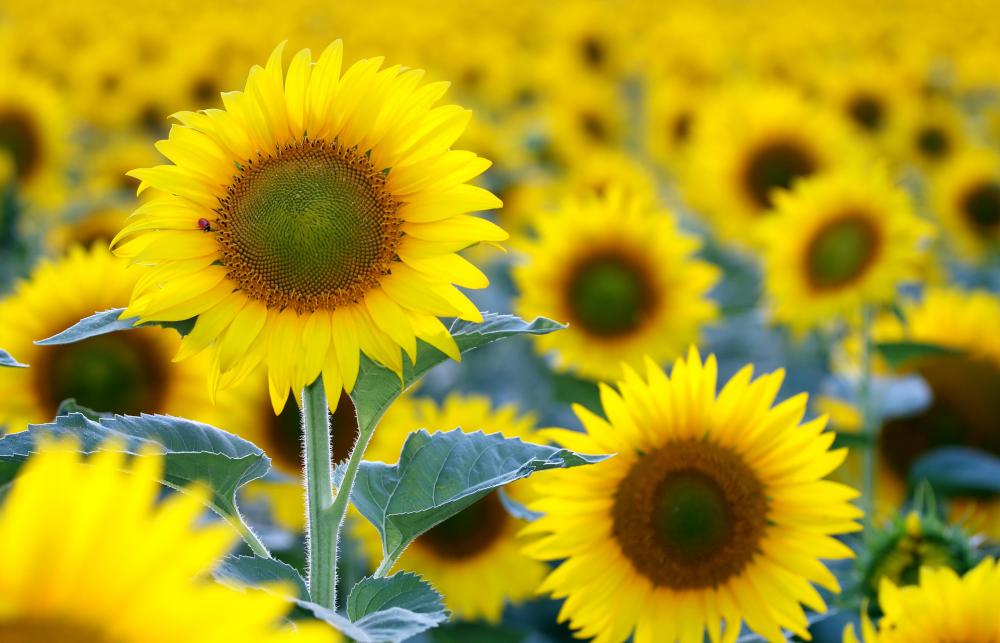
Another popular species of natural herbicide is the black walnut tree. The oils extracted from the leaves of trees are often used in commercially-produced herbicides. Extracts of chemicals found in sunflowers may also be used by gardeners working organically.
Other natural herbicides are used primarily to control weed growth in commercial turf, such as golf courses and installed lawns. These herbicides are considered pre-emergent, which means that they destroy other plants at the germination stage, before the plant can establish roots. One is corn gluten meal, which was originally developed as a medium for growing fungus. Researchers discovered that it also inhibits the germination of other plants, especially weeds and grasses, so it is usually applied to lawns during the germination phase, weeks before the first blade of grass or weed stem appears.

Research to discover more natural herbicides is ongoing. Some agriculture experts have observed allelopathic phenomena in common crop plants such as winter rye and wheat straw. Rye plants have been known to affect the growth of certain vegetables, for example. Some researchers believe that a cover crop of rye, or at least a covering mulch containing rye, could work to kill weeds between soybean crops. Grain-based herbicides could be modified to kill off invasive plants while sparing the important crop plants.

Natural herbicides may sound more appealing than their chemical counterparts, but they are still poisonous substances that can affect humans and livestock. Their application may require the same safety precautions as applying commercial herbicides, so people who use them should never confuse the term "organic" with "non-toxic."
Michael Pollick
A regular WiseGEEK contributor, Michael enjoys doing research in order to satisfy his wide-ranging curiosity about a variety of arcane topics. Before becoming a professional writer, Michael worked as an English tutor, poet, voice-over artist, and DJ.
Learn more...
Michael Pollick
A regular WiseGEEK contributor, Michael enjoys doing research in order to satisfy his wide-ranging curiosity about a variety of arcane topics. Before becoming a professional writer, Michael worked as an English tutor, poet, voice-over artist, and DJ.
Learn more...AS FEATURED ON:
AS FEATURED ON:









-
![Natural herbicides can spare crops.]() By: imaginatioNatural herbicides can spare crops.
By: imaginatioNatural herbicides can spare crops. -
![Selective herbicides are used to kill undesirable species while preserving crops or gardens.]() By: tuayaiSelective herbicides are used to kill undesirable species while preserving crops or gardens.
By: tuayaiSelective herbicides are used to kill undesirable species while preserving crops or gardens. -
![Natural herbicides can be found in sunflowers, and may be used by gardeners working organically.]() By: rookie72Natural herbicides can be found in sunflowers, and may be used by gardeners working organically.
By: rookie72Natural herbicides can be found in sunflowers, and may be used by gardeners working organically. -
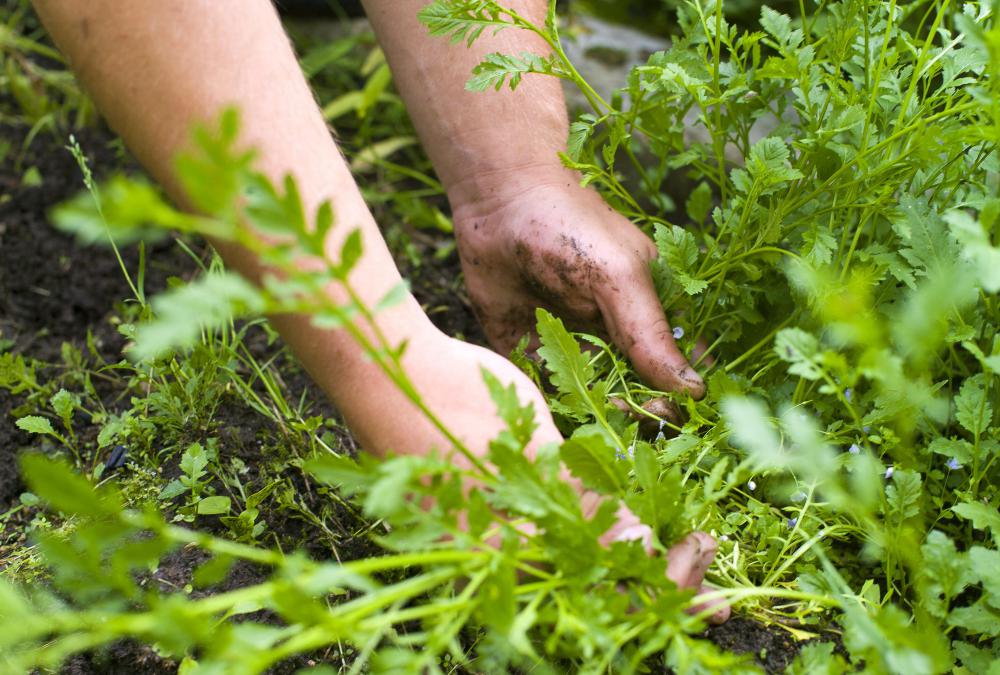
![Using an organic weed killer can be more effective than manually removing weeds.]() By: vectorassUsing an organic weed killer can be more effective than manually removing weeds.
By: vectorassUsing an organic weed killer can be more effective than manually removing weeds. -
![Some natural herbicides may require the same safety precautions that they would use when applying commercial herbicides.]() By: Tan Kian KhoonSome natural herbicides may require the same safety precautions that they would use when applying commercial herbicides.
By: Tan Kian KhoonSome natural herbicides may require the same safety precautions that they would use when applying commercial herbicides. -
![Golf courses use pre-emergent natural herbicides to kill weeds in the germination phase.]() By: WavebreakmediaMicroGolf courses use pre-emergent natural herbicides to kill weeds in the germination phase.
By: WavebreakmediaMicroGolf courses use pre-emergent natural herbicides to kill weeds in the germination phase.




Discussion Comments
Please give some more examples of plants that are herbicides.
I've read that by planting rye, other plants will not grow during the life of the rye. Will the planting of wheat act in the same manner? How does this work? We're very interested in natural herbicides. Thanks, Paige
I need to eradicate some Elder plants that are growing where a septic system is to be installed. I was thinking of cutting them close to the ground and then to prevent them from re-sprouting, drilling some holes in the root ball and pouring in some vinegar. Do you think that this would be effective?
"We have a huge garden and I want to use a herbicide to control weeds. my husband refuses saying that it will affect our water which we drill down 100 feet for (borehole).
he thinks it will also affect the other plants.
anyone got any ideas? andrea"
Well, Andrea, it may affect your water, because herbicides leak into the ground and mix with ground water.
However, it will not affect your other plants, because there are two kinds of herbicides: species specific and non-specific. I hope this helped!
use Juglone which comes from black walnut oil and it will dissipate in water quickly and actually has medicinal properties for humans so if ingested won't harm you. for Andrea By Bobby
I live in the boise id area. I have a problem with milkweed. what are the solutions? we are talking about 3 acres.
one guy uses gasoline to kill his weeds and says it evaporates quickly so does no harm.
What is the difference in disease control and a fungicide. ( Bayer 3 in 1 as an example of disease control)
We have a huge garden and I want to use a herbacide to control weeds. my husband refuses saying that it will affect our water which we drill down 100ft for(borehole).
he thinks it will also affect the other plants.
anyone got any ideas?
andrea
Post your comments