
At WiseGEEK, we're committed to delivering accurate, trustworthy information. Our expert-authored content is rigorously fact-checked and sourced from credible authorities. Discover how we uphold the highest standards in providing you with reliable knowledge.
What are Some Different Kinds of Carpeting?
 Mary McMahon
Mary McMahon
Mary McMahon
Many homeowners choose to install carpeting in their homes since it is often a cheap and attractive flooring option, and also helps to insulate the floor, keeping the house warmer. In other cases, it may be used as a decorative accent in the form of a throw rug. There are many types of carpet available, and all options should be considered when a homeowner is thinking of replacing his or her flooring.
The surface of a carpet is called the pile, and is created either by weaving or by tufting strands of fiber through a pre-woven backing. Carpet that is woven will be more durable, but it is also more expensive, because the process takes longer. Various pile types are available, but they break down into three categories: cut pile, loop pile, and cut and loop carpeting. Within each category, there are a number of variations.

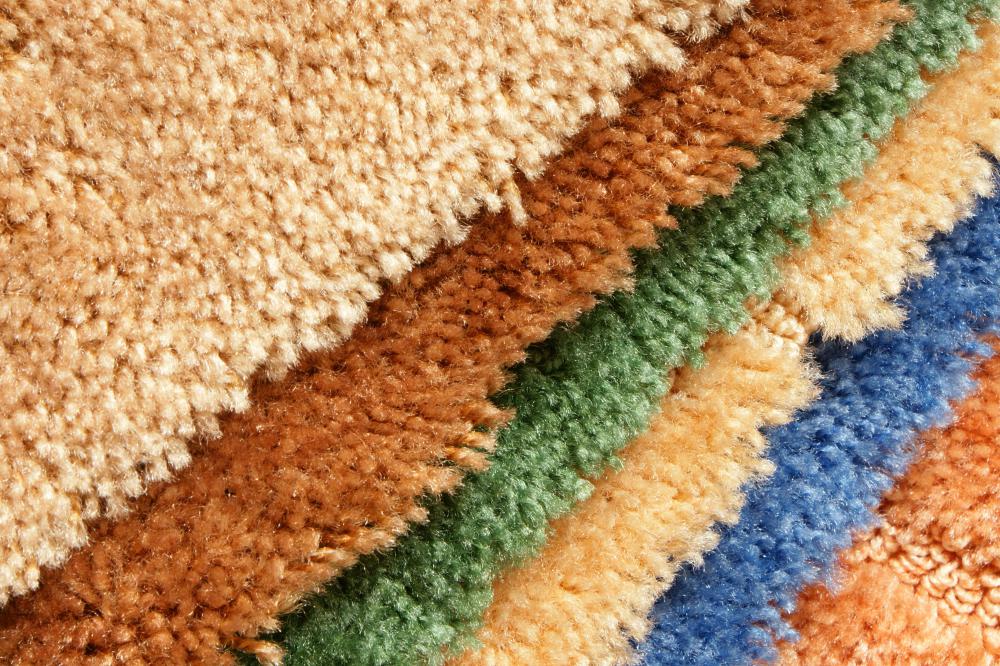
Cut pile carpeting is made by shearing the pile to make a series of tufts. There are three basic types of cut pile, starting with frieze or trackless carpet, which is cut in such a way that minimizes the appearance of tracks, and it is a good choice for high traffic areas of the home. Saxony cut pile is more level, and will show tracks slightly more. Plush carpet has thick clusters of long tufts, and it is the softest of this type of carpeting, but it also shows tracks and collects more dirt, which means that it does not do well in busy areas of the home. It is a good choice for bedrooms and formal rooms.

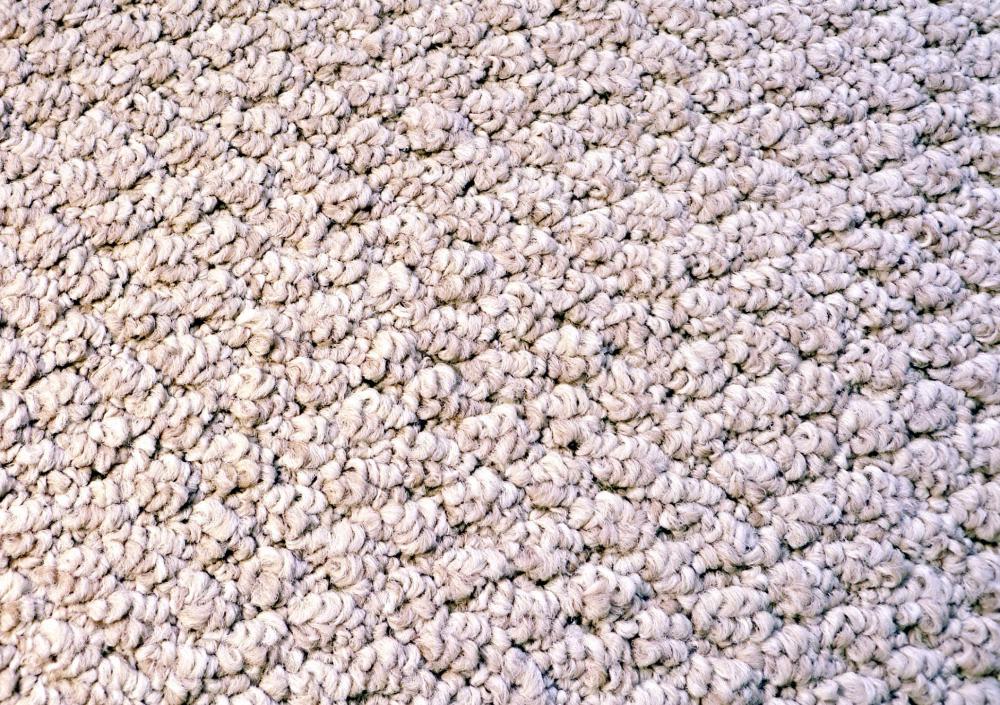
Loop carpet is made with loops of fiber pushed through the backing. It tends to be used in many industrial applications because it is cheaper than cut pile, as it does not require as much fiber. Berber is a type of loop pile, and is a great choice for many areas of the home. Some manufacturers also make multi-level loop pile, which has a textured and more plush appearance.

Cut and loop pile carpeting mixes both techniques. It is commonly used to create a textured effect or pattern, and it is usually not suitable for areas that are heavily used, because the cut pile portions will start to deform. For throw rugs or little used rooms, however, cut and loop pile works very well.
After selecting the type of carpet desired, there are a number of fiber options, starting with wool. Wool is the traditional material for carpeting, and it has been used for thousands of years. This fiber is soft and stands up well to hard use, although it is more expensive. There are several other natural options, such as cotton and sisal, for throw and area rugs, but these materials wear less well. Synthetic fibers are also used, with nylon being the most popular. Nylon is hard wearing, easy to clean, and can offer a bright array of colors. Olefin has excellent mildew and stain resistance, while polyester is soft and brightly colored; both of these synthetics have poor durability, however.
Mary McMahon
Ever since she began contributing to the site several years ago, Mary has embraced the exciting challenge of being a WiseGEEK researcher and writer. Mary has a liberal arts degree from Goddard College and spends her free time reading, cooking, and exploring the great outdoors.
Learn more...
Mary McMahon
Ever since she began contributing to the site several years ago, Mary has embraced the exciting challenge of being a WiseGEEK researcher and writer. Mary has a liberal arts degree from Goddard College and spends her free time reading, cooking, and exploring the great outdoors.
Learn more...AS FEATURED ON:
AS FEATURED ON:









-
![Area rugs.]() By: fotoedgarasArea rugs.
By: fotoedgarasArea rugs. -
![Frieze carpeting.]() By: Popova OlgaFrieze carpeting.
By: Popova OlgaFrieze carpeting. -
![Barber carpet is exceptionally durable and requires little maintenance.]() By: tdoesBarber carpet is exceptionally durable and requires little maintenance.
By: tdoesBarber carpet is exceptionally durable and requires little maintenance. -
![Hallways that get significant foot traffic may benefit from frieze carpeting.]() By: poplasenHallways that get significant foot traffic may benefit from frieze carpeting.
By: poplasenHallways that get significant foot traffic may benefit from frieze carpeting.


Discussion Comments
With three kids and a couple of dogs I like to have carpet that is easy to clean. That means it shouldn't be a light color and the fabric holds up well to a lot of traffic. I have berber carpet in many rooms of my house because it is practical and easy to keep clean. This is more important to me than something that looks really soft and plush.
I only have 2 rooms in my house that have carpeting and they are both bedrooms. All the other rooms in my house are either tile or wood floor. While I like not having carpet in most rooms of my house, I enjoy having it in the bedroom because I don't like stepping on a cold floor in the middle of the night.
The carpet in my bedroom is a neutral color and has small loops in it. This isn't considered a plush carpet but it is soft enough that you don't mind walking barefoot on it.
My friend has carpet tiles in her house. They are really cool, because they form a pattern instead of one solid block of carpet.
Some of the tiles are red, and others are brown. They are placed side to side in alternating colors like a checkerboard. They make her floor look much more interesting than plain carpet.
I would love to get this type of carpeting someday, but right now, I just have to settle for a good throw rug. I can't afford to carpet my entire house yet. A decorative, fluffy throw rug is enough for now.
@OeKc05 – I believe that is called low pile carpeting. I have some in my mudroom.
It is woven very tightly. It isn't soft at all, but it makes great carpeting for areas that need frequent cleaning.
I even have some as outdoor carpeting on part of my covered porch. It's on the steps leading to the house and the area immediately surrounding them. It helps catch dirt before people walk into the mudroom, which is also covered in this carpeting.
What is the term for that really flat commercial carpeting that you see in businesses a lot? It is so smooth that it almost doesn't look like carpet. It's also not very soft, but it would be great to use in spots where people frequently track in dirt.
I guess that's why many stores and other businesses use it. They know that people will be walking in off the streets with their shoes and possibly tracking mud all over the place. It's probably really easy to clean.
Wow! There are lots of carpet types. I usually just go with what feels best, but this probably isn't the wisest way to buy carpeting.
I love plush carpet, simply because I can lie down on it and feel so cozy. However, it has been a pain to clean. It is stained with dirt, and I wish I had gone with brown instead of orange.
Post your comments