
At AllThingsNature, we're committed to delivering accurate, trustworthy information. Our expert-authored content is rigorously fact-checked and sourced from credible authorities. Discover how we uphold the highest standards in providing you with reliable knowledge.
What are Snow Flurries?
 Mary McMahon
Mary McMahon
Mary McMahon
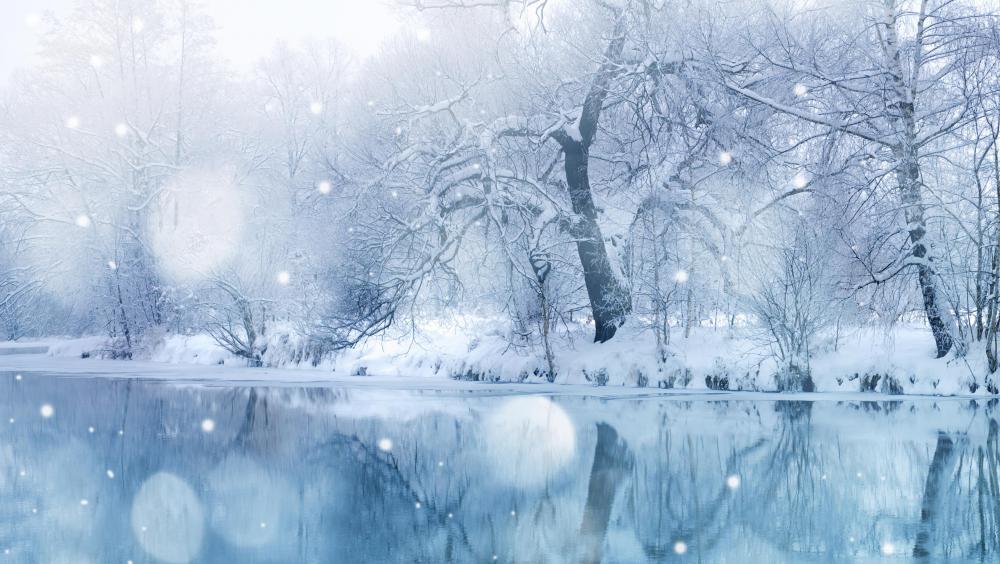
A snow flurry is a brief gust of wind accompanied by a light burst of snow, which does not usually remain lying on the ground. It is common in most cold climates and not unheard of in temperate ones. Other, similar, phenomena are snow squalls, which involve a brief, but heavy, fall; and snow showers, which feature a short-lived, moderate fall, with some accumulation on the ground. Accompanied by wind, the snow may travel some distance, and sometimes take the bystander by surprise, seemingly appearing out of nowhere on a perfectly sunny day and blasting the unsuspecting with a brief shot of bitter cold. Often, snow flurries indicate that a more serious weather front is on the way.
Generally, snow from flurries does not produce a ground covering, as it melts on contact with the surface, and will disappear almost as quickly as it appeared. When the snow falls on ground that is already covered, however, it usually sticks, because the ambient temperature is already far enough before the freezing point to allow it to remain without melting. Especially in temperate climates, this phenomenon can be quite exciting, because people usually only see rain or occasional sleet in the winter. People in some urban areas, such as San Francisco, which rarely experiences snow, may be momentarily shocked by this occasional meteorological event.
Origin

Snow is a common meteorological phenomenon and a crucial part of the water cycle. When water evaporates, it cycles up into the sky, where it often reforms into droplets, seen in the form of clouds. When the droplets become heavy enough, they fall as rain. However, if it is cold enough, the droplets freeze to form snow crystals. If the temperature remains low all the way down, the droplets will retain their crystal formation.

Snow flurries are caused by isolated patches of cloud where droplets have frozen. Like squalls and showers, they are associated with convective, or cumulus, type clouds, rather than the stratiform, or layered, flat clouds that produce steady snowfall. Since they are usually small, snow flurries are difficult to predict, and they generally do not show up on weather radar or at weather observation stations. They are also usually too short-lived to be noted. Anyone witnessing this event should probably run outside quickly to experience it, or he may miss it.
Hazards

Usually, snow flurries are not dangerous, although they can be disconcerting. In some cases, this weather might pose a hazard to unprepared drivers who have to contend with brief limited visibility and possibly a slurry of snow on the roads that will change the way a vehicle handles. Injury due to exposure is rare in the case of a snow flurry, although the brief compromise to visibility and increased slipperiness may lead to pratfalls. In general, however, snow flurries are merely surprising, and sometimes pleasantly playful.
Frequently Asked Questions
What exactly are snow flurries?

Snow flurries are light snowfalls that occur for short durations and result in little to no accumulation. They are characterized by their intermittent nature, often appearing as brief bursts of fine snow. Unlike heavier snowstorms, flurries are typically associated with weaker weather systems and do not significantly impact visibility or travel conditions.
How do snow flurries differ from snow showers?

Snow flurries and snow showers are both forms of light precipitation, but they differ in intensity and duration. Snow showers are heavier and last longer than flurries, often leading to a light accumulation. According to the National Weather Service, snow showers can suddenly reduce visibility and create brief but intense periods of snowfall, unlike the more gentle and sporadic flurries.
Can snow flurries accumulate and cause disruptions?
Generally, snow flurries are not expected to accumulate significantly or cause major disruptions. They are brief and light, with little impact on roads and infrastructure. However, in certain conditions, especially if flurries persist over an extended period or occur at sub-freezing temperatures, they can lead to minor accumulations and potentially slippery surfaces.
What weather conditions are conducive to snow flurries?
Snow flurries typically occur when there are cold temperatures aloft and a weak disturbance in the atmosphere. They are common when a cold front has passed and the air is unstable, often during the winter months. The presence of moisture in the air at lower levels is also necessary for flurries to form.
Are snow flurries predictable?
While forecasting precise details of snow flurries can be challenging due to their localized and transient nature, meteorologists can predict the likelihood of flurries occurring. Using weather models and satellite data, forecasters can identify the atmospheric conditions that may lead to the development of flurries and provide a general forecast for areas that might be affected.
Do snow flurries have any impact on the environment?
Snow flurries themselves have minimal direct impact on the environment due to their light nature and lack of significant accumulation. However, they are part of the natural weather patterns that contribute to the seasonal moisture levels and can provide minor amounts of water to ecosystems, which is beneficial for plants and animals during the colder months.
Mary McMahon
Ever since she began contributing to the site several years ago, Mary has embraced the exciting challenge of being a AllThingsNature researcher and writer. Mary has a liberal arts degree from Goddard College and spends her free time reading, cooking, and exploring the great outdoors.
Learn more...
Mary McMahon
Ever since she began contributing to the site several years ago, Mary has embraced the exciting challenge of being a AllThingsNature researcher and writer. Mary has a liberal arts degree from Goddard College and spends her free time reading, cooking, and exploring the great outdoors.
Learn more...AS FEATURED ON:
AS FEATURED ON:









-
![A light burst of snow and wind.]() By: Vera KuttelvaserovaA light burst of snow and wind.
By: Vera KuttelvaserovaA light burst of snow and wind. -
![A snow flurry is a brief gust of wind accompanied by a short burst of snow.]() By: Igor SokolovA snow flurry is a brief gust of wind accompanied by a short burst of snow.
By: Igor SokolovA snow flurry is a brief gust of wind accompanied by a short burst of snow. -
![Snow flurries are typically associated with cumulus clouds.]() By: PakhnyushchyySnow flurries are typically associated with cumulus clouds.
By: PakhnyushchyySnow flurries are typically associated with cumulus clouds. -
![Snow flurries are most common in cold weather areas.]() By: djtaylorSnow flurries are most common in cold weather areas.
By: djtaylorSnow flurries are most common in cold weather areas. -
![Snow flurries can cause driving issues for communities who are unprepared for winter weather.]() By: Yevgenia GorbulskySnow flurries can cause driving issues for communities who are unprepared for winter weather.
By: Yevgenia GorbulskySnow flurries can cause driving issues for communities who are unprepared for winter weather.



Discussion Comments
I have seen snow flurries that were rather heavy before. It seemed like we were in for a serious snowfall event, though this turned out not to be the case.
The snow flurries that impress me the most are the ones that fall thickly for twenty minutes or so. The wind is blowing so hard that they are falling horizontally, and it feels like a major snowstorm!
I love going out in it and opening my mouth to catch the flurries. The snow is so cooling and pure.
@BrickBack – Here in Mississippi, we rarely get more than an inch or two of snow a year. So, the department of transportation doesn't really have a lot of fancy equipment for removing snow off the roads or preventing slick conditions.
Even a few snow flurries is enough to shut down the schools and several businesses around here. Everyone fears that the roads will become slick, and since we have so many county roads that cross over streams and are not sprinkled with salt to keep them safe, people are often sent home for their own safety.
Salt is sprinkled on the bridges and overpasses of major highways, but most of us have a way to go just to get to those. I'm glad that the place where I work tells me to stay home on days when snow is a possibility, even if we only end up having a few flurries.
I can remember how happy random snow flurries made me as a child. There's nothing quite as magical as being out in the cold and suddenly being hit with a gust of wind and snow. I think the fact that it is so fleeting makes it even more special.
Snow flurries might indicate more snow in cold climates, but down here in the South, they don't indicate much of anything. They last a moment or so, and then they are gone.
Sometimes, they are replaced by drizzling rain, but often, the skies clear up and it is just really cold outside. They do seem to happen when a cold front is moving into the area, but I don't think I've ever seen bad weather arrive right after a snow flurry.
BrickBack-I remember growing up in New Jersey and not having school during the winter season due to snow.
It was so nice to stay home and my mom would make me her special hot chocolate that she made from those thick chocolate bars that they sell in the supermarket. It was absolutely delicious.
I have to say that when snow flurries come down it is so beautiful but if the temperature starts to dip considerably that snow a can turn to ice and make driving conditions very dangerous. Snow rain occurs when it gets really cold and it is very uncomfortable.
Moldova- I think that most municipalities have snow plows and clear the streets in order for people to go to work and continue with business as usual.
Even the schools in New York City rarely close because of blizzard conditions because they clear up the streets so fast that there is really no need.
However, in other communities significant snow fall means that the schools will be closed. Schools have designated snow days that the school can use. If they surpass the allotted days then the school will have to end the school year later as a result.
Succulents- That was probably a snow flurry. Sometimes snow flurries can be light and only allow for a few snow inches and other times the snow flurries can come down hard like in a blizzard and continue to come down for hours at a time.
Usually blizzard condition denotes several inches of snow of at least 6 or more. In some communities these snow blizzards reach a foot or more of snow.
At the ripe old age of 35 years, I've seen snow fall once. It happened suddenly like the article talks about, but the snow just fell pretty much straight down. It didn't circle about like you see on tv (only basis I have lol), but it did only last about 5 minutes. Does that mean it was a snow flurry?
Post your comments