
At WiseGEEK, we're committed to delivering accurate, trustworthy information. Our expert-authored content is rigorously fact-checked and sourced from credible authorities. Discover how we uphold the highest standards in providing you with reliable knowledge.
What are Silicone Ear Plugs?
 Mary McMahon
Mary McMahon
Mary McMahon
Silicone ear plugs are ear plugs which are made from silicone, a rubber-like chemical compound which is utilized in a wide variety of ways. This ear plug design is available from drug stores, swim shops, musical supply catalogs, and medical suppliers. Compared to some other ear plugs on the market, silicone ear plugs tend to be more expensive, but some people believe that they offer superior performance in the realm of ear protection, making the extra cost acceptable.
As a substance, silicone has a number of interesting traits which make it suitable for ear plugs. It is famous for having a memory, which helps it to fill the external section of the ear canal completely, because the silicone molds to the ear's shape. It is also soft and malleable, making it easy to insert and remove without damaging the ear, and it is nontoxic, inert, and safe for use in ears of all ages.

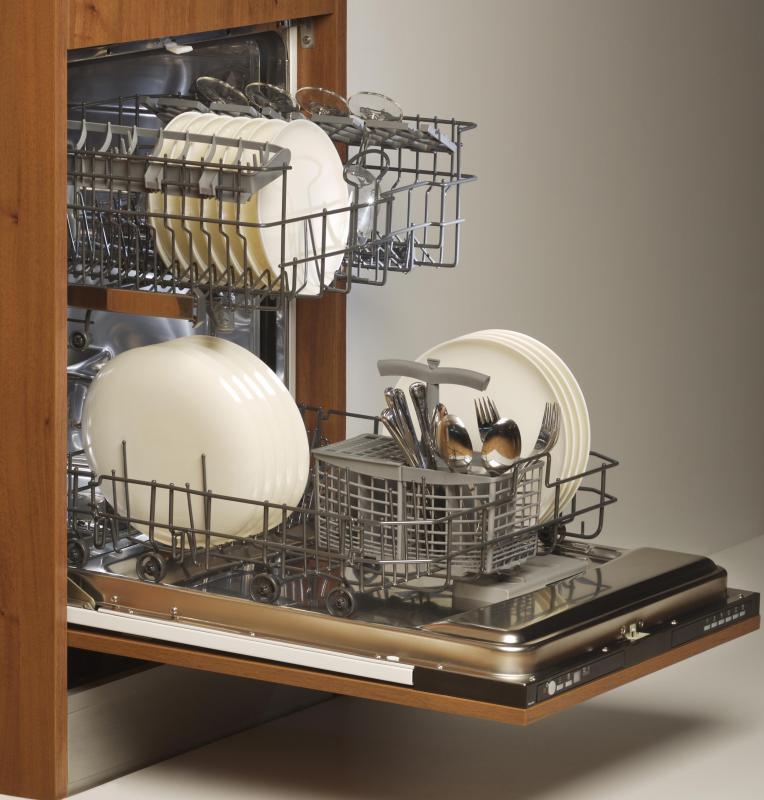
Most silicone ear plugs are reusable, and because silicone is heat-resistant, they can be run through a dishwasher or boiled in a sterile solution for periodic cleaning. The shape of these ear plugs varies, with most looking like little wedges which can be inserted into the external part of the ear canal, and many companies make an array of colors.
For noise protection, silicone ear plugs are very effective. They can be used by musicians, hunters, and other people who work in loud environments to reduce the risk of hearing loss by protecting the ears from loud noises. They also effectively seal water out of the ear, which can be very useful for swimmers, divers, and other people who engage in aquatic sports. The soft texture keeps the ear plugs very comfortable to wear, allowing people to use them for snoring relief overnight, or for plugging the ears against loud ambient noises like garbage trucks and ambulances.

Like all ear plugs, silicone ear plugs need to be inserted and removed with care so that they do not damage the ear. To insert, the ear plugs should be rolled between the fingers and then carefully inserted into the external area of the ear canal and held for a moment while the silicone molds to the area. Forcing the plugs into the ear is not advised. To remove, the edge of the ear plug should be gently pulled towards the ground or the back of the head to break the seal so that the ear plug falls out. Abruptly tugging ear plugs can cause hearing damage.
Mary McMahon
Ever since she began contributing to the site several years ago, Mary has embraced the exciting challenge of being a WiseGEEK researcher and writer. Mary has a liberal arts degree from Goddard College and spends her free time reading, cooking, and exploring the great outdoors.
Learn more...
Mary McMahon
Ever since she began contributing to the site several years ago, Mary has embraced the exciting challenge of being a WiseGEEK researcher and writer. Mary has a liberal arts degree from Goddard College and spends her free time reading, cooking, and exploring the great outdoors.
Learn more...AS FEATURED ON:
AS FEATURED ON:









-
![Silicone ear plugs may be run through a dishwasher.]() By: mitevSilicone ear plugs may be run through a dishwasher.
By: mitevSilicone ear plugs may be run through a dishwasher. -
![Musicians may wear silicone ear plugs.]() By: iofotoMusicians may wear silicone ear plugs.
By: iofotoMusicians may wear silicone ear plugs. -
![Hunters may benefit from wearing silicone ear plugs.]() By: Pierrette GuertinHunters may benefit from wearing silicone ear plugs.
By: Pierrette GuertinHunters may benefit from wearing silicone ear plugs. -
![Swimmers may benefit from wearing silicone ear plugs.]() By: LsantilliSwimmers may benefit from wearing silicone ear plugs.
By: LsantilliSwimmers may benefit from wearing silicone ear plugs. -
![Ear plugs reduce the decibel level and pressure of sound, which helps to protect the ear drum.]() By: Maximo SanzEar plugs reduce the decibel level and pressure of sound, which helps to protect the ear drum.
By: Maximo SanzEar plugs reduce the decibel level and pressure of sound, which helps to protect the ear drum. -
![Earplugs can be used if your partner's snoring affects your sleep.]() By: WavebreakmediaMicroEarplugs can be used if your partner's snoring affects your sleep.
By: WavebreakmediaMicroEarplugs can be used if your partner's snoring affects your sleep. -
![Silicone ear plugs should be put in and removed carefully.]() By: Syda ProductionsSilicone ear plugs should be put in and removed carefully.
By: Syda ProductionsSilicone ear plugs should be put in and removed carefully. -
![Some believe that silicone ear plugs are superior to other types.]() By: autayeuSome believe that silicone ear plugs are superior to other types.
By: autayeuSome believe that silicone ear plugs are superior to other types.


Discussion Comments
Crap, plain and simple. I just started a new job and moved into a new place. It was a little noisy so I started wearing them for sleep. Major mistake. Now a big wedge of that crap is lodged in my left ear. I'm calling a lawyer and going after the jerks who make these.
Seriously, has no one had a positive experience? These should clearly be banned!
I got silicon earplug in my ear. Probably I put it too far and maybe used it several times, but I used wax earplugs before and I had not any problems with that.
So now, after two A&E departments tried to take it out and I spent six hours of waiting and ate 10 tablets of paracetamol not to feel the pain after the A&E departments tried to get it out, I'm waiting for my private ENT clinic operation which will cost me about £500. Don't use them!
This just happened to me as well. I have used silicone ear plugs for years and its never been a problem. Then I went to Argentina. I don't know if it was because it's hot as hell here, or the plugs were outdated, or I didn't do it right, but I woke up three days ago and tried to take one of the plugs out. The plug disintegrated in my ear!! I tried to get it out with tweezers and got a big chunk out, but I could feel a piece of it right by my eardrum. It was like putting a carpet over a speaker.
Because I didn't want to make a big fuss about it, I thought I would just grit it out and wait until I got back to the states. Thanks to looking at these and many other posts, I was hesitant to go to a local doctor. However, the pain was growing stronger and I randomly got a good recommendation for a hospital that handled that problem big time! They gently flushed it out, but I could hear two big thumps when they did it and my boyfriend was about to pass out as he was watching.
I'm grateful to wake up today, New Year's Eve, and be able to party without a tennis ball in my ear. My advice: be careful with the plugs. Use them once, don't break them up, and don't push them in too far. I personally will never use them again. Going to a hospital due to an earplug was traumatic enough. Don't mess with your hearing! You will lose it soon enough!
I bought these off eBay, and pushed them into my ear and of course they heated up due to my body heat and when I tried to remove them, the left ear plug broke into two pieces: the outer and the inner piece stayed in ear and is still in the my ear right now as I type. I'm going to the doctor tomorrow morning to have it removed.
Seriously, do not inflict this on yourself. Leave them on the shelf. They are
unsuitable for the purpose for which they are intended. Stay clear of them.
I followed the instructions with silicone earplugs, but somehow in my sleep some broke off and got lodged inside my ear. I was completely deaf in that ear for three weeks, but when it cleared, I thought nothing more of it, but has I had already been booked to see a specialist. I went to the appointment and was amazed as she fished out big (in the context of a small ear canal) chunks of silicone that had stuck to my eardrum. I won't be using these again.
After both my kids had P/E tubes placed for recurrent ear infections, the doctor told me to use silicone ear plugs during bathing or swimming to stop water from getting in the ear and causing another infection.
My daughter got a piece lodged deep inside her ear and it has now wrapped around the P/E tube, rendering it useless. He wants to put her under general anesthesia again and remove the silicone, another surgery. This stuff breaks off quite easily, especially when warmed by body heat. We followed all directions and thought we were doing everything right. Avoid this stuff.
I feel dumb! I'm an au pair and I decided to go swimming on my off day. When I took the plug out, a piece broke off, and as I tried to get it out, it only went deeper. I asked my host mom to look and she couldn't even see it. After a trip to the hospital's ENT and an earscrape done under general anesthesia, I'm not deaf in my right ear anymore.
They are horrible!
Use with caution or better yet, don't use them at all! I used them for a month for a night's sleep and one morning, I discovered one plug got molded deeper in my ear. I tried to pull it out with my finger and cut a piece out with my nails. I desperately tried to pull it out with pins, but eventually it went deeper. Syringing didn't work. It blocked my eardrum and I couldn't hear a thing.
Finally, I went to the hospital's ENT. They tried to pull it out with all sorts of scissors and vacuum suction. And I cried in pain. They said they have lots of victims of silicone and wax earplugs coming in for help. Then they said they will have to put me under general anesthesia and scrape it out, because it is painful.
I didn't want to risk having such strong sedation so I have home and tried to syringe it out with water and peroxide. Finally, it came out and I felt like I'm in heaven!
I followed instructions, but one earplug molded deeper into my ear during the night, and when I tried to remove it, I cut it into pieces with my nail. After some struggle I removed some more parts, but apparently some pieces are left in my ear, and moved deeper when I used a cotton bud to clean my ear. Now my ear is blocked, I am deaf, feel sick and dizzy because of my balance apparatus, scared and angry!
I got silicone stuck in my ear. I found a hair pin and stuck it in as far as I could through it inside my ear and pulled out. It felt so good. Good luck getting it out.
OK, I followed the instructions: place over ear canal. However, somehow during the night, the plug moved and became lodged in the ear canal. When I took it out, it broke in two pieces, one of which was quite far in.
This stuff is impossible to remove! It's non-soluble, so it doesn't melt and breaks up when manipulated.
I ended up in the hospital for six hours with the ENT department before they finally got the damn thing out. I will never use this product again!
I got it stuck in my ear when I feel asleep, while someone was playing music loudly next door, and in my sleep I'd managed to push it all the way in.
After two monthsm it came out naturally anyway (all I did was push the bottom of my ear every day and the earplug loosened.
Same deal here..I used a waterpik and it finally all seems to be out. Scary. Never again.
Getting a silicone plug stuck in your ear is a really bad deal. Avoid them if there's any chance of not being able to apply them properly. If this does happen, forget the Immediate Care/ Docs on Duty places; they're not properly equipped and you're wasting your time and money. Go to an ENT (ear,nose &throat) specialist ASAP and the thing will be out in less than 10 minutes. This advice comes from experience. I feel like an idiot and I'm out over $200.
If you are an adult and got this stuff stuck in your ear, you are an idiot. It is not meant to be put anywhere except over the top of your ear canal. Read the instructions people, they even have pictures.
The easiest method of removal would be 'syringing' in which a measured blast of water is shot into your ear. A doctor can do it, or theoretically you could with a pumpable water pistol by upping the pressure until it is sufficient, but not so much as to be dangerous.
We used silicone ear plugs with my son and a piece got stuck inside of his ear, too! After a trip to an urgent care and the ER, it ended up being lodged all the way up to his eardrum!
So after a visit with a specialist, we had to have outpatient surgery to have it removed. It was a scary thing for a young child to go through. There should be better warnings and guidelines for these things.
From the first few days when I started using silicone ear plugs my chin below the ears started to itch. Then the Eustachian tubes were itchy and it finally registered to stop using them. After three weeks I still have an itchy neck and I can only surmise that my tissue is contaminated. In very tiny print it state that these plugs shouldn't be used overnight. Obviously they are right!
Silicone ear plugs are dangerous for ears. I have had one stuck in my ear for two months. I went to the doctor and she could not get it out. It is heat resistant so it would not dissolve with warm olive oil or baby oil. She was able to pull out small shards of the earplug but not the whole thing. I have had my hearing impaired on the left side. I thought that it would eventually come out on its own, which is why I waited so long to see a doctor. I had no idea that silicone would not dissolve naturally. Why is such a dangerous product made to protect the ear, used in the ear? I was reading online and found out that I am not the only one who has had this problem, there are others out there who have had these plugs stuck in their ears. Now I will probably have to go see a specialist. This stuff is scary!
Post your comments