
At TheHealthBoard, we're committed to delivering accurate, trustworthy information. Our expert-authored content is rigorously fact-checked and sourced from credible authorities. Discover how we uphold the highest standards in providing you with reliable knowledge.
What are Salivary Glands?
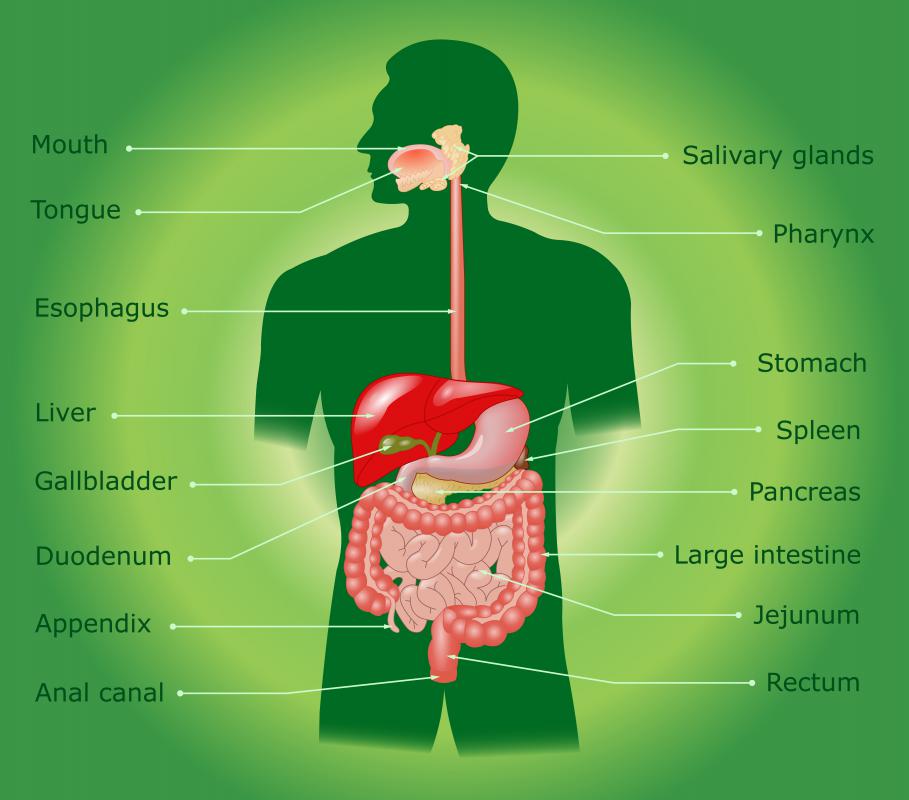
Salivary glands are the glands located in and around the mouth and throat. The major salivary glands are the parotid, submandibular and sublingual glands. The function of these glands is to secrete saliva into the mouth in order to keep the mouth moist, lubricate and bind food, begin the digestion process and maintain oral hygiene. There are other, minor glands located in the lips, inner cheek and linings of the mouth and throat.
The parotid is located near the upper teeth, and it produces a watery secretion through salivary ducts which drain the saliva. The submandibular is located under the tongue and produces a part transparent, part mucous secretion. The floor of the mouth contains ducts through which the sublingual gland secretes a mucous secretion.

The basic units of these glands are cell clusters called acini. These cells secrete water, electrolytes, mucus and enzymes, which flow into collecting ducts where the composition of the fluids change and are either reabsorbed or secreted. Saliva secretion is regulated by the autonomic nervous system, and salivation increases with the smell, thought or presence of food, as well as with the presence or thought of a foreign substance in the mouth. The glands swell during eating and subside afterward.

Some problems that affect these glands include obstruction, infection, tumors and enlarged glands. Stones can form in the parotid or submandibular gland, causing a blocked salivary gland, which prohibits saliva from exiting the ducts. This leads to swelling and pain or infection. One type of infection is mumps, during which the parotid gland swells. Too much bacteria in the mouth can lead to an infected gland, and autoimmune diseases such as HIV cause inflammation of the glands when the immune system attacks them.

A tumor in this area causes the enlargement of typically one salivary gland and a growth in the parotid, submandibular, palate, mouth floor, cheeks or lips. These tumors can be benign or malignant, and the latter can cause the loss of movement of part of the face. Enlarged glands can result from diseases such as diabetes or arthritis.
Salivary gland disease should be treated differently according to each problem. Increased fluids can help because dehydration can put a person at risk for disease. Antibiotics are also effective for mild problems, but sometimes surgery is needed to open a blocked gland or to remove a mass within the gland.
AS FEATURED ON:
AS FEATURED ON:


-
![The salivary glands help lubricate and bind food.]() By: william87The salivary glands help lubricate and bind food.
By: william87The salivary glands help lubricate and bind food. -
![Salivary glands are located in and around the mouth and throat.]() By: iofotoSalivary glands are located in and around the mouth and throat.
By: iofotoSalivary glands are located in and around the mouth and throat. -
![The salivary glands lie in and around the throat and mouth.]() By: dr_oxThe salivary glands lie in and around the throat and mouth.
By: dr_oxThe salivary glands lie in and around the throat and mouth. -
![Damaged salivary glands may occur as a result of bulimia.]() By: Sylvie BouchardDamaged salivary glands may occur as a result of bulimia.
By: Sylvie BouchardDamaged salivary glands may occur as a result of bulimia.



Discussion Comments
How can you prevent too much saliva to avoid spitting it out?
I like to think I am fairly resilient when it comes to pain, but believe me I was whimpering like a baby when I got stones in my salivary glands.
As it started over the weekend I had nearly two days of agony before the doctor could see me. To be honest I didn't even know that there was such a thing as parotid glands. I know it sounds dumb now, but I had never had to think about how we make saliva!
Nobody really knows why this happened to me as I didn't fit into any of the usual at risk categories, such as being depressed, over 40, having Parkinson's disease and so on. It remains a mystery, and as I never had another attack I'm not too worried about pursuing it.
The salivary glands in your mouth are susceptible to developing cancer, as there are numerous cell types present -- I work as a nursing assistant, and I have to tell you, this condition can really scare people, but it's not always serious.
Often, tumors that form in the salivary glands are not threatening to your health, but if a malignant one is discovered it must be taken care of immediately.
Often low grade cancer in salivary glands look very normal and they grow slowly. The highest grade of cancer warps the cells significantly and because of their fast spread can cause damage quickly.
If you do learn of a tumor in your salivary glands, make sure to wait and see if it cancerous or not before panicking. Most can be easily removed if they cause you discomfort.
If your salivary glands aren't working properly you will know it immediately. Dry mouth is a terrible condition that can point to many different medical problems and also let you know how your body is handling new medication.
Dry mouth can point to problems such as diabetes, anemia, high blood pressure and mumps just to name a few conditions. Dry mouth can also be a common side effect of many over the counter medications.
If you have dry mouth and are not sure why, go to a doctor for testing. Properly functioning salivary glands are vital for keeping your teeth from decaying.
@backdraft - I think that is a psychological condition. When this happens you are usually very hungry or about to eat something that looks delicious. Your body is preparing to eat and so it begins to produce more saliva. It is a way of preparing the body for the food it is about to receive.
Think about Pavlov's dog. When it knew it was about to receive a treat it would begin slobbering uncontrollably. You shouldn't worry about this being a problem. It is a completely natural process.
Does anybody know what is happening when you mouth begins to water excessively? I am not thinking about an extreme medical condition, but just the phenomenon that happens when your mouth begins to suddenly produce a lot of saliva.
People tend to think of saliva as just spit, but it is actually an extremely important substance for supporting a whole range of bodily functions.
Have you ever had dry mouth? Then you know how uncomfortable and annoying it can be. Saliva is necessary for keeping the mouth, tongue and pallet moist at all times.
Think about eating. Without saliva it would be almost impossible to chew and swallow. This is the principle at work when people try to eat 6 saltines at once. When your mouth dries up it is impossible to swallow.
Post your comments