
At AllThingsNature, we're committed to delivering accurate, trustworthy information. Our expert-authored content is rigorously fact-checked and sourced from credible authorities. Discover how we uphold the highest standards in providing you with reliable knowledge.
What are Reptiles?
 Michael Anissimov
Michael Anissimov
Michael Anissimov
Reptiles are cold-blooded, air-breathing vertebrates, a group that includes snakes, lizards, turtles, tortoises, crocodiles, and alligators. Most hatch from eggs. Many scientists believe that both mammals and birds evolved from this class of animals, and all three are part of a group called Amniota, which have been the dominant land vertebrates for over 340 million years, since the Carboniferous era. The evolution of the amniote egg was a critical innovation that allowed animals to travel substantial distances from water for the first time in planetary history. As adults, reptiles are typically protected by scales.
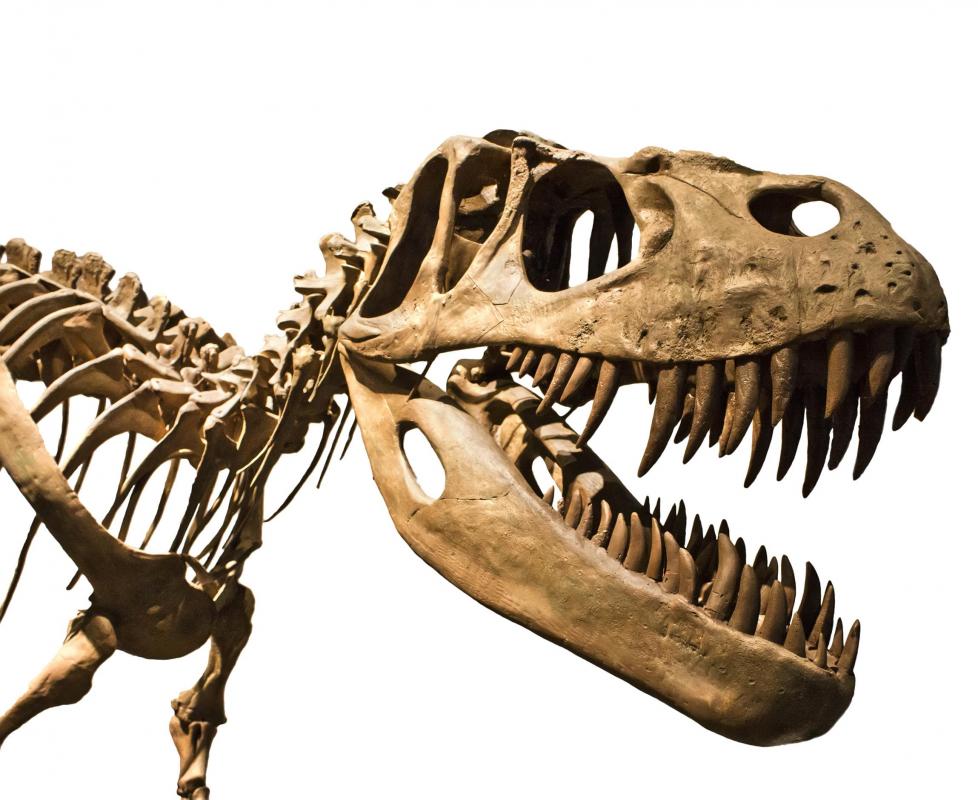
The first reptile is believed to be the Hylonomus (“forest mouse”), which lived 315 million years ago in what is now eastern Canada. It was small, about 8 to 12 inches (20 to 30 cm) in length, and consumed insects. Around 230 million years ago, during the Triassic period, new, larger animals — the first dinosaurs — evolved, and these would go on to dominate terrestrial ecosystems for 160 million years, until they were wiped out during the Cretaceous-Tertiary extinction event 65 million years ago. Because of their dominance during this time, the Mesozoic Era is often called “the Age of Reptiles”.
During this period, the group set various impressive records:
- Largest carnivore — Spinosaurus, 60 ft (18 m) long, 9.9 short tons (9 metric tons);
- Longest animal ever — Amphicoelias fragillimus, 200 ft (62 m);
- Heaviest animal ever — Bruhathkayosaurus, 242.5 short tons (220 metric tons).
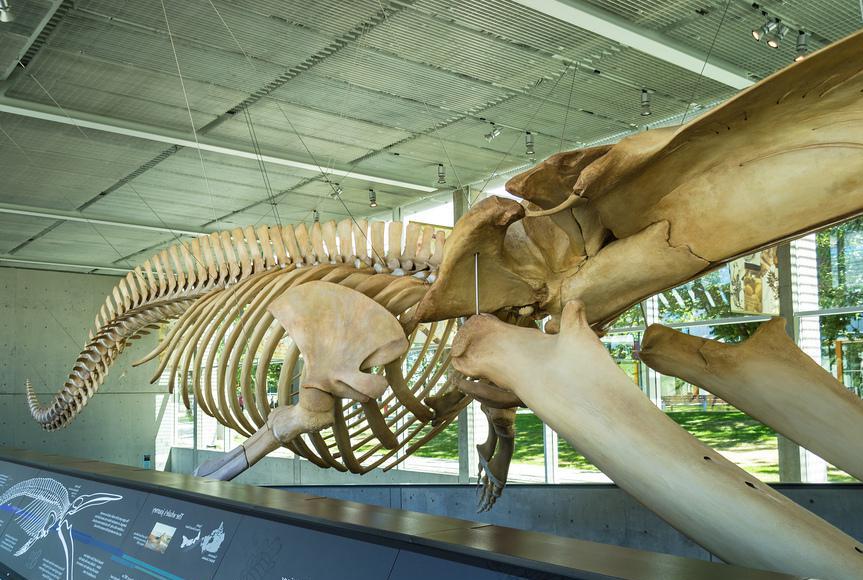
The only real competition for the latter two is the blue
.

Being cold-blooded, reptile metabolism is dependent on the temperature of the environment, and snakes and lizards will often be seen sunning themselves on rocks or in trees. On the plus side, these animals require less food than others, and some can go weeks without a meal. Many are omnivores, eating anything they can find, while others focus on insects, and others, like crocodiles, are generalized carnivores.

Today, the Earth’s ecosystems are dominated by animals rather than reptiles, although the latter are still common. One reptile, the tortoise, is among the longest-living vertebrates ever, with a record of 188 years old. This is only surpassed by the Koi fish, which can live as long as 226 years. Another reptile, the crocodile, is one of the largest living animals, with a record length of 28.2 feet (8.6 meters).
Frequently Asked Questions
What defines an animal as a reptile?

Reptiles are cold-blooded vertebrates that belong to the class Reptilia. They are characterized by their scaly skin, which is impervious to water, and their method of reproduction, which usually involves laying shelled eggs on land. Reptiles are also distinguished by their lung-based respiration and a heart that has at least two chambers, with some having three or four.
How do reptiles regulate their body temperature?

Reptiles are ectothermic, meaning they rely on external sources of heat to regulate their body temperature. They bask in the sun to absorb warmth and move to shade or burrows to cool down. This behavior is crucial as it affects their metabolism, digestion, and activity levels. Unlike mammals, reptiles do not generate their own heat internally.
What are the main groups of reptiles?

The main groups of reptiles include turtles and tortoises, lizards and snakes, crocodilians, and the tuatara. Turtles and tortoises are known for their bony shells, lizards and snakes for their elongated bodies and limb reduction, crocodilians for their semi-aquatic lifestyles and armored skin, and the tuatara for its primitive features resembling ancestral reptiles.
How many species of reptiles exist today?

According to the Reptile Database, there are over 11,000 known species of reptiles as of my knowledge cutoff in 2023. This number is constantly changing due to new discoveries and taxonomic revisions. Reptiles inhabit a wide range of ecosystems across the globe, from deserts to rainforests, showcasing their incredible adaptability.
Can reptiles show affection or bond with humans?

Reptiles do not show affection in the same way mammals do, as their brains are not wired for complex emotional bonds. However, some reptiles can recognize their human caretakers and may exhibit behaviors that suggest a level of comfort or preference for certain people, often associated with feeding or handling routines rather than genuine affection.
What is the lifespan of reptiles?

The lifespan of reptiles varies widely among species. Small lizards may live for only a few years, while larger reptiles like tortoises can exceed 100 years. For instance, the Aldabra giant tortoise is known for its longevity, with some individuals living over 150 years. Lifespan is influenced by factors such as habitat, diet, and predation.
Michael Anissimov
Michael is a longtime AllThingsNature contributor who specializes in topics relating to paleontology, physics, biology, astronomy, chemistry, and futurism. In addition to being an avid blogger, Michael is particularly passionate about stem cell research, regenerative medicine, and life extension therapies. He has also worked for the Methuselah Foundation, the Singularity Institute for Artificial Intelligence, and the Lifeboat Foundation.
Learn more...
Michael Anissimov
Michael is a longtime AllThingsNature contributor who specializes in topics relating to paleontology, physics, biology, astronomy, chemistry, and futurism. In addition to being an avid blogger, Michael is particularly passionate about stem cell research, regenerative medicine, and life extension therapies. He has also worked for the Methuselah Foundation, the Singularity Institute for Artificial Intelligence, and the Lifeboat Foundation.
Learn more...AS FEATURED ON:
AS FEATURED ON:









-
![Dinosaurs appeared about 230 million years ago, and roamed the earth for 160 million years until extinction.]() By: mrks_vDinosaurs appeared about 230 million years ago, and roamed the earth for 160 million years until extinction.
By: mrks_vDinosaurs appeared about 230 million years ago, and roamed the earth for 160 million years until extinction. -
![The only species that can rival the size of the reptiles from the Mesozoic era is the Blue Whale.]() By: Tlaloc XicotencatlThe only species that can rival the size of the reptiles from the Mesozoic era is the Blue Whale.
By: Tlaloc XicotencatlThe only species that can rival the size of the reptiles from the Mesozoic era is the Blue Whale. -
![Chameleon.]()
Chameleon. -
![A turtle.]()
A turtle. -
![A crocodile.]()
A crocodile. -
![An alligator.]()
An alligator. -
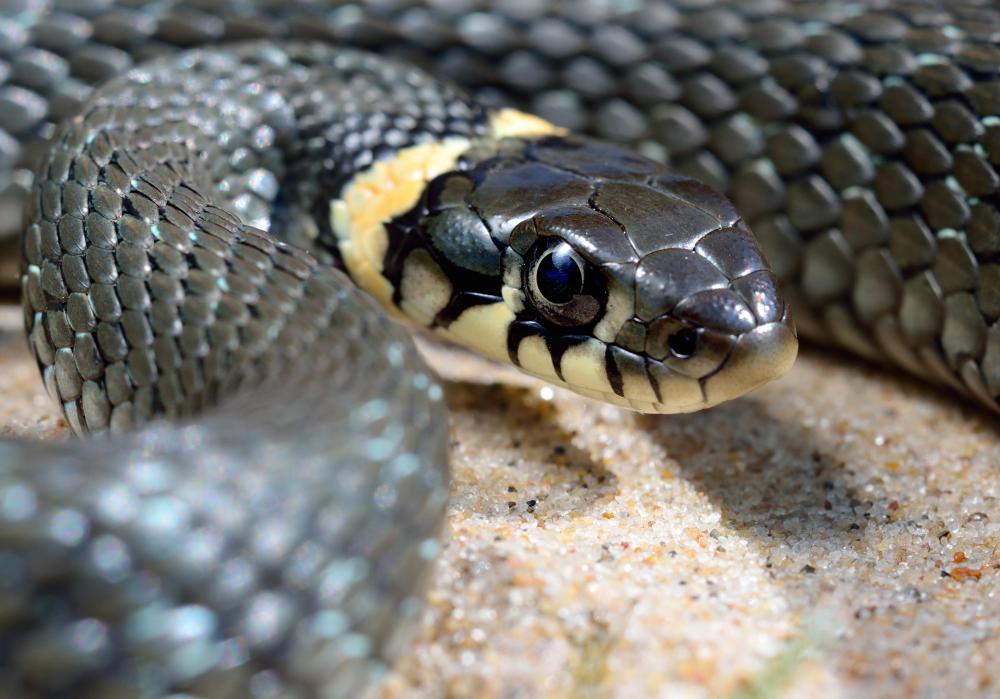
![Snakes are reptiles.]() By: Aleksey StemmerSnakes are reptiles.
By: Aleksey StemmerSnakes are reptiles. -
![Iguanas are one of the larger species of lizards.]() By: mauvriesIguanas are one of the larger species of lizards.
By: mauvriesIguanas are one of the larger species of lizards. -
![Lizards are considered reptiles, as they are cold-blooded vertebrates like the other types of reptiles.]() By: mgkuijpersLizards are considered reptiles, as they are cold-blooded vertebrates like the other types of reptiles.
By: mgkuijpersLizards are considered reptiles, as they are cold-blooded vertebrates like the other types of reptiles.




Discussion Comments
This is all great information. Can you explain in more detail why the "amniote egg was a critical innovation that allowed animals to travel substantial distances from water for the first time in planetary history."?
I'm terrified of alligators and crocodiles. My friend really wants to go kayaking down a river in Florida, but I am too scared that we'll run into one of these big reptiles.
In Florida, they are so common that people sometimes see them in their yards. Going kayaking in murky water is just asking for a reptile encounter.
I just picture us in a small boat, suddenly seeing a pair of eyes rising out of the water. I don't know whether I would be paralyzed with fear or paddling so hard that I might break an oar!
@Oceana – They undergo brumation, which is like hibernation but not as complete. Instead of falling totally asleep, they slow their metabolism way down. Being so cold makes them really sluggish, and they hardly use any energy at all during this time.
Using less energy means they don't have to eat as often or as much. This is good, because in winter, there generally isn't much for a reptile to eat.
So, if reptiles' habitat determines their body temperature, what do they do when the temperatures fall below freezing? Do they hibernate somewhere?
There are so many types of reptiles that live in my yard. I have a pond that is just full of turtles and snakes, and I often see lizards racing through my carport into cracks to hide.
The only reptile I've really gotten a good look at is a turtle. They come out of the pond and into my yard sometimes, and I have had the opportunity to observe them walking.
I once had to pick one up by its shell and move it to safety, because my dog was trying to eat it alive. It withdrew its legs and head, and its neck was all scrunched up. I was scared to hold it near the front or gaze into its eyes, because I have heard that they will snap at you, and if they bite, they don't let go.
@EdRick - I'm a librarian, so I've helped a few different patrons research reptiles as pets even though I've never had one myself. What I read is that no, they are not cuddly and they can't love you back the way a cat or dog can. Cats and dogs are mammals who parent their young, so they have the mother-child relationship as a model of love. (And of course dogs are pack animals, so they have that understanding as well.)
Reptiles, on the other hand, lay eggs and leave them. No loving bond there! Still, some people find them interesting to watch.
Regardless, you'll have to tell your son sorry, no amphibians or reptiles as pets unless his "baby" sister isn't really a baby anymore. Amphibians and reptiles can carry salmonella. For older children and adults, there's not much danger, but babies and small children are much more vulnerable. The CDC recommends that reptiles and amphibians *never* be kept as pets by any household with children age five or younger.
Of course, if I were you I would make up some other reason why he couldn't have one--don't want him resenting baby sister any more than he probably already does!
I remember reading about Komodo dragons having virgin births (sometimes, not always - I think there's one species that always reproduces parthenogenetically). Some years ago there was a virgin reptile birth around Christmas, so it made the news.
Are pet reptiles any fun? My ten-year-old has been asking for a lizard of some kind, but it seems to me it would just sit there. They're not exactly cuddly. And I'm afraid it would frighten his baby sister. But I'm open to being convinced.
Actually, there are some species of lizard that have virgin births. The Komodo Dragon and some branches of whiptails do not need males to reproduce.
no it can't, it can't reproduce by itself, it needs a male and a female to produce a young one.
what do reptiles eat?
this is awesome.
yes they can.
Can a lizard lay eggs without being with a male lizard?
Post your comments