
At WiseGEEK, we're committed to delivering accurate, trustworthy information. Our expert-authored content is rigorously fact-checked and sourced from credible authorities. Discover how we uphold the highest standards in providing you with reliable knowledge.
What are Razor Bumps?
Razor bumps are minor irritations that form on the skin after shaving. In the form of tiny bumps like pimples, razor bumps are often the product of sensitive skin or curly hair. They are usually the result of ingrown hairs, and are sometimes called shaving bumps or shaving pimples. When a freshly shaved hair that is cut at an angle curls into the face and becomes an ingrown hair, irritating bumps are the result. This can happen anywhere on the body, but is most prevalent on the face.
Razor irritation in the form of bumps is often concentrated in one area, and so cluster together to look like acne. Ingrown hairs curling back into the skin causes the body to react with swelling and red bumps, which are the razor bumps. Although there are many ways to avoid or alleviate the problem, for some people, the bumps are inevitable. Sensitive skin and the necessity to shave every day are realities for some people, but clean razors and proper techniques can help the problem.

Stopping razor bumps can be easy and practical, and solutions take on many different forms. Among the easiest is to stop shaving. Giving your face a two or three day break between shaves can help ease irritation and help rid your face of bumps. Rinsing a blade with alcohol can also help, and frequent changing of the razor to avoid dullness on the blade. Using an alcohol or iodine-based aftershave will also help to alleviate the irritating bumps.

Other basic techniques for stopping razor bumps include using a good shaving cream and leaving it on the face to soften the skin and hair. Shaving with the grain of the hair, and not against it, will also help to lessen bumps. Other solutions are just as simple: you can soften your face with a shower or a warm towel, and avoid using multiple blade razors, as they tend to pass over hair more than once. Also, razors should never be passed over the same patch of skin or hair twice.

Razor bumps, known medically as pseudofolliculitis barbae, can escalate into a larger problem if not treated or helped. Known as Barber’s Rash, this larger problem can be avoided by using antiseptic or antimicrobial treatments. Though the inflammation associated with the bumps can be alleviated by a dermatologist, methods such as less frequent shaving, proper techniques, skin softening, clean razors, and alcohol-based aftershaves should be attempted first.
AS FEATURED ON:
AS FEATURED ON:









-
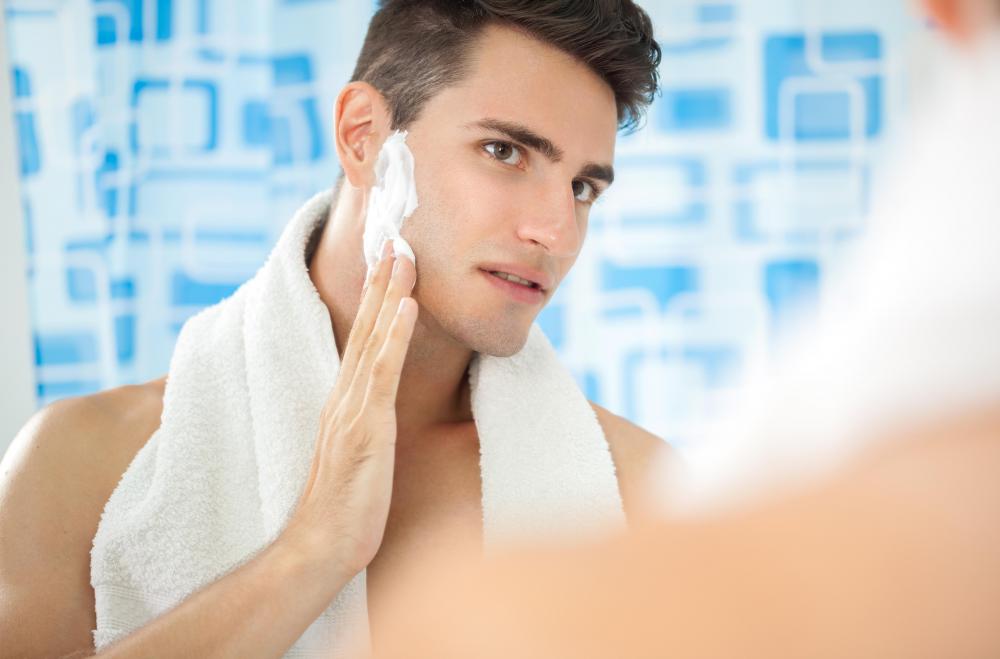
![Use a good shaving cream to avoid razor bumps.]() By: Igor MojzesUse a good shaving cream to avoid razor bumps.
By: Igor MojzesUse a good shaving cream to avoid razor bumps. -
![A razor bump can turn into an ingrown hair if the hair gets stuck in the follicle.]() By: F.C.G.A razor bump can turn into an ingrown hair if the hair gets stuck in the follicle.
By: F.C.G.A razor bump can turn into an ingrown hair if the hair gets stuck in the follicle. -
![A dull razor blade can cause razor bumps.]() By: April CatA dull razor blade can cause razor bumps.
By: April CatA dull razor blade can cause razor bumps. -
![Electric shavers produce less razor bumps than other kinds of shavers.]() By: ArenaCreativeElectric shavers produce less razor bumps than other kinds of shavers.
By: ArenaCreativeElectric shavers produce less razor bumps than other kinds of shavers.


Discussion Comments
Thanks for the article man. I've suffered from razor bumps ever since i started shaving and have tried dozens of techniques and products. even changed jobs since i was required to shave daily.
Anyhow, i have to disagree with your thoughts on using a product with alcohol, which can really dry out your skin and cause discoloration, especially for guys with darker skin tones like me.
my dermatologist recommended a product called Barc Bump Down which has helped tremendously. and it doesn't dry me out.
Post your comments