
At EasyTechJunkie, we're committed to delivering accurate, trustworthy information. Our expert-authored content is rigorously fact-checked and sourced from credible authorities. Discover how we uphold the highest standards in providing you with reliable knowledge.
What are Personal Computers?
The advances in technology in the 20th century, particularly in the field of communications, have produced a revolution in electronics, whose influence is being felt worldwide. A representative part of that revolution has been the advent of the personal computer (PC). Personal computers are computers that are meant to be used by individuals in homes or offices. Their retail prices, size, and capabilities make them practical for use in almost every home and office in the United States and other developed countries. The operation of these computers relies on a small computer chip known as a microprocessor, which governs the functioning of the computer.
All PCs have several basic components that allow them to function and be used. The microprocessor controls everything the computer does, and every process has to go through it first. Computers also have memory, both long-term (read-only memory or ROM) and temporary (random-access memory or RAM), as well as data storage. ROM contains the basic software that allows the computer to boot up and generally does not change; RAM is used to store information that the computer is currently working with, such as open programs.

The microprocessor and memory are contained as part of a large circuit board called the motherboard. The motherboard also acts as an intermediary between the microprocessor and other systems on the computer, such as drives and ports. The hard drive or hard disk is where programs and files are stored. As opposed to the RAM, the hard drive has a large capacity and is meant for long-term storage. This is where the majority of data in personal computers is located.

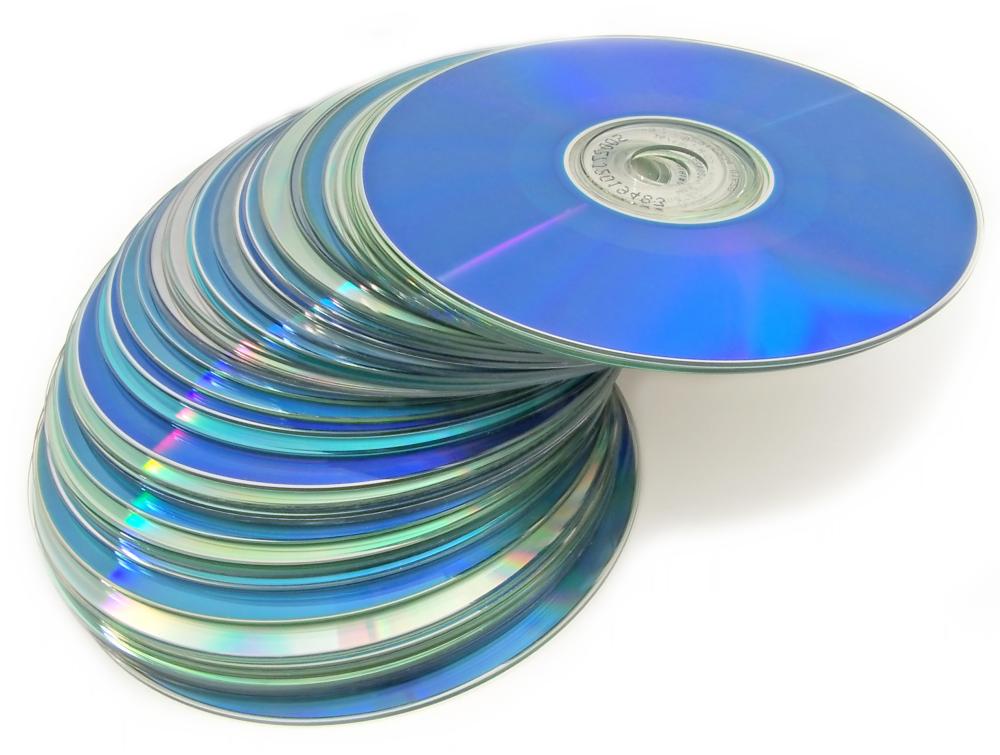
Another important part that is common to all personal computers is the power supply, which regulates the amount of electricity that the PC is using at a given time. Most computers also have sound cards and graphics cards as well, which are small circuit boards that connect to the motherboard to process audio and video data, respectively. Some modern PCs also include a CD-ROM or DVD-ROM drive, where a disk containing programs or files can be inserted. Programs can be run directly from the CD or DVD, which acts as a form of external data storage for a PC.

Personal computers were first introduced on the market in the late 1970s. Their capabilities and speed left much to be desired in comparison with modern PCs, but because of the advancement they represented, their popularity grew quickly, and PCs began to be developed for everyday household use. Computer games and programs were developed which could be used on household computers, further opening up the market for these devices. By the year 2002, one billion had been sold worldwide since they were first introduced.
AS FEATURED ON:
AS FEATURED ON:









-
![Personal computers can be used to play CDs and DVDs.]()
Personal computers can be used to play CDs and DVDs. -
![A computer motherboard.]() By: VIA GalleryA computer motherboard.
By: VIA GalleryA computer motherboard. -
![A tablet computer.]() By: ?A tablet computer.
By: ?A tablet computer. -
![A computer chip from a personal computer.]() By: ing_masaA computer chip from a personal computer.
By: ing_masaA computer chip from a personal computer. -
![A desktop personal computer.]() By: Dmitriy MelnikovA desktop personal computer.
By: Dmitriy MelnikovA desktop personal computer. -
![A laptop computer.]() By: nattstudioA laptop computer.
By: nattstudioA laptop computer. -
![CD-ROM drives allow users to upload new data to the computer.]() By: overthehillCD-ROM drives allow users to upload new data to the computer.
By: overthehillCD-ROM drives allow users to upload new data to the computer. -
![Personal computers may be used to play games.]() By: JcJg PhotographyPersonal computers may be used to play games.
By: JcJg PhotographyPersonal computers may be used to play games. -
![Installing additional RAM may help increase computer speed.]() By: vinsenInstalling additional RAM may help increase computer speed.
By: vinsenInstalling additional RAM may help increase computer speed. -
![Personal computers may have headphones so users can watch movies or play games.]() By: jeninagyPersonal computers may have headphones so users can watch movies or play games.
By: jeninagyPersonal computers may have headphones so users can watch movies or play games. -
![A hard drive stores the programs and files for a personal computer.]() By: merydollaA hard drive stores the programs and files for a personal computer.
By: merydollaA hard drive stores the programs and files for a personal computer. -
![Ports for the Recommended Standard 232 (RS-232) cable are still found on many personal computers.]() By: intararitPorts for the Recommended Standard 232 (RS-232) cable are still found on many personal computers.
By: intararitPorts for the Recommended Standard 232 (RS-232) cable are still found on many personal computers.


Discussion Comments
I have a home office and prefer to use a PC over a laptop most of the time. They keep coming down in price and it doesn't cost much to have a really nice one these days. For some reason I just find it easier to navigate using a PC and like having a bigger monitor screen to look at. When using a laptop or tablet, I feel like there isn't enough space.
I would be surprised if my mom ever uses a PC or any kind of computer for that matter. She is in her 80's and as far as I know has never been online. She may look at a website, but that is only when someone else has brought it up.
My dad, on the other hand loves using the computer and has a PC and a laptop. His PC is pretty old, but that is the one he uses all the time. He still has one of the big heavy monitors too, but it gets the job done for him.
I used to have one computer at home and that was a desktop personal computer. If I ever had any technical problems with it, that was the only way I had access to the internet.
Now there are so many other ways to get online such as a laptop, tablet and a smartphone, that I think personal computers will someday be a thing of the past.
I realize that most places of business still rely on a PC, but many of them are also changing over to a tablet. One of the biggest reasons I keep my PC around is for the grand kids to play games on it. I don't have to worry about them breaking it because it is pretty old and not worth much anyway.
I remember very well when I bought my first PC and was so excited about it. I don't remember for sure how much I paid for it, but I know it was quite a bit more expensive than the last one I bought. Compared to the PCs we use today, it didn't have much memory, and was pretty slow, but when the PC was first introduced, it was quite the thing.
I don't think people are buying personal computers to use at home like they used to. I have one sitting in my home office but hardly ever turn it on anymore. When I am at home I prefer to use my laptop because it is portable.
@hamje32 - I think these personal touch computers which use a stylus are more than cool. They’ve brought computers to mass market for people with disabilities. I think that’s going to continue to define the shape of things to come—whether it’s using a stylus or voice recognition, or what have you.
@everetra - I think that in one sense Sun Microsystems was right. The computer is not the machine--it’s the technology behind it. Now tablets are the big “in” thing. Tomorrow it could be Dick Tracy spy watches with computers in them.
@hamje32 - If you ask me what the future holds, it’s obvious that it’s tablet personal computers. As computer technology gets miniaturized and plugged into everyday devices like phones and other mobile devices, tablet computers may soon replace laptop computers—or at least get very close to it.
They’re delivering just about all of the functionality you need in a computer, but in a more user friendly interface. They’re totally wired, sleek, and at a price point cheaper than most laptops.
Personal computer history is littered with some funny stories, especially when you look at some weird predictions that were made early on. One of the funniest is Bill Gates’ famous comment that “640K of RAM” should be enough for just about anybody. Look at where we are today, where RAM is measured in gigabytes, because of the increased computing processing power and video demands of modern computers.
Another weird prediction was that of Sun Microsystems which coined the phrase “the network is the computer,” and famously predicted that desktop computers would one day go the way of the dinosaur. What was funny about this is that they were wrong and right at the same time. Desktops remained, but now everyone’s hooked up to the Internet and practically can’t get anything done without being online. Who knows what the future will hold.
Post your comments