
At TheHealthBoard, we're committed to delivering accurate, trustworthy information. Our expert-authored content is rigorously fact-checked and sourced from credible authorities. Discover how we uphold the highest standards in providing you with reliable knowledge.
What are Ovaries?
 Mary McMahon
Mary McMahon
Mary McMahon
Ovaries are part of the reproductive system of female organisms. In vertebrate animals, they also produce and release sex hormones that govern physical characteristics and fertility. These organs are extremely important because they ensure the continued survival of the species by producing ova, or eggs, which are intended for fertilization. In humans, they are around the size of an almond, and human females are actually born with all of the eggs they will ever have.
The specifics of ovaries vary, depending on the type of organism under discussion. In vertebrates, they are attached to the fallopian tubes, which are in turn connected to the uterus. During a cycle known as ovulation, they usually release a single egg into the uterus. If the egg is fertilized, it will implant and develop into an embryo, which will ultimately become a baby. If the egg is not fertilized, the uterine lining is shed, along with the egg, allowing the uterus to prepare anew for a fresh egg.

In addition to producing and releasing eggs that contain genetic material needed for reproduction, the ovaries also create sex hormones like estrogen and progesterone. These hormones help to regulate the ovulation process, and they also contribute to general physical characteristics associated with the female sex, such as the development of breasts. Levels of these hormones fluctuate, depending on the age of the female and where she is in her ovulation cycle.

Healthy ovaries are very important for reproductive health. Many women have annual exams to ensure that their reproductive organs are in good health; cancer is a major concern for many women, since it can impact fertility as well as overall health. Damage to the ovaries may also lead to abnormal hormone levels, which can cause mental distress and uncomfortable physical symptoms. Women who note irregularities in their menstrual cycles should contact a medical professional, as these irregularities may be symptoms of more serious health problems.

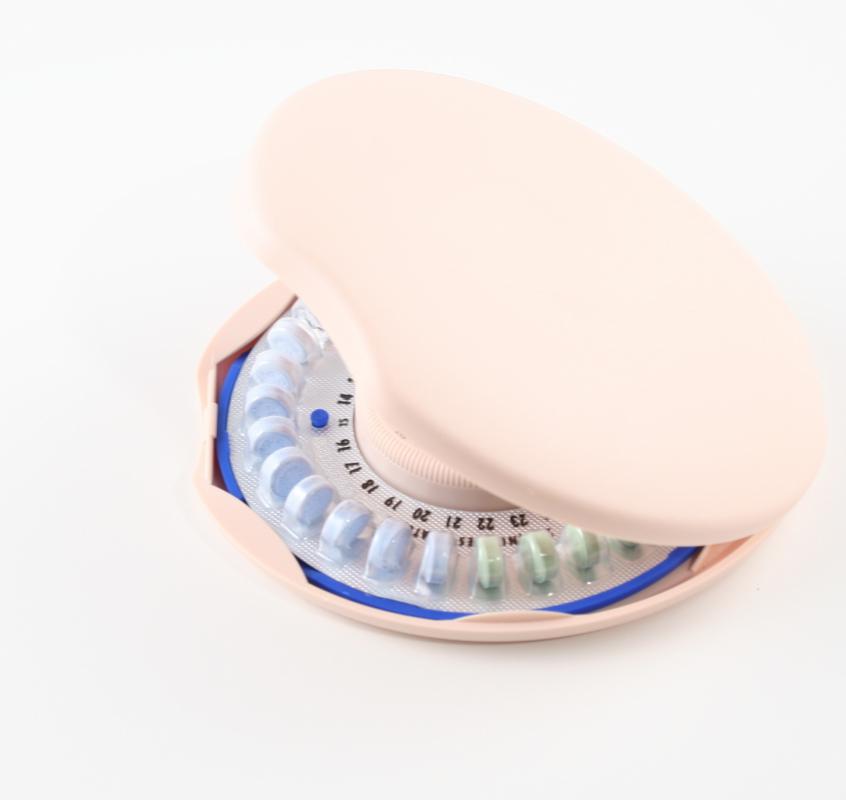
Birth control pills work by manipulating the levels of a woman's sex hormones to trick her body into thinking that an egg has already been released into the uterus. Since no egg has in fact been released, the woman cannot get pregnant. She will, however, have a period, since the dosage of hormones fluctuates to allow her uterus to shed its lining. Some birth control pills use different hormone levels, allowing women to have periods less frequently.
Mary McMahon
Ever since she began contributing to the site several years ago, Mary has embraced the exciting challenge of being a TheHealthBoard researcher and writer. Mary has a liberal arts degree from Goddard College and spends her free time reading, cooking, and exploring the great outdoors.
Learn more...
Mary McMahon
Ever since she began contributing to the site several years ago, Mary has embraced the exciting challenge of being a TheHealthBoard researcher and writer. Mary has a liberal arts degree from Goddard College and spends her free time reading, cooking, and exploring the great outdoors.
Learn more...AS FEATURED ON:
AS FEATURED ON:


-
![The female reproductive system, including the ovaries.]() By: OOZThe female reproductive system, including the ovaries.
By: OOZThe female reproductive system, including the ovaries. -
![A healthy ovary and one from a woman with PCOS.]() By: AlilaA healthy ovary and one from a woman with PCOS.
By: AlilaA healthy ovary and one from a woman with PCOS. -
![Birth control pills trick a woman's body into thinking an egg has been dropped.]() By: Jacob KearnsBirth control pills trick a woman's body into thinking an egg has been dropped.
By: Jacob KearnsBirth control pills trick a woman's body into thinking an egg has been dropped. -
![Healthy ovaries are very important for reproductive health.]() By: Marin ConicHealthy ovaries are very important for reproductive health.
By: Marin ConicHealthy ovaries are very important for reproductive health. -
![Ovaries create sex hormones like progesterone.]() By: logos2012Ovaries create sex hormones like progesterone.
By: logos2012Ovaries create sex hormones like progesterone. -
![Damage to the ovaries may lead to abnormal hormone levels.]() By: jovanmandicDamage to the ovaries may lead to abnormal hormone levels.
By: jovanmandicDamage to the ovaries may lead to abnormal hormone levels.




Discussion Comments
It is amazing how our ovaries control the hormones that affect us our whole lives. Keeping hormones in balance through the different seasons of life is really important and not always easy.
I have friends who have had their ovaries removed at an early age and immediately went into menopause. This can really wreak havoc on your system and overall well being. I haven't had my ovaries removed but am still dealing with hormone changes that are a natural part of life.
As women, we are used to a lot of strange cramps and ovary pain, at least it has always been that way for me. I am a little bit more aware of this because of my family history. There are many times I think I may have ovarian cancer symptoms and wonder if I will get ovarian cancer too.
My gynecologist knows my family history and knows my concern about this. This is something I always want to stay on top of and always get checked when I have symptoms that don't go away or seem abnormal for me.
I have an aunt who was never supposed to be able to have children. When she was younger she had one of her ovaries removed. Because of this and some other female problems, her chances of ever getting pregnant were very slim.
She never used any birth control and was quite surprised when she found out she was pregnant. She had a healthy baby girl and about 4 years later had another baby girl. She considers both of them miracle babies.
@nanny3 – I feel your pain (pardon the pun). Seriously, though, I do understand.
I have what is called polycystic ovarian syndrome. This is basically a condition where my body makes lots of little cysts when I ought to be ovulating. It has all kinds of fantastic symptoms like hormonal imbalance, weight gain, insulin resistance and even acne.
But I think that one of the worst things about it (besides the difficulty I had with infertility) was that sometimes these cysts don’t just go away without a care.
Sometimes they really hurt, really bad. You have my sympathies. I knew we were kindred spirits as soon as I saw the icepick part. Polycystic ovaries are no fun at all.
I often have cysts on my ovaries that are apparently not harmful to my health, but incredibly painful. It actually seems like every other cycle that I have really bad aches on the right side just before it’s time for me to start.
I’ve been told that these cysts are normal and that they burst on their own; that there is no need to worry about them.
I think that it’s really easy for a male doctor to say that I shouldn’t worry about an ovary which feels like it’s stabbing me with an icepick from within. I’m just saying…
Post your comments