
At TheHealthBoard, we're committed to delivering accurate, trustworthy information. Our expert-authored content is rigorously fact-checked and sourced from credible authorities. Discover how we uphold the highest standards in providing you with reliable knowledge.
What are Omega-6 Fatty Acids?
 Tricia Christensen
Tricia Christensen
Tricia Christensen
Omega-6 fatty acids are common fats that most people consume regularly. These include fatty acids like linoleic acid, and arachidonic acid. Such acids are given their name because of chemical composition, which includes a carbon double bond six carbons distance from the omega or last carbon in a chain. The name indicates where the double bonds occur in the chain of fatty acids.
This type of fatty acids are derived in food sources from dietary items like eggs, meat, whole grains, cereals, polyunsaturated oils from vegetables and nuts, and most baked goods. Most often, Western diets do not require supplementation of Omega-6 because they tend to already contain more than enough. These acids are called essential, because they are important to brain growth. Some studies have shown that low levels of may make children more prone to ADD/ADHD.

Frequently, though, we tend to consume a lot of meat and grains. In fact, most medical researchers claim Western diets, particularly those of Americans, the British and Israelis, are far too high in Omega-6. Too high consumption of this fatty acid has been linked to the development of heart disease, asthma, certain forms of cancer, arthritis, and depression. Though some Omega-6 is necessary since they comprise essential acids, too much is definitely a problem.

Studies of Omega-3 fatty acids have shown they may promote heart health, though those taking fish oil that have arrhythmias should consult with their doctors. This type is also considered helpful in the treatment of arthritis, and may further help lower bad cholesterol and raise good cholesterol. They may also assist with mood balance in people with mood disorders like depression or bipolar. Studies of Omega-6 fatty acids, which are normally consumed with greater regularity in most diets, suggest that it may actually decrease levels of both good and bad cholesterol.

Omega-6 has also been linked to keeping people depressed. A 2005 study published in The American Society for Biochemistry and Molecular Biology Journal suggests that people may remain depressed when their diet contains a lot of this fatty acid. Their conclusion, albeit done on a rat population, recommended reducing its intake and increasing that of Omega-3.

Many westerners eat about a 10:1 ratio of Omega-6 to Omega-3, or in some cases as much as 30:1. Studies suggest that greater health might be achieved if a 4:1 ratio were instead applied. In fact, with people who suffer from chronic conditions like asthma or arthritis, supplementation with Omega-3 and reduction of eating foods like breads and meat, may help improve these conditions.
Thus Omega-6 fatty acids are essential, but often used in excess in the Western diet. The results may lead to poorer health. It should not be confused with Omega-3, which tends to be associated with better health.
Tricia Christensen
Tricia has a Literature degree from Sonoma State University and has been a frequent TheHealthBoard contributor for many years. She is especially passionate about reading and writing, although her other interests include medicine, art, film, history, politics, ethics, and religion. Tricia lives in Northern California and is currently working on her first novel.
Learn more...
Tricia Christensen
Tricia has a Literature degree from Sonoma State University and has been a frequent TheHealthBoard contributor for many years. She is especially passionate about reading and writing, although her other interests include medicine, art, film, history, politics, ethics, and religion. Tricia lives in Northern California and is currently working on her first novel.
Learn more...AS FEATURED ON:
AS FEATURED ON:


-
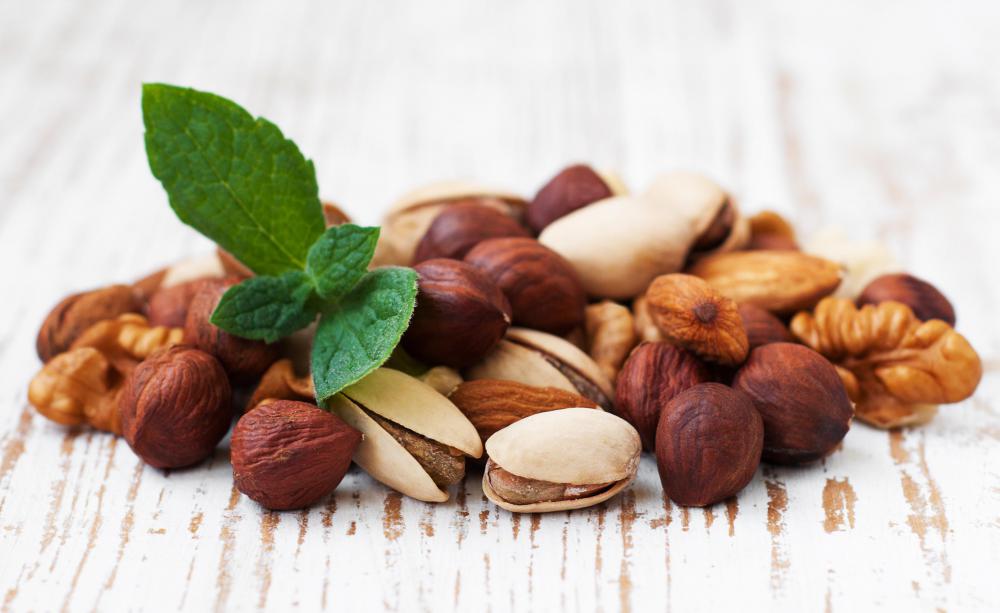
![Nuts have fatty acids.]() By: Es75Nuts have fatty acids.
By: Es75Nuts have fatty acids. -
![Studies using labratory rats and Omega-6 have been linked to depression.]() By: lculigStudies using labratory rats and Omega-6 have been linked to depression.
By: lculigStudies using labratory rats and Omega-6 have been linked to depression. -
![Many medical researchers say that American diets are too high in Omega-6s.]() By: sattrianiMany medical researchers say that American diets are too high in Omega-6s.
By: sattrianiMany medical researchers say that American diets are too high in Omega-6s. -
![Unlike Omega-6 fatty acids, Omega-3 may help people who are struggling with depression or bipolar disorder.]() By: AntonioguillemUnlike Omega-6 fatty acids, Omega-3 may help people who are struggling with depression or bipolar disorder.
By: AntonioguillemUnlike Omega-6 fatty acids, Omega-3 may help people who are struggling with depression or bipolar disorder. -
![Omega-6 fatty acids may be derived from polyunsaturated oils from vegetables.]() By: Zdenka DarulaOmega-6 fatty acids may be derived from polyunsaturated oils from vegetables.
By: Zdenka DarulaOmega-6 fatty acids may be derived from polyunsaturated oils from vegetables. -
![High consumption of Omega-6 has been linked to the development of asthma.]() By: petert2High consumption of Omega-6 has been linked to the development of asthma.
By: petert2High consumption of Omega-6 has been linked to the development of asthma. -
![Omega-6 fatty acids are found in abundance in meats.]() By: Syda ProductionsOmega-6 fatty acids are found in abundance in meats.
By: Syda ProductionsOmega-6 fatty acids are found in abundance in meats.






Discussion Comments
Keep in mind the vast majority of omega 6 is consumed in processed oils like soy, corn and canola oil. It is important to consume organic unprocessed omega 6 oils like safflower sunflower and/or sesame oil to obtain optimal health benefits.
when they say 4 to 1, should that apply to 4 being omega 6 and 1 being omega 3?
What about those studies in the article, minombre, that cite achieving 4:1 ratios is best?
There is a theory that increased amount of omega 6 in farmed fish is detrimental to the heart health. It is well known that omega 3 is heart healthy because it reduces inflammation.
However, the higher ration of omega 6 to omega 3 has not been proven yet that it contributes to heart disease, it is still only a theory.
In what way can Omega 3 Fish oil negatively impact those with heart arrhythmias?
Post your comments