
At DelightedCooking, we're committed to delivering accurate, trustworthy information. Our expert-authored content is rigorously fact-checked and sourced from credible authorities. Discover how we uphold the highest standards in providing you with reliable knowledge.
What are New Potatoes?
 Michael Pollick
Michael Pollick
Michael Pollick
One popular trend in cooking is the harvesting of young or immature vegetables, as in the case of very young peas or baby corn. Immature potatoes harvested during the spring or summer are called new potatoes, or sometimes creamers or fingerlings. They are not a separate variety of potato, but younger versions of other varieties.
The skin of new potatoes is generally thinner and flakier than the skin found on older potatoes, so they are rarely if ever peeled before cooking. Restaurants and cafeterias use special machines with rotating abrasive wheels to remove some of the peel, but home cooks may just want to wash the small potatoes thoroughly and keep them unpeeled.

Because new potatoes are very small in size, they are well-suited to boiling and roasting. Boiled ones retain their shape and texture, and they can be seasoned to match the overall tone of the meal. New potatoes can also be used in slow-cooked meals such as traditional Yankee pot roast.
There are several things to consider when buying new potatoes. Grocery stores often sell them individually or by the bag. Buying individual potatoes for a single meal can guarantee less waste, but is generally more expensive than buying by the bag. Bagged potatoes can spoil quickly if not stored properly, however, and occasionally small stones can get into the mix.

Because they have very thin skins, these young potatoes are also prone to sun damage. A sunburned potato has a green patch under its red or yellow skin. This patch contains a poisonous chemical, so cooks should either discard the entire potato or cut out the discolored area entirely before using it. It only takes a few unchecked sunburned potatoes to cause food poisoning.

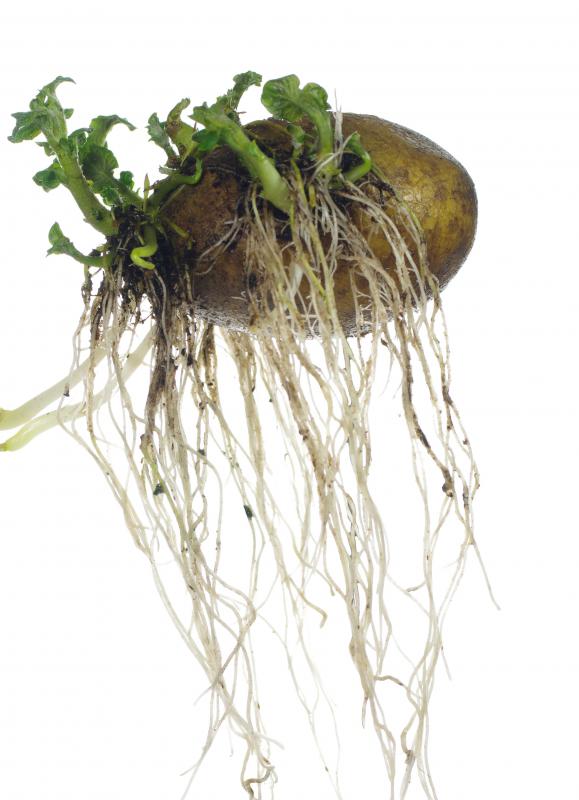
It is also possible to find sprouts growing from the eyes. Some farmers use new potatoes as seed potatoes, but these sprouts are not good news for cooks, who should discard any potatoes that have them in substantial quantities. Some bruising is to be expected with any immature vegetable, but large soft patches and dark spots may be signs of disease or rot. Bags of potatoes should be stored off the floor, preferably in a dry, dark storage bin.
Michael Pollick
A regular DelightedCooking contributor, Michael enjoys doing research in order to satisfy his wide-ranging curiosity about a variety of arcane topics. Before becoming a professional writer, Michael worked as an English tutor, poet, voice-over artist, and DJ.
Learn more...
Michael Pollick
A regular DelightedCooking contributor, Michael enjoys doing research in order to satisfy his wide-ranging curiosity about a variety of arcane topics. Before becoming a professional writer, Michael worked as an English tutor, poet, voice-over artist, and DJ.
Learn more...AS FEATURED ON:
AS FEATURED ON:


-
![New potatoes.]() By: Yahia LOUKKALNew potatoes.
By: Yahia LOUKKALNew potatoes. -
![Sprouting potatoes should be discarded.]() By: Witold KrasowskiSprouting potatoes should be discarded.
By: Witold KrasowskiSprouting potatoes should be discarded. -
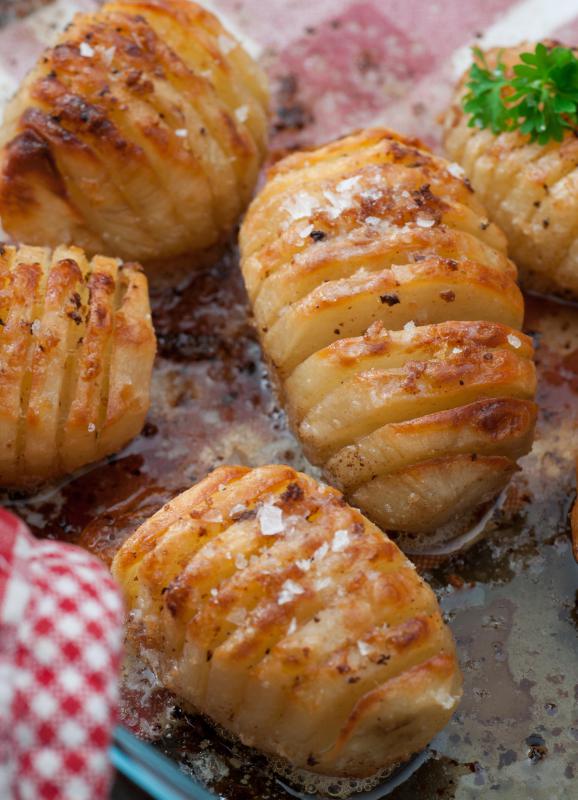
![Small potatoes are best suited for creating Hasselback potatoes.]() By: Barbro BergfeldtSmall potatoes are best suited for creating Hasselback potatoes.
By: Barbro BergfeldtSmall potatoes are best suited for creating Hasselback potatoes. -
![Some farmers use new potatoes as seed potatoes.]() By: Johan LarsonSome farmers use new potatoes as seed potatoes.
By: Johan LarsonSome farmers use new potatoes as seed potatoes. -
![Consuming sunburned potatoes may result in food poisoning.]() By: DemianConsuming sunburned potatoes may result in food poisoning.
By: DemianConsuming sunburned potatoes may result in food poisoning.



Discussion Comments
Our sweet potatoes didn't get big like I find in the store. They were very small and very good. The skin was thin and tender and the inside was just as sweet as the ones I had purchased in the store. Is there a place to buy golf ball or smaller sizes?
I have read that a new potato comes from a plant that does not bear a flower. How true is this.
if you ever get the chance to dig an egg size potato early in the summer, wash it off, boil, butter, salt and pepper and you will have done something that rates in the top three of good eating!
I lived on a smallholding as a boy during the 1940and early 50's. I assisted in planting potatoes.
We grew two different types of potato.
One planted early and reached maturity early. This potato had the waxy thin skin we associate with new potatoes. Planted a little later were the main crop potatoes. these matured more slowly, grew to a larger size, and had the thicker skin.
To say that a new potato was merely a potato harvested before maturity and no different from a main crop potato is, I think, misleading as the crops are grown from seed potatoes having quite different characteristics.
First of all new potatoes and fingerlings are not the same thing.
Fingerlings are a a group of potatoes that grow long skinny tubers that look like fingers. Rose Finn Apple, French Fingerling and Australian Crescent are just a few varieties.
New potatoes are *any* immature potato dug shortly after the plant flowers. New potatoes cannot be stored they have a *very* short shelf life and need to be used within a few days of digging.
Unless you are buying new potatoes directly from a grower or farmer you are not getting new potatoes. You can buy baby reds in the grocery store, but these have been through the hardening off process needed for storage and long distance travel. They are good, but still not the same as a new potato.
New potatoes have not had as much time to convert their sugar into starch, which is probably what qualifies them for your particular diet. The baby reds will be better for you than the "regular" baking potatoes, but be sure to check with your dr regularly if you are eating many of these, because they will have more starch than a potato you harvest directly from your garden.
New potatoes are not stored. When they go into storage, some chemical changes happen, one of which is the skin loses a lot of its nutritional value. A stored potato is mostly starch when it ends up at the dinner table. A new potato, if I am not mistaken, has a much more balanced nutritional value, which includes protein - unusual with a vegetable. The skin is the more nutritious and flavorful part. That is where the protein and vitamins are. I might be mistaken, but I am pretty sure reds are not handled any different than whites.
eat drink and be merry.
I am told not to eat potatoes because they can increase my blood sugar. However, one doctor told me that it is OK to eat new potatoes. Why are they different? My wife has been getting small red skined potatoes and says they are the same thing. Are they?
Regards,
Dearhawke
Post your comments