
At WiseGEEK, we're committed to delivering accurate, trustworthy information. Our expert-authored content is rigorously fact-checked and sourced from credible authorities. Discover how we uphold the highest standards in providing you with reliable knowledge.
What are Muscle Relaxants?
 Niki Foster
Niki Foster
Niki Foster
Muscle relaxants are drugs used to relax, or decrease the tone of, skeletal muscles, those that are responsible for voluntary movement of the human body. There are different types, with different applications. Neuromuscular-blocking drugs completely block the transmission of nervous signals to the muscles, resulting in paralysis. Others, such as benzodiapines and methocarbamol, relax the muscles to a lesser degree and are used to manage seizures, muscle spasms, or pain associated with muscle injury.
Neuromuscular-blocking drugs are most often used during surgery to prevent complications resulting from involuntary muscle movement. These muscle relaxants can affect smooth muscle, such as the diaphragm, as well as skeletal muscle, so artificial respiration may be necessary. Neuromuscular-blocking drugs do not block the sensation of pain, so they must be used in conjunction with anesthetics.

Muscle relaxants taken to relieve pain or spasms are only available through prescription in the United States. Benzodiapines have other effects and uses, such as sedation and decreased anxiety, and they are sometimes used and abused recreationally as well as for medical concerns. Prescription medications work on the central nervous system, while neuromuscular-blocking drugs work directly on the muscles, making them insensible to neurotransmitters. Movement is typically possible, though impaired, under the effect of benzodiapines and similar drugs.

Prescription muscle relaxants have a number of side effects. Many types carry a high risk of dependence, and withdrawal can be very uncomfortable and even fatal. Some do not carry this risk, or have a less severe risk of dependence. A patient may also build a tolerance to the drugs, especially with heavy use.
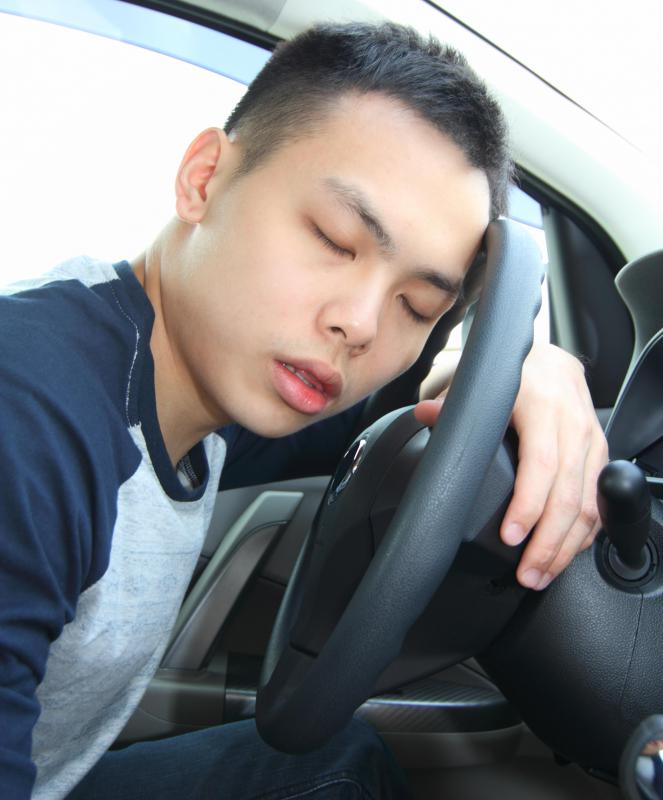
Muscle relaxants cause impaired movement and coordination, as well as drowsiness, as you would expect, so one should not drive or operate machinery under their effect. Combining them with alcohol is extremely dangerous and can result in coma or death. For all of these reasons, it is important to take these medications only under the direction and supervision of a medical professional.
Niki Foster
In addition to her role as a WiseGEEK editor, Niki enjoys educating herself about interesting and unusual topics in order to get ideas for her own articles. She is a graduate of UCLA, where she majored in Linguistics and Anthropology.
Learn more...
Niki Foster
In addition to her role as a WiseGEEK editor, Niki enjoys educating herself about interesting and unusual topics in order to get ideas for her own articles. She is a graduate of UCLA, where she majored in Linguistics and Anthropology.
Learn more...AS FEATURED ON:
AS FEATURED ON:









-
![Muscle relaxants may be used during surgery.]() By: andrea86gMuscle relaxants may be used during surgery.
By: andrea86gMuscle relaxants may be used during surgery. -
![Muscle relaxants should only be used under the supervision of a medical professional.]() By: Photographee.euMuscle relaxants should only be used under the supervision of a medical professional.
By: Photographee.euMuscle relaxants should only be used under the supervision of a medical professional. -
![Combining muscle relaxants with alcohol is extremely dangerous and can result in coma or death.]() By: gwimagesCombining muscle relaxants with alcohol is extremely dangerous and can result in coma or death.
By: gwimagesCombining muscle relaxants with alcohol is extremely dangerous and can result in coma or death. -
![Muscle relaxants can cause drowsiness, so one shouldn't operate a car or machinery under their effect.]() By: Adrin ShamsudinMuscle relaxants can cause drowsiness, so one shouldn't operate a car or machinery under their effect.
By: Adrin ShamsudinMuscle relaxants can cause drowsiness, so one shouldn't operate a car or machinery under their effect. -
![Combining muscle relaxants with alcohol is extremely dangerous.]() By: lacamerachiaraCombining muscle relaxants with alcohol is extremely dangerous.
By: lacamerachiaraCombining muscle relaxants with alcohol is extremely dangerous.



Discussion Comments
@anon160288: I take ativan and I am on elavil, zyprexa, and parafon forte. I too have involuntary muscle movements. You can see my stomach move in and out and the muscles jerk. I finally got me a new family doctor and I am working with my neurologist to find out what is going on with these muscles. My ativan seems to calm them down a lot. I take 2mgs twice a day.
I was wondering if it could also be the zyprexa causing them. I notice there are a lot of bad side effects of bipolar medicine. I would take your wife to a neurologist and find out what is going on.
I just moved to Texas from Florida. It is sick what the clinics are doing there: $500 for a fake mri; $250 for the doctor visit, plus $250 for the prescription. I've seen so many good people turn to crap from the pain pills. And on top of selling and buying them, I'd love to burn them to the ground.
If you have an addictive personality, stay away from the pain pills especially roxycodine, which is a generic form of oxycontin. In short, it's synthetic heroin. God bless. singer, Truce A.
My wife was diagnosed with anxiety and depression. She was put on Celexa 10mg, and Ativan 0.5mg when needed. She never took more than 1mg per 24h. Usually 0.5mg per day. After nine days she has developed involuntary muscle movements. Her neck, chest, stomach, arms, and legs shake violently. Sometimes individually and sometimes all together.
Now her doc took her off Celexa, and put her on Seroquel 75mg per day. We are not sure if she should take it because it too causes involuntary muscle movements. So we are worried that it may worsen her condition even make it permanent. He could not clearly tell us the risks of taking this medication. Ativan seems to slow down or stop the movement. But we feel that it is masking the problem instead of solving it. Your comments are greatly appreciated. Thank you.
Sneakers41 - I think that celebrities that have drug addictions like this surround themselves with people who will do what they want so they can continue to abuse these drugs.
It is proven that many of these drugs depress the nervous system and cause very shallow breathing when combined with other drugs. This is how many die because their system just shuts down and the person stops breathing.
I know that in many parts around the country there is a crackdown on pain clinics because many of these centers just give drugs to people. In Florida they just passed a law that a licensed doctor had to prescribe these medications.
BrickBack -It is really sad when people get addicted and misuse these drugs. People say that that is how Michael Jackson became addicted to pain medication.
After his Pepsi commercial in which he burned his scalp he began taking Demerol for years in order to ease the pain.
He progressed to more powerful drugs and on the night of his death it was reported that he took 4 mg of Ativan, 4 mg of Versed, 10 mg of Valium, and 25 mg of the muscle relaxer Propofol which eventually killed him.
These drugs were given to Jackson in order to help him relax and get some sleep. When you need to take this many drugs to go to sleep then there is a serious problem.
Propofol is so powerful that it is supposed to be administered prior to having surgery it is not supposed to be prescribed for regular daily use. This is why Jackson died of ingesting too many muscle relaxants which led to an overdose.
ZeeMoo- I wish I had an answer for you. All I can say is that you really have to be careful with the potential for muscle relaxant overdose. Many people fall into this trap because their pain is so severe that they end up taking more of the medication than they are supposed to and become addicted.
This is what happened to Rush Limbaugh. He took muscle relaxants for back pain after surgery and he became addicted to oxycontin. As a result of his addiction he lost his hearing which he was able to restore somewhat with coquilar implants in his ears.
He still has trouble hearing and can only hear sounds that he was once familiar with. For example,with older songs he can make out the sounds because he remembers the musical pattern of the songs.
He will not be able to hear new songs that he has never heard before and when callers call into his show they transcribe the information and that is how he communicates.
He almost lost his career and life to prescription medication.
how can I distinguish between the muscle relaxants and other agents? Also the sedation and schedule drugs? please I need the answer ASAP.
Post your comments