
At AllThingsNature, we're committed to delivering accurate, trustworthy information. Our expert-authored content is rigorously fact-checked and sourced from credible authorities. Discover how we uphold the highest standards in providing you with reliable knowledge.
What are Marigolds?
 Mary McMahon
Mary McMahon
Mary McMahon
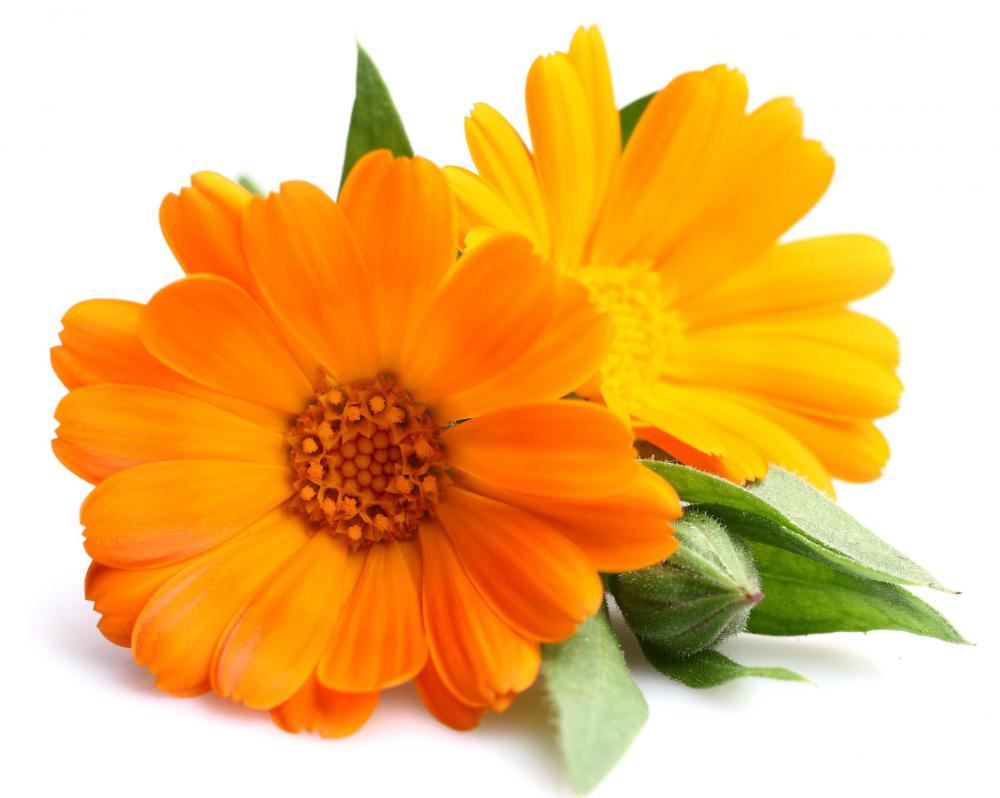
Marigolds are bright, colorful flowers that are native to Mexico, although they are cultivated all over the world. In addition to looking attractive, the flowers are also edible, and have natural pesticidal properties that allow them to resist insect infestation. Some gardeners take advantage of this property to garden organically, protecting more sensitive species with a barrier of this plants. Any plant in the genus Tagetes can be considered a marigold, along with several other blooming plants in the Asteraceae family. The name originally was simply “golde,” in a reference to the bright color, although it later came to be associated with the Virgin Mary. In the late 1400s, the flowers began to be called marigolds by most gardeners.
Extremely hardy flowers, marigolds can be grown in USDA Zones 3-11 with success, and if well cared for, they will bloom continuously throughout the summer months. The flowers are distinguished by being bright gold or yellow and highly ruffled. Some species are bi-colored, such as French marigolds. The plants will grow into the shape of a small bush that can reach a height of about 18 inches (45 centimeters) with strongly scented lush green foliage. Some gardeners find the smell distasteful, and several companies have developed odorless varieties, although these plants lack insect repelling properties.

Marigolds can be used to create a colorful border, a potted garden feature, or a dense patch of color when planted in the garden. Many gardeners use them to line beds of other flowers, along with garden paths. To encourage the flowers to keep blooming, dead blooms should be removed with clippers along with dying foliage. The plants can be easily grown from seed, and in areas where frost is likely, the seeds should be sprouted indoors and planted after the risk of frost has passed. Otherwise, they can be seeded directly.
If marigolds are being used as a food product, the flowers should be picked and used immediately or stored for up to one week under refrigeration in a brown paper bag. While the flowers can be picked whole, only the petals are consumed, and they should be washed and dried before use. Marigold petals can liven up a salad or be dried and used to naturally color foods. A very small percentage of people are allergic to the insect-resisting compound in these plants, and cooks should warn diners if they serve the flowers with dinner.
Frequently Asked Questions
What exactly are marigolds?
Marigolds are a genus of annual or perennial, mostly herbaceous plants in the sunflower family. They are native to the Americas but have been spread around the world due to their vibrant flowers and ease of cultivation. Marigolds are known for their distinctive orange, yellow, and red blooms, which can be seen from spring to fall.
Are marigolds easy to grow?
Yes, marigolds are considered one of the easiest flowers to grow. They are not particularly fussy about soil conditions, though they prefer well-drained soil and full sun exposure. Marigolds are also drought-tolerant and can thrive with minimal care, making them ideal for beginner gardeners or those looking for low-maintenance plants.
Do marigolds have any benefits in the garden?
Marigolds are renowned for their pest-repellent properties, making them excellent companion plants in vegetable gardens. They emit a substance from their roots that deters nematodes and other pests. Additionally, their bright flowers attract pollinators such as bees and butterflies, which are beneficial for the entire garden ecosystem.
Can marigolds be used for anything besides ornamentation?
Absolutely! Marigolds have various uses beyond their ornamental value. They have been used traditionally in culinary applications, with petals adding color to salads and dishes. Marigolds also possess medicinal properties and have been used in treatments for skin irritations and minor wounds due to their anti-inflammatory and antibacterial effects.
How long do marigold flowers last?
Marigold flowers can last a remarkably long time, both on the plant and as cut flowers. On the plant, blooms typically last from early summer until the first heavy frost. As cut flowers, marigolds can last up to a week or more if they are properly cared for, with fresh water and trimmed stems.
Are there different types of marigolds?
Yes, there are several types of marigolds, each with unique characteristics. The most common types include the African marigold (Tagetes erecta), which is known for its large, pom-pom-like flowers; the French marigold (Tagetes patula), which has smaller, more delicate blooms; and the signet marigold (Tagetes tenuifolia), noted for its fine foliage and dainty flowers.
Mary McMahon
Ever since she began contributing to the site several years ago, Mary has embraced the exciting challenge of being a AllThingsNature researcher and writer. Mary has a liberal arts degree from Goddard College and spends her free time reading, cooking, and exploring the great outdoors.
Learn more...
Mary McMahon
Ever since she began contributing to the site several years ago, Mary has embraced the exciting challenge of being a AllThingsNature researcher and writer. Mary has a liberal arts degree from Goddard College and spends her free time reading, cooking, and exploring the great outdoors.
Learn more...AS FEATURED ON:
AS FEATURED ON:









-
![Marigolds can bloom continuously throughout the summer months.]() By: DionisveraMarigolds can bloom continuously throughout the summer months.
By: DionisveraMarigolds can bloom continuously throughout the summer months.
Discussion Comments
Marigolds are so beautiful and vibrant! I love both the bright yellow and the bright orange marigolds!
I love that marigolds have more than just aesthetic beauty. They also can help with a lot of different things.
As this article mentioned, marigolds can help repel insects. Marigolds can also help with digestion. Also, if you are stung by a bee, you can use the pedals to help alleviate the pain and swelling.
Marigold juice can help remove warts. You can make a Marigold tea and drink it to help with internal ailments, like digestion and menstrual cramps.
Marigolds can be used for the skin too! Marigolds can help clear up rashes and insect bites.
Many European facial products have marigold in them, because marigold has helpful agents to reduce fine lines and wrinkles. It also has a helpful collagen producing agent to help your skin look more young and vibrant!
I think that marigolds and nasturtiums go well together. Both are in the same color family, both have edible parts, and both are known to repel insects.
I have yellow and orange marigolds and yellow, red, and orange nasturtiums. The nasturtiums spring up quickly from seeds that resemble filberts without their shells. They grow rapidly once established. You just have to keep them watered, which the marigolds planted alongside of them appreciate.
I planted both flowers around my squash and zucchini garden. They added so much color to the area, and they kept the veggies safe from insects.
I may be one of the few people who actually plant vegetables in their flower gardens in the front yard. I think the greenery is beautiful, and it is enhanced by the color of the flowers.
The first year that I planted miniature pumpkins, I had a lot of trouble with insects eating the vines and the fruit. I had heard that marigolds might keep the bugs away, so the next season, I planted several all throughout my little pumpkin patch.
I noticed a big drop in the insect population. It was nice not to have to pull dozens of beetles off every day. I had a nice crop that year, and I didn’t have to harvest them prematurely because of gnawed vines.
The main insect that caused me to get the marigolds was the squash beetle. They are known for their appetite for pumpkins, but they are also known for their hatred of marigolds.
I am in charge of caring for the flowers at my church. We have four large pots out front under a big awning, and someone else had planted marigolds in there, along with cosmos.
I thought that marigolds were a poor choice for the location. The awning doesn’t allow them to get any rain or sun, and the pots are too heavy to be moved. I have always grown marigolds in direct sunlight, so I thought they couldn’t survive in the shade.
I was wrong. They actually thrived. Even the fact that I could only come by once a week to water them didn’t deter their growth.
I have never had any luck with growing marigolds from seed. Maybe my soil isn’t rich enough. I usually just buy them already in bloom at a garden center.
I like to buy a container of each color. I have yellow, orange, and an orange so deep it is almost red lined with gold.
I plant them in front of my taller flowers so that they can be seen. I also have some lining the front of my house.
They do emit a strong odor. In the garden, I plant them near sweet smelling flowers, so I don’t notice their scent as much as I do that of the ones in front of the house.
When I was introducing my kids to some easy and fun gardening projects, planting marigolds was always on the list.
I would buy some marigolds that were already in bloom and let them choose a place to plant them. Since they are easy to grow and maintain, this makes a great way for them to begin learning how to plant and take care of flowers.
These can also be started from seed in small plastic cups and given as gifts. This is another fun thing for children to be involved with. This takes more patience though, as you have to wait several weeks for those seeds to germinate and finally bloom.
Marigolds are one flower that I make sure and have around every year. They have a very distinct smell to them, and even though I know they are edible, I have never tried eating any part of them.
I plant them because they are easy to grow and their blooms last all season long. I haven't bought any marigolds for several years because I will usually collect marigold seeds in the fall.
This is so easy to do and only takes a few minutes before you have a handful of them. The most important thing is to make sure they get completely dried out so they don't get moldy.
Some of my marigolds will self seed every year, but I always want to be sure I have a nice selection of them, so will gather plenty of seeds.
Another fun thing about this, is you really never know which colors you are going to be getting. You know they will be bright yellow and orange, but I have had some interesting color blends after sowing the seeds I have gathered.
Every summer I plant a row of yellow marigolds in the front of some big rocks in my front yard. There are several things I like about marigolds that keeps me buying them and planting them every year.
Probably the first thing is their bright, bold colors that last all season long. They are such cheerful looking flowers. They are also very easy to grow and even though they do better when they get enough rain, will still tolerate hot, dry conditions.
I don't walk all the way out to where I have them planted to water them so they have to rely on whatever rainfall we get. They always bloom well all summer long and it wouldn't be the same without those cheerful flowers greeting me as I pulled in the drive.
Post your comments